Test Records

The Best Pressings of Brothers in Arms Are Not Hard to Recognize

We try to be upfront with our customers that the Hot Stamper pressings of Brothers in Arms on our site have many nice qualities, but some of the best qualities of analog recordings from the 50s, 60s and 70s are not among them.

It would be foolish to pretend otherwise. We want our customers to know what to expect when they buy a modern recording, and, having played copies of this album (as well as Love Over Gold) by the score, we are qualified to tell them what even the best pressings do not do as well as we might like. In a recent listing we introduced one of the best sounding pressings from our last shootout this way:

  • Tonally correct from start to finish, with a solid bottom and fairly natural vocals (for this particular recording of course), here is the sound they were going for in the studio
  • Drop the needle on “So Far Away” – it’s airy, open, and spacious, yet still rich and full-bodied
  • We admit that the sound may be too processed and lacking in Tubey Magic for some
  • When it comes to Tubey Magic, there simply is none — that’s not the sound Neil Dorfsman, the engineer who won the Grammy for this album, was going for
  • We find that the best properly-mastered, properly-pressed copies, when played at good loud levels on our system, give us sound that was wall to wall, floor to ceiling, glorious, powerful and exciting — just not Tubey Magical

The notes you see below catalog the qualities of our 2025 Shootout Winner.

Side One

Track One (So Far Away)

  • Meaty guitar and bass
  • Big, weighty and present

Track Two (Money for Nothing)

  • Wide, full and weighty
  • Lots of punch

Side Two

Track One (Ride Across the River)

  • Tight, deep and weighty [bass]
  • Vocals are sweet and present
  • Most space yet
  • Rich too

Note that the person doing the listening confined himself to what the record was doing right. In the case of this Shootout Winning Top Shelf 3/3 pressing, there really wasn’t any aspect of the sound to find fault with. As far as we were concerned, the record was doing what the record was trying to do, and doing it better than any of the other copies we played, hence the high grades.

If you have five or ten early domestic pressings of Brothers in Arms, you can judge them accurately by limiting yourself to the qualities only found on the best of them. For any copy you might play, you could ask:

  • How big is it?
  • How big does it get when loud?
  • How weighty is it?
  • How present is it?
  • How wide is the soundstage?
  • How full-bodied is the sound?
  • How punchy is it?
  • How tight, deep and weighty is the bass?
  • How sweet and present are the vocals?
  • How much space does the recording have?
  • How rich is the sound?

If your equipment, room, electricity, etc. are good enough, and your front end is properly set up, all these questions can be answered with relatively little effort. You could even create a checklist of them after playing a few copies and hearing what the best of them did well.

(more…)

Listening in Depth to Blue

Hot Stamper Pressing of the Music of Joni Mitchell Available Now

Presenting another entry in our extensive listening in depth series with specific track by track advice to help you evaluate your copy of Blue.

Here are some albums currently on our site with similar track by track breakdowns.

Our Overview

The better pressings (which tend to be the ones mastered by Bernie Grundman in his glory days) bring out the breathy quality to Joni’s voice, and she never sounds strained either. They are sweet and open, with good bass foundation and transparency throughout the frequency range.

The best pressings (and today’s better playback equipment) have revealed nuances in this recording — and of course the performances of all the players along with it — that made us fall in love with her music all over again. Of all the tough nuts to crack, this was the toughest, yet somehow copies emerged from our shootouts that made it easy to focus on the sonic merits of Blue and ignore its shortcomings.

Hot Stampers have a way of doing that. You forget it’s a record; it’s now just music. The right record and the right playback will bring Joni’s music to life in a way that you cannot imagine until you hear it.

That is our guarantee on Blue — better than you ever thought possible or your money back.

Side One

All I Want

This is a do-or-die song for side one. When Joni sings “traveling, traveling, traveling, traveling,” she really pushes on the last couple of them, and even the best copies have a hard time dealing with it. When a copy of this record comes in, that first line often tells me that there is no hope for side one.

If an LP can get through that first line properly, it’s at least a ‘B’ and more often than not a truly Hot Stamper.

(more…)

The Nautilus Half-Speed of Harvest Is Not Bad!

Hot Stamper Pressings of the Music of Neil Young Available Now

Sonic Grade: B

We haven’t played a copy of this record in more than a decade [make that two], but back in the day we liked it, so let’s call it a “B” with the caveat that the older the review, the more likely we are to see things differently now. 

In the early 2000s we wrote the following (please excuse the all-caps, I could barely type back then):

This is a SURPRISINGLY good sounding Nautilus Half-Speed mastered LP with AMAZING transparency.

The sound here is DRAMATICALLY more natural than your average audiophile pressing. Just listen to the phony top end found on most MoFis to see what we mean.

On this record you’ll hear none of the hyped-up highs that are MoFi’s claim to fame.

This Nautilus is sure to destroy the typical domestic pressing, which (before cleaning) will tend to sound opaque, thick and dull.

This Half-Speed wouldn’t really match up to our Hottest Stampers, but you could sure do a lot worse.

Although it’s a tad fat at the bottom, it still retains much of the warmth and richness found on the best copies.

(more…)

On Dog and Butterfly, Listen for the Fat Snare on Straight On

Hot Stamper Pressings of the Music of Heart Available Now

Take five copies of the album, clean them well and then cue up Straight On. 

Now listen for how fat and solid the snare sounds. 

At least three will have a snare that doesn’t have the heft of the real thing. At most one will show you what it should really sound like.

Of course the copy with the right snare sound may have other problems, most assuredly does have other problems, which is why you need about ten to fifteen copies to really do a proper shootout.

Side Two

The vocals were breathy and clear on this side two, and the overall sound was punchy and energetic. The main areas we took points off for were a lack of warmth and a bit of smear on the acoustic guitars. Most copies have trouble getting all the transient information to resolve properly. The acoustic guitars are the place where this is most easily heard.

Side one earned the full Three Pluses for sound, with some of the breathiest background vocals we heard on any copy. That is a key sign of transparency — the background vocals are clear and breathy behind the lead singers. Most of the time they will be audible but the texture of the voices will be compromised.

(more…)

On Late for the Sky, This Kind of Clarity Wears Out Its Welcome Before Long

Hot Stamper Pressings of the Music of Jackson Browne Available Now

It’s not easy to find copies that get the tonal balance right the way the best copies do. Most err in one of two ways — either they’re rich, full and a little veiled, or they’re clear and transparent, but leaned-out and boosted in the upper midrange.

The clear ones of course are the ones that initially fool you – they present an illusion of transparency because everything is easy to hear right from the get-go, but they quickly wear out their welcome with their more modern, clearer, cleaner, more-often-than-not leaner sound.

The choruses are telling here.

With so many background singers, the size and weight and energy of the singers only comes through on the copies that are full and rich.

What else to listen for, you ask? The jug on Walking Slow — you gotta love it!

Choruses Are Key

Three distinctive qualities of vintage analog recordings — richness, sweetness and freedom from artificiality — are most clearly heard on a Big Production Record like this in the loudest, densest, most climactic choruses of the songs.

We set the playback volume so that the loudest parts of the record are as huge and powerful as they can possibly become without crossing the line into distortion or congestion. On some records — Dark Side of the Moon comes instantly to mind — the guitar solos on Money are the loudest thing on the record.

On Breakfast in America, the sax toward the end of The Logical Song is bigger and louder than anything else on the record, louder even than Roger Hodgson’s near-hysterical multi-tracked screaming “Who I am” about three-quarters of the way through the track. Those, however, are clearly exceptions to the rule. Most of the time it’s the final chorus of a pop song that gets bigger and louder than what has come before.

(more…)

I Have to Admit: the Cisco Pressing of Home Again! Had Me Vexed

Reviews and Commentaries for the Music of Doc Watson

Folks, if you made the mistake of buying the Cisco Heavy Vinyl reissue of this album, and you manage to grab one of our Hot Stamper pressings, you are really in for a treat.

I have to confess that when this record came out in 2003 I had a hard time coming to grips with what was wrong with it. I knew I didn’t like it, but I wasn’t sure exactly why. I wasn’t sure exactly what it was doing wrong, if anything. It seemed tonally correct and natural sounding. Why didn’t I like it?

It wasn’t phony up top with sloppy bass like a MoFi.

It wasn’t hard and transistory like so many of the Classic Records pressings back then.

I didn’t know the record at all so I really had nothing to judge it by.

But there was definitely something lacking in the sound that had me confused. Eventually I figured it out. Looking back on it now, the problems with the Cisco I could not identify were these:

  • The Cisco lacks presence. It puts Doc Watson further back than he should be, assuming that he is where he should be on the good vintage pressings, which sound right to me — some better, some worse, of course. Moving him back in the sound field does him no favors.
  • The Cisco lacks intimacy, which is key to the best pressings. The shootout winners remove all the veils and put you in the presence of the living, breathing Doc Watson. The Cisco adds veils and takes the intimacy right out of the record.
  • The Cisco lacks transparency. It frustrates your efforts to hear into the recording.
  • Doc is in a studio, surrounded by the air and ambience that would naturally be found there. The Cisco is airless and ambience-free, with Doc performing in a heavily damped booth of some kind. At least that’s what it sounds like.
  • And the last thing you notice is the lovely guitar harmonics on the originals and early reissues, harmonics that are attenuated and dulled on the Cisco.

As my stereo got better and better, and my critical listening skills improved in tandem, it became more and more obvious to me what was wrong with the Cisco. When we play modern Heavy Vinyl pressings these days, especially albums we know well, it usually doesn’t take us two minutes to hear what they are doing wrong.

(more…)

The Yellow Label Reissues Can Sound Very Good, But Great? Not a Chance

Hot Stamper Pressings of Contemporary Jazz Albums Available Now

The earlier pressing on the site as of this writing is an amazingly well recorded album with many fine qualities:

Boasting seriously good grades from top to bottom, this vintage Contemporary pressing is doing just about everything right.

These sides are bigger and more open, with more bass and energy, than most others we played – the saxes and trumpets are immediate and lively.

Mr. Earl Hines himself showed up, a man who knows this music like nobody’s business – Leroy Vinnegar and Shelly Manne round out the quartet.

“Great musicians produce great results, and most of the LP’s tracks were done in one or two takes. The result is ‘a spontaneous, swinging record of what happened’ when Carter met Hines ‘for the first time. . . .'”

Our notes for the Yellow Label reissues point out that they are always more compressed, with some added upper midrange. The intro benefits from this but the peaks can get congested.

The earlier pressings, especially the originals on the Black Label, are the most likely to sound right, but they are tough to find in audiophile playing condition.

If you see a copy on the site with these grades — less than 2+ on both sides — it will proabably have a Yellow Label and some of the shortcomings we mention above.

Correct, In This Case

Some people like to search for relationships between the sound of the pressing and the label it has, but in our experience that is more often than not a fool’s errand once confirmation biases and other kinds of mistaken audiophile thinking are taken into account.

When the conventional wisdom turns out to be correct — in other words, when it comports with reality, at least for the six copies of this album that we played — we are happy to temporarily put aside our skepticism and learn the lessons playing a stack of copies of this title has taught us.

Why? Because the experimental evidence supports it.

(more…)

Our Top Copy of Iberia Lacked a Measure of Weight and Tubey Magic on Side Two

Hot Stamper Pressings of Recordings by Decca Available Now

Subtitled:

The Thrill of Hearing Massive Sound on an Orchestral Blockbuster of the First Order.

We described our most recent shootout winning pressing this way:

This superb classical release (the first copy to hit the site in close to two and a half years) boasts big, bold, dynamic Shootout Winning Triple Plus (A+++) sound or close to it throughout this early London pressing.

The notes rave about this copy: “huge and spacious, strong strings and brass, very rich, well-defined low end, sweet and rich and textured strings, gets massive and extends both up high and down low.”

Here you will find the huge hall, correct string tone, spacious, open sound that are hallmarks of all the best vintage orchestral pressings.

Listen to the plucked basses – clear, not smeary, with no sacrifice in richness. Take it from us, the guys that play classical recordings by the score, this is hard for a record to do.

Below you can find our actual shootout notes for that copy.

We discovered that side two was slightly lacking in some ways. We had a side two on another copy that was better than the 2.5+ side two you see here.

When we played the two best copies back to back, side one of this copy came out on top, earning a grade of 3+, but the side two of another copy showed us there was potentially even more weight and Tubey Magic to the recording than we had expected after hearing a number of copies by that point in the shootout.

As a consequence we felt it best to drop side two’s grade a half plus to 2.5+. Initially it was graded “at least 2+”, and the grade was then raised to 2.5+ after playing it head to head in the final round against the eventual shootout winner.

We marvelled at these specific qualities in the sound of side one.

Track Three

  • Huge and spacious
  • Strong strings and brass
  • Very rich
  • Well defined lows

Track Two

  • Sweet and rich and textured strings
  • Gets massive
  • Extends at both ends of the frequency spectrum

“Gets massive” is something we don’t say about too many records, but the best Hot Stamper pressings of Orchestral Spectaculars such as this one can certainly get massive if you have the speakers, the power to drive them, and the room big enough to unleash the kind of orchestral power found on these phenomenal sounding LPs.

In our experience, if you really want to hear this kind of “massive sound,” an early pressing of a Decca recording from 1960 is a good place to go looking for it.

You are very unlikely to hear it on any record made in the last fifty years, although we can’t say it isn’t possible.

Allow us to save you some trouble looking for love in all the wrong places. Take our word and skip the more than forty remastered classical and orchestral titles we’ve played over the years that badly missed the mark. (For other kinds of music there are hundreds more.)

Side two was nearly as good:

(more…)

Room Treatments Bring Out The Big Speaker Whomp Factor

Hot Stamper Pressings of the Music of Sergio Mendes Available Now

UPDATE 2025

The first Sergio Mendes and Brasil ’66 album is one of those records that helped us dramatically improve the quality of our playback.


Only the best copies are sufficiently transparent to grant the listener the privilege of hearing all the elements laid out clearly, each occupying a real three-dimensional space within the soundfield. 

With recent changes to some of our room treatments, we now have even more transparency in the mids and highs, while improving the whomp factor (the formula goes like this: deep bass + mid bass + speed + dynamics + energy = whomp) at the listening position.

There’s always tons of bass being produced when you have three 12′ woofers firing away, but getting the bass out of the corners and into the center of the room is one of the toughest tricks in audio.

For a while we were quite enamored with some later pressings of this album — they were cut super clean, with extended highs and amazing transparency, with virtually none of the congestion in the loud parts you hear on practically every copy.

But that clarity comes at a price, and it’s a steep one. The best early pressings have whomp down below only hinted at by the “cleaner” reissues. It’s the same way super transparent half-speeds fool most audiophiles. For some reason audiophiles rarely seem to notice the lack of weight and solidity down below that they’ve sacrificed for this improved clarity. (Probably because it’s the rare audiophile speaker that can really move enough air to produce the whomp we are talking about here.)

But hey, look who’s talking! I was fooled too. You have to get huge amounts of garbage out of your system (and your room) before the trade-offs become obvious.

When you find that special early pressing, one with all the magic in the midrange and top without any loss of power down below, then my friend you have one of those “I Can’t Believe It’s A Record” records. We call them Hot Stampers here at Better Records, and they’re guaranteed to blow your mind. (more…)

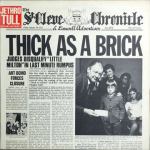
Thick as a Brick Is a Top Test Disc for System Accuracy

Hot Stamper Pressings of the Music of Jethro Tull Available Now

From 2009 to 2010 this was our single go-to record for testing and tweaking our system.

Although we now use an amazing copy of Bob and Ray (the big band version of The Song of the Volga Boatmen located therein has to be one of the toughest tests we know of), we could easily go back to using TAAB.

Artificiality is the single greatest problem that every serious audiophile must guard against with every change and tweak to his stereo. cleaning system, room, electricity and everything else.

Since TAAB is absolutely ruthless at exposing the slightest hint of artificiality in the sound of the system, it is clearly one of the best recordings one can use to test and tune with. Here are just some of the reasons this was one of our favorite test records back in the day:

Dynamics

The better copies are shockingly dynamic. At about the three minute mark the band joins in the fun and really starts rocking. Set your volume for as loud as your system can play that section. The rest of the music, including the very quietest parts, will then play correctly for all of side one. For side two the same volume setting should be fine.

Bass

The recording can have exceptionally solid, deep punchy bass (just check out Barrie “Barriemore” Barlow’s drumming, especially his kick and floor toms. The guy is on fire).

Midrange

The midrange is usually transparent and the top end sweet and extended on the better pressings.

Tubey Magic

The recording was made in 1972, so there’s still plenty of Tubey Magic to be heard on the acoustic guitars and flutes.

(more…)