Half-Speed Mediocrities

On Dark Side of the Moon, “Breathe” Is a Good Check for Midrange Tonality

Hot Stamper Pressings of the Music of Pink Floyd Available Now

Breathe is my favorite test track for side one for any version of Dark Side Of The Moon, Half-Speed or otherwise. When the voices come in about halfway through the song, you can tell that most copies are too bright simply by listening to the vocals on this track. The cymbals might sound wonderful; lots of other instruments might sound wonderful; and there might be plenty of ambience, detail and transparency.

But all of that counts for nothing if the voices don’t sound right.

And far too many copies have the voices sounding bright, aggressive, grainy and transitory. (This is unfortunately the case with the 180 gram 30th anniversary edition. That pressing will wake up a sleepy stereo, but my stereo hasn’t been sleepy enough to play that recut for a very long time, and I hope you can say the same.)

The discussion below may shed light on some of the issues involved in the remastering of Dark Side.

Of course, most audiophiles are still under the misapprehension that Mobile Fidelity, with their strict ‘quality control’, which they spend hundreds of words explaining on their inner sleeves, eliminates pressing variations of these kinds.

Isn’t that the reason for Limited Edition Audiophile Records in the first place? The whole idea is to take the guesswork out of buying the Best Sounding Copy money can buy.

But it just doesn’t work that way. I hate to be the bearer of bad news, but our entire website is based on the proposition that nothing of the sort is true. If paying more money for an audiophile pressing guaranteed the buyer better sound, 99% of what we do around here would be a waste of time.

(more…)

Chicago Transit Authority on MoFi

Hot Stamper Pressings of the Music of Chicago Available Now
The last time I played a copy of the MoFi Chicago debut was at least twenty years ago. The all tube system I had back then was much darker and dramatically less resolving than the one I have now, having made score upon score of improvements in every area of reproduction in the interim.

I actually had some nice things to say about it. I didn’t find it too bright the way so many MoFi pressings are. Here’s what I wrote all those years ago:

What do we like about this MoFi?

For one thing it doesn’t have the phony boosted top end most of their pressings do. It was mastered by Jack Hunt, not Stan Ricker, and Jack Hunt likes to EQ his projects without all the extra top end that made Mobile Fidelity famous. (Great for dull speakers, don’t you know.)

The other thing this MoFi has going for it is tons of weight down where it needs it, in the all-important lower midrange, and extending well into the mid-bass area.

Chicago is about brass and you want that brass to have weight and power.

So many domestic copies are leaned out, and many are hard sounding. On both counts this MoFi excels over copies with those problems. Our White Hot Stamper was definitely better, but we don’t find those very often, not to mention the fact that we happened to charge a ton of money for it.

I did take issue with the MoFi bass though.

This is where your MoFi falls apart, as good as it may be in other areas.

There IS no lower octave of bass on their pressing.

(more…)

Close to the Edge – A MoFi Winner, Or Was It? We’ll Never Really Know

Hot Stamper Pressings of the Music of Yes Available Now

Sonic Grade: Side One: B to B+ / Side Two: C


Many, many years ago (2005?) we wrote the commentary you see below. We can’t say if we would still agree with the sentiments expressed, so take what you read with a grain of salt, and remember that no two records sound the same. If your copy is better or worse on either side, it will not come as a surprise to us here at Better Records.


This is a great MOFI! (On side one anyway.) I have to admit I was partly wrong about this pressing. I used to think it was mud. Either the copy I have here is much better than the copy I played years ago, or my stereo has changed. I’m going to guess that it’s the stereo that has changed. I used to like the original American copies of this album and now I hear that they are upper midrangy and aggressive. [*] So my stereo must have been too forgiving in that area, which in turn would have made this MOFI sound too dull. [**]

Side one is as good as I’ve ever heard it outside of the best British originals. [We don’t even buy those anymore. Maybe that’s the problem with this comparison.] Since almost none of those have survived in clean enough condition to be played on modern audiophile turntables, there isn’t much of an alternative to this pressing.

And it should be noted that there is distortion on the tape. It’s on every LP copy and it’s on the CD too. There are cacophonous passages that have what sounds like board overload, mike preamp overload, tape saturation or something of the kind.

Eddie Offord, the recording engineer, is famous for complaining that the boys in the band were totally out of control when it came to adding layer upon layer and track upon track to their recordings, running the risk of creating such a dense mix that nothing would be heard above the din. He was always fighting a losing battle trying to rein them in. Although he did his best, it appears his efforts failed in some of the musical passages on this album.

So here’s a MOFI I like, but I only really like side one. Side two, although it’s decent enough, errs a little on the smooth, dull side. I have copies in which the guitars have wonderfully extended harmonics and sweeter tone. Some of them are even domestic pressings! On the MOFI there is a “blunting” of the acoustic guitar transients.

[*] Some pressings are indeed bright and aggressive, but that just shows how little I knew about the album in 2005. The later domestic pressings, and even some of the 4 digit catalog pressings, can indeed sound that way. Eventually I would figure out what the good stampers were and then I would no longer be as ignorant as I so clearly was when I wrote this. As for more stuff we’ve gotten wrong, you can find some of it here, under the heading: live and learn.

[**] My stereo was indeed too dark and forgiving back in those days. The way I know that is that records that are too bright and upper-midrangy to play now played just fine twenty years ago.

(more…)

Dreamer Tells You What You Need to Know About this MoFi

Hot Stamper Pressings of the Music of Supertramp Available Now

This commentary was written about 2000, when the Speakers Corner pressing had just come out. We liked it back then, but I doubt we would care much for it now.

Listen to the vocals at the end of Dreamer.

If they are too bright, the bells at the end of the song sound super-extended and harmonically clear and clean.

But at what price? Now the vocals are too bright. Which is more important, good vocals or good bells?

There has to be balance. This is something audiophiles — and audiophile labels, who should obviously know better — seem to have difficulty appreciating.

We used to get these MoFis in on a regular basis, and they usually sound as phony and wrong as can be. They’re the perfect example of a hyped-up audiophile record that appeals to people with lifeless stereos, the kind that need amped-up records to get them to come to life.

I’ve been telling people for years that the MoFi was junk, and that they should get rid of their copy and replace it with a tonally correct version, easily done since there is a very good sounding Speakers Corner 180g reissue currently in print which does not suffer from the ridiculously boosted top end and bloated bass that characterizes the typical MoFi COTC pressing.

Brighter and more detailed is rarely better. Most of the time it’s just brighter. Not many Half-Speed mastered audiophile records are dull. They’re bright because the audiophiles who bought them preferred that sound. I did too, a couple of decades ago [make that four decades ago].

Hopefully we’ve all learned our lesson by now, expensive and embarrassing as such lessons so often turn out to be.

If your system is dull, dull, deadly dull, the way many of our older systems tended to be, this record has the hyped-up sound to bring it to life in a hurry.

There are scores of commentaries on the site about the huge improvements in audio available to the discerning (and well-healed) audiophile. It’s the reason Hot Stampers can and do sound dramatically better than their Heavy Vinyl or audiophile counterparts: because your stereo is good enough to show you the difference.

(more…)

MoFi’s Misguided EQ Does Neil’s Voice No Favors on Hot August Night

More of the Music of Neil Diamond

The MoFi, all things considered, is not a bad record, but the phony EQ they use causes Neil’s voice to sound unnatural, and an unnatural sounding Neil Diamond record is not something that appeals to us.

If any of you out there in audio land are still buying these remastered pressings, from any era, take the advice of some of our customers and stop throwing your money away on Heavy Vinyl and Half-Speed Masters.

At the very least let us send you a Hot Stamper pressing — of any album you choose — that can show you what is wrong with your copy. And if for some reason you disagree that our record sounds better than yours, we will happily give you all your money back and wish you the best.

(more…)

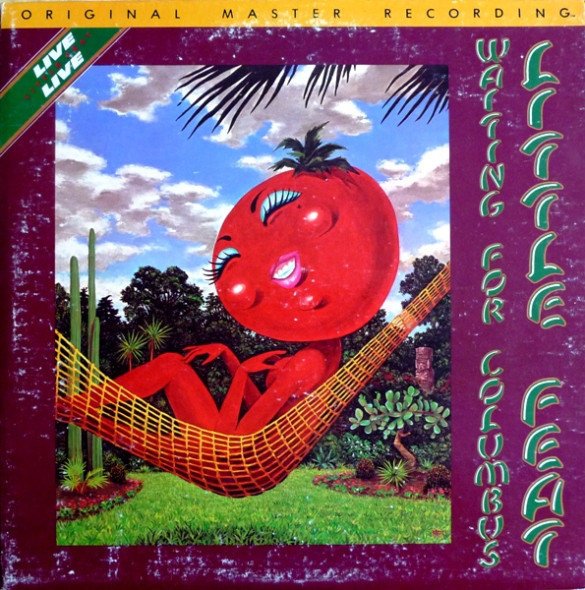
Waiting for Columbus – A MoFi Pseudo-Hot Stamper

Hot Stamper Pressings of the Music of Little Feat Available Now

Sonic Grade: C

Ten or fifteen years ago we did a listing for this Mobile Fidelity pressing as a Pseudo-Hot Stamper. Here is what we had to say about it at the time:

This is actually a pretty good sounding record, all things considered. We put this one through our cleaning process and gave it a listen. Although our Hot Stamper copies do sound better, they’re also quite a bit more expensive. This copy had the best sound we heard out of the three or four we played, which makes it a Hot Stamper I suppose, but we are instead just calling it a Very Good Sounding Copy.

Waiting for Columbus is one of the greatest live rock and roll albums ever made, containing performances by one of the greatest rock and roll bands to ever play. If you only buy one Little Feat album in your lifetime, make it this one.

We spent years trying to get shootouts together for this album, but kept running into the fact that in a head to head shootout the right MoFi pressing — sloppy bass and all — was hard to beat.

This is no longer the case, courtesy of that same old laundry list you have no doubt seen on the site countless times: better equipment, tweaks, record cleaning, room treatments, et cetera, et cetera. Now the shortcomings of the MoFi are clear for all to see, and the strengths of the best non-half-speed mastered pressings are too, which simply means that playing the MoFi now would be an excruciating experience. All I can hear is what it does wrong. I was so much happier with it when I didn’t know better.

(more…)

Star Wars, Close Encounters and Other Multi-Miked Messes

Decca and London Hot Stamper Pressings Available Now

This Mobile Fidelity LP contains the music of Star Wars and Close Encounters, conducted by Zubin Mehta. The MoFi pressing is far more transparent than the London pressings we have auditioned of the album, even the ones half-speed mastered by Stan Ricker himself.

Yes, he cut the original Londons! At Half Speed! (We’ve also played some later pressings not mastered by Stan, of course. Who can predict which version would sound the best?)

It’s still one of the better MoFi remasters, all things considered. The music, to these ears, has always been hi-fi-ish schlock, and the recording itself is too multi-miked to be taken seriously. It sounds far too much like a bad Phase IV recording, and we know whereof we speak when it comes to Phase IV, good or bad. We’ve played them by the score.

This famous record from the Top Seven of the TAS Super Disc List has the same problem, but I never hear anybody mention it. Why that is I cannot imagine, other than our favorite explanation for just about everything that seems to fly under the audiophile radar, or perhaps a better description would be flying over the heads of the self-appointed audiophile cognoscenti, our old standby, reviewer malpractice.

Bottom line, a loser, but the original Londons in our experience are even worse!

For more on the subject of opacity on record, click here and here.

(more…)

How to Make All Your Records Sound Like MoFi’s – For Free!

Hot Stamper Pressings of the Music of The Doors Available Now

The Doors first album is yet another obvious example of MoFi’s predilection for a sucked-out midrange.

Scooping out the middle of the midrange has the effect of creating an artificial sense of depth where none belongs. Play any original Bruce Botnick engineered album by Love or The Doors and you will notice immediately that the vocals are front and center.

When the DCC Doors first album was released on vinyl, we noted that the vocals were finally back where they belonged. After having lived with the MoFi for so many years, we’d almost forgotten.

And now of course we can’t tolerate the smear and opacity of the DCC. We like to think we’re simply setting higher standards these days.

The midrange suckout effect is easily reproducible in your very own listening room.

Pull your speakers farther out into the room, and also farther apart, and you can get that MoFi sound on every record you play. I’ve been hearing it in the various audiophile systems I’ve been exposed to for years.

(more…)

Blood Sweat and Tears – Direct Disc Labs Half-Speed Reviewed

More of the Music of Blood, Sweat and Tears

Reviews and Commentaries for Blood, Sweat and Tears

Sonic Grade: C [not sure it would rate that highly today, my guess it would not]

Back in the ’80s, I thought this DD Labs version smoked domestic copies, because the only domestic copy I had ever bought was a bad sounding one. This was many years before I came to understand that no two domestic copies were the same and that there were dozens of pressing variations.

I believe it was not until about 1990 that I heard my first Hot Stamper of BS&T. Oddly enough, those stamper numbers managed to best all comers for about the next 15 years. Now we know that although they can be awesome, there is actually another stamper that is potentially even better. It’s so good in fact that it has been awarded our Four Plus grade. 

The reason this pressing doesn’t get a lower grade is that, regardless of how compressed and veiled the sound is, the average Columbia pressing is surely no better.

When it comes to finding your own great sounding pressing, sure, you can do it, but it’s a lot of hard work. I’m guessing most of you already have a job and don’t need another one. I do this for a living as well as for a hobby, so I’m willing to put in the time and effort to slog through all the trash in order to find the treasure.

Also, we have a big advantage over our customers. I’ve been doing this for a very long time. I have a big head start on all of you. I know many stampers that are good and many that are bad. I found out the hard way. On BS&T I know exactly which copies to buy and which copies to avoid. I have literally played more than 100 copies of this record.

This is true for scores if not hundreds of other albums. Why did I bother to listen to so many different pressings? The overriding reason is because I wanted to find a better sounding version for myself.

It’s not worth the effort if it’s not music you love.

This is also the reason you will never find Hot Stamper pressings of some artists’ records on the site. I don’t like their music and I will just never make the effort to listen to enough pressings of their albums in order to find a hot one.

[Most of this was written way back in 2005.]


Further Reading

Half-Speed Mastered Disasters

(more…)

The Crusaders / Chain Reaction – MoFi Reviewed

More Jazz Fusion Records with Hot Stampers

This is a Mobile Fidelity LP with relatively good sound. We did a mini-shootout many years ago and this copy apparently killed the competition. 

However…

When you play the MoFi against an actual honest-to-goodness properly mastered and pressed vintage LP – we call them Hot Stampers – the audiophile version of the album reeks of phony top end EQ, compression and sloppy bass.

Of course, what half-speed mastered record doesn’t?


Further Reading

The best place to start is here:

How come you guys don’t like Half-Speed Mastered records?

(more…)