Performers

Sibelius / Violin Concerto / Ricci

Hot Stamper Pressings of the Music of Jean Sibelius Available Now

This is a wonderful sounding London Stereo Treasury pressing featuring one of our favorite violinists, Ruggiero Ricci, performing the Sibelius Violin Concerto in D Minor.

The tone of the violin on side one is just right — every nuance of Ricci’s bowing can clearly be heard.

While the violin sounds amazing on side one, the orchestra lacks a bit of weight.

This side is also not quite as Tubey Magical as it could be. In our opinion, however, the violin tone and the incredible dynamics are more than enough to make us want to award this record a fairly high grade.

Side two actually has a bit more fullness, but this also seems to rob the violin of some of its presence. 

(more…)

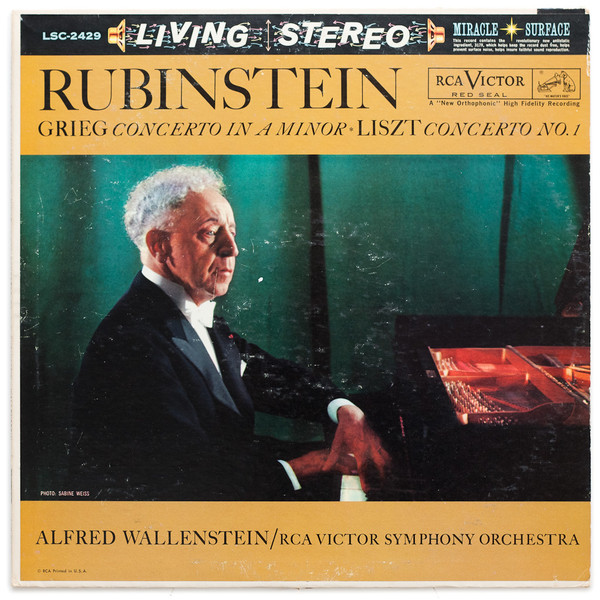
LSC 2429 – Grieg & Liszt with Rubinstein – You Can Do Better

Hot Stamper Pressings of the Music of Grieg Available Now

UPDATE 2026

This is a very old review of LSC 2429, which we ourselves may no longer agree with.

If you see this record in the bins for cheap, give it a try, but don’t pay a lot on our say-so.

Our two favorite recordings of the Grieg Piano Concerto are the Decca with Lupu and Previn from 1973 and Rubinstein’s for RCA in 1962. Either one should be superior to the Living Stereo Shaded Dog we review here.


The strings are RICH in the best Living Stereo tradition, but unlike so many classical pressings we play, the tubey magical string tone comes with virtually no tube smear. The textures and overtones are fully intact.

(more…)

Brahms / Piano Concerto No. 1 on Speakers Corner Heavy Vinyl

UPDATE 2026

This review was written in the 90s, back in the days when we were selling Heavy Vinyl records. We had auditioned it and found it to be one of the better releases from Speakers Corner.

Based upon that very unreliable assessment from many, many decades ago, it might still be one of the better Heavy Vinyl pressings from the label. If you can pick one up for cheap, give it a try and see if we were right that it’s “good.”

Of course, the right London pressing would be a huge step up in sound quality for those who have the means to acquire one.


Our Old Review

One of the best of the Speakers Corner heavy vinyl reissues. As you may know they have gone way downhill lately. Haven’t played this LP in a while but I remember liking it quite a bit back in the day.

As a general rule, this Heavy Vinyl pressing will fall short in some of the following areas when played head to head against the vintage pressings we offer:

(more…)

Beethoven / “Kreutzer” & Spring Sonatas / Rubinstein

More of the Music of Beethoven

  • This original Shaded Dog pressing of Rubinstein and Szeryng’s extraordinary performances of Beethoven’s sonatas for violin and piano (LSC 2377) boasts solid Double Plus (A++) Living Stereo sound from first note to last
  • Both of these sides are Tubey Magical, lively and clear, with the kind of three-dimensionality that will fill your listening room from wall to wall that only the best vintage vinyl can offer
  • The immediacy of Szeryng’s violin is simply in a league of its own, with some of the sweetest, richest, most “rosiny” violin tone we’ve had the good fortune to hear
  • Problems in the vinyl are sometimes the nature of the beast with these early pressings, but once you hear just how superb sounding this copy is, you might be inclined, as we were, to stop counting ticks and pops and just be swept away by the music

RCA is famous for its chamber recordings, which tend to be quite rare for some reason. Let’s be honest: we did not conduct this shootout with a dozen copies of the album. It would take us years to find that many clean pressings.

However, that said, we’ve played dozens and dozens of good violin recordings, and we have no problem recognizing good violin sound when we hear it. Don’t be fooled by the lack of Hot Stamper classical listings on the site. The vast majority of killer classical records never make it to the site; they go directly to our best customers, customers who want classical recordings that actually sound good. Not just the kind of Golden Age Recordings that are supposed to.

(more…)

The Cisco Pressing of Beethoven’s Kreutzer Sonata

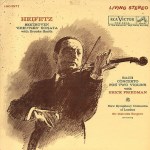
Hot Stamper Pressings of Recordings with Heifetz Performing

An audiophile hall of shame pressing from Cisco / Impex / Boxstar / whatever.

The Cisco pressing of LSC 2577 should not have sound that is acceptable to any person who considers himself an audiophile.

There is no violinist in front of you when you play their pressing.

There is someone back behind your speakers under a thick blanket, and his violin sure doesn’t sound very much like a real violin — no rosiny texture, no extended harmonics, no real body.

In short, the sound of this reissue is much too smearyveiled, and lacking in presence to be taken seriously.

Unfortunately for those of us who love good music with good sound, Cisco’s releases from this era (as well as DCC’s) had to fight their way through Kevin Gray’s transistory, opaque, airless, low-resolution cutting system. We discuss that subject in more depth here.

(more…)

Beethoven, Bach, Schubert / Heifetz, Primrose, Piatigorsky

More of the Music of Beethoven

  • An original Shaded Dog pressing of this wonderful recording of string trios and sinfonias, here with two solid Double Plus (A++) or BETTER sides
  • It’s also fairly quiet at the high end of Mint Minus Minus, a grade that even our most well-cared-for vintage classical titles have trouble playing at
  • Beethoven’s Trio in D, Op 9, No. 2 takes up all of this Nearly Triple Plus (A++ to A+++) side one, and is practically as good as we have ever heard, right up there with our Shootout Winner
  • Remarkably spacious, rich and smooth – only vintage analog seems capable of reproducing all three of these qualities without sacrificing resolution, staging, imaging or presence
  • This copy showed us the balance of clarity and sweetness we were looking for in the violin, viola and cello – not many recordings from this era can do that as well as this one does
  • Heifetz is a fiery player – he is front and center, with every movement of his bow clearly audible without being hyped-up in the least

(more…)

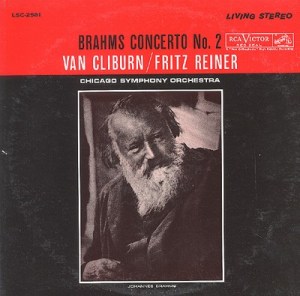
Brahms / Piano Concerto No. 2 / Cliburn / Reiner

More of the Music of Johannes Brahms

  • Van Cliburn’s exceptional performance of Brahm’s Piano Concerto No. 2, here with solid Double Plus (A++) Living Stereo sound or close to it throughout this early Shaded Dog pressing
  • It’s also fairly quiet at Mint Minus Minus, a grade that even our most well-cared-for vintage classical titles have trouble playing at
  • This side one is big, full-bodied, clean and clear, with a wonderfully present and solid piano, and plenty of 3D space around it, and side two is not far behind in all those areas
  • One of the best of the Cliburn recordings – most are not very good, the worst of them being LSC 2252 and the best of them being, probably, LSC 2507 with this one right up there with it
  • We’ve liked LSC 2296 with Rubinstein and Krips in the past, but after doing this shootout we have to say that Cliburn and Reiner set a higher standard for a recording of the work
  • On the right shaded dog pressing, LSC 2581 is yet another Must Own orchestral recording from 1962

Our main listening guy made some notes about the sound of the best pressings he heard. Here is what he wrote:

This LP might be tough for some customers to reproduce. The big peak at the end of track one on side one can have some tube/compressor distortion. Only the fullest, richest copies can properly reproduce this section without the piano and low end getting lost.

(more…)

Schubert – The Trout Quintet / Curzon / Vienna Octet

More of the Music of Franz Schubert

  • Boasting two seriously good Double Plus (A++) sides, this vintage Ace of Diamonds pressing is doing just about everything right
  • It’s simply bigger, more transparent, less distorted, more three-dimensional and more REAL than most of what we played – this is music you cannot help but be drawn into
  • The 1958 master tape has been transferred brilliantly using “modern” cutting equipment (from 1968, not the low-rez junk they’re forced to make do with these days), giving you, the listener, sound and surfaces that are hard to fault
  • When you hear how good this record sounds, you may have a hard time believing that it’s a budget reissue from 1968, but that’s precisely what it is.
  • Some budget reissues are so good, they can actually win shootouts

The cello does not have that “fat” sound some audiophiles seem to like – Decca knew more about recording chamber music in 1958 than practically all the audiophile labels that would come along later, the ones that managed to make a mess of the very idea of audiophile quality sound (you know who I mean)

The piano and the strings have that Golden Age Tubey Magical sound we love. It’s been years since I’ve had the opportunity to play this record; most copies are just too beat up to bother with, so I was glad to find a number in minty condition.

Now what I hear in this recording is sound that is absolutely free from any top end boost, much the way live music is. There’s plenty of tape hiss and air; the highs aren’t rolled off, they’re just not boosted the way they often are in a recording.

A few years back I had a chance to see a piano trio perform locally; they even played a piece by Schubert. The one thing I noticed immediately during their live performance was how smooth and natural the top end was. I was no more than ten feet from the performers in a fairly reverberant room, and yet the sound I heard was the opposite of what passes in some circles for Hi-Fidelity.

This is the opposite of those echo-drenched recordings that some audiophiles seem to like, with microphones placed twenty feet away from the performers so that they are awash in “ambience.” If you know anything about us, you know that this is not our sound.

I have never heard live music sound like that and that should settle the question. It does in my mind anyway. The Chesky label (just to choose one awful audiophile label to pick on) is a joke and always will be. How anyone buys into that phony sound is beyond me, but any audio show will prove to you that there is no shortage of audiophiles who love the Chesky “sound,” and probably never will be.

(more…)

Mozart – Violin Concertos / Milstein

More of the Music of Mozart

  • Milstein’s virtuoso performance of Mozart’s violin concertos, here with an INCREDIBLE Shootout Winning Triple Plus (A+++) side one mated to a solid Double Plus (A++) side two on this vintage Blue Angel Stereo pressing
  • This pressing has all the qualities that make analog so involving and pleasurable – the warmth, the richness, the naturalness, and above all the realism
  • The sound here has the power to transport you completely, with solid imaging and a real sense of space, qualities that allow us to forget we are sitting comfortably in our listening rooms and not in the concert hall
  • Milstein’s violin is immediate, real and lively here – you are in the presence of greatness with this recording

(more…)

Is the 1s Pressing Always the Best on the Brahms Violin Concerto with Heifetz?

Hot Stamper Pressings that Sound Their Best on the Right Reissue

This early Shaded Dog pressing of the 1958 recording has surprisingly good sound on side two. On the second side the sound opens up and is very sweet, with the violin becoming much more present and clear.

The whole of side two is transparent with an extended top. Usually the earliest Living Stereo titles suffer from a lack of top end extension, but not this one.

Maybe the 1s pressing is also that way. For some reason audiophiles tend to think that the earliest cuttings are the best, but that’s just more mistaken audiophile thinking if our experience can serve as any guide, easily refuted if you’ve played hundreds of these Living Stereo pressings and noted which stampers sound the best and which do not.

The 1s pressings do not consistently win our shootouts.

About half the time, maybe less would be my guess.

Of course, to avoid being biased, the person listening to the record doesn’t know the stamper numbers, and that may help explain why the 1s loses so often.

If you are interested in finding the best sounding pressings, you have to approach the problem scientifically, and that means running record experiments.

Practically everything you read on this blog we learned through experimentation.

When we experimented with the Classic Records pressing of LSC 1903, we were none too pleased with what we heard. Our review is reproduced below.

(more…)