_Composers – Debussy

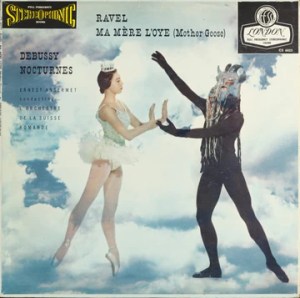
Ravel / Debussy – Ma Mère L’Oye (Mother Goose Suite) / Nocturnes / Ansermet

More of the Music of Ravel / More of the Music of Debussy

  • Here is an original London pressing (CS 6023) of Ansermet and the Suisse Romande’s lively performance of these wonderful works with a spacious, textured and Tubey Magical Shootout Winning Triple (A+++) side two mated to a solid Double Plus (A++) side one
  • It’s also fairly quiet at Mint Minus Minus, a grade that even our most well-cared-for vintage classical titles have trouble playing at
  • This spectacular Demo Disc recording is big, clear, dynamic, transparent and energetic – here you will find some of the best orchestral Hot Stamper sound we offer
  • The sonics here have the power to transport you completely, with solid imaging and a real sense of space, qualities that allow us to forget we are in our listening rooms and not in the concert hall
  • There are some bad marks (as is sometimes the nature of the beast with these early pressings) on the first movement of Debussy’s Nocturnes – “Nuages,” but once you hear just how incredible sounding this copy is, you might be inclined, as we were, to stop counting ticks and just be swept away by the music

(more…)

Debussy / Images for Orchestra / Ansermet

More of the Music of Claude Debussy

  • Excellent Double Plus (A++) sound or BETTER brings Ansermet and the Suisse Romande’s performance to life on this vintage London Stereo pressing
  • It’s also fairly quiet at Mint Minus Minus, and for recordings of Debussy, that is quiet indeed
  • Side one was sonically very close to our Shootout Winner – you will be amazed at how big and rich and tubey the sound is
  • If you want to go digging for your own copy, we tell you how to do that on the blog, and we wish you good luck – you’re going to need it
  • This copy is remarkably lively and dynamic – the RCA with Munch is also excellent, but you will find very little to fault in the sound of this record if you don’t have precisely the right stampers for that one
  • It’s worth noting that only the London pressings ever win the shootout, which is something that we run into on a regular basis, but for some reason surprises audiophile record lovers to this very day
  • Why the disparity, we have no idea – they are all mastered by Decca in England from the same tapes, and by the same engineers!
  • There are about 100 orchestral recordings we’ve awarded the honor of offering the best performances with the highest quality sound, and this record certainly deserve a place on that list.

(more…)

Don’t Waste Your Money on this Living Stereo from 1962

Hot Stamper Pressings of Living Stereo Recordings Available Now

The sound of the copies we’ve played of LSC 2605, Highlights from Rubinstein at Carnegie Hall, released by RCA in 1962, have never impressed us sonically.

We didn’t listen to the music critically because our primary purpose here at Better Records is to evaluate recordings for their sound quality first (hence the name of our business), and if the sound isn’t good enough, we have to move on to titles with better sound that our customers might find more to their liking.

1962 was surely one of the truly glorious years for analog recordings, but the sound of the most recent copy of the album we played may have been rich, but unfortunately is was also opaque.

We would consider the sound no better than passable, and therefore it’s not a title we would consider offering to our customers.

Unless…

Unless you somehow managed to come across a copy noticeably better than the ones we’ve played over the last twenty or more years — a possibility that, although unlikely, cannot be ruled out — we would advise those interested in a top quality piano recital recording to look elsewhere.

Leave this RCA to the people who love collecting records. It’s perfect for record collectors — it’s from the right company, made in the right era, and it has the right original label — but it’s really not suitable for those of us who love playing good sounding records. It will of course sit happily on a shelf, to be pulled out and shown to other like-minded souls, but it is unlikely to spend much time spinning on a turntable platter with a needle tracing its grooves.

Some audiophiles are of the opinion that vintage Living Stereo recordings on the original Shaded Dog label can do no wrong, but we have never subscribed to that view. We’ve played too many that did plenty wrong. Maybe one out of three are good enough for the audiophile who wants to experience music reproduced at a highest levels of sound quality.

There are quite a number of records that we’ve run into over the years with more shortcomings than this one. Here are some of them, a very small fraction of the titles we’ve played, broken down by label.

  • London/Decca records with weak sound or performances
  • Mercury records with weak sound or performances
  • RCA records with weak sound or performances

(more…)

Don’t Waste Your Money on this Living Stereo from 1959

Hot Stamper Pressings of Living Stereo Recordings Available Now

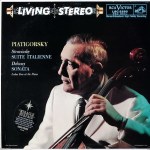
The sound of the copies we’ve played of LSC 2293 with Piatigorsky performing these two works for cello have never impressed us with their sound.

They are tonally natural but the acoustic is much too dry for our taste.

Perhaps Radio Recorders was not the ideal place to record this music.

Or we got unlucky with the copies we’ve played. Either way, we are not going to pursue this one. It’s a title that is very unlikely to sound right on high quality modern equipment.

There are quite a number of other vintage classical releases that we’ve run into over the years with similar shortcomings.

For fans of vintage Living Stereo pressings, here are some to avoid.

1959 was a phenomenal year for audiophile quality recordings – as of 2025 we’ve auditioned and reviewed more than one hundred and seventy titles, and there are undoubtedly a great many more that we’ve yet to discover.

We think there are close to 50 that belong in any audiophile record collection worthy of the name.


Our Pledge of Service to You, the Discriminating Audiophile 

(more…)

Sorry, This Album of String Quartets Is Not As Good As We Thought

Hot Stamper Pressings of the Music of Claude Debussy Available Now

Hot Stamper Pressings of the Music of Maurice Ravel Available Now

UPDATE 2024

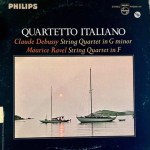
About ten years ago we were under the impression that the domestic Philips pressing you see pictured had exceptionally good sound, sound that would be difficult to beat.

Well, that just goes to show how little we knew about the sound of the various recordings of this music back then.

We needed to do a lot more homework, and the reason we started playing other recordings of these two string quartets is simply that the Philips record we liked so much was too hard to find on the domestic pressing.

The imports could be found, sure, but they sounded like a lot of Philips pressings — overly smooth, smeary, lifeless, recessed and veiled, like the Golden Imports Philips had made in the 70s. It was in those bad old days of the early 70s that Philips set about ruining the sound of phenomenally good Mercury master tapes. They should never be forgiven for it.

I bought one and fell in love with it, for both its music and its sound, a classic case of me not having any idea what I was missing.

How clueless was I? I was almost as clueless as the guy who thought the MoFi pressing of Star Wars and Close Encounters was a true audiophile Demo Disc. As foolish a MoFi fan as I was in the late-70s, even I knew was a piece of phony junk that record was.

Now there are dozens of outfits that make it their business to ruin phenomenally good master tapes by dint of their incompetent remastering, a story we never tire of telling.

Breaking Through

The key to our breakthrough was the rediscovery of a record we had played many years before, all the way back in 2005, and had simply lost track of in the ensuing years: LSC 2413. (It’s easy to lose track of rare Shaded Dogs. They’re not usually sitting in the bins of your local record store. Out of sight, out of mind.)

The best pressings of LSC 2413 are dramatically better sounding, and the performances are equal to or better than any we know.

Recently we finally got hold of another copy of the rare Philips pressing above and found to our dismay that the sound was not nearly as good as we remember it from our shootout years ago. The copy that came in was flat and badly lacked the presence and Tubey Magic of the Shaded Dog pressings we played of the RCA.

As the best of the RCA pressings demonstrate beyond all doubt, 1960 was a great year for classical and orchestral recordings. (What the shameful modern masterng engineers operating today do to such wonderful recordings is another thing altogether.)

(more…)

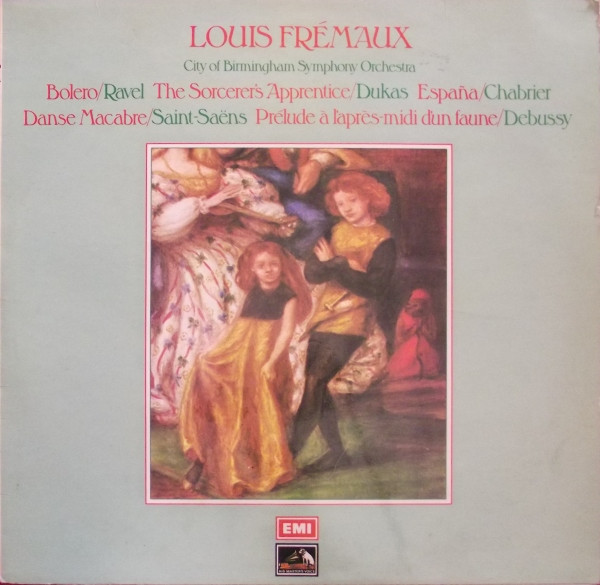
The Best Danse Macabre on Record

Hot Stamper Pressings of the Music of Saint-Saens Available Now

Saint-Saens’ symphonic poem, Danse Macabre, the second piece on the second side, is the heart of the album and its raison d’être for us. This is where the real fireworks can be found, although that’s not really fair as there are fireworks aplenty on both sides.

What we have here is the best Danse Macabre we have ever played.

We have always been fans of Gibson’s performance on the legendary Witches’ Brew. As good as that recording may be, this one is clearly superior in practically every way — it’s bigger, clearer, richer, more resolving, more spacious, more real and, to my surprise, more EXCITING and involving.

If you own a copy of LSC 2225, hopefully not the awful Classic Records Heavy Vinyl pressing, you need to hear what Fremaux and the City of Birmingham Symphony Orchestra have accomplished on this wonderful 70s EMI.

Audiophiles (especially those of us with large dynamic speakers) have always been drawn to the biggest and most exciting orchestral spectaculars, and we have plenty on the site at all times to satisfy the need to hear these kinds of records at their properly-mastered, properly-pressed best.

Why spend money on another underperforming modern reissue that you will end up rarely playing when much more powerful and involving sound can be found on our site, sound so good it has the potential to change your life.

Four Exceptional Orchestral Showpieces

The Sorcerer’s Apprentice (Dukas)

This piece opens the side. There is depth and richness to beat the band, as well as clarity and tonal correctness that let you forget the recording and just enjoy the music.

A superb performance as well, as good as any we know of. And the sound is the equal of the best recordings we’ve played.

Espana. Rhapsody For Orchestra (Chabrier)

As good as Fremaux is, I think the Ansermet (CS 6438) might still have the edge, but both are so good that it might just come down to a matter of taste. You cannot go wrong with either.


UPDATE 2023

And now we actually prefer the famous Argenta recording for Decca that’s on the TAS List, CS 6006.


(more…)
Debussy & Ravel – A Tale of Two Top Copies

Hot Stamper Pressings of the Music of Claude Debussy Available Now

Hot Stamper Pressings of the Music of Maurice Ravel Available Now

In 2024 we did a shootout for this recording of quartets, LSC 2413, our first in 19 years.

For the shootout winning pressing, we wrote the following:

Juilliard String Quartet’s performance of these wonderful classical works appears on the site for only the second time ever, here with INSANELY GOOD Shootout Winning Triple Plus (A+++) grades on both sides of this original Shaded Dog pressing.

Having just played some killer copies of Death and the Maiden, we’re tempted to say that this Debussy record has the potential for even better sound — it’s richer and sweeter, but every bit as real and immediate as any chamber recording we know of.

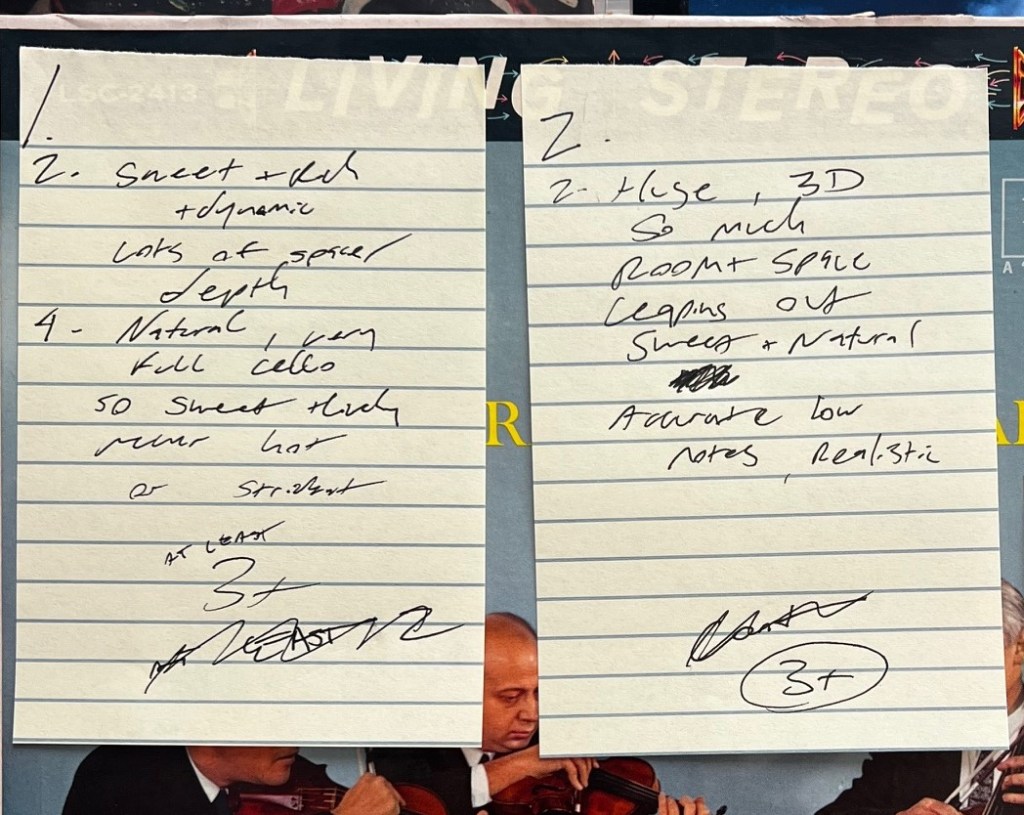
Here are the notes for the actual record we played. Side one really blew our minds, earning a grade of at least 3+.

The second place finisher may not have been quite as good on side one, but it was still so good that it had no problem earning the full three pluses. It had the same stampers as the copy above by the way.

Side two however lacked the space of the very best pressings we played, and we marked it down one half plus for that shortcoming. Although it was “so tubey and 3-D” it did not have “all the space but not hot at all and natural and sweet.”

It’s very unlikely that the person who bought this copy would feel there was any problem with side two. We had two killer side two’s to play against each other back to back, and that’s about the only way these kinds of very subtle differences can be recognized, assuming you have a system that can resolve the space of the recording at an extremely high level to begin with.

The big rooms with high ceilings that systems like those require are not usually found in listening rooms that have not been custom built.

More on this wonderful record:

The Living Stereo sound here is Tubey Magical, lively and clear, with the kind of transparency that puts living, breathing musicians right in your listening room in the way that only the best vintage vinyl pressings can.

Lewis Layton engineered this recording (along with Ed Begley) and he nailed it, perfectly capturing the rich, textured sheen on the strings, the hallmark of Living Stereo sound in the 50s and 60s.

He recorded both the Schubert (LSC 2378) mentioned above and this wonderful Debussy/Ravel record for RCA in 1960 — it would be quite the understatement to say he had a gift for recordings of this kind.


Another superb recording from the 60s, brought to you by your vinyl-loving friends at Better Records.

It’s an exceptional Living Stereo all analog recording from 1960 – nothing else sounds like it.

When you’ve played as many Living Stereo titles as we have (250+ and counting), you’re bound to run into this kind of Demo Disc sound from time to time – it’s what makes record collecting fun.

It’s an amazing find, the kind of record we live for here at Better Records.

(more…)

Debussy – La Mer / Ansermet

More of the music of Claude Debussy (1862-1918)

  • A vintage Decca import pressing of these wonderful orchestral pieces that was doing just about everything right, with both sides earning seriously good Double Plus (A++) grades
  • La Mer is on side one and it is lovely – rich and sweet, tonally correct, dynamic, and extended on the top and the bottom
  • Two other major works found on this compilation are Prelude to the Afternoon of a Faun and Clair De Lune
  • The richness of the strings is displayed here beautifully for fans of the classical Golden Age – it’s practically impossible to hear that kind of string sound on any recording made in the last thirty years
  •  When you hear how good this record sounds, you may have a hard time believing that it’s a budget reissue from 1972, but that’s precisely what it is. Even more extraordinary, the right copies are the ones that win shootouts

(more…)

Saint-Saens / Chabrier / Danse Macabre / Espana and More

More of the music of Camille Saint-Saens (1835-1921)

More of the music of Emmanual Chabrier (1841-1894)

  • An outstanding EMI import pressing of these sublime orchestral works with Double Plus (A++) sound from first note to last
  • Both of these sides are bigger and richer than most of what we played – they’re super clean and clear, tonally correct from top to bottom, and have all of the weight of the orchestra down low
  • If you want a classical record to test your system and demo your system, this copy is for you!
  • This Demo Disc Quality recording should be part of any serious Orchestral Music Collection. Others that belong in that category can be found here.
  • There are about 150 orchestral recordings we think offer the best performances with the highest quality sound. This record is certainly deserving of a place on that list.

Orchestral Showpieces

Who can resist these sublime orchestral works? To quote an infamous (around here) label, “they are an audiophile’s dream come true.”

The sound is clear, with wonderful depth to the stage. These recordings may just be the ideal blend of clarity and richness, with depth and spaciousness that will put to shame 98% of the classical recordings ever made.

Clean bottom and lower mids. Zero smear. They’re so full-bodied and rich, yet clear and clean, and spread out on such a huge stage, these sides may become your go-to reference disc for Orchestral Reproduction.

One More Thing

This is the kind of record that will make you want to take all your Heavy Vinyl classical pressings and put them in storage. None of them, I repeat: not a single one of them, can ever begin to sound the way this record sounds. (The worst of them can be found here. If these 30-odd Heavy Vinyl titles sound good to you, something is definitely wrong somewhere.)

(more…)

Who Can Explain Why This Cheap Reissue Sounds So Good?

Hot Stamper Pressings of the Music of Claude Debussy Available Now

This Decca reissue is spacious, open, transparent, rich and sweet.

Roy Wallace was the engineer for these sessions from 1955 to 1962 in Geneva’s glorious sounding Victoria Hall. His work here is superb in all respects.

It’s yet another remarkable disc from the Golden Age of Vacuum Tube Recording, with the added benefit of mastering using more modern, but apparently still good, cutting equipment from the ’70s, 1972 to be exact.

We are of course here referring to the often amazing modern mastering of 40+ years ago, not the mediocre-at-best modern mastering of today.

The combination of old and new works wonders on this title as you will surely hear for yourself on both of these superb sides.

We were impressed with the fact that it excelled in so many areas of reproduction. The illusion of disappearing speakers is one of the more attractive aspects of the sound here, pulling the listener into the space of the concert hall in an especially engrossing way.

Thread It Up and Just Hit Play Already

What might be seen as odd — odd to some audiophiles but not to us — was how rich and Tubey Magical the reissue can be on the best copies.

This leads me to think that most of the natural, full-bodied, smooth, sweet sound of the album is on the tape, and that all one has to do to get that vintage sound on to a record is simply to thread up the master on a good machine and hit play.

The fact that nobody seems to be able to make an especially good sounding record these days makes clear that in fact I’m wrong to think that this approach would work. It seems to me that somebody should be able to figure out how to do it. In our experience that is simply not the case today, and has not been for many years.

Old Tapes, New Tapes

The master tapes were about fifteen years old when this record was mastered.

Compare that to a current cutting which would be made from approximately fifty year old tapes.

Perhaps that explains it.

Or maybe it doesn’t.

(more…)