Testing the Lower Midrange and Mid-Bass

Linked below are more than twenty titles that are good for testing the lower midrange and mid-bass performance of your system. Some brass instruments, e.g., trombones and baritone saxophones, as well as cellos, pianos and other keyboard instruments live or die by your system’s ability to faithfully and forcefully reproduce this area of the frequency spectrum.

More Bass or More Detail, Which Is Right?

Hot Stamper Pressings of the Music of The Who Available Now

With Doug Sax mastering from the real tape, you get a Rock Solid Bottom End like you will not believe. Talk about punchy, well-defined and deep, man, this record has BASS that you sure don’t hear too often on rock records. 

And it’s not just bass that separates the Men from the Boys, or the Real Thing from the Classic Reissue for that matter. It’s WEIGHT, fullness, the part of the frequency range from the lower midrange to the upper bass, that area that spans roughly 150 to 600 cycles.

It’s what makes Daltry’s voice sound full and rich, not thin and modern.

It’s what makes the drums solid and fat the way Johns intended.

The good copies of Who’s Next and Quadrophenia have plenty of muscle in this area, and so do the imports we played.

But not the Classic. Oh no, so much of what gives Who By Numbers its Classic Rock sound has been equalized right out of the Heavy Vinyl reissue by Chris Bellman at BG’s mastering house.

Some have said the originals are warmer but not as detailed. I would have to agree, but that misses the point entirely: take out the warmth — the fullness that makes the original pressings sound so right — and you of course hear more detail, as the detail region is no longer masked by all the stuff going on below it.

Want to hear detail? Disconnect your woofers — you’ll hear plenty of detail all right!

Keep that in mind when they tell you at the store that the record you brought in to audition is at fault, not their expensive and therefore “correct” equipment. I’ve been in enough of these places to know better. To mangle another old saying, if you know your records, their excuses should fall on deaf ears. (more…)

What Do You Mean by “These Swan Lake Highlights Sound Like Live Music”?

Hot Stamper Pressings of the Music of Tchaikovsky Available Now

Kenneth Wilkinson engineered this album of Swan Lake Highlights for Decca in 1961 (one of the truly great years for top quality analog recordings).

Judging by the best pressings we played in our shootout, he did a great job. Knowing his work the way we do, this was to be expected. There are about 50 of his recordings for which we have done Hot Stamper shootouts, probably more than for any other engineer, and there are sure to be more added in the years to come.

It’s as wide, deep, and three-dimensional as any, which is, of course, all to the good, but what makes the sound of these recordings so special is the timbral accuracy of the instruments in every section.

Highlights of the recording include huge amounts of bass; a clear snare at the back of the hall (a good test for transparency, of both the record and of your system and room); full-bodied horns and strings, which never become blary or shrill; and of course huge amounts of space.

This is the kind of record that will make you want to take all your heavy vinyl classical pressings and put them in storage. They cannot begin to sound the way this record sounds. (Before you put them in storage or on Ebay please play them against this pressing so that you can be confident in your decision to rid yourself of their mediocrity.)

Quality record production is a lost art, and it’s been lost for a very long time.

(more…)

Energy Is the Key to the Best Sounding Pressings of Let’s Dance

Hot Stamper Pressings of the Music of David Bowie Available Now

With Let’s Dance the name of the game is energy, and boy do the best copies! Both sides of this former shootout winner have the deep, punchy bass, smooth vocals and sweet, extended highs that Bowie’s music needs to come alive.

With that big bass and natural top end, this is one record you can turn up good and loud without fear of fatigue. On a big pair of dynamic speakers, you will get more than your money’s worth from the best of our Hot Stamper pressings. 

If you’re a fan of big drums in a big room with jump out of the speakers sound, this is the album for you.

Side One

Modern Love

This track has a tendency to be a bit brighter than those that follow. To find out if your Let’s Dance is killer, see how the title track further down sounds.

China Girl
Let’s Dance

The best sounding track on the album and one of the handful of best sounding Bowie tracks ever recorded. With a truly Hot Stamper copy, try as you might you will be very hard-pressed to find better sound. Demo Disc quality doesn’t begin to do it justice.

(more…)

The Best Pressings of Brothers in Arms Are Not Hard to Recognize

We try to be upfront with our customers that the Hot Stamper pressings of Brothers in Arms on our site have many nice qualities, but some of the best qualities of analog recordings from the 50s, 60s and 70s are not among them.

It would be foolish to pretend otherwise. We want our customers to know what to expect when they buy a modern recording, and, having played copies of this album (as well as Love Over Gold) by the score, we are qualified to tell them what even the best pressings do not do as well as we might like. In a recent listing we introduced one of the best sounding pressings from our last shootout this way:

  • Tonally correct from start to finish, with a solid bottom and fairly natural vocals (for this particular recording of course), here is the sound they were going for in the studio
  • Drop the needle on “So Far Away” – it’s airy, open, and spacious, yet still rich and full-bodied
  • We admit that the sound may be too processed and lacking in Tubey Magic for some
  • When it comes to Tubey Magic, there simply is none — that’s not the sound Neil Dorfsman, the engineer who won the Grammy for this album, was going for
  • We find that the best properly-mastered, properly-pressed copies, when played at good loud levels on our system, give us sound that was wall to wall, floor to ceiling, glorious, powerful and exciting — just not Tubey Magical

The notes you see below catalog the qualities of our 2025 Shootout Winner.

Side One

Track One (So Far Away)

  • Meaty guitar and bass
  • Big, weighty and present

Track Two (Money for Nothing)

  • Wide, full and weighty
  • Lots of punch

Side Two

Track One (Ride Across the River)

  • Tight, deep and weighty [bass]
  • Vocals are sweet and present
  • Most space yet
  • Rich too

Note that the person doing the listening confined himself to what the record was doing right. In the case of this Shootout Winning Top Shelf 3/3 pressing, there really wasn’t any aspect of the sound to find fault with. As far as we were concerned, the record was doing what the record was trying to do, and doing it better than any of the other copies we played, hence the high grades.

If you have five or ten early domestic pressings of Brothers in Arms, you can judge them accurately by limiting yourself to the qualities the best of them have. For any copy you might play, you could ask:

  • How big is it?
  • How weighty is it?
  • How present is it?
  • How wide is the soundstage?
  • How full-bodied is the sound?
  • How punchy is it?
  • How tight, deep and weighty is the bass?
  • How sweet and present are the vocals?
  • How much space does the recording have?
  • How rich is the sound?

If your equipment, room, electricity, etc. are good enough, and your front end is properly set up, all these questions can be answered with relatively little effort. You could even create a checklist of them after playing a few copies and hearing what the best of them did well.

(more…)

Our Top Copy of Iberia Lacked a Measure of Weight and Tubey Magic on Side Two

Hot Stamper Pressings of Recordings by Decca Available Now

Subtitled:

The Thrill of Hearing Massive Sound on an Orchestral Blockbuster of the First Order.

We described our most recent shootout winning pressing this way:

This superb classical release (the first copy to hit the site in close to two and a half years) boasts big, bold, dynamic Shootout Winning Triple Plus (A+++) sound or close to it throughout this early London pressing.

The notes rave about this copy: “huge and spacious, strong strings and brass, very rich, well-defined low end, sweet and rich and textured strings, gets massive and extends both up high and down low.”

Here you will find the huge hall, correct string tone, spacious, open sound that are hallmarks of all the best vintage orchestral pressings.

Listen to the plucked basses – clear, not smeary, with no sacrifice in richness. Take it from us, the guys that play classical recordings by the score, this is hard for a record to do.

Below you can find our actual shootout notes for that copy.

We discovered that side two was slightly lacking in some ways. We had a side two on another copy that was better than the 2.5+ side two you see here.

When we played the two best copies back to back, side one of this copy came out on top, earning a grade of 3+, but the side two of another copy showed us there was potentially even more weight and Tubey Magic to the recording than we had expected after hearing a number of copies by that point in the shootout.

As a consequence we felt it best to drop side two’s grade a half plus to 2.5+. Initially it was graded “at least 2+”, and the grade was then raised to 2.5+ after playing it head to head in the final round against the eventual shootout winner.

We marvelled at these specific qualities in the sound of side one.

Track Three

  • Huge and spacious
  • Strong strings and brass
  • Very rich
  • Well defined lows

Track Two

  • Sweet and rich and textured strings
  • Gets massive
  • Extends at both ends of the frequency spectrum

“Gets massive” is something we don’t say about too many records, but the best Hot Stamper pressings of Orchestral Spectaculars such as this one can certainly get massive if you have the speakers, the power to drive them, and the room big enough to unleash the kind of orchestral power found on these phenomenal sounding LPs.

In our experience, if you really want to hear this kind of “massive sound,” an early pressing of a Decca recording from 1960 is a good place to go looking for it.

You are very unlikely to hear it on any record made in the last fifty years, although we can’t say it isn’t possible.

Allow us to save you some trouble looking for love in all the wrong places. Take our word and skip the more than forty remastered classical and orchestral titles we’ve played over the years that badly missed the mark. (For other kinds of music there are hundreds more.)

Side two was nearly as good:

(more…)

Listening for Energy and Rock and Roll Firepower on Bad Company’s Debut

Hot Stamper Pressings of Rock Classics Available Now

The drums on this album are so solid, punchy and present, they put to shame 99% of the rock records on the planet.

As well as having great drums, the overall sound of the best pressings is raw, real and wonderfully unprocessed.

Here you will find none of the glossy artificiality you might hear on many of the rock and pop records we sell.

There’s nothing wrong with that sound, mind you, but this recording captures much more of what the real instruments sound like in the studio.

And, if you’re playing this album good and loud, you’ll feel like you’re in the room with the boys as they kick out the jams. “Ready For Love” sounds great here — shocking clarity, tons of ambience, and silky sweet highs.

This album was one of Ron Nevison‘s early engineering jobs.

The year before (1973) he had been behind the board at Ronnie Lane’s Mobile Studio for Quadrophenia, one of the best sounding Who albums we know of, and a longtime member of our Top 100 (as is this album).

He also knocked it out of the park on Bad Company’s follow-up, 1975’s Straight Shooter.

He worked on the sprawling mess that turned into Physical Graffiti the same year.


Want to find your own killer copy?

Consider taking our moderately helpful advice concerning the pressings that tend to win our shootouts.

(more…)

The Strings on Elton John’s Second Album Are a Tough Test

Hot Stamper Pressings of the Music of Elton John Available Now

What’s especially remarkable about this album is the quality of Paul Buckmaster‘s string arrangements. I don’t know of another pop record that uses strings better or has better string tone and texture. Strings are all over this record, not only adding uniquely interesting qualities to the backgrounds of the arrangements but actually taking the foreground on some of the songs, most notably Sixty Years On.

When the strings give in to a lovely Spanish guitar in the left channel (which sounds like a harp!) just before Elton starts singing, the effect is positively glorious. It’s the nexus where amazing Tubey Magical sound meets the best in popular music suffused with brilliant orchestral instrumentation. Who did it better than The Beatles and Elton John? They stand alone.

Correct string tone and texture are key to the best-sounding copies. The arrangements are often subtle, so only the most transparent copies can provide a window into the backgrounds of the songs that reproduce the texture of the strings.

Without extension on the top, the strings can sound shrill and hard, a common problem with many pressings.

Without a good solid bottom end, the rockers (“Take Me to the Pilot”) don’t work either of course, but you can even hear problems in the lower strings when the bass is lightweight.

String tone on a pop record is a tough nut to crack, even more so on a record like this where the strings play such a prominent role. It’s the rare copy that allows you to forget the recording and let you just enjoy the music.

For that you really need a Hot Stamper.

These Are Some of the Qualities We’re Listening For on Elton’s Albums

There are probably closer to a dozen, but some of the more important ones would be these:

(more…)

English Settlement – A Sonic Tour de Force

More of the Music of XTC

This is an AMAZINGLY well-recorded album, with huge amounts of open studio space and that Tubey Magical, rich, fat, dense British Rock Sound. That sound isn’t easy to reproduce, but this copy absolutely nails it. Nothing else in our shootout came close to it!

If you have big speakers and the room to play them, this is quite the sonic tour de force. Credit Hugh Padgham, producer and engineer, who’s worked with the likes of Peter Gabriel, Genesis, The Police, Yes and Emerson, Lake and Palmer. Those bands make the kind of music that make good use of Padgham trademark sound: wall-to-wall, deep, layered, smooth, rich and stuffed to the gills. XTC with Padgham’s help have here produced a real steamroller of an album in English Settlement.

The big hit on this album is one that most audiophiles will probably know: Senses Working Overtime. Even over the radio you can hear how dense the production is. Imagine what it sounds like on an original British pressing with Hot Stampers, played on a modern audiophile rig. We can tell you: IT ROCKS. (more…)

Testing for Life-Size Images and Living Presence

Hot Stamper Pressings of the Music of Paul McCartney Available Now

On the song Blackbird Paul moves the microphone, scraping it along the floor, which causes a huge wave of bass to spread through the room.

I was over at one of my customer’s houses a while twenty years ago, doing some testing with electronics and tweaks, and I remember distinctly that the microphone stand was shrunken and lean sounding in a way I had simply never heard before.

Now this customer, whose system was in the $100K range, had no idea what that microphone stand could really do. I did, because I’ve been hearing it do it for years.

Some speakers can’t move enough air down low to reproduce that sound properly.

And some speakers, usually those with woofers under 12 inches, shrink the size of images.

These are many things to test for for in a given system, dozens and dozens in fact, but two of the important ones are these: if it doesn’t have a solid foundation (read: a big bottom end), and it doesn’t have correctly-sized images for the instruments, that’s a system that is failing in fundamentally important ways. 

If you close your eyes, you’re not in the presence of full-size musicians. Ipso facto, the fidelity to the live event has been compromised.

That’s precisely what makes this a good test disc. The band is right there.

To the extent that you can make them sound live in your living room, you are getting the job done.

The last bit of resolution is not the point. Full-sized live musicians in your living room is the point. Either Paul and his band are in front of you, or they’re not.

When they’re not, it’s time to get to work and find out what part of the system is not doing its job.

Hint: you can be pretty sure it’s the speaker. Most audiophile speakers are not very good at moving enough air. You need multiple large dynamic drivers with plenty of piston area to do the job correctly. Speakers of that design are usually large and expensive. I recommend the original Legacy Focus (not the current model) as the best sounding, most affordable full-size speaker on the used market.

Make Me Better

The bulk of this commentary was written in 2006. Most of it is based on what we had learned from the shootout we’d just done, our first for the album.

I bought my first copy of Unplugged upon its release. I credit it with helping me advance in this hobby of ours. Back in those dark days of the 90s, although I was completely clueless at the time about pretty much everything having to do with vinyl and equipment, I can take some solace in the fact that everybody else appeared to be as clueless as I was.

This blog is dedicated to sharing some of what I’ve learned — with the unflagging help of my staff of course — about records and audio over the last fifty years.

Testing with Unplugged

This record is good for testing all of the following areas, and here are some links to other titles that will also make good test records for those of you looking to improve the quality of your analog playback:

(more…)

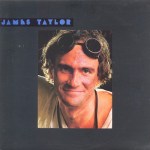
Two Qualities Are Hard to Come By on Dad Loves His Work

Hot Stamper Pressings of the Music of James Taylor Available Now

As usually happens in one of our shootouts, we learned that there’s so much more to this album than just great songs.

What really made this music work on the best copies was the result of two qualities we found were in fairly short supply:

Correct Tonality

Most copies have a phony MoFi-like top end boost in the 10k region that we found irritating as hell. The longer we listened the less we liked the copies that had that boost, which adds a kind of “sparkle” to cymbals and guitars that has no business being there.

Now if you’re a MoFi fan, and you like the boosted highs that that label is famous for, don’t waste your money buying a Hot Stamper copy from us. Our copies are the ones with the correct and more natural-sounding top end. The guitars will sound like real guitars and the voices will sound like real voices.

Lower Midrange and Bottom End Weight

When the vocals sound thin, bright and phony, as they do on so many copies of this album (partly no doubt the result of the grainy crap vinyl Columbia is infamous for) that hi-fi-ish sound takes all the fun out of the music.

Many tracks have background vocals and big choruses, and the best copies make all the singers sound like they are standing in a big room, shoulder to shoulder, with the full lower midrange weight that that image implies.

The good copies capture that energy and bring it into the mix with the full-bodied sound it no doubt had live in the studio. When the EQ or the vinyl goes awry, causing Taylor and crew’s voices to take on a lean or gritty quality, the party’s over.

This is one of our favorite Taylor albums here at Better Records.

It’s the last album by the man that bears any resemblance to the genius of his early work. It’s steeply, steeply downhill after DLHW. (Case in point: His specials for PBS of the last few years [make that twenty or more] are a positive cure for insomnia, with every song slowed down and all the energy drained from the material.)

But he still had fire in his belly when he made this one — one listen to Stand and Fight is all the evidence you need; the song rocks as hard as anything the guy ever did. (And it’s got plenty of cowbell, always a good sign.)

(more…)