Month: June 2023

Elvis Costello Arrayed His Armed Forces and Produced His Single Best Sounding Album

Hot Stamper Pressings of Elvis’s Albums Available Now

We consider Armed Forces to be one of the best sounding rock records ever made, and a copy like this White Hot Shootout Winner is proof enough to back up our claim. The best copies are extremely transparent and silky sounding, but with unbelievably punchy, rock-solid bass and drums.

The sound of the rhythm section ranks with the best we’ve ever heard. Beyond that, the musical chops of this band at this time rank with the best in the history of rock. Steve, Bruce and Pete rarely get the credit they deserve for being one of the tightest, liveliest backing bands ever to walk into a studio or on to a stage.

The song Oliver’s Army on the first side is a perfect example of what we’re talking about. Rock music doesn’t get much livelier than that.

Skip on down to Green Shirt for another track that’s as punchy as they come.

(more…)

Led Zeppelin / II – Jimmy Page Remasters a Classic, Updated

More of the Music of Led Zeppelin

A customer who bought one of our Hot Stampers was sent the Page remaster, free of charge of course. He wrote us a nice letter about what a thrill it was to hear such an amazing record — the original, not the reissue — and we made the following comment to him about the shootout he said he was going to do.

Bill,

Pay special attention in your shootout to The Lemon Song. I am going to discuss some things I learned about it recently. See how all your versions do on the song and what you think each version is doing right and wrong.

Enjoy and have fun.

Click here to read the whole story from January, 2023

The Beach Boys – Spirit of America

More of The Beach Boys

More Sixties Pop

  • The Beach Boys compilation follow-up to Endless Summer finally arrives on the site with two Shootout Winning Triple Plus (A+++) sides mated with two outstanding Double Plus (A++) sides – exceptionally quiet vinyl too
  • This copy get the midrange right, and since that is where The Beach Boys’ voices are, that puts it well ahead of the other pressings we played n the first two sides
  • “Spirit of America was downright refreshing in its succinct, bracing brevity, singles and album tracks alike.”
  • If you’re a fan of the Beach Boys, this 1975 release surely belongs in your collection

(more…)

If This Is Your Idea of a Reference Record, You Are in Real Trouble

Hot Stamper Pressings of TAS List Super Disc Albums Available Now

An astoundingly bad Sound Show!!

An audiophile hall of shame pressing and a Half-Speed mastered disaster if there ever was one. If this Reference LP isn’t the perfect example of a pass/not-yet record, I can’t imagine what would be. It is just awful.

Mastered by none other than Stan Ricker. RR-7 also appears to still be on Harry Pearson’s TAS List.

My recent notes can be seen below. (The 1 in the upper left hand corner is my abbreviation for side one, which seems to be the worst side of the two here.)

Track two, the Red Norvo selection, is a real mess, highlighting the problems typically caused by Half Speed Mastering, especially at the hands of one of the most notorious “Audiophile” Mastering Engineers of All Time, the late Stan Ricker. Who cut as many bad sounding records as SR/2 himself? No one I can think of comes close.

His records, with few exceptions, suffer from bad bass (probably bloated and poorly defined in this case, my notes don’t say but after playing these records for thirty years I doubt I’m very off with this guess) and phony, boosted highs, which cause the striking of the mallets to be emphasized in an especially unnatural and unpleasant way.

Arthur Lyman had dramatically better sound in the 50s.

How come none of the audiophiles at Reference Records bothered to figure out how he did it?

Can anybody take sound like this seriously?

(more…)

Herbie Mann – Live At The Village Gate

  • A vintage Atlantic stereo pressing of what is probably the most well known album Herbie Mann ever made, here with two superb Double Plus (A++) sides
  • One of the better flute jazz albums we’ve heard, both in terms of sonics and music
  • Problems in the vinyl are sometimes the nature of the beast with these vintage LPs – there simply is no way around them if the superior sound of vintage analog is important to you
  • 4 1/2 stars: “In addition to ‘Comin’ Home Baby,’ Mann and his men perform memorable versions of ‘Summertime’ and ‘It Ain’t Necessarily So’; the latter is 20 minutes long. Recommended.”
  • It’s hard to imagine that any list of the Best Jazz Albums of 1962 would not have this record on it

We’ve been trying to track down top pressings of this one for ages, but they are tough to come by and often noisy.

Both sides really shine with a meaty bottom end, lots of energy, an extended top and wonderful transparency. The soundstage is big and open with lots of depth, giving room to all the various players and their instruments.

Would you believe a song from this album was sampled and turned into a big hit in the ’90s? The great version of Gershwin’s Summertime on side one provided the backbone for the band Sublime’s 1997 single Doin’ Time. Maybe not of much interest to most of us baby boomer audiophiles, but the younger guys around here all had a good laugh when they recognized the break. Maybe your kids will too? (more…)

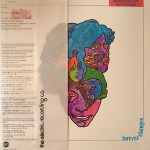
Every Day Is Record Store Day at The Electric Recording Company

Our Review of The Electric Recording Company’s Release of Forever Changes

Recently we took the Electric Recording Company to task for their botched mastering of Love’s Forever Changes.

At ERC they like to point out they are doing things differently, and boy are they ever. They do not remaster the tapes, they simply transfer the tapes onto disc without any interference from equalizers, compressors and the like.

Naturally, they seem less willing to discuss the sludge-like sound their vintage tube cutting amplifiers bring to every tape that’s forced to go through them before it gets to the cutting stylus. I hope to discuss this issue in more depth down the road.

What Is It, Exactly

For now, let’s try to get to the heart of what this pressing is.

This is not an audiophile record, properly understood.

No member of the audiophile community, those lovers of sound you’ve heard so much about, could possibly put up with a record that sounds as bad as this one does.

Having played two of their releases and knowing how all of them are made, I would be surprised if any of this company’s records are any better than awful.

No, this is plain and simply a collectible.

It exists because it could be made as a very limited edition at a profit.

It exists because it could be made with exceptionally high quality packaging.

The vinyl inside the fancy packaging is only there to make sure that all the elements of a collectible release are accounted for.

All the value is tied up in the collector appeal of the release, none in the vinyl, because the vinyl is junk.

(more…)

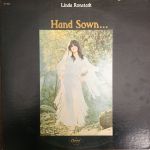
This Linda Ronstadt Album from 1969 Did Not Make the Grade

Hot Stamper Pressings of the Music of Linda Ronstadt Available Now

Transistory and veiled. Not worth the Capitol vinyl it was pressed on. Not the least bit enjoyable on today’s much more revealing high quality equipment.

The only stereo that can play a record that sounds the way this album does is a stereo that is powered by a pair of vintage tube amps like the Macs seen below, or something like them. (Some modern amps try to recreate that sound, and if you want to hear what is on your records, you had best avoid them.)

The above approach to record playback is also very good at hiding the faults of the modern Heavy Vinyl record.

Remastering Out The Good Stuff

What is lost in the newly remastered recordings so popular with the record buying public these days?

Lots of things, but the most obvious and irritating is the loss of transparency.

(more…)

What We Think We Know about Scheherazade

More of the music of Rimsky-Korsakov (1844-1908)

Our Favorite Performance of Scheherazade – Ansermet with the Suisse Romande

This post was written in 2014 or so. It’s the story of the breakthrough pressing we discovered that year.

I attended the Dec. 2013 performance of the work at the Disney Hall. Pictured is Mr de Burgos conducting. It was a thrill like no other. (Well, maybe The Planets.)

“Guest conductor Rafael Frühbeck de Burgos’s attention to detail delivers the razzle dazzle and also discovers renewed radiance in ‘Scheherazade.'”

We did a monster shootout for this music in 2014, one we had been planning for more than two years. On hand were quite a few copies of the Reiner on RCA; the Ansermet on London (CS 6212, his second stereo recording, from 1961, not the earlier and noticeably poorer sounding recording from in 1959); the Ormandy on Columbia, and a few others we felt had shown potential.

The only recordings that held up all the way through — the fourth movement being THE Ball Breaker of all time, for both the engineers and musicians — were those by Reiner and Ansermet. This was disappointing considering how much time and money we spent finding, cleaning and playing those ten or so other pressings.

Here it is a year later and we’re capitalizing on what we learned from the first big go around, which is simply this: the Ansermet recording on Decca/London can not only hold its own with the Reiner on RCA, but beat it in virtually any area. The presentation and the sound itself are both more relaxed and natural, even when compared to the best RCA pressings.

The emotional content of the first three movements (all of side one) under Ansermet’s direction are clearly superior. The roller coaster excitement Reiner and the CSO bring to the fourth movement cannot be faulted, or equaled. In every other way Ansermet’s performance is the one for me.

Both Sides

Superb! Big brass, so full-bodied and dynamic, yet clear and not thick or overly tubey. Lots of space as is usually the case with Ansermet’s recordings from this era.

Both sides here are BIG, with the space and depth of the wonderful Victoria Hall that the L’Orchestre De La Suisse Romande perform in. As a rule, the classic ’50s and ’60s recordings of Ansermet and the Suisse Romande are as big and rich as any you’ve heard. On the finest pressings (known around these parts as Hot Stampers) they seem to be the ideal blend of clarity and richness, with depth and spaciousness that will put to shame 98% of the classical recordings ever made.

The solo violin is present and so real you will have a hard time believing it.

This copy is huge in every dimension, just as all the best ones always are, with maximum amounts of height, width, and depth. The transparency is also superb — you really hear into this one in the way that only the best Golden Age recordings allow.

(more…)

The Science of Hot Stampers – Incomplete, Imperfect, and (Gulp!) Provisional

Important Lessons We Learned from Record Experiments 

We have a section on the blog you may have seen called live and learn.

It’s devoted to discussing the records we think we we were wrong about.

Oh yes, it’s true. But it’s not really a problem for us here at Better Records. We see no need to cover up our mistakes. The process of learning involves recognizing and correcting previous errors.

Approached scientifically, all knowledge — in any field, not just record collecting or music reproduction — is incomplete, imperfect, and must be considered provisional.

What seems true today might easily be proven false tomorrow. If you haven’t discovered that for yourself yet, one thing’s for certain, you haven’t been in this hobby for very long.

We’re so used to the conventional wisdom being wrong, and having our own previous findings overturned by new ones, that we gladly go out of our way in listing after listing to point out just how wrong we were. (And of course why we think we are correct now.)

A common misperception among those visiting the site is that we think we know it all. Nothing could be further from the truth.

We learn something new about records with practically every shootout.

Each time we go back and play a 180 gram or Half-Speed mastered LP we used to like (or dislike), we gain a better understanding of its true nature. (The bulk of those “audiophile” pressings seem to get worse and worse over time, a subject that has been thoroughly discussed on the blog.)

Record cleaning gets better, front ends get better, electronics get better, tweaks get better, rooms get better — every aspect of your playback system should be improving on a regular basis, allowing you to more correctly identify the strengths and weaknesses of every record you play.

I almost forgot: your ears get better too, whether you like it or not. If that’s not happening, you’re probably not doing some very important things right. (Maybe some of your records are holding you back.)

What follows is a typical excerpt from a recent listing.

(more…)

One Of These Nights – We Broke Through in 2016

This 2-pack contains the best side one we’ve ever heard! The sound is bigger, richer, tubier and livelier than we even thought possible. Side one was so amazing, such an obvious step up over every side of every other copy, we felt it deserved to be awarded our “Four Plus” (A++++) grade. One of These Nights, Too Many Hands and Hollywood Waltz will blow your mind on this side one. 

  • Our lengthy commentary entitled Outliers & Out-of-This-World Sound talks about how rare these kinds of pressings are and how to go about finding them.
  • We no longer give Four Pluses out as a matter of policy, but that doesn’t mean we don’t come across records that deserve them from time to time.
  • Nowadays we most often place them under the general heading of Breakthrough Pressings. These are records that, out of the blue, revealed to us sound of such high quality that it dramatically changed our appreciation of the recording itself.
  • We found ourselves asking “Who knew?” Perhaps a better question would have been “How high is up?”

A Side One Like No Other

My notes read: ‘hi-rez, super tubey, breathy vocals with much less honk.”

Here is the one comment which really gets to the point of the better pressings: “guitar solos rise above.” The big solo on the title track just soars on this copy like we’d never heard before.

This is the guitar sound that Bill Szymczyk achieved with the band that Glyn Johns had not. Of course, it’s only fair to point out that Johns had never tried. He saw them as a Country Rock band. The Eagles saw themselves as a Rock band, it’s as simple as that.

  • Reviews and commentaries for albums with soaring guitars can be found here.

Also note on side one that the loud choruses and huge guitars on the second track, Too Many Hands, hold up on this side one amazingly well. It’s a great test track as well as the first, providing positive confirmation that what you will hear for the song One of These Nights — the size and the power — will carry all the way through this side one.

When you play side two of the first disc, the disc with the Four Plus side one, you may be rather shocked at how small and opaque it is, especially in comparison to the incredible sound of side one.

Side two in general tends to have worse sound than side one on this album by one half to one full grade, if our experience is any guide.

(more…)