Month: February 2022

Paul McCartney and Wings – Red Rose Speedway

More Paul McCartney / More of The Beatles

  • This early British EMI pressing has excellent Double Plus (A++) sound throughout
  • Forget whatever dead-as-a-doornail Heavy Vinyl record they’re making these days – if you want to hear the Tubey Magic, size and energy of this wonderful album, a vintage UK pressing like this one is the only way to go
  • 4 stars: “…every bit as insular as the lo-fi records of the early ’90s, but considerably more artful, since it was, after all, designed by one of the great pop composers of the century. …McCartney’s little flourishes are intoxicating — not just the melodies, but the facile production and offhand invention.”
  • If you’re a fan of Paul McCartney’s post-Beatles output, this release from 1973 probably belongs in your collection.

We have not had particularly good luck with the domestic pressings we’ve tried. The Brits are the only ones that, to our ears, seem to be made from the real tape. (more…)

Why Would Anyone Want to Take All the Fun Out of CCR’s Music? Part One

More of the Music of Creedence Clearwater Revival

The last time I played the MoFi pressing mentioned below I found the sound so weirdly colored as to defy understanding. Ten years ago when I wrote this commentary I apparently found it more tolerable.  More recently I clearly did not.

When an audiophile record sounds worse than it used to, there is a very good chance that you are making progress in audio.

Of course this is not something to be assumed. (Speaking of assumptions, you can find more on the subject here).

Rather it is something to be tested. (You can read more about some of the rigorous and extensive record testing we have conducted over the last twenty years here.)

Even if 99 times out of a hundred it turns out to be the case that the modern remastered record can now be seen for the fake it always was, there is still a one out of a hundred chance that the record may in fact be better than you remember.

These audiophile records are easily called out for their illusory superiority for the simple reason that the better your stereo gets, the more obvious their colorations and shortcomings become. This was my experience, and I pass this information on in the hopes that you will make progress with your stereo system and find them every bit as wrong as I do.

We’ve created a section for the worst of them, and even with 274 entries we could easily double that number if we were inclined to carry out more auditions and catalog their manifold shortcomings.

With the number of Heavy Vinyl records being pressed today, triple or quadruple that number I suspect would be possible.

Without sounding even more arrogant than some believe me to be, I have better things to do with my time. Thank god we are in the business of selling good records and not in the business of reviewing bad ones.


Further Reading

Records are getting awfully expensive these days, and it’s not just our Hot Stampers that seem priced for perfection.

If you are still buying these modern remastered pressings, making the same mistakes that I was making before I knew better, take the advice of some of our customers and stop throwing your money away on Heavy Vinyl and Half-Speed mastered LPs.

At the very least let us send you a Hot Stamper pressing — of any album you choose — that can show you what is wrong with your copy. of the album.

And if for some reason you disagree with us that our record sounds better than yours, we will happily give you all your money back and wish you the best.

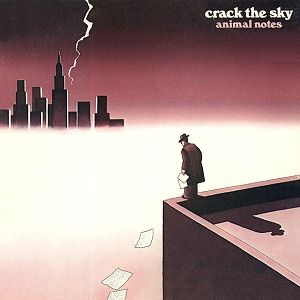
Crack The Sky – Animal Notes

More Recordings Engineered by Shelly Yakus

Other Well Recorded Albums that Should Be More Popular with Audiophiles

Both sides are big and rich in the same way that all the best Classic Rock albums from the ’70s are. It has plenty of rock ENERGY; here the sound jumps out of the speakers like practically no other copy we heard.

At the levels it was playing at it was nothing less than a thrill to hear the album I’d known for so long sound so much better than I remember it from back in the day. (Stereo has come a long way since 1976, that’s for damn sure.)

To my mind, speaking as both a fan and an audiophile, both the first two Crack the Sky albums succeed brilliantly on every level: production, originality, songwriting, technical virtuosity, musical consistency and, perhaps most importantly for those of you who have managed to make it this far, Top Quality Audiophile Sound.

This is simply a great album of adventurous, highly melodic Proggy Arty rock. If you like the well known bands that made the classic albums cited below there’s a very good chance you will like this much less well known band’s second album also. Especially if you have the taste for something different — I know of no other album quite like it. It may have been strongly influenced by many of the ’70s Classics of both Prog and Art Rock, but it is stylistically unique.

This is Big Production rock that pulls out all the stops and then some, with a massive Beatlesque string section, horns, synths, backward guitars and every other kind of studio effect that they could work out.

Much like Ambrosia’s debut (another poorly understood band on a small label), such an ambitious project was clearly an effort to make a grand musical statement along the lines of Tumbleweed Connection, Sgt. Pepper, Crime of the Century, Close to the Edge, The Original Soundtrack or Dark Side of the Moon — all albums I suspect this band played countless times in hopes of recreating some of that magic themselves once in the studio. I am of the opinion that they succeeded marvelously.

In the 70s I was a huge fan of those albums too. (Still am of course; check out our Top 100 if you don’t believe me. They’re all in there.) I played them more times than I can remember, with Crack The Sky’s albums spending plenty of time — in heavy rotation you could say — on the turntable in those days.

Fun tip: Listen for the Elton-John-like piano chords on the first track. Can you name that song? (Hint: it’s on Tumbleweed Connection.)

Crack the Sky

I freely admit this band is not for everybody. AMG is correct that the album is not exactly sweetness and light. Of course Dark Side of the Moon isn’t exactly a treatise on positive thinking either. It seems to have held up rather well.

If after listening to the album you feel Crack the Sky is not to your liking, feel free to send it back for a full refund. We want you to be happy with every Hot Stamper purchase you make. Every one is guaranteed to satisfy or we will gladly take it back, no questions asked.

Want to find your own killer copy?

Consider taking our moderately helpful advice for how to find your own shootout winners.

Shootouts for this album should be carried out:

How else can you hear this record to sound the way it should?

Based on what were the winners of our most recent shootout, Animal Notes should sound its best:

(more…)

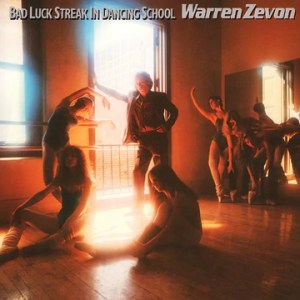
Warren Zevon – Bad Luck Streak in Dancing School

More Warren Zevon

  • Zevon’s 1980 release finally arrives on the site with outstanding Double Plus (A++) sound or BETTER from start to finish
  • The best sides are doing most everything right — they’re cleaner, clearer, with better bass, more energy, better midrange presence, as well as lots of other qualities only found on the best analog pressings
  • Features a long list of guest artists, detailed below, who brought their talents to bear on this superb album
  • 4 1/2 stars: “The album’s rockers hit harder and cut deeper than any of his previous work, especially the twisted Southern gothic of “Play It All Night Long” and the mercenary’s anthem “Jungle Work,” while “Bed of Coals” and “Wild Age” found Zevon bravely addressing his own failings and expressing his need for a greater maturity in his life.”

(more…)

Led Zeppelin / II – A Milestone Event from the 90s

More of the Music of Led Zeppelin

More Milestone Events in the History of Better Records

Here’s the story of my first encounter with a Hot Stamper Zep II.

I had a friend who had come into possession of a White Label Demo pressing of the second album and wanted to trade it in to me for the Mobile Fidelity pressing that I had played for him once or twice over the years, and which we both thought was The King on that album.

To my shock and dismay, his stupid American copy KILLED the MoFi. It TROUNCED it in every way. The bass was deeper and punchier. Everything was more dynamic. The vocals were more natural and correct sounding. The highs were sweeter and more extended. The whole pressing was just full of life in a way that the Mobile Fidelity wasn’t.

The Mobile Fidelity didn’t sound Bad. It sounded Not As Good. More importantly, in comparison with the good domestic copy, in many ways it now sounded Wrong.

Let me tell you, it was a milestone event in my growth as a record collector. I had long ago discovered that many MoFi’s weren’t all they were cracked up to be. But this was a MoFi I liked. And it had killed the other copies I had heard in the past.

So I learned something very important that day. I learned that hearing a good pressing is the best way to understand what’s wrong with a bad pressing..

Needless to say, the trade didn’t go through: he kept his copy and I was stuck with mine. But I knew what to look for. I knew what the numbers were in the dead wax. And I started hunting them down.

(more…)

The Original Pressings of The Beatles Albums Are the Best Sounding, Right?

beatles help labelHot Stamper Pressings of the Music of The Beatles Available Now

No they are not. At least the ones on the label you see pictured are not (with the exceptions noted below).

We think it’s just another example of mistaken audiophile thinking.

Back in 2005 we compared the MFSL pressing of Help to a British Parlophone LP and were — mistakenly, as you may have already surmised — impressed by the MoFi. We wrote:

Mobile Fidelity did a GREAT JOB with Help!. Help! is a famously dull sounding record. I don’t know of a single original pressing that has the top end mastered properly. Mobile Fidelity restored the highs that are missing from most copies.

The source of the error in our commentary above is in this sentence, see if you can spot it:

I don’t know of a single original pressing that has the top end mastered properly.

Did you figure it out? If you’ve spent much time on our site of course you did.

Original pressing?

Is that the standard?

Why? Who said so? Where is it written?

(more…)