Month: November 2019

Getting the Balance Right on It’s Monk’s Time

There are three main elements that comprise the sound of It’s Monk’s Time: piano, sax and drums. You need all three to be balanced and correct. The mix is perfection on the best copies, with the piano, sax and drums clearly audible and in musically correct proportion to each other. 

As we played the sides we noted how each of them fared.

PIANO. Clear, present and lively. Very high-rez.

SAX. Smooth, rich and tubey, with no RVG squawk to be found.

DRUMS (and BASS). Big drums in a big room. Listen to how solid that kick is. The standup bass is tight and note-like.

Surprisingly side two sounded just like side one. We could find no fault with it. It doesn’t happen very often but it happened on this copy. (more…)

Bill Evans – At The Montreux Jazz Festival

More Bill Evans

  • Evan’s Classic Live album from the Montreux Jazz Festival returns to the site with outstanding Double Plus (A++) sound or BETTER from first note to last
  • A killer Verve stereo pressing, with lovely richness and warmth, real space and wonderful immediacy throughout
  • Recorded live in 1968, this superb release pairs Evans’ unique piano improvisations with bandmates Eddie Gomez and Jack DeJohnette
  • 4 stars: “Evans, famous for a soft-spoken pianistic touch, seems driven to new vistas on this album. He experiments more with harmonic dissonance and striking rhythmical contrasts, making this his most extroverted playing since his freshman release, New Jazz Conceptions.”

(more…)

Honky Mids and Veiled Vocals Are Common on Another Side of Bob Dylan

Hot Stamper Pressings of the Music of Bob Dylan Available Now

This commentary was written many years ago.

We played a bunch of these this week and only a very small handful of sides had enough magic to be considered Hot Stampers.

The typical pressing loses its steam in (at least) one of two ways:

  • honky mids, and
  • veiled vocals.

The copies with the honk can be nearly unlistenable when Dylan starts blowing his harmonica, and the copies with veiled vocals and no real immediacy bored us to tears. 

This copy has the magic on side two. The sound is full-bodied, natural, and rich with excellent presence and real depth to the soundfield.

It’s also SUPER open and spacious with lots of ambience and clearly audible transients on the acoustic guitar. The clarity is off the charts, and the sound is wonderfully natural throughout.

Side one is clean, clear and transparent with correct tonal balance. The vocals have a touch of honk to them and the presence is nowhere near as amazing as on the flipside. We rated side one A – A+. It’s musical and enjoyable but not superb like side two.

(more…)

Cannonball Adderley – Jump For Joy

More Cannonball Adderley

  • An incredible sounding copy – this early stereo pressing boasts Shootout Winning Triple Plus (A+++) sound from start to finish 
  • We were knocked out by the Tubey Magical midrange of this killer original, with all the saxophone’s breath and bite you would expect to hear on an All Tube affair from 1958
  • This is precisely what is sure to be missing from whatever reissue has been made from the tapes (or, to be clear, a modern digital master copied from who-knows-what-tapes)
  • “Jump for Joy is Adderley’s reinterpretation of a Duke Ellington stage musical from 1941… Hearing Adderley’s often thrilling, always well-constructed alto sax improvisations over tunes like “I Got It Bad and That Ain’t Good” is reason enough for the album to exist…”

With Bill Evans on piano no less! (more…)

The Kinks – Something Else in 2009

Hot Stamper Pressings of the Music of The Kinks Available Now

UPDATE 2026

We did our first shootout for the album in 2009, and it would take us until 2026 to do another one. The original domestic pressings are by far the best, and you can imagine how difficult it is to find them in audiophile playing condition.

Make sure to read the insightful 5 Star AMG review — they really nail this one!


This Original Reprise Tri-Color Steamboat Label pressing is one of the best sounding Kinks records we’ve ever had the pleasure of playing here at Better Records. It sounds nothing like the typically dull and smeary domestic Kinks LPs we are used to hearing. The overall sound is lively, musical, and natural. Drop the needle on No Return for wonderful sound and music — it’s got a bit of a Jobim vibe. 

After dropping the needle on a wonderful sounding copy a few months back, we started pursuing these in the hopes of getting a proper shootout together. It didn’t happen easily or inexpensively — clean looking copies of this one go for as much as $50 in the local bins, and that’s obviously with no guarantee of good sound or quiet vinyl. We found a few good ones and a few stinkers, but this copy went beyond our expectations. It’s got punchy bass, great energy, and real texture to everything. Most copies tend to be too smooth and veiled, but this one passed our tests with flying colors.

Play David Watts or No Return on side one for the best sound, and Afternoon Tea or Waterloo Sunset on side two for the same. (more…)

Brahms / Sonata No. 3 in F Minor / Rubinstein – Reviewed in 2011

This exceptionally rare Shaded Dog pressing has AMAZING sound on side one, A+++, with side two rating a nearly as good sonic grade of A++. I can’t recall the last time I played a solo piano recording that was this transparent and lively. It’s shockingly realistic; this is what a piano sounds like in performance.

Well, almost. Rubinstein’s recordings never manage to convey all the weight of a real concert grand piano — as if any home stereo could anyway — but this recording is still relatively full-bodied. What it is more than anything else is REAL sounding. You will quickly forget that you are listening to a record at all. (more…)

What to Listen For on Ancient Dances and Airs

More of the music of Ottorino Respighi (1879-1936)

Hot Stamper Mercury Pressings Available Now

Both sides of this TAS List early Colorback RFR copy have SUPER Hot Stamper sound, so much richer and sweeter and less strident than the typical copy you might find.

I must admit the Mercury approach to sound has not worn as well as I might have hoped. When it comes to the Big Three from the Golden Age, these days we prefer London, followed by RCA, then Mercury.

[UPDATE: In 2024 I would not agree with the above statement. Many Mercury pressings are amazing now that we can reproduce them with greater fidelity.]

Of course the music is wonderful, with Respighi looking back and paying homage to the music and the musical structures of the past. This is no Pines of Rome. 

Side One

A++ Superb Living Presence sound. Listen especially to how textured and natural the cellos sound, as well as the strings in general.

Mercury rarely recorded strings properly but here they sound tonally correct, neither nasally nor strident.

Side Two

A++, superb again. Watch out for the opening though — it’s full of compressor distortion. Once it passes, the sound is lovely: rich and sweet, two words we do not often associate with Mercury. But we do here.

The Absolute Sound Super Disc List

Inclusion on The TAS List doesn’t guarantee great sound, but Better Records does. If you don’t think a Hot Stamper pressing sounds as good as we’ve described, we’ll always happily take it back and refund your money. Good luck getting ol’ Harry to send you a check when the TAS-approved pressings you pick up don’t deliver. Ours are guaranteed to.

Side One

Suite No. 1
Suite No. 2

Side Two

Suite No. 2 (cont.)
Suite No. 3

Ancient Airs and Dances

Hungary, October 1956. Russian tanks roll into Budapest and brutally crush a 10-day-old uprising. Thousands of Hungarians flee their homeland to refugee camps in Austria. Amongst them are 200 musicians, most without their instruments, but determined to form an orchestra. With the help of refugee charities, private benefactors and the leadership of Antal Dorati, the Philharmonia Hungarica was born.

Within a year they are making world-class recordings, and performing all over the world. The Respighi Ancient Airs and Dances for Lute was recorded in 1958, and is still regarded as one of their finest works.

Ottorino RespighiThis is music of the modern era, but owes much to the past. Ottorino Respighi was not only a composer but also a musicologist and antiquarian. These 3 suites, written between 1917 and 1932, are arrangements of music from the Renaissance. The original composers flourished between 1575 and 1625. Their names Molinaro, Galilei, Caroso, Besard, Gianoncelli and Roncalli roll off the tongue beautifully, but are by no means household names today. Respighi’s task was to capture the elegance, subtlety and brilliance of this very old music in a form pleasing to the modern palate. He was so successful that they are some of the most popular works of the 20th Century.

Suites 1 and 2 are for full orchestra, and suite 3 is for strings only. Listening to them there is the curious juxtaposition of ancient ideas and themes with modern orchestration. To bring this off successfully, they must be performed with understated poise, elegance and the occassional flash of fire. The Philharmonia do this to perfection. From the well-known boisterous Bergemasca , to the soothing and elegant Campanae Parisienses (and incidentally a wonderful piece, a true discovery), the performances are polished and convincing. Nothing less could be expected under Dorati.

You may think that a recording over 40 years old may be left by the wayside by modern recording techniques. Not so. In fact, this is a CD that proves that a good analogue recording can be as good as any modern digital.

The common practice at the time was to use multiple microphones placed throughout the orchestra, then re-mix and balance them before final recording. Mercury’s sound engineer Bob Fine developed a new recording technique that used one ultra-sensitive microphone placed strategically in front of the orchestra. There was no limiting, balancing, mixing or boosting of the sound before it reached the final tape.

The result was a recording that was “like being in the living presence of the orchestra” according to Howard Taubman, chief music critic of the New York Times. This became known as Mercury’s Living Presence series of recordings. It was revolutionary in its time, and has proved itself so to this day.

Wonderful rediscovered music, a definative performance with a rich history, as good a recording as you will find anywhere, and for a bargain price. Worthy of its 5 stars.

good-music-guide.com review

Kodaly / Hary Janos Suite / Kertesz

This is a SUPERB recording, a real sleeper in the world of audiophile pressings. The sound is as BIG, BOLD and DYNAMIC as practically any classical record you can name. And the distortion level is vanishingly small as well. 

This British pressing has an AMAZING SIDE ONE (A++) backed with an excellent side two (A+), both on very quiet vinyl.

I’m a fan of this music and here’s a pressing that really delivers. Side one of the album has the complete Suite, and with Super Hot Stamper sound this copy is guaranteed to knock you out.

One of the top Kertesz recordings on London.

Engineering

Kenneth Wilkinson engineered this album for Decca in 1965.

What makes the sound of these recordings so special is the timbral accuracy of the instruments in every section.

This is the kind of record that will make you want to take all your heavy vinyl classical pressings and put them in storage. They cannot begin to sound the way this record sounds. (Before you put them in storage or on Ebay please play them against this pressing so that you can be confident in your decision to rid yourself of their mediocrity.)

Quality record production is a lost art, and it’s been lost for a very long time.
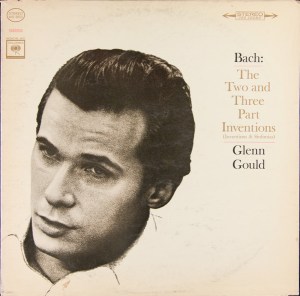
Speakers Corner remastered the recording (seen here) in the ’90s and I believe we carried it back in the day, which means that the sound had to at least be acceptable, if not in fact very good. We played all their releases for sound and only carried the ones we thought met our standards, standards which have obviously changed radically since then.

I doubt we would care for their Heavy Vinyl LP now, but you never know, that was a long time ago.

TRACK LISTING

Side One

Hary Janos Suite

1. Prelude — The Fairy Tale Begins
2. Viennese Musical Clock
3. Song
4. The Battle and Defeat of Napoleon
5. Intermezzo
6. Entrance of the Emperor and His Court

Side Two

Dances of Galanta
Arias from Hary Janos

1. Szegeny Vagyok
2. Hej Ket Tikom

Bach / Two and Three Part Inventions / Glenn Gould


  • Bach’s Inventions returns to the site with stunning Shootout Winning Triple Plus (A+++) sound on side two and an outstanding Double Plus (A++) side one – fairly quiet vinyl too
  • Amazingly natural “you are there” sound – the room and the piano sound exactly the way I’ve heard them in real life, so what more can you ask for?
  • “The little 2 and 3 part creations last just a couple minutes each and present a wealth of creativity from the mind of Johann Sebastian, expertly enunciated by the most technically complete Bach pianist of the century.” Larry VanDeSande
  • 4 1/2 stars: “For many, the albums Glenn Gould recorded for Columbia between 1955 and 1981 are documents of unalloyed genius, particularly in his imaginative and masterful performances of Bach’s keyboard works.”

(more…)