Month: October 2019

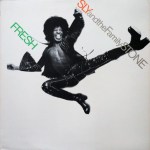
Sly and The Family Stone’s Fresh Was Revolutionary

More of the Music of Sly and the Family Stone

Reviews and Commentaries for Sly and the Family Stone

Jazz legend Miles Davis was so impressed by the song “In Time” from the album that he made his band listen to the track repeatedly for a full 30 minutes.

Composer and music theorist Brian Eno cited Fresh as having heralded a shift in the history of recording, “where the rhythm instruments, particularly the bass drum and bass, suddenly [became] the important instruments in the mix.”

George Clinton, who has listed Fresh as one his favorite albums, later convinced the Red Hot Chili Peppers to cover “If You Want Me to Stay” on their second album, the Clinton-produced Freaky Styley.

In 2003, the album was ranked number 186 on Rolling Stone magazine’s list of the 500 greatest albums of all time.

Wikipedia


Fresh expands and brightens the slow grooves of There’s a Riot Goin’ On, turning them, for the most part, into friendly, welcoming rhythms. There are still traces of the narcotic haze of Riot, particularly on the brilliant, crawling inversion of “Que Sera, Sera,” yet this never feels like an invitation into a junkie’s lair.

Still, this isn’t necessarily lighter than Riot — in fact, his social commentary is more explicit, and while the music doesn’t telegraph his resignation the way Riot did, it comes from the same source. So, Fresh winds up more varied, musically and lyrically, which may not make it as unified, but it does result in more traditional funk that certainly is appealing in its own right.

Besides, this isn’t conventional funk — it’s eccentric, where even concise catchy tunes like “If You Want Me to Stay” seem as elastic as the opener, “In Time.” That’s the album’s ultimate charm — it finds Sly precisely at the point where he’s balancing funk and pop, about to fall into the brink, but creating an utterly individual album that wound up being his last masterwork and one of the great funk albums of its era.

Allmusic

Mystery To Me – Whomp Factor on “Why”

More of the Music of Fleetwood Mac

Reviews and Commentaries for Fleetwood Mac

That bass drum tells you a lot about your deep bass reproduction, but we prize a little something called whomp here at Better Records every bit as much. It’s the WEIGHT and POWER you sense happening down below that translates into whomp factor. (This is the frequency area that screens and small dynamic drivers have the most trouble with. You need to be able to move lots of air under, say, 200 cycles to give the music a sense of real power down below. Few systems I’ve run into over the last thirty years can really pull it off.) 

That bass drum tells you a lot about your deep bass reproduction, but we prize a little something called whomp here at Better Records every bit as much. It’s the WEIGHT and POWER you sense happening down below that translates into whomp factor.

“Why”

Speaking of the song “Why,” I have to confess that it’s my favorite Fleetwood Mac song of all time. Considering how many great songs this band has recorded over the last thirty plus years, that’s really saying something. (“Need Your Love So Bad” off Pious Bird is right up there with it.) (more…)

Paganini / Violin Concerto 1 & 2 / Ricci (LL 1215) – Reviewed in 2010

More Performances by Ruggiero Ricci

Reviews and Commentaries for the Performances of Ruggiero Ricci

This is one of the MOST AMAZING VIOLIN RECORDINGS in the history of the world. For sheer violin virtuosity it doesn’t get any better than this. Ricci and London in the early ’50s cannot be beat! This is a true Demo Disc with music of the highest caliber, and I’m betting whoever takes this one home will be THRILLED. 

Both sides are dynamic, full-bodied, lively and sweet. This is a vintage London mono recording of the ’50s and consequently has some limitations in terms of bandwidth and of course soundstage, but the luscious midrange more than makes up for both. The violin is REAL in a way that few other recordings manage to make it.

Since this is a particularly thick piece of vinyl, you’ll get the best sound from this one by adjusting your VTA a bit as if it were a modern Heavy Vinyl release. Of course, I don’t think there’s any modern Heavy Vinyl out there that could hold a candle to a record like this! And when the VTA locks in perfectly on this record you will know it — the tonality is Right On The Money. (more…)

Just How Good Is a Second Tier Neil Young Album?

Hot Stamper Pressings of the Music of Neil Young Available Now

AMG raves about this album, giving it 5 big stars. (For those of you keeping score at home, that’s half a star MORE than they gave Harvest.) We like the album just fine, but I doubt we would want to go quite that far. Sure, these are great songs, but give us After The Gold Rush, Zuma or Harvest (all Top 100 titles, Hot Stampers of which are sometimes in stock) over this one any day.

Still, a second tier Neil Young album (by our standards) usually will beat a first tier album from just about anybody else making records in 1979.

And if you’re a fan this record absolutely belongs in your collection, along with about ten others by the man. Now what other solo artist can you name that has ten or more records to his name worth owning? I’m hard pressed to think of one. The Beatles and The Stones don’t count, obviously. Elvis Costello comes pretty close, but ten? I can’t get there, with him or anybody else. Neil’s body of work stands alone.

This is a live recording with minimal overdubs. Crazy Horse is of course widely recognized to be one of the all time killer concert acts of its day, so it’s a bit of a shame that most of the copies we played this week made us want to go to sleep. The not-so-Hot copies failed in a number of ways: thin guitars or vocals, overly dry or edgy sound, and insufficient presence, just to name a few. It was the rare copy that made us forget we were listening to a record and allowed us to really get into the music.

Needless to say we had this record playing very very loud. Twenty db less than at the live event, sure, at least, but very very loud for a 18×20 living room in the suburbs.

(more…)

Polar AC – Smeary and Veiled, or Thin and Harsh?

Hot Stamper Pressings of the Music of Freddie Hubbard Available Now

Years ago we described the sound of the album this way:

Most copies fail in one of two ways. Either they’re smeary and veiled, or they’re thin and harsh, but this side has no such problems! There’s plenty of richness and sweetness, but there’s also real bite to the brass. 

Like side one, the balance between transparency and richness is just right here.

We’re big fans of Hubbard’s CTI material around here and this album has a lot of the qualities we love about this stuff. All the usual faces are here — Ron Carter, Billy Cobham, George Benson, Airto — and Rudy Van Gelder does a great job capturing their performances.

We used to criticize RVG pretty harshly, but in recent years we’ve found more and more pressings of his stuff that really work.

We Love CTI

We’ve been really digging this CTI jazz stuff lately. On the better albums such as this one, the players tend to sound carefree and loose — you can tell they are having a heck of a time with the material. Don’t get me wrong — we still love the Blue Note and Contemporary label stuff for our more “serious” jazz needs, but it’s a kick to hear top jazz musicians laying down the grooves and not taking themselves so seriously… especially when it sounds this good!

All Music Guide Bio

One of the great jazz trumpeters of all time, Freddie Hubbard formed his sound out of the Clifford Brown/Lee Morgan tradition, and by the early ’70s was immediately distinctive and the pacesetter in jazz.

Born and raised in Indianapolis, Hubbard played early on with Wes and Monk Montgomery. He moved to New York in 1958, roomed with Eric Dolphy (with whom he recorded in 1960), and was in the groups of Philly Joe Jones (1958-1959), Sonny Rollins, Slide Hampton, and J.J. Johnson, before touring Europe with Quincy Jones (1960-1961). He recorded with John Coltrane, participated in Ornette Coleman’s Free Jazz (1960), was on Oliver Nelson’s classic Blues and the Abstract Truth album (highlighted by “Stolen Moments”), and started recording as a leader for Blue Note that same year.

Hubbard gained fame playing with Art Blakey’s Jazz Messengers (1961-1964) next to Wayne Shorter and Curtis Fuller. He recorded Ascension with Coltrane (1965), Out to Lunch (1964) with Eric Dolphy, and Maiden Voyage with Herbie Hancock, and, after a period with Max Roach (1965-1966), he led his own quintet, which at the time usually featured altoist James Spaulding. A blazing trumpeter with a beautiful tone on flügelhorn, Hubbard fared well in freer settings but was always essentially a hard bop stylist.

In 1970, Freddie Hubbard recorded two of his finest albums (Red Clay and Straight Life) for CTI. The follow-up, First Light (1971), was actually his most popular date, featuring Don Sebesky arrangements. But after the glory of the CTI years (during which producer Creed Taylor did an expert job of balancing the artistic with the accessible), Hubbard made the mistake of signing with Columbia and recording one dud after another; Windjammer (1976) and Splash (a slightly later effort for Fantasy) are low points.

However, in 1977, he toured with Herbie Hancock’s acoustic V.S.O.P. Quintet and, in the 1980s, on recordings for Pablo, Blue Note, and Atlantic, he showed that he could reach his former heights (even if much of the jazz world had given up on him).

Side One

Polar AC 
People Make the World Go Round 
Betcha by Golly, Wow

Side Two

Naturally 
Son of Sky Dive

Brewer & Shipley / Weeds – Our Four Plus Shootout Winner from 2017

More Brewer and Shipley

Reviews and Commentaries for Brewer and Shipley

It took two copies on two different labels to give you BETTER than Triple Plus (A+++) sound on the two sides of this 2-pack. These sides were beyond anything we had ever heard, with weight and Tubey Magic to put other records to shame. On the best copies the midrange is amazingly relaxed and natural, yet completely clear and present. This Bay Area Hippie Folk Rock has much in common with classic albums like Workingman’s Dead and CSN’s first.

Why two different records on two different labels to get top sound on both sides?

Simple: in our shootout no Robert Ludwig mastered side one on the original label sounded remotely as good as it did on the best pressings with the later label.

If you want the absolute best sound, this is the only way we can get it for you in 2017.

(more…)

Mozart / Symphonies No. 39 & 36 / Bohm

This is not your typical DG, and as far as we’re concerned that’s a good thing! If you end up with this copy you may find yourself agreeing with us that it actually sounds pretty much like a good RCA pressing from the era, with the kind of rich, sweet sound that the best RCAs are famous for, and rightly so.  

The sound on side one is spacious and sweet, with good texture to the strings, far from the smeared, hard, steely sound that so many DG pressings suffer from.

And side two is even better! More transparent, with better texture and even richer sound.

Side one earned a grade of A+. In the loudest string passages it can get to be a bit much, so we took a plus off for that shortcoming and the fact that side two gives you a bit more of everything that’s good with the sound.

This is an Italian pressing, and what a lovely record it is! Bohm is of course quite famous as an interpreter of Mozart. This performance from the early ’60s should be considered one of the best on record.

(more…)

Lou Rawls – Natural Man

More Lou Rawls

More Soul, Blues, and Rhythm and Blues

xxxx

  • This outstanding copy of Lous Rawls’ 1971 release boasts solid Double Plus (A++) sound from first note to last – exceptionally quiet vinyl too 
  • The immediacy of the vocals is striking, putting a living, breathing Lou Rawls right between your speakers
  • 4 stars: “Relying on his deep, rich voice, he sings with confidence everything from the bluesy ‘I’m a King Bee’ and the Beatles cover ‘Got to Get You into My Life’ to Duke Ellington’s jazz ballad ‘Sophisticated Lady’… a representative collection covering the eclectic range of styles in which Rawls has always performed.”

This Original MGM pressing has the kind of Tubey Magical Midrange that modern records rarely even BEGIN to reproduce. Folks, that sound is gone and it sure isn’t showing signs of coming back. If you love hearing INTO a recording, actually being able to “see” the performers, and feeling as if you are sitting in the studio with Lou, this is the record for you. It’s what vintage all analog recordings are known for — this sound. (more…)

Foreigner – Head Games

More Foreigner

More Rock Classics

  • This outstanding copy of the band’s third album earned outstanding Double Plus (A++) grades on both sides
  • One of the better copies from our recent shootout – big, bold and lively with a punchy bottom end 
  • With plenty of energy, killer rock bass, and clear, present vocals, this pressing has all the key qualities we look for in a Foreigner record
  • 4 stars: “Foreigner continued its platinum winning streak on Head Games, the band’s third album… and the supergroup’s successes would continue well into the ’80s.”

This copy showed us just how good this album can sound — BIG, rich and ENERGETIC.

As I’m sure you know, there is a Mobile Fidelity Half-Speed Mastered version of this album currently in print and I can only imagine how terrible it sounds. If any of our Hot Stamper customers have purchased the current release, I would be interested in hearing how you think it stacks up against this copy.

What’s key to the sound of Foreigner’s records? Obviously, the big one would have to be ENERGY, a subject we have discussed at length here on the site.

Next would be punchy ROCK BASS, followed by clear, present vocals. Those would be the big three. (more…)

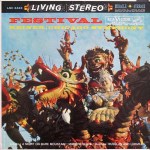
TAS List Thoughts about Festival – Harry, This One Is Out of Polarity, Man!

Hot Stamper Pressings of Living Stereo Titles Available Now

Harry Pearson put this on his list of the best Classic Records RCAs. It may be. I don’t recall ever playing one.

If you can reverse your absolute phase, this original pressings of this record actually sound fairly decent. Do you think Harry knew to do that, or even how to do it? I have my doubts.

He’s gone now so the point is moot, but I maintain it’s the rare reviewer who grasps these kinds of issues with anything approaching the depth and understanding that are required in order to be informative and accurate.


This is an older classical/orchestral review

Most of the older reviews you see are for records that did not go through the shootout process, the revolutionary approach to finding better sounding pressings we started developing in the early 2000s and have since turned into a veritable science.

We found the records you see in these older listings by cleaning and playing a pressing or two of the album, which we then described and priced based on how good the sound and surfaces were. (For out Hot Stamper listings, the Sonic Grades and Vinyl Playgrades are listed separately.)

(more…)