Month: July 2019

Miles Davis (Cookin’ and Relaxin’) in 2019

Hot Stamper Pressings of the Music of Miles Davis Available Now

To the Jazz Fans of the World, we here present one of the best sounding jazz recordings we have ever had the privilege to place on a turntable. I cannot ever recall hearing a better sounding Rudy Van Gelder recording, and I have a theory as to why this tape is as good as it is: it’s MONO.

WAY off the charts. Demo Disc Quality Sound of the Highest Order on the best tracks. The extension high and low sets these sides apart. The presence of the instruments and the space around them just cannot be beaten.

It also sounds like it’s recorded completely LIVE in the studio, direct to one track you might say. As good a recording as Kind of Blue is, I think the best parts of this album are more immediate and more real than anything on KOB.

Talk About Timbre

Man, when you play a Hot Stamper copy of an amazing recording such as this, the timbre of the instruments is so spot-on it makes all the hard work and money you’ve put into your stereo more than pay off. To paraphrase The Hollies, you get paid back with interest. If you hear anything funny in the mids and highs of this record, don’t blame the record.

This is the kind of record that shows up audiophile BS equipment for what it is: Audiophile BS. If you are checking for richness, Tubey magic and freedom from artificiality, I can’t think of a better test disc. It has loads of the first two and none of the last.

(more…)

Letter of the Week – “Never heard the Doors sound like this before”

Letters and Commentaries for The Soft Parade

One of our good customers had this to say about some Hot Stampers he purchased recently:

Hey Tom,   

Tom, I have not listened to the other two yet, but I had to shoot you a quick email about the Doors Soft Parade. It is totally killer.

It’s for records like this that we pour money into high performance audio systems. Bravo! Never heard the Doors sound like this before.

It’s hard to describe that pressing. It has everything you could want in a vinyl LP. Huge wide and deep soundstage, Jim’s voice and each instrument in its own 3D place in the soundstage, phenomenal tonal balance over the entire range of the music, great texture of voice and instruments, real here-with-you presence and the decay of notes is for real. Yeah, you’re right, this one has the magic.

Ed M.

Ed, thanks very much for your letter. I think you did a great job describing the pressing we sent you.

Best, TP

(more…)

Queen – Hot Space

More Queen

Hot Stamper Albums with Huge Choruses

  • With Shootout Winning Triple Plus (A+++) sound on side one and an outstanding Double Plus (A++) side two, this copy of Hot Space took top honors in our recent shootout
  • The best pressings – like this one – have plenty of bass and are smoother and fuller than the rest
  • Disco, funk, rhythm and blues, dance and pop music all found their way onto this 1982 release -the monster hit Under Pressure with none other than Mr. David Bowie closes out side two
  • “Hot Space is an essential cog for Queen completists… [it] has invention and ideas to spare.”

Queen albums in general are notoriously hard to find good sound for, and Queen albums from 1982 are probably even harder.

We’re guessing this album’s appeal is probably limited to fans of the band, but for those of you who want something different, or to hear Under Pressure sound good, we offer Hot Space with White Hot Stamper sound. (more…)

Ella Fitzgerald / Sings The Irving Berlin Song Book – Reviewed in 2005

This is a very nice looking Verve Strobe Label Double LP. The quality of the sound changes here not only from side to side but from track to track. We dropped the needle on various songs on each side and side three had the best sounding songs we heard. Every side had some great sounding songs, some with tubey magic and breathy vocals. How About Me and Cheek to Cheek on side two sound particularly good.  

AMG Review

These selections are perfectly suited for Fitzgerald’s voice and her romantic sensibility; they are happy, occasionally sad, and full of swinging rhythm. A few of these songs — “Cheek to Cheek,” “Puttin’ on the Ritz,” and “Blue Skies” — will be most familiar; others, “Top Hat, White Tie, and Tails,” “Russian Lullaby,” and “All By Myself” are as memorable but perhaps less known… For fans who have enjoyed other songbook recordings, this is a must-have; for those unfamiliar with Fitzgerald’s songbook work, this is an excellent place to start.

Yello – One Second

  • You’ll find outstanding Double Plus (A++) sound on both sides of this UK copy of the band’s 1987 release – exceptionally quiet vinyl too 
  • This British pressing boasts a wonderful combination of material, performance, and sonics from these German Studio Wizards
  • A true Demo Disc with everything-but-the-kitchen-sink sound
  • “…pounding drums, emotional vocals, downright evil backgrounds and completely zany, crazy and fun experiments in music production.”

Killer sound for this famous audiophile recording! The British and German import copies in our experience are the only ones that are made from master tapes; the domestic copies we played were not competitive, being clearly sourced from dubs. (more…)

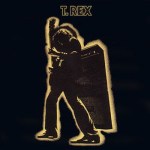
T.Rex / Electric Warrior – Our Previous Shootout Was in 2019

Hot Stamper Pressings of Albums from 1971 Available Now

UPDATE 2025

Yes, it takes us five or six years to find enough clean copies of this album with the right stampers to get a shootout going these days.


This early UK pressing is amazing, with the kind of grungy, Tubey Magical guitars that are guaranteed to blow your mind.

It’s beyond difficult to find quiet copies of this title (same goes for The Slider), let alone those with this kind of sound, so any fan of Mr Bolan should snap this one up and be quick about it.

This pressing is super spacious, sweet and positively dripping with ambience. Talk about Tubey Magic, the liquidity of the sound here is positively uncanny. This is vintage analog at its best, so full-bodied and relaxed you’ll wonder how it ever came to be that anyone seriously contemplated trying to improve it. (more…)

The Day the Music Burned

The Day the Music Burned

Jody Rosen

Please read the entire article. It is long but eminently worth your while if you care about music.

An excerpt:

But the case for masters extends beyond arguments about bit depth and frequency ranges audible only to dogs. It enters the realms of aesthetics and phenomenology. Simply put, the master of a recording is that recording; it is the thing itself. The master contains the record’s details in their purest form: the grain of a singer’s voice, the timbres of instruments, the ambience of the studio. It holds the ineffable essence that can only truly be apprehended when you encounter a work of art up-close and unmediated, or as up-close and unmediated as the peculiar medium of recorded sound permits. “You don’t have to be Walter Benjamin to understand that there’s a big difference between a painting and a photograph of that painting,” Zax said in his conference speech. “It’s exactly the same with sound recordings.”

The comparison to paintings is instructive. With a painting, our task as cultural stewards is to hang the thing properly, to keep it away from direct sunlight, to guard it from thieves. A painting must be maintained and preserved, but only in rare cases will a technological intervention improve our ability to see the artwork. If you were to stand before the Mona Lisa in an uncrowded gallery, you would be taking in the painting under more or less ideal circumstances. You will not get a better view.

In the case of a recording, a better view is possible. With recourse to the master, a recording’s “picture” can, potentially, be improved; the record can snap into sharper focus, its sound and meaning shining through with new clarity and brilliance. The reason is a technological time lag: For years, what people were able to record was of greater quality than what they were able to play back. “Most people don’t realize that recording technology was decades more sophisticated than playback technology,” Sapoznik says. “Today, we can decode information off original recordings that was impossible to hear at any time before.”

The process of revisiting and decoding can transfigure the most familiar music. In May 2017, a new box set of the Beatles’ “Sgt. Pepper’s Lonely Hearts Club Band” was released to mark the album’s 50th anniversary. “Sgt. Pepper’s” is one of the most famous recordings in history, but the version most listeners know is the stereo mix, which was of secondary importance to the Beatles, their producer George Martin and his engineer, Geoff Emerick. It was the mono mix that consumed the Beatles’ attention, and it is to those materials that the box set’s producer, Martin’s son Giles, returned, creating a fresh stereo mix from the mono masters. “The job was to strip back layers, to get back to that original sound and intent,” he says. “The detail we can garner from the mix compared to what they could have done 50 years ago is fantastic.”

The result is a vivid new “Sgt. Pepper’s.” In certain quarters, the album has been regarded as twee, but Giles Martin’s mix reveals a burlier rock ’n’ roll record. The box set opens new vistas on the album’s themes and adds force to its pathos. The opus “A Day in the Life” sounds more ominous than ever, a portent of late ’60s chaos, of the storm gathering on the other side of the Summer of Love. These epiphanies would not have been possible without masters. “Working without the master tapes,” Martin says, “would be like a chef having to use precooked food.”

The “Sgt. Pepper’s” masters are kept in a secure location in London. The tape boxes are marked with recording notes that helped guide Martin’s mixing decisions. The tapes themselves feature additional recordings — alternate versions, overdubs, studio chatter — that were included on the rerelease. Tens of millions of copies of “Sgt. Pepper’s” have been sold over the years; it may seem precious to place special value on the original of a record that is so well known and ubiquitous. But the masters in the London archive are unique. They have greater fidelity than any copy of “Sgt. Pepper’s” that is out in the world. They have more documentation than any version anywhere. And the masters contain more Beatles music too.

Jody Rosen is a contributing writer for the magazine. His book about the history of the bicycle will be published in 2020.

Martin Denny – Exotica Volume II

  • Side two is White Hot – the sound positively JUMPS out the speakers
  • It’s shockingly 3-Dimensional, rich and Tubey Magical – you won’t believe it
  • Side one is quite good at A+ to A++ – it gets better as it plays
  • One of our favorite Martin Denny records – wonderfully spacious Exotica sound from 1957

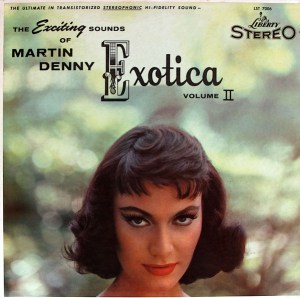
This Liberty ’60s Label Stereo LP has Hot Stamper EXOTIC SOUND on both sides. The cover says it’s The Ultimate in Transistorized Stereophonic Hi-Fidelity Sound, but I hear an awful lot of Tubey Magical richness and sweetness. The tonality is actually right on the money, a quality that the heavily tubey recordings rarely exhibit: they can easily get overly lush and turn murky.

We played a big pile of Martin Denny records during our shootout, not having enough clean copies of any one of them to do it the way we would with rock or jazz records, and this pressing was one of the best we heard, musically and sonically. (more…)

Blues Breakers – A Must Own John Mayall Album

More British Blues and Blues Rock
Hot Stamper Pressings of the Music of Eric Clapton Available Now

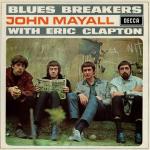
We’ve been searching for copies of Bluesbreakers for years — everyone wants a great copy of this Five Star Classic, the only album John Mayall ever made that we would consider a Must Own. After many, many years of experimentation and dozens of copies purchased we’ve finally discovered the British pressings that deliver the best sound we’ve ever heard for this music.

But they don’t come easy and they sure don’t come cheap, so don’t expect the floodgates to open with Hot Stamper after Hot Stamper hitting the site. We have a select few and it will be a year or two at the very least before we have a big enough stack of copies with which to do a shootout to find more.

A Landmark of British Blues from 1966

This is an Timeless Classic — Allmusic calls it “perhaps the best British blues album ever cut” — and it’s been a drag for years hearing it sound dull, lifeless, bland and small the way it does on so many copies. You may recognize these descriptors for what they are: signs that the pressing is made from a dubbed tape of the master .

Even worse are the versions that are bright, brittle and phony. When you’ve got a lineup like this you need the kind of space and soundstaging separation that lets you appreciate just what each of these guys is doing, instead of the muddled mess that many of us have all but given up trying to enjoy.

To qualify as a Hot Stamper, a must offer the transparency to let listener hear into the music and appreciate how the members of this group are playing as an ensemble to create this exceptionally powerful, moving and timeless music.

Credit engineer (and later producer) Gus Dudgeon with the full-bodied, rich, smooth, oh-so-analog sound of the best copies of Bluesbreakers. He’s recorded or produced many of our favorite albums here at Better Records, most notably the classic Elton Johns from the self-titled album onward. You can find many of them on our site and on our Top 100 list, including Elton’s Masterpiece, Tumbleweed Connection.

AMG Review

Bluesbreakers with Eric Clapton was Eric Clapton’s first fully realized album as a blues guitarist — more than that, it was a seminal blues album of the 1960s, perhaps the best British blues album ever cut, and the best LP ever recorded by John Mayall’s Bluesbreakers.

Standing midway between Clapton’s stint with the Yardbirds and the formation of Cream, this album featured the new guitar hero on a series of stripped-down blues standards, Mayall pieces, and one Mayall/Clapton composition, all of which had him stretching out in the idiom for the first time in the studio.

This album was the culmination of a very successful year of playing with John Mayall, a fully realized blues creation, featuring sounds very close to the group’s stage performances, and with no compromises.

Credit has to go to producer Mike Vernon for the purity and simplicity of the record; most British producers of that era wouldn’t have been able to get it recorded this way, much less released. One can hear the very direct influence of Buddy Guy and a handful of other American bluesmen in the playing.

Dr. John – In The Right Place

  • Off the charts “Triple Triple” sound for this Must Own Dr. John album – both sides earned our top grade of A+++
  • SURPRISINGLY GOOD SOUND – who knew how well recorded this album was? (Certainly not the audiophile press)
  • We don’t know of any other Dr. John album with sound remotely as good, and the modern albums of his we’ve played were just awful
  • 4 1/2 Stars: “Dr. John finally struck paydirt here and was certainly In the Right Place. With the hit single “Right Place Wrong Time” bounding up the charts, this fine collection saw many unaware listeners being initiated into New Orleans-style rock.”

Punchy drums, solid bass, smooth vocals, extended highs — this album was produced, recorded and mastered by superbly talented individuals who deserve a lot of credit for the work they have done here.

If you like Little Feat this album should be right up your alley. And if you like this album and don’t know little feat, the link on the left will take you to their music. They’re one of the all time great bands of the ’70s (and still going as far as I know). (more…)