top-CD-sound

We Get Letters – “That is the only CD I have ever heard that had Hot Stamper sound quality.”

Hot Stamper Pressings of the Music of The Doors Available Now

A customer wrote the following to us not long ago:

Recently I fired up my CD circuit, which does not happen very often.

Once the system was warmed up I played some MoFi gold CDs.

Nothing special, but I did like the Yes Fragile CD. Actually enjoyed it.

Guns and Roses Appetite was nasty…

Supertramp Breakfast was nasty…

Enough of that. Then I read your blog on the Doors LA Woman DCC gold CD. Found I have it!

Played the whole thing and I wanted more of it. That is the only CD I have ever heard that had Hot Stamper sound quality.

Dear Sir,

Steve did a great job on L.A. Woman, let me be the first to say. Of course the real thing on vinyl is even better, but it’s a great way to test how good your front end is, assuming you have a killer copy of the vinyl, something that is very unlikely to be the case but something that cannot be ruled out entirely. (Tell me your stamper numbers and I will tell you if you are close.)

I worked through a lot of changes to my system in the 90s and 2000s partly because I had CDs that sounded better in some ways than my vinyl versions of them.

That never happens now, but it took me 20 years to get there!

For example, in the early 2000s this title did not sound as good as the CD until I got rid of all my tube equipment and discovered the life-changing sound of the EAR 324P, the Dynavector 17d and a lot more. The transient attack of the drums and cymbals went from “well recorded — it’s a direct to disc, what did you expect?” to suddenly sounding like real drums you might hear if you were sitting right in front of the kit in a small club.

(I recently took a trip to Nashville and had a chance to see and hear more than a dozen drum kits on the main boulevard. There seemed to be one in every club, facing inwards with the glass of the window removed to give the passers by a taste of what was in store for them inside. Standing three feet from a guy banging a drum kit is something that can teach you a lot about sound, mostly by showing you the enormous gulf that separates live sound from recorded sound in the most audiophile systems.)

That CD of The Three showed me what I had been missing — the presence, dynamics, and most importantly speed and complete freedom from smear of any kind on any instrument. It changed many of my ideas about audio in the most fundamental ways imaginable. Nothing in my audio world was the same after that.

Of the many audio breakthroughs I’ve undergone in the fifty years I’ve been pursuing audio , I might be inclined to put this one right at the top of the list.

(more…)

Just Say No to The Yes Album on Rhino

Hot Stamper Pressings of the Music of Yes Available Now

You can find this one in our audiophile record hall of shame, along with almost 300 others that, in our opinion, make a mockery of the term “audiophile record.”

Is it the worst version ever?

Hard to imagine it would have much competition. The CD I own is dramatically better sounding, and it can probably be had for ten bucks or less. (Make sure Joe Gastwirt had nothing to do with whatever version you buy. His stuff is usually no-noised garbage.)

That notorious hack Ron McMaster strikes again.

Rhino Records bills their releases as pressed on “180 gram High Performance Vinyl.” However, if they are using performance to refer to sound quality, we have found the performance of their vinyl to be quite low, lower than the average copy one might stumble upon in the used record bins.

The CD versions of most of the LP titles they released early on are far better sounding than the lifeless, flat, pinched, so-called audiophile pressings they produced starting around 2000.

The mastering engineer for this junk title actually has the nerve to feature his name in the ads for the records. He should be run out of town, not promoted as a keeper of the faith and defender of the virtues of “vinyl.” If this is what vinyl sounds like I’d would have switched to CD years ago.

And the amazing thing is, as bad as these records are, there are people who like them. I’ve read postings on the internet from people who say the sound on these records is just fine. It’s sad.

Their Grateful Dead titles sound as bad as the cheapest Super Saver reissue copies I have ever heard. And those are terrible!

(more…)

Which Album by The Who Has the Best Sound?

Hot Stamper Pressings of the Music of The Who Available Now

We think Tommy has the best Who sound.

I don’t know of another Who album with such consistently good sound — song to song, not copy to copy of course. Just about every song on here can sound wonderful on the right UK pressing.

If you’re lucky enough to get hold of a killer copy, you’re going to be blown away by the Tubey Magical guitars, the rock-solid bottom end, the jumpin’-out-of-the-speakers presence and dynamics, and the silky vocals and top end.

Usually the best we can give you for The Who is big and rockin’ (Who’s Next, Live at Leeds), but on Tommy, we can give you 60s analog magic you will rarely find in the decades to follow.

Killer Acoustic Guitars

Acoustic guitar reproduction is key to this recording, and on the best copies the harmonic coherency, the richness, the body and the simply phenomenal amounts of Tubey Magic can be heard in every strum.

What do high grades give you for this album? Silky, sweet vocals; huge weight to the bottom end; “you are there” immediacy; BIG drums, off the charts rock and roll energy, and shocking clarity and transparency.

No other Who album in our experience has all these things in such abundance.

The Tubey Magic Top Ten

You don’t need tube equipment to hear the prodigious amount of Tubey Magic that exists on this recording. For those of you who’ve experienced top quality analog pressings of Meddle or Dark Side of the Moon, or practically any jazz album on Contemporary, whether played through tubes or transistors, that’s the luscious sound of Tubey Magic, and it is all over Tommy.

(more…)

Workingman’s Dead is Dead as a Doornail on Rhino Records

Hot Stamper Pressings of the Music of The Grateful Dead Available Now

This review was written many years ago, shortly after the release of the album in the early-2000s.


An audiophile hall of shame pressing and a Heavy Vinyl disaster if there ever was one (and oh yes, there are plenty. Here are some of the more recent examples we’ve played).

The 2003 Rhino reissue on Heavy Vinyl of Workingman’s Dead is absolutely awful. It sounds like a bad cassette.

The CD of the album that I own is superb, which means that the tapes are not the problem, bad mastering and pressing are.

This pressing has what we call ”modern” sound, which is to say it’s clean and tonally correct for the most part, but it’s missing the Tubey Magic the originals and the good reissues both have plenty of.

Is it the worst version of the album ever made? The pressings on the last WB labels are pretty awful, but this awful? Who can say.


Rhino Records has really made a mockery of the analog medium. Rhino bills their releases as pressed on “180 gram High Performance Vinyl”. However, if they are using performance to refer to sound quality, we have found the performance of their vinyl to be quite low, lower than the average copy one might stumble upon in the used record bins.

The CD versions of most of the LP titles they released early on are far better sounding than the lifeless, flat, pinched, so-called audiophile pressings they did starting around 2000. The mastering engineer for this garbage actually has the nerve to feature his name in the ads for the records. He should be run out of town, not promoted as a keeper of the faith and defender of the virtues of “vinyl.” If this is what vinyl sounds like I’d switch to CD myself.

And the amazing thing is, as bad as these records are, there are people who like them! I’ve read postings on the internet from people who say the sound on these records is just fine, thank you very much. I find this very, very sad. More proof, as if we needed it, that the audiophile record collecting world has lost its mind.

Their Grateful Dead titles sound worse than the cheapest Super Saver reissue copies I have ever heard. The Yes Album sounds like a cheap cassette as well, a ghost of the real thing.

(more…)

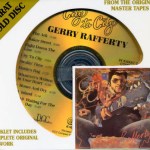
City To City on Gold CD

More of the Music of Gerry Rafferty

The DCC gold CD sounds very respectable; Hoffman did his usual excellent job.

But it’s still a CD, and no CD has the kind of warmth, sweetness and Tubey Magic that can be found on a properly-mastered and -pressed LP.

As we’ve noted in our listings, “Here you will find the kind of rich, sweet, classically British Tubey Magical sound that we cannot get enough of here at Better Records.”

A list of Must Own rock and pop albums from 1977 would have to have this album on it, somethere near the top I would think.

In our opinion, City to City is Rafferty’s best sounding album, and probably the only Rafferty solo release you’ll ever need.

Click on this link to see more titles we like to call one and done.

Night Owl (1979), Snakes and Ladders (1980) and Can I Have My Money Back (1971) strike us as weak albums, strictly for hardcore fans.

(more…)

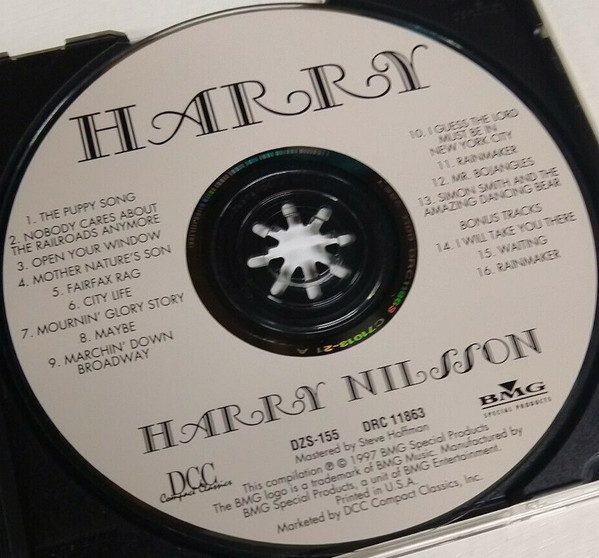
Try the DCC of Harry, It’s Excellent

Hot Stamper Pressings of the Music of Harry Nilsson Available Now

Until recently we had not done a shootout for this album in many years, and the good copies we are offering on the site are far from cheap.

You may not want to pay our prices.

However, the music is so good we think everyone deserves a chance to hear it, so pick up the Hoffman-mastered CD and enjoy the hell out of it in the meantime.

Hoffmann did a great job, as he did on so many of the DCC discs. (The Heavy Vinyl LPs are another matter entirely of course.)

The CD sound is excellent and it will probably cost you a very small fraction of what we would charge for the vinyl.

Harry is a forgotten gem that sank like a stone in 1969, but time has treated the album well, and it still holds up.

The production is superb throughout. Judging by this early Nilsson’s album, it appears he was already a pro in the studio, as well as an accomplished songwriter, and, more importantly, the owner of one of the sweetest tenors in popular music, then or now.

(more…)

Song for Beginners Was Remixed and Ruined on Classic Records

I’ve listened to Nash’s first solo outing countless times over the last thirty years, even more than Crosby, Stills and Nash’s first album. As I was listening to the Classic pressing, I recall thinking “Wow, I don’t remember that sound being there; this version is so much better I can hear things I never heard before!”

Well, owners of this album (all five of you) will certainly hear things you never heard before, because some of the tracks on this album have been remixed and some of the instruments re-recorded. How about them apples.

Both the snare and the kick drum on some songs are clearly too “modern” sounding for anything recorded in 1971. For Pete’s sake, they’d be right at home on Nevermind.

Sometimes the vocal tracks are different—probably alternate takes I would think, as Graham obviously can’t sing like he did thirty years ago to even attempt a re-recording.

As you can imagine, remastering a well-known title and creating a new sound for it is a huge bête noire for us here at Better Records. This Classic Records release is like nails on a blackboard to me now.

No doubt the idea was Graham’s but it was a very bad one indeed. (If you can get hold of the original unadulterated CD, I highly recommend it. The sound is excellent.)

(more…)

What I Couldn’t Hear on My 90s Tube System

Hot Stamper Pressings of Contemporary Jazz Albums Available Now

I have a very long history with Bells Are Ringing, dating back to the 90s. My friend Robert Pincus first turned me on to the CD, which, happily for all concerned, was mastered beautifully and comes highly recommended if you want to work on your digital playback or other non-analog aspects of your system such as your room, electricity, speaker placement and such like. (More recommended CDs here.)

Back in the day we often used it to test and tweak some of the stereos in my friends’ systems.

Playing the original stereo pressing, all I could hear on my 90s tube system was

  • blurred mids,
  • lack of transient attack,
  • sloppy bass,
  • lack of space and transparency,
  • and plenty of other shortcomings too numerous to mention.

All of which I simply attributed at the time to the limitations of the vintage jazz pressing I owned.

A classic case of me rather foolishly blaming the recording.

I know better now. The record was fine. I just couldn’t reproduce it.

Well, things have certainly changed. I have virtually none of the equipment I had back then, and I hear none of the problems with this copy that I heard back then. This is clearly a different LP, I sold the old one off years ago, but I have to think that much of the change in the sound was a change in cleaning, equipment, setup, tweaks and room treatments, all the stuff we prattle on about endlessly on this blog.

(more…)

Waiting for the Sun – Don’t the DCC Pressings All Sound Different Too?

More of the Music of The Doors

I recently had a chance to listen again to this DCC pressing for the first time in many years. I was putting it up on ebay to sell and dropped the needle to check the sound. I can’t say I liked what I heard. Knowing the record as well as I do, I could her that the DCC was clearly to be brighter in the midrange.

When I went back to read what I had said about the DCC years ago, I saw that I had described that copy the same way. You can read it for yourself.

Our old review follows.

We rate the DCC LP a B Minus

We used to like the DCC pressing of this Doors album. Now… not so much. It’s a classic case of Live and Learn.

Keep in mind that the only way you can never be wrong about your records is simply to avoid playing them. If you have better equipment than you did, say, five or ten years ago, try playing some of your MoFi’s, 180 gram LPs, Japanese pressings, 45 RPM remasters and the like. You might be in for quite a shock.

Of course the question on everyone’s mind is, “How does this Hot Stamper copy stack up to the famous DCC pressing?” After all, the DCC was the one we were touting all through the ’90s as The One To Beat.

Well, to be honest, the DCC is a nice record, but a really special original copy throws a pretty strong light on its faults, which are numerous and frankly fairly bothersome.

The top end on the copy I played was a touch boosted, causing a number of problems.

For one, the cymbals sounded slightly tizzy compared to the real thing, which had a fairly natural, though not especially extended, top end.

But the real problem was in the midrange. Morrison sounded thinner and brighter, more like a tenor and less like a baritone, with a somewhat hi-fi-ish quality added to the top of his voice. Folks, I hate to say it, but if someone had told me that the record playing was half-speed mastered, I probably would have believed it. I detest that sound, and the DCC pressing bugged the hell out of me in that respect.

Morrison has one of the richest and most distinctive voices in the history of rock. When it doesn’t sound like the guy I’ve been listening to for close to forty years, something ain’t right.

The mid-bass was also a tad boosted — not in the deep bass, but more in that area around 100-200 cycles, causing the sound to be overly rich. None of the originals we played had anything like it, so I’m pretty sure that’s a bit of added EQ Hoffman introduced for reasons best known to him. (Did he like it that way, or was he pandering to some of the audiophile community’s preference for overly rich sound, the kind they confuse with “analog”? Nobody knows.)

Not So Fast There, O Hot Stamper Guru

But wait a minute — don’t all records sound different? Is it really fair to paint his version with such a broad brush on the basis of having played only one copy?

Of course not. Perhaps other copies sound better. It wouldn’t be the first time. (Maybe they sound worse. Think about that.)

So here’s our offer to you, dear customer: We absolutely guarantee our Hot Stamper copies will handily beat the DCC pressing or your money back. We’ll even pay the return domestic shipping if for some reason you are not 100% satisfied with the sound of our Hot Stamper. Now there’s an offer you can’t refuse, for any one of you who love the album and have a wad of money burning a hole in your pocket.

(more…)

Girls Girls Girls – Skip It on Vinyl (But Get the Brilliant 2 CD Set)

More of the Music of Elvis Costello

Years ago we had a British Import Demon Records 2 LP set that sounded decent — better sound than you’d find on any domestic copy — and the songs, spanning the period from 1976 to 1986, are GREAT! 

But the CD has much better sound than any vinyl I have yet to hear.

Buy the CD, it’s one of the best compilations — of any artist’s music — I know of.

(more…)