
tchaisym4

This Tchaikovsky 4th with Argenta Didn’t Make the Grade

Hot Stamper Pressings of the Music of Tchaikovsky Available Now

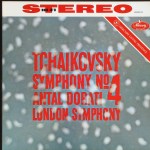
This vintage London Blueback pressing of CS 6048 was released in 1958.

(1958 just happens to be one of the best years for analog recording, as evidenced by this amazing group of albums, all recorded or released in that year.)

CS 6048 seemed to have a lot going for it so we thought we would get one in and give it a spin.

For starters, just take a look at that cover!

Roy Wallace was the engineer and many of his recordings are superb. (As of this posting there are fifteen available on our site.)

Recorded in Geneva’s world-renowned Victoria Hall with L’Orchestre De La Suisse Romande performing, many of of the best sounding records we’ve ever played boast these three elements.

Unfortunately, this London has a case of the “old record” sound we find on far too many vintage pressings, even those with credentials as promising as this one.

All the right people worked on it. How did it all go so wrong?

Who the hell knows?

The world is full of old records that just sound like old records. We’ve suffered through them by the tens of thousands in the 38 years we’ve been in the business of selling premium vinyl to audiophiles.

Our website, as well as this blog, are devoted to helping audiophiles find pressings that don’t sound anything like the millions of run-of-the-mill — and sometimes just awful, as was the case here — LPs that were stamped out over the last seven decades or so.

Even a million dollar stereo can’t make the average record sound good, and the more accurate and revealing the system, the more limited and lifeless the average record will show itself to be.

(more…)

This Mercury Is Not a Good Way to Enjoy Tchaikovsky’s 4th

More of the Music of Tchaikovsky Available Now

The pressings we’ve played of SR 90279 over the years tended to have crude and shrill sound. The string tone was bright and steely.

In our most recent shootout for the work, since we happened to have one in stock, we figured we would give the Mercury one more chance, just in case we had finally stumbled on some good stampers or that other improvements to our playback would allow the hidden virtues of the recording to be revealed. (Yes, thankfully that is still happening. So is the reverse; some records don’t do as well in shootouts as they used to, a reality every audiophile has to be on the alert for, a subject we discuss here.)

It probably lasted less than five minutes on the table.

It was simply too unpleasant to be played on the revealing modern equipment we use.

It seems that many early Mercury recordings suffer from these shortcomings. My guess would be at least half, maybe even closer to two out of three.

Waking Up

If your system is dull, dull, deadly dull, the way some audiophile systems tend to be, this record has the hyped-up, bright and aggressive sound to bring it to life in no time. (If you’re a fan of MoFi pressings from the 70s and 80s, you definitely have a much smoother top end than we do. Most of the records they made in those years are way too bright and full of the kind of phony detail that some systems need to wake them up. I should know; I had one of those systems myself, but of course I didn’t know it at the time and would have gone to the mat to deny the accusation.)

There are scores of commentaries on the site detailing the huge improvements in audio available to the discerning (and well-healed) audiophile. It’s the reason Hot Stampers can and do sound dramatically better than their Heavy Vinyl or audiophile counterparts: because your stereo is now good enough to show you the difference.

With a too-forgiving system, you will most likely continue to be fooled by bad records, just as I and all my audio buds were fooled thirty and forty years ago. Audio has improved immensely in that time. If you’re still playing Heavy Vinyl and audiophile pressings, there’s a world of sound you clearly don’t know you’re missing.

My advice is to get better equipment and spend as much time as you can learning to tweak and tune it. That will allow you to be better at recognizing bad records when you play them.

The Heavy Vinyl Route

If more vintage Mercurys had sound as bad as this one, we would happily admit that going the Heavy Vinyl route might make sense.

And there certainly are a lot of bad vintage pressings — we should know, we’ve played them by the hundreds — but the number of bad modern Heavy Vinyl pressings would give them a run for their money and then some.

Beyond this Tchaicovsky title, there are plenty of others we’ve run into over the years with too many sonic shortcomings. As a public service, here are about 60 of them, broken down by label.

(more…)

This Tchaikovsky 4th Turned Out to Be Not as Good as We’d Hoped

Hot Stamper Pressings of the Music of Tchaikovsky Available Now

About ten years ago we dropped the needle on this Mehta recording and thought it had potential, so we went about acquiring more copies for an eventual shootout.

A few years back we gave them another listen and found the sound not to our liking.

We have not done a shootout for any of the major Tchaikovsky symphonies (4, 5 and 6) in a very long time, but we hope to do them in the future, although that future could be many years from now. Nothing we have dropped the needle on has knocked us out, and that’s usually what it takes to get the ball rolling.


UPDATE 2024

Actually we quite like this RCA reissue with Monteux, and there are some other recordings we know to be good, but they are turning out to be very hard to find.


These Mehta Londons have revealed themselves to be much more artificial sounding than we thought they were, or, more accurately, could tell they were back in 2011.

Like every Royce Hall recording we’ve ever played, including the one everybody knows, there is too much multi-miking and spotlighting going on for us to suspend our disbelief and feel like we are in the living presence of the musicians, to borrow a phrase. The orchestra in this recording is not presented with anything resembling the experience one would have in the concert hall.

James Lock is a brilliant recording engineer, but his work here in the states leaves a lot to be desired.

(more…)