mussopictu

Did We Get The Power of the Orchestra Wrong, or Are These Just Bad Stampers?

Hot Stamper Pressings of Living Stereo Recordings Available Now

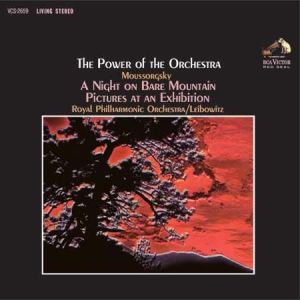
In 2007, we wrote the following review for The Power of the Orchestra, VCS 2659:

DEMO DISC QUALITY ORCHESTRAL SOUND like you will not believe. We put two top copies together to bring you the ultimate-sounding Pictures At An Exhibition. Folks, it doesn’t get any better than this for huge orchestral dynamics and energy.

I confess I badly misjudged this record over the course of the last few years. I remember liking it in the early ’90s; at that time it was the only Golden Age recording of Pictures whose performance moved me. I never liked the famous Reiner, LSC 2201, and Ansermet’s performance on London also lacks drive and coherency in my opinion.

I then went on to extoll the many virtues of the recording, making special mention of the brass, dynamics and bass, which you can read about here.

More recently we played a copy of VCS 2659 in one of our regular Pictures at an Exhibition shootouts and were not the least bit impressed by it.
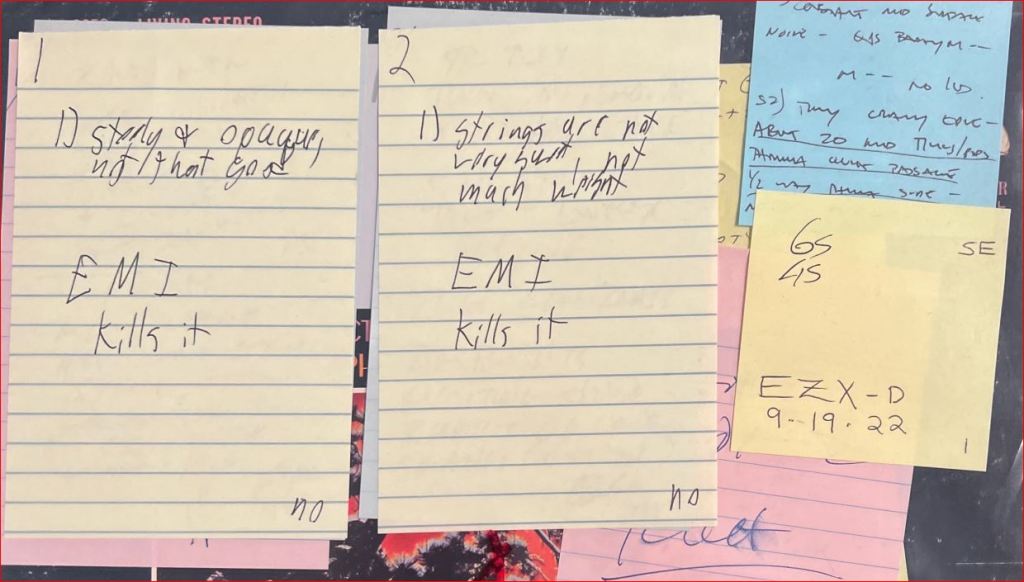
Side One:

Steely and opaque, not that good.

Side Two:

Strings are not very [unintelligible, might be bright], not much weight.

In other words, it just sounded like an old record.
(more…)

Big Speakers and Loud Levels Bring Out the Power of the Orchestra

Hot Stamper LPs that Sound Their Best on Big Speakers at Loud Levels

The darker brass instruments like tubas, trombones and french horns are superb here. Other Golden Age recordings of the work, as enjoyable as they may be in other respects, do not fully reproduce the weighty quality of the brass, probably due to limiting, poor eq, poor miking, or some combination of the three.

The brass on this record has the powerful weight and energy of live music like practically no other orchestral pressing we have ever played.

It’s also tonally correct. It’s not aggressive. It’s not irritating. It’s just immediate and powerful the way the real thing is when you hear it live. That’s what really caught my ear when I first played the recording.

There is a blast of brass at the end of Catacombs that is so big and real, it makes you forget you’re listening to a recording. You hear every brass instrument, full size, full weight. I still remember the night I was playing the album, good and loud of course, when that part of the work played through. The power of it was truly startling.

Back then I had the Legacy Whisper speaker system, the one with eight 15″ woofers. They moved air like nobody’s business. If you want to reproduce the power of the trombone, the loudest instrument in the orchestra, they’re the speaker that can do it.

Some of Ansermet’s recordings with the Suisse Romande are absolutely the best I’ve ever heard. It was a magical combination of the right hall, the right engineers, the right orchestra and the right technology — the pure tube ANALOG technology of the 50s and 60s!

Dynamics

Another thing this recording has going for it is dynamic power. This is a dynamic piece of music. Few recordings I have ever heard have the dynamic contrasts that this one does. It really gets loud when it needs to. The best pressings sound completely uncompressed. Although I’m sure there has to be compression of one kind or another, the listener is rarely made aware of it.

Dynamics such as these are thrilling. They let the music come alive.

(more…)

Mussorgsky / Pictures at an Exhibition / Ansermet

Hot Stamper LPs that Need to Be Played on Big Speakers at Loud Levels

Recordings that Sound Their Best on Big Speakers at Loud Levels 

I used to think Ansermet’s reading was ponderous, but this copy from 2013 is making me want to change my mind.

Is it more lively than others? Is the stereo that much improved since I last heard one of these Londons?

We have no way of knowing. All we do know is that we were enjoying Ansermet’s performance more than we ever had before.

The darker brass instruments like tubas, trombones and french horns are superb here. Other Golden Age recordings of the work, as enjoyable as they may be in other respects, do not fully reproduce the weighty quality of the brass, probably because of compression, limiting, tube smear, or some combination of the three.

The brass on this record has a power like practically no other recording of the work we know.

It’s also tonally correct. It’s not aggressive. It’s not irritating. It’s just immediate and powerful the way the real thing is when you hear it live. That’s what really caught my ear when I first played the recording.

There is a blast of brass at the end of Catacombs that is so big and real, it makes you forget you’re listening to a recording. You hear every brass instrument, full size, full weight. I still remember the night I was playing the album, good and loud of course, when that part of the work played through. It was truly startling in its power.

Some of Ansermet’s recordings with the Suisse Romande are absolutely the best I’ve ever heard. It was a magical combination of the right hall, the right engineers, the right orchestra and the right technology — the pure tube ANALOG technology of the ’50s and ’60s!

(more…)

Witches’ Brew on Classic Records and How Crazy Wrong We Were, Part Two

Hot Stamper Living Stereo Classical and Orchestral Titles Available Now

As I noted in Part One of this commentary, I promised to find my old blurb for the Classic pressing of Witches’ Brew from the catalog I sent out for years in the mid-’90s.

Well, I found it.

The excerpt from the earlier commentary seen below gets to the heart of the problem with my (embarrassing) review.

“With an old school audio system you will continue to be fooled by bad records, just as I and all my audio buds were fooled thirty and forty years ago. Audio has improved immensely in that time. If you’re still playing Heavy Vinyl and Audiophile pressings, there’s a world of sound you’re missing. We would love to help you find it.”

Ouch.

I apparently had one of those systems in the ’90s, because my system sure wasn’t doing a very good job of showing me how awful the Classic pressing of Witches’ Brew was.

Also, my guess that the Classic pressing was 10db more dynamic is risible. That number was clearly plucked out of thin air by someone who didn’t know what he was talking about (10db is a lot).

I will take some solace from my comment that  “90% of the magic of the original is here,” which means that even in 1994 I could hear that Bernie’s cutting system had problems reproducing the Tubey Magical Living Stereo sound that was all the rage at the time, mostly owing to Harry Pearson’s listing so many RCAs on his Super Disc List.

And, although we still like Gibson’s reading of the work, these days our favorite performance of Danse Macabre is this one on EMI, one we only discovered about five years ago. It’s one advantage to being in the record business. You get to play lots and lots of records, and playing large numbers of records is practically the only way to find the ones that are even better than the ones you know.

(more…)

An Exceptionally Natural Piano Recording of Pictures at an Exhibition

More of the music of Modest Mussorgsky (1839-1881)
This original London pressing of the solo piano version of Pictures has uncannily natural piano reproduction, which is why we are awarding this side one our highest sonic grade, A Triple Plus.

The fact that the recording takes place in Kingsway Hall in 1967 no doubt plays a large part in the natural sound. The hall is bigger here than on other copies, the piano even more solidly weighted, yet none of this comes at the expense of the clarity of the playing.

The piano has no smear, allowing both the percussive aspects of the instrument and the extended harmonics of the notes to be heard clearly and appreciated fully.

Pianos are very good for testing your system, room, tweaks, electricity and all the rest, not to mention turntable setup and adjustment. More records that are good for testing and improving your playback can be found here.


Side two has Mehta’s performance of the orchestrated work squeezed onto side two, which is never a good idea if one is looking for high quality orchestral sound. The performance itself is mediocre as well.

We are not, and never have been, big fans of Mehta’s work with the Los Angeles Philharmonic on London Records.

The exceptionally rare copy of Mehta’s Planets can sound good, but 90% of them do not — just don’t make the mistake of telling that to the average audiophile who owns one. Harry told him it was the best, he paid good money for it, and until someone tells him otherwise it had better be “the one Planets to own.” (Why audiophiles need someone to tell them what recordings are the best is a mystery. Can’t they just play them and listen for themselves?)

We see one of our roles here at Better Records as being the guys who actually will “tell you different,” and, more importantly, can back up our opinions with the records that make our case for us.

(more…)

Mussorgsky / The Power of the Orchestra / Leibowitz – Our Shootout Winner from 2011

UPDATE 2023

This review dates from 2011. We recently played a stereo copy of the album and did not much care for the sound of it, which you can read about here.


This Shaded Dog pressing of the famous TAS List Super Disc title has TWO AMAZING SIDES, including a side two that is White Hot! We have never heard a copy with such a huge hall sound and so much weight down low. As we said last time we did a shootout for this title in 2007: “DEMO DISC QUALITY ORCHESTRAL SOUND like you will not believe. Folks, it doesn’t get any better than this for huge orchestral dynamics and energy.” 

As you know, if you’ve been on our site for any length of time at all, we’ve made a good number of significant improvements to our stereo and room since 2007, so it’s entirely accurate to say we have never heard this kind of Demo Disc sound for this album until now, because we haven’t!

Side One

A++. The hall is wide and deep as any you will hear. Tons of power and weight down low. A touch dark, otherwise it would have earned the full Three Plus top grade.

Side Two

A+++, White Hot and Hard to Fault! The strings are so richly textured — who does it better than Wilkinson? Cymbal really crash on this side, something you rarely hear correctly reproduced on recordings.

This could easily become your go-to record for demonstrating not just the Power of the Orchestra, but the power of Old Analog! (more…)

Witches’ Brew – Reviewed in 2007

Hot Stamper Pressings of Living Stereo Titles Available Now

This review from 2007 is way off the mark. We see now just how wrong we were.

To be honest, in 2007 we had a lot to learn. We’ve worked very hard to learn it over the ensuing years, and we have no intention of stopping as long as people keep buying our Hot Stamper pressings.

2007, Here Goes

DEMONSTRATION QUALITY SOUND, of a sort. As I’ve said elsewhere on the site, this is not my idea of natural tonality. It’s not trying to be a realistic recreation of music performed in the concert hall. It’s a blockbuster to be impressive when played on an audio system in your home. On that level is succeeds.

As for the music, I have long held that the Danse Macabre on this album is the best ever. I probably still agree with that [not anymore, here’s a better one], but so much of the material on this record is amazingly good that that’s actually kind of a left-handed compliment. The entire side 2 is outstanding from start to finish.

The excerpt on side 1 from Pictures at an Exhibition and the complete A Night on Bare Mountain are both played with a kind of energy and orchestral technical quality that makes these pieces come alive right in your living room.

(more…)

Mussorgsky / The Power of the Orchestra / Leibowitz – Awesome In Mono

Hot Stamper Pressings of Pictures at an Exhibition

More on Mussorgsky’s (and Ravel’s) Masterpiece – Pictures at an Exhibition

This review dates from 2007. We recently played a stereo copy of the album and did not much care for the sound of it, which you can read about here.

This is the kind of record that the mono cartridge owners of the world worship. And for good reason. But you don’t need to have a mono cartridge to hear how good — in fact, how much BETTER — this copy sounds than most of the stereo pressings out there.

I found out about mono classical records one day when I got a mono copy of The Power Of The Orchestra, VCM 2659. It sounded better than any stereo recording of that work I had ever heard. All the instruments were so much more solid sounding, so palpable, so free from distortion, that it made me recognize for the first time what the mono record lovers of the world were talking about.

That was well over ten years ago. Since then many high end mono cartridges have come on the market, specifically to bring out that sound.

(more…)

Mussorgsky / The Power of the Orchestra – Awesome In Stereo?

More of the Music of Modest Mussorgsky

UPDATE 2022

This review dates from 2007. We recently played a copy of the album and did not care for the sound much, which you can read about here.


DEMO DISC QUALITY ORCHESTRAL SOUND like you will not believe. We put two top copies together to bring you the ultimate-sounding Pictures At An Exhibition. Folks, it doesn’t get any better than this for huge orchestral dynamics and energy.

One side of each copy rates A Triple Plus — our highest sonic grade. The sound is out of this world. 

We had to do it that way, for one simple reason: Pictures stretches over both sides of this record, and no copy we played had two good sides, which means that if you were to own only one LP of this set, some part of the work would not sound nearly as good as the rest. This is always a problem with classical recordings: one good sounding side is not enough.

On top of that there are always condition issues with old Living Stereo records. So few are quiet. We love the sound but the vinyl leaves much to be desired. Here are some comments from a previous comparison package (with minor changes of course). (more…)

Britten / Young Person’s Guide to the Orchestra / Ozawa

The sound of this White Hot Stamper side two is SUPER TRANSPARENT — you can hear all the way to the back of the hall and then some! There’s so much ambience on this pressing it forced us to reevaluate the other copies in light of the sound we were discovering here.

As if that wasn’t enough, it had energy and immediacy we simply did not expect to hear. The sound is big and bold during the loud passages, but sweet and delicate when, for example, the woodwinds are spotlighted in the composition. (more…)