mayorv_1

Lincoln Mayorga and Distinguished Colleagues Implore You to Turn Up Your Volume

Hot Stamper Pressings of Direct-to-Disc Recordings Available Now

S9 is hands down one of the best examples of a recording that only really comes to life when you have your volume up good and loud.

One obvious reason that our turn up your volume test makes a good test is that the louder the problem, the harder it is to ignore.

There’s not much ambience to be found in their somewhat dead sounding studio, and very little high frequency boost to any instrument in the mix, which means at moderate levels this record sounds flat and lifeless.

(You could say it has that in common with most Heavy Vinyl pressings these days, assuming you wanted to take a cheap shot at those records, which, to be honest, I don’t mind doing. They suck; why pretend otherwise?)

But turn it up and man, the sound really starts jumpin’ out of the speakers, without becoming phony or hyped-up. In fact, it actually sounds more NATURAL and REAL at louder levels.  

A Quick and Easy Test

Play the record at normal levels and pick out any instrument — snare, toms, sax, bass — anything you like.

Now turn it up a notch and see if the timbre of that instrument isn’t more correct.

Add another click of volume and listen again.

I think you will see that with each increase in volume, the tonality of each instrument you hear becomes more accurate. The insturments are sounding more real than they did at lower levels.

This record would sound right at something very close to, if not actual, LIVE levels, assuming you have the system and the room that can manage it. (more…)

Letter of the Week – “So dynamic and real it’s scary.”

Hot Stamper Pressings of Direct-to-Disc Recordings Available Now

Tom

So dynamic and real it’s scary. An extraordinary recording. This copy is a bit long in the tooth and worn, but the sound is overwhelming. 

Phil

Phil,

That copy won a shootout, that’s why it was so good. They don’t all sound like that.

In fact, only that one sounded like that in our last shootout, if memory serves.

Here is more on Sheffield’s first direct to disc.

Doug Sax Is The Man

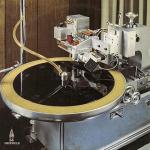
The Mastering Lab was one of the greatest cutting houses to ever master records.

Doug Sax knew how to keep his lathes and amplifiers working at state-of-the-art levels. The sound quality is unsurpassed.

And he did it all with tubes.

He was very proud of his custom-made tube-driven cutting amps, designed by none other than his brother, Sherwood. His amps cut many of my favorite records of all time, including this one, an album that I have been using to test and improve the playback quality of my system for more than forty years.

To this day we get taken to task by some regrettably misguided individuals for criticizing his work on the awful audiophile records he made in the 90s, many of them for Analogue Productions. We stand firmly behind the criticism we made of those albums decades ago. Their sound has not improved with age, nor is it likely to.

Those records from the 90s sound nothing like the records Doug and his crew were making in the 70s.

According to the logic of our critics, if you made great records in the 70s, then you must have been making great records in the 90s, whether your name is Doug Sax, Bernie Grundman, George Marino, Robert Ludwig or any other.

This is a very crude way of understanding the work of these exceptionally talented men.

The fact that this kind of sophistry is taken seriously by supposedly grownup adults in the audiophile community is embarrassing. To those of us who have been in the hobby for decades, it comes as no surprise.

Audiophiles have always embraced bad ideas (Half-Speed mastering!) and bad records (like those found here.) Our hobby attracts large numbers of True Believers, and many of them — too many of them — latch onto conventional ideas about records and audio which are attractively convenient and comforting.

Self-evident, convenient and comforting ideas — so beautiful and beguiling — rarely get put to the test. They are a ball some audiophiles have unknowingly chained to themselves.

These superficially attractive ideas do not hold up well to scrutiny. They are mostly assumptions, and we take issue with assumptions when it comes to finding better sounding records.

For those who would like a more thorough explanation of our approach and the heterodox views it produces, we wrote about it here.

Uniquely among audiophile reviewers, empirical evidence, using large pools of data, all of it acquired scientifically, is at the heart of everything we think we know. And, as we freely admit, we sometimes still get it wrong.

(more…)

Lincoln Mayorga Volume 1 and Obvious Pressing Variations

Hot Stamper Pressings of Direct-to-Disc Recordings Available Now

After doing our first shootout many years ago for the record that single-handedly introduced the audiophile community to Direct to Disc recording, Lincoln Mayorga and Distinguished Colleagues, Volume One, I have to confess I was taken aback by the significant pressing variations we heard among the copies we played, 

These LPs are all over the map sonically.

Some Sheffield pressings are aggressive, many of them are dull and lack the spark of live music, some of them have wonky bass or are lacking in the lowest octave — they are prey to every fault that befalls other pressings, direct to disc and otherwise.

Which should not be too surprising. Records are records. Pressing variations exist for every album ever made. If you haven’t noticed that yet, start playing multiple copies of the same album while listening carefully and critically. If your stereo is any good at all, it should not take you long to notice how different one record sounds from another in practically every case.

Biggest problems on S9?

I would have to say smear is Number One.

When the brass loses its bite and the bells don’t have the percussive quality of metal being struck, this is not a good thing. The band also seems to lose energy when the pressing suffers from smear.

Number Two would be a lack of top end extension.

The harmonics of the sax and trumpet are muted on some copies, and the harpsichord really suffers when the top end isn’t all there. This lack of extension is most noticeable on all the lovely bells and percussion instruments that pepper the soundstage, but you can actually hear it on practically every instrument once you recognize the problem. It’s there on guitar harmonics, cymbals and snares, and on down the list.

Linked here are other records that are good for testing these same shortcomings:

(more…)

Lincoln Mayorga and Distinguished Colleagues – Volume 1 (S9)

More Lincoln Mayorga and Distinguished Colleagues

Reviews and Commentaries for Lincoln Mayorga and Distinguished Colleagues

  • An original pressing of this rare and sought-after direct to disc recording (the first to hit the site in twelve months) with two INSANELY GOOD Shootout Winning Triple Plus (A+++) sides
  • Here are just a few of the things we had to say about this amazing copy in our notes: “deep, rich bass”…huge extension top to bottom”…”very detailed and transparent, just jumping out and huge bass and weight”…”more realistic all around” (side one)…”top detail” (side two)…”silky and spacious”….”great weight and dynamics”
  • This copy could not be beat for sound – get your VTA right and the bottom end on this LP will turn into a Bass Demo Disc like nothing you’ve heard
  • It’s very difficult to find this album in clean condition, and even more difficult to find one that sounds as good as this one does, but marks in the vinyl are sometimes the nature of the beast with these vintage LPs – there simply is no way around them if the superior sound of vintage analog is important to you
  • One of the rarest Hot Stamper records bar none – only a handful have ever made it to the site
  • If you’re a fan of Mr. Mayorga and His Distinguished Colleagues, this is a top title from 1971.

This is a stunning copy of The Big One — Lincoln Mayorga and Distinguished Colleagues’ first Sheffield Direct-to-Disc LP aka S9. We’ve been comparing and contrasting pressings of this album for more than twenty years and this is one of the better copies we’ve stumbled upon. The sound is BIG, RICH and FULL OF ENERGY.

Both sides have prodigious amounts of bottom end. It is a thrill to hear the power of the bass on this recording. The kick drum is HUGE.

Both sides have about as much Tubey Magic as can be found on the album, although Tubey Magic is clearly not what the engineers were going for with this recording. It’s a sound that many copies reproduce less than ideally, being somewhat dry. (more…)