 Hot Stamper Pressings of the Music of Crosby, Stills, Nash and (Sometimes) Young
A letter came to us years ago with the comment “I had no idea that vinyl could produce this sound.”
As the time I made some of the following comments in reply and have added a few new ones since then.
Deja Vu is indeed a very special album, one I have been obsessed with since I first became an audiophile.
I was a big Crosby, Stills and Nash fan already — the first album being life-changing to a 15 year old music lover such as myself, playing over and over on 8-track tape in the car no less — so it was only natural that I would fall in love with Deja Vu when it came out in 1970.
13 Years Go By
Time went by and then, oddly enough, my love for the music was reignited by a pressing that came out 13 years after the album’s first release, on a label you may be familiar with, Mobile Fidelity Sound Labs.
I realized instantly that Mobile Fidelity had indeed improved upon the average original’s sound.
This is not a high bar considering how awful sounding most originals are, but let us give credit where credit is due. With the volume cranked good and loud, I often played the first track, Carry On, using the MoFi pressing to demonstrate how smooth, rich, big, powerful and dynamic my system could sound.
“The CD may be taking over the world,” I would say, because by 1983 that was exactly what was happening, “but you”ll never hear a CD that sounds like this!”
13 More Years Go By
It would take me many years, at least another 13 or so, to come across the domestic reissues that trounced the MoFi and showed me how colored, compressed, thick, blurry and recessed their pressing was.
Here is the real shocker from that time: I actually thought that the extremely hard-to-find reissue I’d discovered was so flukishly good that it could never be beaten by any other pressing!
(To be fair, my long-time audiophile buddy Robert Pincus probaby deserves the credit for finding it. He found a great many special pressings for me back when I was buying records from him, reaching all the way back to 1987.)
Which is yet another example of everything being relative. I admit I had a poor understanding of that vitally important concept at the time. I really had no idea how good a recording Deja Vu was, and I didn’t really have a way to find out because many of the most important revolutions in audio had not been incorporated into my system, or had yet to be invented.
Within the last five years or so another domestic pressing, and now most recently an import (!), have come to be seen as clearly superior to all of these.
This is the result of having never given up the search for a better Deja Vu.
Record Collecting in My World
Anticipating the release of the newest Half-Speed remastered pressing that would deliver me from the evils of the garden-variety domestic or import LP I happened to own was the dominant feature of my record collecting world in the 70s and 80s.
No one reading this blog will be surprised to learn that almost none of those “new and improved” pressings would pass the test of time. This is an idea I first came to appreciate in the 90s and one that has become more true with each passing year.
With the increasing proliferation of one Heavy Vinyl mediocrity after another, in 2007 we finally recognized we had a duty to our customers to stand athwart audio history and yell “Stop.”
(more…)

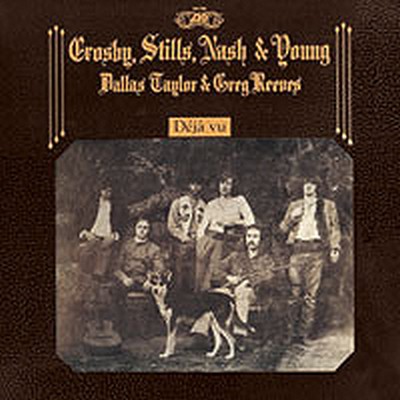
 Hot Stamper Pressings of the Music of Crosby, Stills, Nash and (Sometimes) Young


