TAS List Commentaries

Commentaries about records on the TAS Super Disc list.

Belafonte at Carnegie Hall – Key Tracks for Side One

Hot Stamper Pressings of Pop and Jazz Vocal Albums Available Now

Harry Pearson brought this record to the attention of audiophiles with his TAS list a long time ago, and rightfully so: it’s an amazing recording.

We happen to love the music too, which makes it one of the most recommendable records we have ever offered. If you can find a better combination of demo disc sound, with music worth the hassle and expense of reproducing it properly, more power to you. We sure can’t.

Because this is a live recording, because it has lots of natural instruments as well as a vocal, because it was recorded in the Golden Age by one of the greatest labels of all time, RCA, by Bob Simpson no less — for this and many other reasons, it has to be considered one of the most amazing recordings in the history of the world.

That said, it is our contention (and the basis of our business model) that the brilliant quality of the recording can only be appreciated if you have the pressing that captured the sound that the engineers recorded. In other words, a Hot Stamper.

From an audiophile point of view, you get to hear live musicians and all the energy they bring to this music, all on the stage at the same time: strings, brass, percussionists, and Harry Belafonte front and center. Tube mics (and not too many of them), a tube tape recorder, RCA’s superb engineering and all-tube mastering chain ensure that the “breath of life” is captured intact.

I know of no better live popular vocal recording on the planet.

Side One

Introduction
Darlin’ Cora
Sylvie 

This is a wonderful song, sung by Belafonte with virtually no accompaniment. His voice should be rich and full-bodied with plenty of presence. In other words, he should sound like a living, breathing person.

Cotton Fields 

The liner notes say this song was introduced in the previous year in Las Vegas. Before I read that I noted that the uptempo arrangement had a jazzy feel to it. The walking bass is well up in the mix and the piano and a few of the other instruments in the song are well behind — it’s pretty much Belafonte and bass. The bass is deep and very note-like.

This is of course a big system record. Do not expect good results from small speakers.

But what makes this one of the best Demo Quality tracks on the album is Belafonte’s amazingly energetic performance. He really sells this song.

As I was listening to the dynamics on the best pressings, it made me think about all the compressed-to-death vocals that are so much a part of the recording style of the modern era. Nobody gets loud anymore.

Belafonte did back in 1959, and not too many followed him.

(more…)

On Trust, the Bass Is (Almost) All

Hot Stamper Pressings of Elvis’s Albums Available Now

Notes from a Hot Stamper shootout we did quite a while back.

There’s a TON of low-end on this record. Regrettably, most copies suffer from either a lack of bass or a lack of bass definition. I can’t tell you how much you’re missing when the bass isn’t right on this album. (Or if you have the typical bass-shy audiophile speaker, yuck.) 

It’s without a doubt THE SINGLE MOST IMPORTANT ASPECT of the sound on this album. When the bass is right, everything falls into place, and the music comes powerfully to life. When the bass is lacking or ill-defined, the music seems labored; the moment-to-moment rhythmic changes in the songs blur together, and the band just doesn’t swing the way it’s supposed to.

On the best pressings, you get the full-on bottom end WHOMP you paid for, with no loss in control. You can clearly follow Bruce Thomas’s bass lines throughout the songs, a real treat for any music lover. (He and Elvis don’t get along, hence the end of the Attractions as his backing band. I guess we should be thankful for the nine albums on which they were together; many of them are Desert Island Discs for me.)

Not only that, but the drums have real body and resonance, a far cry from the wimpy cardboard drum sound you’ll hear on most copies.

Hey, these are The Attractions: the pro’s pros. You can’t ask for better, and as expected they deliver big time on this album. But the mastering and pressing problems of most British copies typically make them sound half-hearted and uninspired, which is certainly nothing like what they sound like on the master tape. On the master tape, they play GREAT. You need a very special copy of the LP to hear them play that way, and that’s all there is to it. 

The better the pressing, the better the band.

A Must Own Title

This, along with My Aim Is True and Armed Forces, is as good as it gets for Elvis on LP.

All three are absolute Must Owns that belong in any serious rock collection. This is that rare breed of music that never sounds dated (especially considering the era in which it was produced). Music with real depth such as this only gets better with the passage of time. The more you play it, the more you appreciate it, and love it.

(more…)

Are All the Original Asylum Pressings of Desperado Demo Discs?

Hot Stamper Pressings of the Music of The Eagles Available Now

No, and this should come as not much of a surprise to anyone that’s bought records from us or spent much time reading this blog.

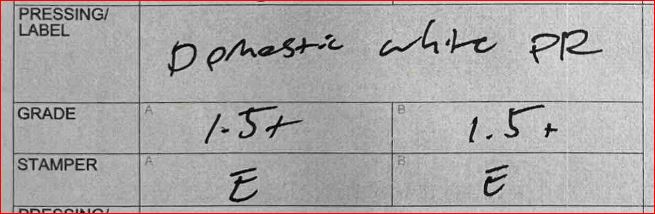
As you can see from the notes below for this particular pressing of Desperado, both sides are passable, earning a minimal Hot Stamper grade of 1.5+.

It’s a decent sounding copy I suppose, but a long, long, long way from the best.

1.5+ is four grades down from the top copy. That’s a steep dropoff as far as we’re concerned. 1.5+ only hints at how good a recording Desperado can be on the best vintage pressings.

To see more records that earned the 1.5+ grade, please click here.

Incidentally, some of them are even on Heavy Vinyl. The better modern pressings have sometimes, if rarely, been known to earn Hot Stamper grades, and one shocked the hell out of us by actually winning a shootout. Wouldn’t you like to know which one!

For those who might be interested, there’s more on our grading scale here.


Desperado Is a True Super Disc 

Of course, the best sound on an Eagles record is found on the first album. For whatever reason, that record was left off the TAS super disc list, even though we feel that both musically and sonically it beats this one by a bit.

On the TAS Super Disc list. Harry Pearson recommends the British SYL pressings for this album. SYL pressings can sound very good; in fact, one of the top copies from a recent (2024) shootout was SYL. A bit of a surprise since our champion for both sides during the previous shootout was domestic.

Does that mean the best domestics will always beat the best SYL pressings? Not at all. Only critical listening can separate the superb pressings from the typical ones. After playing more than a dozen copies of this album this week, we can definitively tell you that there are far more mediocre copies of this record — both domestic and import — than truly exceptional ones. The typical pressing of this album, whether the domestic or SYL, falls far short of belonging on a Super disc list.

There are killer domestic copies and killer SYL imports out there, and the only way to know which ones sound good is to collect ’em, clean ’em, and play ’em.

Remember: TAS list doesn’t guarantee great sound, but Better Records does — if you don’t think a record sounds as good as we’ve stated, we’ll always happily take that record back and refund your money. Good luck getting ol’ Harry to send you a check when the TAS-approved pressings you pick up don’t deliver.

(more…)

Why Do So Few Living Stereo Pressings Sound as Good as This One?

Hot Stamper Pressings of Orchestral Spectaculars Available Now
We introduced our most recent shootout winning copy of The Reiner Sound from 1958 this way:

The Reiner Sound returns to the site for the first time in years, here with big, bold, dynamic Triple Plus (A+++) Living Stereo sound throughout this original Shaded Dog pressing.

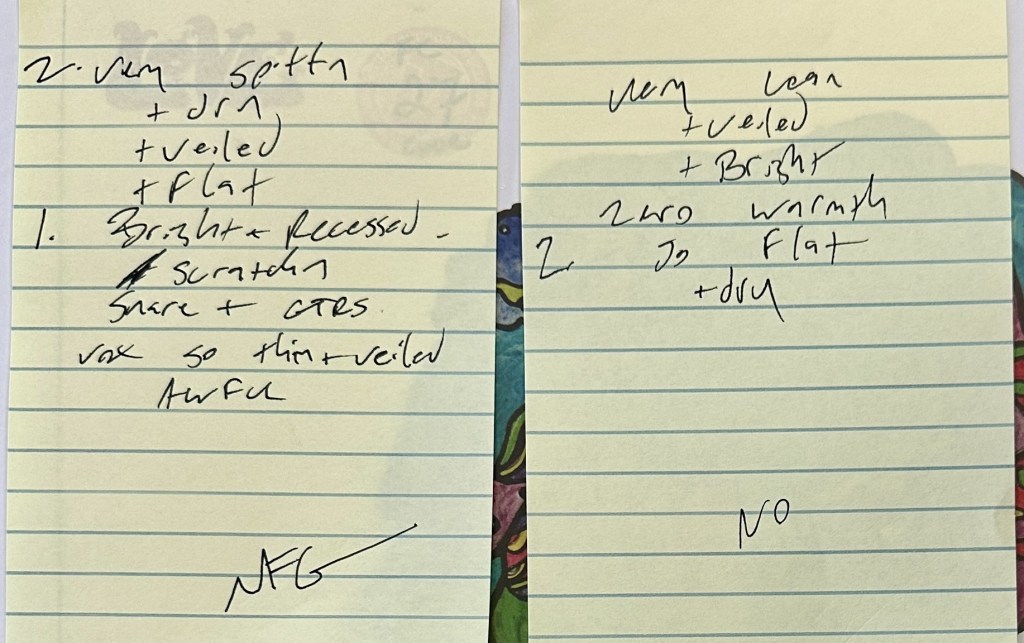
These are just a few of the things we had to say about this amazing copy in our notes: “fully extended up top”…”sweet and rich”…”supremely dynamic and spacious!!!” (side one)…”massive and tubey and 3D”…”like no other” (side two)…”explosive finish.”

These sides are doing everything right – they’re rich, clear, undistorted, open, spacious, and have depth and transparency to rival the best recordings you may have heard.

This record will have you asking why so few Living Stereo pressings actually do what this one does.

The more critical listeners among you will recognize that this is a very special copy indeed.

Everyone else will just enjoy the hell out of it.

And here are the notes to prove it!

Side one was at least 3+.

  • Lots of tape hiss
  • The top end really extends
  • Sweet and spacious dynamic peaks, and rich
  • Supremely dynamic and spacious

Side two was right up there with it:

  • Massive and tubey and three-dimensional
  • Very full and dynamic
  • The explosive finish is like no other

(more…)

Half-Speed Masters – Stopgaps and Benchmarks

Hot Stamper Pressings of the Music of Joan Baez Available Now

Mobile Fidelity released a version of Diamonds and Rust on Anadisq in 1995, and if you want to hear a pressing that’s not murky, compressed and opaque, you would be wise to avoid their remastered pressing.

To be fair, MoFi has made some reasonably good sounding records too. For those of you whose budget is on the limited side, if you find an affordable copy of any of these MoFis, you are probably not completely wasting your money.

Stopgaps and Benchmarks

Our advice for the longest time has been that, while you are actively improving your stereo, room and setup, the best way to use your remastered audiophile pressings is as stopgaps and benchmarks.

As you make more and more progress, eventually you will find the vintage pressings that can show you what your audiophile pressings don’t do well, or at the very least, not as well as they should.

The unfortunate reality — considering how much money you had invested in them — is that they were falling short in many ways for all the years you had been playing them, but until you improved your playback, those problems were hidden from you.

Charting Your Success

As your stereo improves, you can actually chart your success by how many of these kinds of records you are able to eliminate from your collection. Once you can count the number of modern reissues you still own on one or two hands, there is a good chance you have reached a much higher level of playback.

(more…)

Doesn’t Anyone Know What Love Is (Supposed to Sound Like)?

Click Here to See Our Most Recent Review for a Real Gold Label Stereo Pressing of Forever Changes 

The one person we can say for sure who must have absolutely no idea what a vintage pressing of the album is supposed to sound like is Chris Bellman. Allow us to make the case.

Below you can see our notes for the Rhino Heavy Vinyl pressing of Forever Changes cut by Chris for Bernie Grundman Mastering in 2012.

We recently got hold of a copy locally and figured why not give it a spin and see how one of the most respected mastering engineers of the day, CB, fared with this apparently difficult to master title. (Others have tried and failed. See here and here.)

The Gold Label pressings are the only ones we buy these days. The Big Red E Elektras are passable at best, and everything after them is terrible, including imports and all the Heavy Vinyl reissues that we’ve had the misfortune to play over the years. We hope to be posting some of the stampers to avoid (we call them bad stamps) before too long.

Let’s get right into the sound of this 2012 remaster. We played the two tracks on each side that we’re most familiar with from doing shootouts for the title.

As the record played, to the best of our ability we made notes of the sound we were hearing:

(more…)

Classic Records 45 RPM Recut – This Is Your Idea of a Great Firebird?

Hot Stamper Pressings of the Music of Igor Stravinsky Available Now

Many years ago, a customer alerted me to a review Wayne Garcia wrote about various VPI platters and the rim drive, and this is what I wrote back to him:

Steve, after starting to read Wayne’s take on the platters, I came across this:

That mind-blowing epiphany that I hadn’t quite reached with the Rim Drive/Super Platter happened within seconds after I lowered the stylus onto the “Infernal Dance” episode of Stravinsky’s Firebird (45 rpm single-sided Classic Records reissue of the incomparable Dorati/LSO Mercury Living Presence recording).

That is one of my half-dozen or so favorite orchestral recordings, and I have played it countless times.

This is why I have so little faith in reviewers. I played that very record not two weeks ago (04/2010) against a good original and the recut was at best passable in comparison. If a reviewer cannot hear such an obvious difference in quality, why believe anything he has to say?

The reason we say that no reviewer can be trusted is that you cannot find a reviewer who does not say good things about demonstrably mediocre and even just plain awful records. It’s the only real evidence we have for their credibility, and the evidence is almost always damning.

I want a reviewer who knows better than to play such an underwhelming pressing and then waste my time telling me about it. He should tell us what a good record sounds like with this equipment mod. Then I might give more credence to what he has to say.

Reviewer malpractice? We’ve been writing about it for more than 25 years.

P.S.

This is one of the Classic Records titles on Harry Pearson’s TAS List of Super Discs(!)

P.P.S.

Allow me to quote a writer with his own website devoted to explaining and judging classical recordings of all kinds. His initials are A.S. for those of you who have been to his site.

Classic Records Reissues (both 33 and 45 RPM) – These are, by far, the best sounding Mercury pressings. Unfortunately, only six records were ever released by Classic. Three of them (Ravel, Prokofiev and Stravinsky) are among the very finest sounding records ever made by anyone. Every audiophile (with a turntable) should have these “big three”.

Obviously we could not disagree more. I’ve played all six of the Classic Mercury’s. The Chabrier, Ravel and Prokofiev titles are actually even worse than the Stravinsky we reviewed.

This same reviewer raved about a record we thought had godawful sound, Romantic Russia on MoFi, a label that never met an orchestral string section it didn’t think needed brightening.

Find me a Mobile Fidelity classical record with that little SR/2 in the dead wax that does not have bright string tone. I have yet to hear one.

What is it with audiophile record reviewers? They seem to be taken in by the most unnatural sounding pressings. The world is full of wonderful vintage pressings that have no such problems. If you are an audiophile who feels himself qualified to write about records, shouldn’t you at least be able to hear the difference between a phony audiophile pressing and the vintage pressings it supposedly improved?

(more…)

Was Jazz Really a TAS List Superdisc?

Hot Stamper Pressings of TAS List Super Disc Albums

The typical pressing of this record doesn’t even hint at how magical the album can sound. If your copy isn’t exceptionally full-bodied, rich, and sweet, you can bet that it will sound edgy and irritating with the extensive amount of listening required to appreciate and enjoy this music.

There’s a reason this record was on the TAS list [not sure when it was removed, maybe ten years ago] but you’d never know it by playing the average Warner Brothers pressing. Most copies of this record just sound like an old record. You would never even know how magical this recording is by playing a copy that, for all intents and purposes, appears to be the pressing Harry Pearson was recommending on his Super Disc list.

The catalog number is the same, the sound is not. Unless you have at least a half-dozen copies of this record, you have little chance of finding even one exceptional side.

This has always been the problem with the TAS list.

The pressing variations on a record like this are HUGE and DRAMATIC. There is a world of difference between the best copies and what the typical audiophile owns based on HP’s list. I’ve been complaining for years that the catalog number that Harry supplies has very little benefit to the typical audiophile record lover.

Without at least the right stampers, the amount of work required to find a copy that deserves a Super Disc ranking is daunting, requiring the kind of time and effort that few audiophiles could ever devote to such a difficult and frustrating project.

As is sometimes the case, there is one and only one set of stampers that consistently wins our shootouts for this album.  Click on this link to see other titles with one set of stamper numbers that always come out on top.

(more…)

Labels, Patterns and Reasoning in a Circle

Hot Stamper Pressings of Orchestral Music Available Now

This commentary was written more than ten years ago. It seems to be holding up just fine though, especially considering just how bad some of the Heavy Vinyl pressings we’ve played recently sounded.


RFR1/ 2This pressing has DEMONSTRATION QUALITY SOUND.

Here is the sound that Mercury is famous for: immediate, dynamic and spacious. This record lives up to the Mercury claim: You immediately feel as though you are in the Living Presence of the orchestra.

This is precisely the kind of record that Speakers Corner would not have a clue how to master. I’d stake my reputation on it, for what that’s worth.

As you may know, I am a critic of the new [now long in the tooth] Speakers Corner Mercury series, and I can tell you without ever hearing their version of this recording that there is NO CHANCE IN THE WORLD they will ever cut a record that sounds like this.

It’s alive in a way that none of their pressings would even begin to suggest.

If you don’t believe me, please buy this record and play it for yourself. If you don’t agree, I will refund your money and pay the domestic shipping back.

This record also gives the lie to those who think that Vendor pressings are inferior. This is a Vendor and I would be surprised if there’s a better sounding copy than this one. I’ve certainly never heard one.

People who like to read labels and find some sort of pattern or connection between the label and the sound of the record are living in a world of their own making.

A world that exists solely in their heads.

The stamper numbers are the only thing that can possibly mean anything on a record, and even those are subject to so much variation from pressing to pressing that they become little more than a vague, general guide.

This LP is a good example of a record that a certain kind of record collector might pass up, hoping to find a better sounding non-Vendor pressing.

Of course, the circular reasoning that would result is that such a collector would buy the non-Vendor pressing, possibly with the exact same stamper numbers, hear how good it sounded, and congratulate himself on the fact that the non-Vendor pressings always sound so much better.

All without ever having done a comparison. A good way to never be wrong.

(more…)

Tchaikovsky on Classic Records and the TAS List

Hot Stamper Pressings of the Music of Tchaikovsky Available Now

We used to like the Classic Records pressing of LSC 2241 a lot more than we do now, a case of live and learn.

Our tube system from the 90s was very different from the one we are using now.

That system was noticeably darker and by all accounts far less revealing when we had auditioned the Classic sometime in the 90s, and those two qualities did most of the heavy lifting needed to disguise its shortcomings. We mistakenly noted:

HP put the Shaded Dog pressing (the only way it comes; there is no RCA reissue to my knowledge) on his TAS List of Super Discs, and with good reason: it’s wonderful!

The rest of our commentary still holds up though:

But for some reason he also put the Classic Records Heavy Vinyl reissue on the list, and that record’s not even passable, let alone wonderful. It’s far too lean and modern sounding, and no original Living Stereo record would ever sound that way, thank goodness. 

(more…)