Classic Records – Rock, Pop, Vocals, etc.

Labels With Shortcomings – Classic Records – Rock, Pop, Vocals, etc.

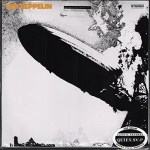
Led Zeppelin – A Classic Records LP that Will Beat Most Pressings (!)

Hot Stamper Pressings of the Music of Led Zeppelin Available Now

Considering how bad (or at best mediocre) the average copy of the first Zep album sounds, let’s give credit where credit is due and say that Bernie’s remastered version on Heavy Vinyl is darn good (assuming you get a good one, something of course that neither I nor you should assume).

It’s without a doubt the best of all the Classic Zeppelin titles, most of which we found hurt our delicate ears.

Our Thinking Circa 2010 

[The last time we played a copy.)

We like the Classic, albeit with reservations. It’s without a doubt the best of all the Classic Heavy Vinyl reissues of the Zeppelin catalog, most of which are not very good and some of which are just awful.

Why is this one good? It’s tonally correct for one thing, and the importance of that cannot be stressed too strongly.

Two, it actually ROCKS, something a majority of pressings we’ve played over the years don’t.

Three, it’s shockingly dynamic. It may actually be more dynamic than any other pressing we have ever played.


UPDATE 2023

It might have been back in the day, but it’s highly unlikely we would agree with that assessment in 2023. Much like this record, we had a lot of R&D ahead of us before we could know just how dynamic this recording could be.


(more…)

Casino Royale Is Really a Mess on Classic Records Vinyl

Hot Stamper Pressings of the Music of Burt Bacharach Available Now

Casino Royale under the sway of Bernie’s penchant for bright, gritty, sour, ambience-challenged sound? Not a good match. There is no reissue, and there will never be a reissue, that will sound as good as a properly-mastered, properly-pressed, properly-cleaned original.

And I hope it would go without saying that most copies cannot begin to do what a real Hot Stamper original can.

As is often the case, the Classic Heavy Vinyl Reissue is simply a disgrace.

Is it the worst version of the album ever made?

That’s hard to say. But it is the worst sounding version of the album we’ve ever played, and that should be good enough for any audiophile contemplating spending money on this Heavy Vinyl trash. Our advice: don’t do it.

In Through The Out Door – Another Classic Records Bomb

More of the Music of Led Zeppelin

Reviews and Commentaries for the Music of Led Zeppelin

Sonic Grade: F

After finishing our first shootout for this album in August of 2007, our faces were sure red. We used to think the Classic version was pretty decent, but the best originals SLAUGHTER it! We had never done a shootout for this album before that. We didn’t feel up to the challenge, because most pressings tend to be miserable — gritty, grainy, hard sounding, with congested mids, dull, and so on.

The best pressings of this album sound AMAZING, but they are few and far between. The test is an easy one — a copy that makes you want to turn up the volume is likely a winner. The Classic does not pass that test.

We threw one on and just couldn’t deal with the edgy vocals and upper midrange boost. As far as we’re concerned, there’s no substitute for The Real Thing.

As hard as it may be to find great sounding copies of this album, it’s positively impossible to sit through Classic’s version.


I used to think the Classic Records pressing was a decent enough record.

Then my stereo got a lot better, which I write about under the heading Progress in Audio.

Eventually it became obvious to me what was wrong with practically all of the Heavy Vinyl pressings that were put out by that label.

The good ones can be found in this group, along with other Heavy Vinyl pressings we liked or used to like.

The bad ones can be found in this group.

And those in the middle end up in this group.

Audio and record collecting (they go hand in hand) are hard. If you think either one is easy you are very likely not doing it right,, but what makes our twin hobbies compelling enough to keep us involved over the course of a lifetime is one simple fact, which is this: Although we know so little at the start, and we have so much to learn, the journey itself into the world of music and sound turns out to be both addictive and a great deal of fun.

Every listing in this section is about knowing now what I didn’t know then, and there is enough of that material to fill its own blog if I would simply take the time to write it all down.

Every album shootout we do is a chance to learn something new about records. When you do them all day, every day, you learn things that no one else could possibly know who hasn’t done the work of comparing thousands of pressings with thousands of other pressings.

The Law of large numbers[ tells us that in the world of records, more is better. We’ve taken that law and turned it into a business.

It’s the only way to find Better Records.

Not the records that you think are better.

No, truly better records are the records that proved themselves to be better empirically. We employ rigorous scientific methodologies that we have laid out in detail for anyone to read and follow.

Being willing to make lots of mistakes is part of our secret, and we admit to making a lot of them

(more…)

Our Take on Classic Records in 2005

Hot Stamper Pressings of the Music of The Who Available Now

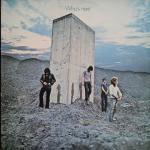
Back when we were carrying a select group of Heavy Vinyl pressings in 2005, Who’s Next on Classic Records was one of the ones we recommended.

We felt the Classic Records pressings of this album and the others mentioned below were a good value for those who had thirty bucks to spend on a record.

By 2007 we had already changed our minds about Who’s Next on Classic — and a whole lot more.

The Voice (Isn’t What It Should Be) on Heavy Vinyl

More of the Music of Frank Sinatra

Reviews and Commentaries for the Music of Frank Sinatra

Sonic Grade: D

An audiophile hall of shame pressing and another Classic Records popular music LP badly remastered for the benefit of audiophiles looking for easy answers and quick fixes.

There is a boatload of TUBEY MAGIC to be heard on the early pressings, no doubt due to the fact that they are mastered with tube equipment, but you would never know it by playing this barely passable Classic repressing.

The difference is night and day.

It’s been quite a while since I played the Classic pressing, but I remember it as nothing special. Like a lot of the records put out by this label, it’s tonally fine but low-rez and lacking spacewarmth and above all, Tubey Magic.

I don’t think I’ve ever played an original that didn’t sound better, and that means that the best grade to give Classic’s pressing is probably a D, for below average. It sounds far too much like a CD.

Who can be bothered to play a record that has so few of the qualities we audiophiles are looking for on vinyl?

Back in 2007 we put the question this way: Why own a turntable if you’re going to play mediocrities like these?

(more…)

Today’s Heavy Vinyl Disaster from Classic Records… Zep IV

Hot Stamper Pressings of the Music of Led Zeppelin Available Now

A classic case of live and learn

Back in the day I thought the Classic 180 and then 200 gram pressing was the king on this title. In late 2006 I wrote:

“You can hear how much cleaner and more correct the mastering is right away…”

Folks, I must have been out of my mind.

No, that’s not quite fair. I wasn’t out of my mind. I just hadn’t gotten my system to the place where it needed to be to allow the right original pressings to show me how much better they can sound.

Our EAR 324 phono stage and constantly evolving tweaks to both the system and room are entirely responsible for our ability to reproduce this album correctly. If your equipment, cleaning regimen, room treatments and the like are mostly “old school” in any way, getting the album to sound right will be all but impossible. Without the myriad audio advances of the last decade or so you are just plain out of luck with a Nearly Impossible to Reproduce album such as this.

All of the above are courtesy of the phenomenal revolutions in audio that have come about over the last twenty years or so. It’s what progress in audio in all about.

The exact same 200 gram review copy now [this was written about ten years ago] sounds every bit as tonally correct as it used to, and fairly clean too, as described above, but where is the magic?

You can adjust your VTA until you’re blue in the face, nothing will bring this dead-as-a-doornail Classic LP to life.

(more…)

Presence – Classic Records Reviewed

More of the Music of Led Zeppelin

More Led Zeppelin on Classic Records Reviewed

Sonic Grade: D

This was one of only three Classic Records 180 gram (later 200 gram) titles that I used to recommend back in the day.

Now when I play the heavy vinyl pressing, I find the subtleties of both the music and the sound that I expect to hear have simply gone missing.

It may be tonally correct, which for a Led Zeppelin pressing on the Classic Records label is unusual in our experience (II and Houses being ridiculously bright), but it, like Physical Graffiti and some others, badly lacks resolution compared to the real thing, the real thing being a run-of-the-mill early pressing.

(more…)

Today’s Bad Heavy Vinyl Pressing Is… Aqualung!

Hot Stamper Pressings of the Music of Jethro Tull Available Now

An Audiophile Hall of Shame pressing and another Classic Records Rock LP badly mastered for the benefit of audiophiles looking for easy answers and quick fixes.

By the time the guitars at the end of the title track fade out you will be ready to take your heavy vinyl Classic Record pressing and ceremoniously drop it in a trashcan. (Actually, the best use for it is to demonstrate to your skeptical audiophile friends that no heavy vinyl pressing can begin to compete with a Hot Stamper from Better Records. Not in a million years.)

We Was Wrong on All Counts

Over the course of the last 25 years we was wrong three ways from Sunday about our down-and-out friend Aqualung here.

We originally liked the MoFi from the early ’80s. Wrong. Proof positive that In the early ’80s I didn’t have good reproduction or know much about records, but I sure thought I did!

When the DCC 180g came along in 1997 we liked that one better. Wrong again. It didn’t have MoFi’s usual midrange suckout and sloppy bass, but it was bad in so many other ways that it is hard for me to believe I ever liked it. But I did, to some degree anyway.

Back then I was a DCC believer, a mistake I would come to recognize once a few more years had passed. See here and here.

And a few years back I was briefly enamored with some original British imports. Wrong for the third time.

After playing more than two dozen pressings of Aqualung in our recent [circa 2010] shootout, it’s pretty clear that the right early Reprise pressings KILL any and all contenders. Forget all the Green Label Chrysalis pressings. Forget the reissues. Forget the imports. It’s original domestic Reprise or nothing when it comes to Aqualung.
(more…)

Lady in Satin on Classic Records

Hot Stamper Pressings of the Music of Billie Holiday Available Now

It’s been quite a while since I played the Classic Records pressing that came out in 1998, but I remember it as nothing special, tonally correct but with somewhat low-rez (not breathy) vocals and lacking in both space and warmth.

Records made for audiophiles are rarely any good, so rarely in fact that we are positively shocked when such records are even halfway decent. After playing so many bad audiophile records for so many years it’s practically a truism here at Better Records.

A recording like this is the perfect example of why we pay no attention whatsoever to the bona fides of the disc, but instead make our judgments strictly on the merits of the record spinning on the table. The listener normally does not even know the label of the pressing he is reviewing. It could be a Six Eye original, the 360 reissue, or even a (gasp!) ’70s-era LP.

We don’t care what the label is.

What does that have to do with anything? We’re looking for the best sound. We don’t play labels, we play unique pressings of the album.  We assume that every pressing sounds different from every other pressing. Our job is to figure out what each of them is doing, right or wrong. 

We mix up all our copies and play them one after another until we come across the best sounding one.

This approach has opened up a world of sound that most audiophiles — at least the ones who buy into the hype associated with the typical audiophile pressing — will never be able to experience.

(more…)

A Bad Pressing Tells You… What, Exactly?

Hot Stamper Pressings of the Music of Peter Gabriel Available Now

I wrote this commentary many years ago after a review I spotted online prompted me to crack open one of the Classic Records 200 gram Peter Gabriel titles and play it.

Let’s just say the results were less than pleasing to the ear.

Bernie Grundman had worked his “magic” again. As usual I was at a loss to understand how anyone could find his mastering in any way an improvement over the plain old pressings, even the domestic ones.


[UPDATE 2022: This is a foolish statement on my part, since the domestic pressings are by far the best sounding versions of the album. Live and learn, right?]


The Original Commentary

I had a discussion with a reviewer for an audiophile web magazine concerning his rave review for the Peter Gabriel records that Classic pressed.

I have just now played one, and it’s not as bad as I thought it would be. But of course it’s not very good either.

Not surprisingly, reviewers have a tendency not to notice these things. I’m not exactly sure how these people are qualified to review records when the most obvious tonal balance problems seem to go unnoticed.

The Classic is brighter and less rich.

Like a lot of the records that Bernie Grundman has cut in the modern era, the tonality is off. It is simply too lean.

This is not the right sound for this album.

That’s Bernie for you. After all these years, no amount of mischief he did for Classic — or any other label — surprises me.

A Bad Record Tells You… What?

Which brings up something else that never fails to astonish me. How can an equipment review be trusted when the reviewer uses bad sounding records to evaluate the equipment he is testing? Aren’t we justified in assuming that if a reviewer can’t tell he is listening to a bad record, he probably can’t tell whether the equipment under review is any good either?

Here is a good example of a reviewer raving about a mediocre-at-best pressing in an equipment review.

A bad record tells you nothing about the equipment it is playing on.

Worse, it might complement the faults of the gear and end up sounding tonally correct. If you use So Long So Wrong as a test disc, what are you testing for, the hyped-up vocals or the harmonically-challenged guitars?

(more…)