*Thinking About Records

Practically everything we know about record pressings we learned by playing them, in record shootout after record shootout, starting way back in 2004.

Once you implement a scientific approach to evaluating record pressings, most of the thinking stops and the real learning begins.

Could This Be the Sound Audiophiles Complain About with RVG’s Mastering?

Hot Stamper Pressings of the Music of John Coltrane Available Now

A rare and expensive early mono pressing that we put into our most recent shootout was dreadful sounding.

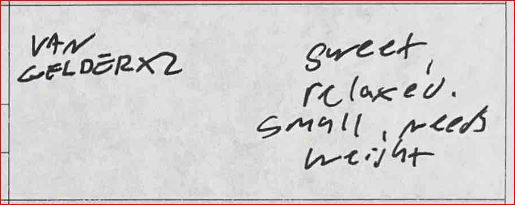
Our main listening guy owns the record and made the note you see below, saying that his personal copy is every bit as bad.

The sound of the original was painfully midrangy and crude. It was not the worst of all the pressings we played, but it was nevertheless pretty bad, sounding nothing like our shootout winners.

We had a pressing on an early Prestige label in stereo, also mastered by Rudy Van Gelder, that was reasonably good sounding, earning grades of 1.5+ to 2+. It was sweet and relaxed, but relatively small and lacked the weight of the best.

For this music, we’ve found the best sound on the better Two-Fer pressings and the right OJC.

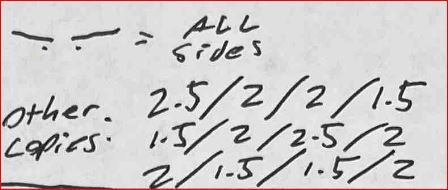
That Two-Fer budget reissue pressing, remastered by David Turner in 1972, can do very well in a shootout, but it can also fall far short of the mark on some sides, as you can see from the grades for these three other copies.

If you have the Two-Fer, how does yours sound compared to the four we auditioned (a shootout we were doing for the third or fourth time I might add), and how could you possibly know such a thing without a great many more copies at hand to clean and play?

(more…)

Is It Possible to Find Out Who Mastered the Japanese Thrillers?

Hot Stamper Pressings of the Music of Michael Jackson Available Now

A letter we received not long ago made the point that the Japanese pressing of Thriller the owner had been listening to for years, even decades, fell well short of the mark set by the sound of the White Hot Stamper pressing he now owned.

To think, I spent all those years playing and re-playing a record that was bright and edgy, none the wiser to matrix numbers and pressing variations.

I agreed, saying that I myself learned the hard way, having wasted some of my own money on them. that Japanese pressings were almost always a crock, writing:

Most Japanese pressings cater to what a mid-fi system would need to sound good and a hi-fi system would find ruinous. They are almost always made from dubbed tapes, which are then brightened up in the mastering phase since that is the sound that appeals to the Japanese market for some reason unknown to me. Old school audio equipment — horn speakers and vintage tube electronics — would be my guess.

A fellow who saw an opening to set me straight and take me down a peg, all without having to learn how to use that pesky shift key on his computer, left the following comment in that post:

the japanese pressings were mastered by BG. the only difference being the quality of the material. nice try though, snakeoil salesman.

I immediately went to battle stations. I doubted whether Bernie Grundman has mastered any pressings for the Japanese market, but I couldn’t say for sure. It’s a question that had never come up. We ourselves had discovered a very good sounding pressing of Tusk that was mastered by Ken Perry and pressed in Japan, so I knew it was possible that the original mastering engineer could have sent metalwork to Japan for the Japanese to produce properly-mastered records for their market.

Fortunately, Discogs makes checking such things fairly easy. I went right up to the listing for Thriller and clicked on all the Japanese original pressings to see if there was any evidence to show that he had mastered them.

Bernie Grundman’s name was credited on the back cover as the mastering engineer, but I didn’t put much stock in that. I assumed that he did not master the album for their market, since that is hugely impractical. I surmised that removing his credit would have badly defaced the jacket, something I doubted the Japanese would have found acceptable. They seem to be very particular about these things.

Sure enough, here is what the stampers look like for the typical Japanese pressing that supposedly would have been mastered by BG:

There are about half a dozen original Japanese pressings for the album on Discogs and all the stamper listings look like the one above.

If you know anything about records, you know that these markings could not have been created by Bernie Grundman’s mastering operation here in the states.

(more…)

Stop Doing These Things and You Too Will Start Finding Better Sounding LPs

Our Guide to Collecting Better Sounding Records

We’ve learned through thousands and thousands of hours of experimentation that there is no reliable way to predict which pressings will have the best sound for any given album.

The impossibility of predicting the sound of individual pressings is one which we’ve learned to accept as axiomatic. As a scientifically-oriented person and a born skeptic, this was a concept I had never had any difficulty wrapping my head around.

At some point in my audio career, probably in the early-90s, about twenty years into my audio journey, I realized it was in fact beyond dispute. Like it or not — and, based on what I read on forums and such, there apparently is a sizable number of audiophiles who don’t like it — it was simply a fact.

What to Stop

Given the unpredictable nature of records, the five most important aspects of the solution we put into practice were these:

  1. We stopped pretending we could know something that can’t be known. [1]
  2. We stopped relying on theories proven to have virtually no predictive effect. [2]
  3. We stopped paying attention to the experts and so-called authorities. [3]
  4. We stopped assuming and speculating. [4]
  5. We stopped worrying about getting it wrong. [5]

It took many years, decades even, to learn what worked and what didn’t work in our pursuit of better records. We came to realize over that span of time that the five things listed above were hindering us in doing our job, so we stopped doing them.

What remained was the simplest possible approach to the problem. One that could be taught in a high school science class, if high school science classes were run by experimentally-minded record collectors.

  1. Guess what pressings might be good for a given album.
  2. Buy some of those pressings and others like them.
  3. Clean them up, play them and see if your guess about the sound of the pressing turns out to be right, wrong or somewhere in-between.
  4. Repeat steps one through three until you chance upon a pressing that sounds better than all the others.
  5. Get hold of as many of those as you can and play them against each other under rigorously controlled conditions.
  6. Continue to make other guesses and acquire other pressings to play against the pressing you believe to be the best.
  7. Keep making improvements to your playback system and never stop testing as many alternate pressings as possible.

That’s it. Nothing to it. It all comes down to experimenting at a sufficiently large scale to achieve higher rates of success.

Failing Forward

Edison is said to have failed 10,000 times before inventing a light bulb filament that had a practical use.

Most audiophiles do not have the time and money, not to say patience, needed to fail again and again this way.

For us, having a full-time staff of ten and a rather large record buying budget, we see failures as just another part of the job. Our successes pay for them, since obviously somebody has to, Milton Friedman’s famous remark about free lunches being as true as ever. This partly accounts for our prices being as high as they are.

We don’t make a dime from writing about records that don’t sound good to us. We review them as a service to the audiophile community. We play them so that you don’t have to.

(more…)

Getting It Right When There’s Money on the Line

More Entries in Our Thinking About Records Series

John Stossel wrote a piece about prediction markets shortly after the 2022 midterms, explaining why prediction markets are still a good thing even though many of the predictions for the election that were made there did not come true. His take:

Bettors [may be wrong, but] at least adjust their predictions quickly.

Last night, while clods on TV still said “Democrats and Republicans battle for control of the House (CBS),” those of us who follow the betting already knew that Republicans would win the House.

Historically, bettors have a great track record. Across 730 candidate chances we’ve tracked, when something is expected to happen 70% of the time, it actually happens about 70% of the time.

That’s because people with money on the line try harder than pundits to be right.

As you can imagine, this last line was music to my ears.

We’ve built our record business on the fact that we have the experience, the expertise and the staff needed to find the best sounding pressings of many of the most important recordings of all time, from Dark Side of the Moon to Kind of Blue and everything in between.

And, as everyone knows, we charge a premium price for our Hot Stamper pressings, often ten and twenty times their “market value.”  This has been known to confuse and upset some people.

But can we charge more than our customers are willing to pay and still be in business after 37 38 years?

Some people must think they are getting their money’s worth, at least, that’s what some of them tell us.

We have to back up our opinions and our descriptions with actual records that deliver the sound we say they will, or we would have gone out of business a long time ago. You can fool some of the people all of the time, etc., etc.

Guaranteed?

This is in sharp contrast to the audiophile reviewers who tout one new record after another with no guarantee whatsoever that you will find anything like the superior sound they spent an endless number of words describing when the record finally ends up on your turntable.

Where do you go to get your money back when the record doesn’t have the sound they told you it would have?

(more…)

Letter of the Week – “Am I really paying for nothing when I buy a Hot Stamper? “

More of the Music of Carole King

One of our good customers had this to say about his recent experience on the Steve Hoffman forum.

We’ve added some headings and such like. Scroll down to read the many comments that have been left, most of which I have replied to at length.

Hi Tom,

When Fred emailed me to say that a copy of Tapestry was about to hit the site, I did not hesitate in buying it. I’m not writing today with one of my usual raves of your records. Suffice it to say, it’s always a joy to be hear an album I thought I knew by heart in a whole new way. Rather I’m writing because I still can’t fully square my enthusiasm for your records with the reaction I got when I talked about it on the Steve Hoffman Forum a couple months ago.

Hoffman’s Parting Words

As I purchased my 32nd (!) record from you without a moment’s hesitation, Steve Hoffman’s parting words to me sprang back into my mind. Could he possibly be right? Am I really paying for nothing when I buy a hot stamper? By posting my appreciation of Better Records on his forum, was I merely inducing other people to throw their money away too? Have I been fooling myself? Are there other ways to get records that sound as good as yours?

I never had a chance to respond to his view there because the whole thread was taken down a few minutes after he posted that, so if you don’t mind, I’d like to ask you to share my views with the readers of your blog, since people can’t find my views on the Steve Hoffman forum.

So here goes.

We’re all aware that there’s misinformation on the internet. We’ve learned by now how to spot the sins of commission – the obvious manipulations and falsehoods. What’s more pernicious are the sins of omission – accurate information that’s been removed because it does not fit a narrative.

Somebody interested in finding great sounding records would be blameless if they ended up with a pile of mediocrities, because they followed the advice and opinions readily available on the internet. It’s a frustration that there are so few voices like yours and Robert Brook’s offering a different view.

The biggest problem with a stack of mediocre records that you mistakenly believe are excellent is that if you ever notice they don’t sound very good, the only fix you can think of is to buy more expensive equipment.

And that’s where the real money gets wasted.

[Hear hear!]

A Roadmap for Finding “Pretty Good Records”?

There are tons of posts on the Steve Hoffman Forum, and tons of people are presumably following the advice there, but what’s on there is really nothing more than a roadmap to finding Pretty Good Records.

(more…)

Robert Brook Has a Question for the Audiophile Community

Are Hot Stampers for real, or are they for the birds?

(That’s a question I see asked a lot by audiophiles. You will have no trouble guessing what the answer tends to be.)

Below you will find some of the text from an email exchange I had with Robert, one of hundreds we’ve sent to each other as we found ourselves winding through the thicket of records and audiophile equipment.

It’s one we are constantly struggling to understand, in my case even after 40 years.

In this email he recounts a personal story about a yoga friend, exploring his reaction to an incident that occurred with a fellow yoga practioner and some of the psychological lessons he learned from it. What he learned, he has now come to realize, helped him see more clearly some of the things that are going on in analog audio, especially when it comes to the credibility of yours truly.

He also points out that I am not always as tactful as I should be, and I don’t doubt for a minute that he is right about that. Not my strong suit. I’m more in favor of the “tough love” approach, but after rereading some of my old emails, it’s often shocking — even to me — how blunt I can be. I’ll try to do better.

Please to enjoy Robert’s story.

TOM PORT and Why More Audiophiles Don’t Take His Advice

A GUIDE FOR THE DEDICATED ANALOG AUDIOPHILE

Robert has approached the various problems he’s encountered methodically and carefully along these three fronts:

(more…)

Letter of the Week – “Holy smokes, the 3/3 copy transforms the musical experience.”

Hot Stamper Pressings of the Music of The Doors Available Now

A letter from a good customer tells of his experience playing a top copy of the album.

Hi Guys,

Just when I thought you guys could not surprise me, you did it again. Morrison Hotel was not in my collection when I was growing up although I was familiar with some of the tracks on the album. I picked up a SHS 2/1.5 copy; it was good and I added it to my collection. I saw the WHS 3/3 copy come up on the site and thought I would give it a try because of my past experience (Jackson Browne, Beatles – White Album, Crowded House).

Holy smokes, my intuition was correct: the 3/3 copy transforms the musical experience. I don’t know how or why this happens; how a SHS side 2 that sounds good goes exponentially up with a WHS 3 copy; it just does. When one gets a WHS 3/3 in single album as opposed to a 2 pack; it is a musical treat beyond compare. Thanks as usual.

Mike

Mike, I have had that experience quite often, hundreds of times in fact. The 3+ takes the music to a place no other copy can take it, and it takes you with it. This is why we do shootouts, and why you must do them too, if owning the highest quality pressings is important to you.

Shootouts are the only way to answer the most important question in all of audio: “compared to what?

Without shootouts, how can you begin to know the specific characteristics of the sound of the pressings you own?

We write a lot about that subject, and here is a bit of an overview that we think our readers will find helpful.

(more…)

Cognitive Dissonance, or, I Just Paid $600 for This LP – Was That Too Much?

New to the Blog? Start Here

This letter came to us when we first started selling Hot Stamper pressings on our website way back in 2004-2005. Since that time we have received many other letters like it. Apparently, charging a lot of money for used records upsets people. Who knew?

Don, who wrote us the following letter, applauds us for being able to convince our customers to pay forty times the going rate for some of the records we sell — and like it!

The subject line of Don’s letter is Music.

What a great example of free market capitalism at it’s [sic] finest. Your web site is truly a unique example of marketing. You’ve taken a medium that [sic] completely relative and you can convince someone to pay upwards of 40X the going rate because….well, you said so. That doesn’t mean that the record will sound the same to them or that their experience of music is the same as yours as a reviewer. I guess if someone decides to spend $600 on a record they damn well better find a reason why it’s worth it even if they’re not completely convinced. (I took the time to read some of the other comments on your site.)

Don’t understand why someone would be upset about that or how they could argue that the records aren’t worth the price. They’re worth whatever someone is willing to pay for them as I see it. Maybe because they didn’t think of it first or they have some misplaced sense of ethics….who knows. I know it’s not worth it to me and thankfully there are plenty of other resources available for buying music. Another great example of capitalism…..

Sincerely,

Don L.

Don, honestly, I’m positively blushing at the thought that my “say so” is what gets people to pay the ridiculously high prices we charge for what appear to be fairly common rock records, the kind that might be worth roughly, oh, I don’t know, 1/40th of what we are asking? (Truth be told, probably even less.)

Ah, but here’s the kicker: there’s actually a scientific explanation for it!

It’s called cognitive dissonance, and it works like this. Let’s say someone decides to spend $600 on a record — sound familiar? — yet for some reason they’re not completely convinced it’s worth it — ring any bells? — so they find a way to justify the purchase to themselves by rationalizing one of two things: their actions or their perceptions.

In this case, although the actual record may not sound all that good when they get it home, because it costs so much they must find a way to make it somehow seem better than it really is. Failing to do so, this person, demonstrably $600 poorer, would have to conclude that he, like an idiot, has just let himself get ripped off, in this case by us.

Twisted Logic

The logic at work here is pretty straightforward. The buyer says to himself: I am not an idiot. Only an idiot would pay $600 for a record that doesn’t sound amazingly good, especially one that can easily be had for one-fortieth the amount of money I have paid, therefore the record must sound better than my ears tell me it does.

Which — let’s be honest here — may in fact be happening. I don’t know what these records sound like in my customer’s homes. How could I? They live all over the world. I have certainly taken some of my best sounding pressings with me while visiting customers, and they sure sounded good on their systems. But I can’t vouch for systems I have never heard and people I have never met. That would be silly.

You Are Correct Sir

You are certainly correct in pointing out that musical values are relative. The famous Latin proverb “De gustibus non est disputandum,” roughly translated “There’s no accounting for taste,” is one with which I am very familiar. (When somebody pays $600 for The Hunter on vinyl, you don’t have to tell me there’s no accounting for taste.)

As a skeptic I require evidence for what I believe in order to believe it. Although it’s certainly possible that our customers are willing to pay our admittedly high prices on nothing more than our say so, I see no evidence that this is in fact the case. All things being equal I think they must really like our records. They tell us so all the time, and they keep buying them week after week, so if they really are just fooling themselves, they apparently can’t stop doing it.

Occam’s Razor

The scientist’s and skeptic’s best friend, Occam’s razor, comes into play here. It holds that “the explanation of any phenomenon should make as few assumptions as possible.” It’s often paraphrased as “All other things being equal, the simplest solution is the best.” In other words, when multiple competing theories are equal in other respects, the principle recommends selecting the theory that introduces the fewest assumptions…”

Why assume people who buy expensive records are crazy? Why assume that the records they buy aren’t every bit as good as advertised, if not better? Why assume that the “other resources available for buying music” are even remotely as good, absent any evidence?

People assumed that the CD was going to be a cheap and easy resource for their music, and look where that got them.

Assumptions? Us?

(more…)
What Causes Lifeless and Pointless Sound?

More of the Music of Chuck Mangione

We did a shootout for this album in 2012 and had a hard time finding much energy in the music. That is, until we stumbled upon a few good copies, which showed us just how well recorded the album was and how enjoyable the music could be on the right pressing.

It’s shocking just how lifeless and pointless Feels So Good can sound on some copies.

After only a few minutes the band seems to be having a hard time staying awake.

But the same performance is captured on every pressing, so how can the band sound so inspired here and so uninspired elsewhere?

It’s one of the mysteries of recorded media, one which still takes us by surprise on a regular basis, every week in fact.

This idea that most pressings do a poor job of communicating the music still has not seeped into the consciousness of the audiophile public. Here at Better Records, we’ve been diligently working to change that for close to twenty years, one Hot Stamper at a time.

The copies that are present, clear, open, transparent and energetic, with a solid rhythmic line driving the music, are a hundred times more enjoyable than the typical pressing that can be found practically unplayed (gee, I wonder why?) sitting in most record collections.

By the way, if you know Feels So Good only through the radio, you may be surprised to find that it’s close to ten minutes long, not the three minutes you’re familiar with. The band stretches out quite a bit and the solos are fairly inventive, as AMG noted.

This very side two has that problem to a fair degree; it’s a bit too murky and veiled to be as much fun as side one. But so few copies were any good at all that it still earned an A+ grade. If you turn it up it helps it quite a bit. Still, it lack extension high and low compared to this side one. (more…)

Question – Where Are All Your New Wave and Post Punk Titles?

Extreme Record Collecting: Confessions of an Analog Vinyl Snob

Extreme Record Collecting Part II: There’s Only One Way to Find Better Records

One of our good customers wrote us a letter recently

Hey Tom, 

Just a quick message to let you know that I really enjoyed reading those two recent pieces on the Dangerous Minds blog (“Extreme Record Collecting: Confessions of an Analog Vinyl Snob” and “Extreme Record Collecting Part II: There’s Only One Way to Find Better Records”).  As always, it is a total pleasure to read anything in which you are interviewed at length, as you articulate ideas about sound and music so much better and more eloquently than anybody else.

Very kind of you to say, we try! I did an interview with a colleague which you may enjoy: detail versus weight

Loved some of the nuggets I had never heard you speak about before (the lack of any hot stampers for Then Play On, the difficulty with the first CSN album, and your hilarious take on the live Fleetwood Mac album).  Hearing those kinds of insights from you gives me a total buzz for hours afterward! 

Awesome. We do a lot of that stuff on the blog. Do a search for any record and something will usually come up. Also we have a “never again” tag for some of the records that probably won’t go into shootouts now that I have retired.

The only point you offer in the whole interview with which I would quibble at all is your take on new wave and post-punk titles.  Your sense is that there wouldn’t be a market for $200 pressings of records by Nick Cave, Joy Division, et al., but I suspect the exact opposite is true.  I for one would leap at Hot Stampers by both of those artists, as well as many others from their time (Echo and the Bunnymen, The Cure, The Blue Nile, The Psychedelic Furs, Public Image Ltd., etc.), and I’m certain that there are many others like me.  What’s more, I suspect we would pay a lot more than $200 for each title.  Your point about the sound quality of some of those albums being less distinguished than records from previous eras could certainly be true.  Nonetheless, as we’ve talked about before, people don’t expect every record they buy from you to sound like Aja or Dark Side of the Moon.  Rather, they want the albums they love to sound the best they possibly can.

While not precisely analogous, I might mention your recent success with Hot Stampers of Beck’s Sea Change as indicative of the untapped market that awaits you.  By my count, at least three copies of that title (two White Hot Stampers and a Super Hot Stamper) recently flew off the shelves of Better Records.  I have no doubt that Sea Change is an exceptionally well recorded album and perhaps—as your write-ups indicated—an especially analog-sounding one.  But all of the records on your website have those qualities.  The copies of Sea Change went so fast because that title and that artist had never been available from your store before.

Having said all of that, I completely get your point about the time, money, and hard work that would be involved in introducing new titles to the Better Records inventory.  Given that you and your team are working full time as it is, and given that you are massively successful with the existing pool of titles, there doesn’t seem to be much of an incentive to change course for an unproven commodity.  Nonetheless, if you ever do decide to test the waters with some of these other artists, I would gladly share my two cents as far as artist/album selection goes, and I would gladly share my thousands of dollars for the shootout winners.

All good points. The reason it was easy for me to get Beck going was that I owned both Sea Change and Mutations and knew the sound was excellent. The R and D had already been done.

I have played albums by The Blue Nile, Psychedelic Furs and Public Image and found them all to be unacceptable, along with a host of others. Ultravox is a good sounding band, but who will buy them if we have trouble selling Roxy Music? We can hardly do Roxy Music these days for cryin’ out loud. One of the greatest bands ever.

(more…)