Composers

Beethoven / Symphony No. 4 / Siegfried Idyll / Monteux

More of the Music of Beethoven

  • This early Plum Label Victrola pressing of these lively and masterful performances earned solid Double Plus (A++) grades or close to them from first note to last
  • It’s also fairly quiet at Mint Minus Minus, a grade that even our most well-cared-for vintage classical titles have trouble playing at
  • Boatloads of energy, loads of detail and texture, superb transparency and excellent clarity (particularly on side one) – all qualities the best vintage vinyl classical pressings have in abundance
  • A top performance of the 4th by Monteux and the LSO, with strings that are tonally correct, rich, and sweet (also particularly on side one)
  • The horns on the Wagner piece are reproduced quite well here too – how could a Wagner record be any good without good horns?

Both sides of this early Plum Label Victrola pressing are superb, with the kind of string tone only found on the best of the Living Stereo releases and other top quality Golden Age recordings.

Here is the kind of sound that Classic Records could not ignore, even though the original was only ever made available as part of RCA’s budget reissue series, Victrola.

Don’t let its budget status fool you — this pressing puts to shame most of what came out on the full price Living Stereo label. (And handily beats any Classic Records reissue ever made.)

And Monteux is once again superb.

We played a large group of Beethoven’s symphonies this week and this was clearly one of the best, if not THE best. Well recorded Beethoven is hard to come by. The box sets we played were mediocre at best, and that left us with only a handful of clean early pressings. These records just aren’t out there like they used to be.

(more…)

Holst – The Planets / Previn

More of the Music of Gustav Holst

  • An early British EMI pressing of Holst’s magnum opus, here with very good Hot Stamper sonic grades on both sides
  • Previn’s and the LSO’s performances are without peer in our estimation
  • We guarantee there is more space, richness, presence, and performance energy on this copy than others you’ve heard or you get your money back – it’s as simple as that
  • TAS list Super Disc, with a performance that’s as spectacular as the recording (thanks to the work of the two Christophers)
  • Marks and problems in the vinyl are sometimes the nature of the beast with these vintage LPs, but once you hear the sound of this copy, you might be inclined, as we were, to stop counting ticks and pops and just be swept away by the music
  • This link will take you to more of our favorite orchestral performances with top quality sound

(more…)

Chabrier / Orchestral Music – Ansermet

More of the Music of Emmanual Chabrier

  • This vintage London pressing of the Suisse Romande‘s performance of Chabrier’s most famous compositions boasts incredible Nearly Triple Plus (A++ to A+++) grades from start to finish – just shy of our Shootout Winner
  • It’s also impossibly quiet at Mint Minus to Mint Minus Minus (or close to it), a grade that practically none of our vintage classical titles – even the most well-cared-for ones – ever play at
  • Contains our favorite “Espana Rhapsody” on side one, and we guarantee you’ve never heard it sound remotely as good as it does on this very copy
  • This spectacular Demo Disc recording is big, clear, rich, dynamic, transparent and energetic – here is the sound we love
  • All the energy and power of Chabrier’s remarkable orchestration, thanks to the brilliant engineering of Roy Wallace
  • Ansermet’s Chabrier disc has long been a favorite of ours here at Better Records – this copy will show you why
  • We have a section of classical recordings that we think offer the best performances with top quality sound, and this record is one of its founding members. (Some might say that this one might even be ever so slightly better for the Espana Rhapsody.)

If you want a classical record to TEST your system, if you want a classical record to DEMO your system, you will have a hard time finding a better pressing than this very copy.

Who can resist these sublime orchestral works? To quote an infamous (around here) label, they are an audiophile’s dream come true.

So clear and clean, and spread out on such a huge stage, either one or both of these sides will serve you well as your go-to reference disc for Orchestral Reproduction.

Listen for the waves of sound in Espana — only the best copies bring out the energy and power of Chabrier’s remarkable orchestration.

(more…)

Various Composers – Balalaika Favorites

More Mercury Label Recordings

  • This delightful collection – a longstanding member of the TAS list of Super Discs – returns to the site for only the second time in nearly four years, here with solid Double Plus (A++) sound or BETTER from start to finish
  • It’s also fairly quiet at Mint Minus Minus, a grade that even our most well-cared-for vintage classical titles have trouble playing at
  • Both sides here are wonderful – clean, clear and present with an abundance of energy and lots of space around all of the players
  • Marks in the vinyl are sometimes the nature of the beast with these early pressings – there simply is no way around them if the superior sound of vintage analog is important to you
  • “For what it is, it doesn’t get any better than this. What it is, of course, is a collection of Russian folk music played with astonishing artistry by the Ossipov State Russian Folk Orchestra…”

What do you hear on this pressing that you don’t hear on others? It’s very simple: the Balalaikas are delicate and sweet. There’s air all around them.

They have the kind of midrange magic that you hear on the best pop guitar records, the Tea For The Tillerman’s and the After The Gold Rush’s of this world. When you hear that sound there’s no mistaking it. It’s what we audiophiles live for.

The Classic Records Reissue Was a Real Bust

It’s been quite a while since I played the Classic pressing, but I remember it as unpleasantly hard and sour. Many of the later Mercury reissues pressed by Columbia had some of that sound, so I was already familiar with it when their pressing came out in 1998 as part of the just-plain-awful Mercury series they released.

I suspect I would hear it that way today. Bernie Grundman could cut the bass, the dynamics, and the energy onto the record. Everything else was worse 99% of the time.

The fast transients of the plucked strings of the Balalaikas was just way beyond the ability of his colored and crude cutting system. Harmonic extension and midrange delicacy were qualities that practically no Classic Records Heavy Vinyl pressing could claim to have.

Or, to be precise, they claimed to have them, and whether they really believed they did or not, they sure fooled a lot of audiophiles and the reviewers that write for them.

The better your stereo gets the worse those records sound, and they fall further and further behind with each passing year.

(more…)

The Dvorak Violin Concerto – Was Sound This Good Still Possible in 1980?

Hot Stamper Pressings of the Music of Dvorak Available Now

You’ll find amazing Hot Stamper sound on this exceptionally quiet Philips recording of the Dvorak Violin Concerto.

As well as a SUPERB performance from Salvatore Accardo, one that is certainly competitive with the best we have heard.

Yes, it was still possible to record classical music properly in 1980, though not many labels managed to pull it off.

(Londons from this era are especially opaque and airless. We find them as irritating and frustrating as most of the Heavy Vinyl releases being foisted on the audiophile public today.)

The orchestral passages are rich and sweet, the violin present, its harmonic colors gloriously intact. This is still ANALOG, with the better copies displaying much of the Tubey Magic of ’50s and ’60s vinyl without as much compressor distortion (the Achilles’ heel of so many of the great recordings from the Golden Era).

(more…)

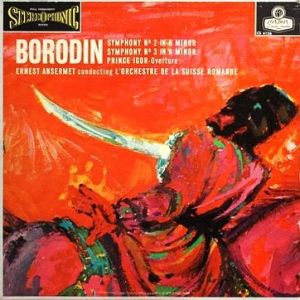
Borodin / Symphonies Nos. 2 & 3 / Ansermet

More of the Music of Alexander Borodin

  • An early London Stereo pressing of these two symphonic masterworks with very good Hot Stamper sound on both sides
  • It’s also fairly quiet at Mint Minus Minus, a grade that even our most well-cared-for vintage classical titles have trouble playing at
  • We guarantee there is more richness, fullness, and performance energy on this copy than others you’ve heard, and that’s especially true if you own whatever Heavy Vinyl pressing is currently on the market, made from who-knows-what tapes
  • These originals are selling for hundreds of dollars on ebay these days, so don’t expect many early London pressings to make it to the site

We’ve long considered the album one of the greatest of all the Decca / London recordings.

Big, rich and dynamic, this is the sound of LIVE MUSIC, and it can be yours, to enjoy for years to come — if you’ve got the stereo to play it and the time to listen to it.

The powerful lower strings and brass are gorgeous. Ansermet and the Suisse Romande get that sound better than any performers I know. You will see my raves on record after record of theirs produced during this era. No doubt the world renowned Victoria Hall they recorded in is key. One can assume Decca engineers use similar techniques for their recordings regardless of the artists involved. The only real variable should be the hall.

Ansermet’s recordings with the Suisse Romande exhibit a richness in the lower registers that is unique in my experience. His Pictures At Exhibition has phenomenally powerful brass, the best I’ve ever heard. The same is true for his Night On Bald Mountain. Neither performance does much for me — they’re both too slow — but the sound is out of this world. Like it is here.

(more…)

Venice on Classic Records

Hot Stamper Pressings of Classical and Orchestral Music

Classic Records remastered the tapes for LSC 2313 and even the people who like the sound of Classic’s Heavy Vinyl pressings used to complain about it, so you can imagine what we think of it.

What a piece of garbage. With smeary, shrill, screechy strings, it gives no indication of the beauty that is on the tape. 

The Victrola reissue, VICS 1119, is dramatically better sounding than any other reissue of the album we have played, including of course the Classic, and may even be better sounding that the Shaded Dog original itself.


This Heavy Vinyl reissue is noticeably lacking in a number of areas that are important to the proper presentation of orchestral music. If you own a copy of this title, listen for the qualities we identified above in the sound that came up short.

Below you will find links to other records that have the same shortcomings we heard when playing the Classic Records pressing of LSC 2313.


(more…)

Schubert – The Trout Quintet / Curzon / Vienna Octet

More of the Music of Franz Schubert

  • Boasting two seriously good Double Plus (A++) sides, this vintage Ace of Diamonds pressing is doing just about everything right
  • It’s simply bigger, more transparent, less distorted, more three-dimensional and more REAL than most of what we played – this is music you cannot help but be drawn into
  • The 1958 master tape has been transferred brilliantly using “modern” cutting equipment (from 1968, not the low-rez junk they’re forced to make do with these days), giving you, the listener, sound and surfaces that are hard to fault
  • When you hear how good this record sounds, you may have a hard time believing that it’s a budget reissue from 1968, but that’s precisely what it is.
  • Some budget reissues are so good, they can actually win shootouts

The cello does not have that “fat” sound some audiophiles seem to like – Decca knew more about recording chamber music in 1958 than practically all the audiophile labels that would come along later, the ones that managed to make a mess of the very idea of audiophile quality sound (you know who I mean)

The piano and the strings have that Golden Age Tubey Magical sound we love. It’s been years since I’ve had the opportunity to play this record; most copies are just too beat up to bother with, so I was glad to find a number in minty condition.

Now what I hear in this recording is sound that is absolutely free from any top end boost, much the way live music is. There’s plenty of tape hiss and air; the highs aren’t rolled off, they’re just not boosted the way they often are in a recording.

A few years back I had a chance to see a piano trio perform locally; they even played a piece by Schubert. The one thing I noticed immediately during their live performance was how smooth and natural the top end was. I was no more than ten feet from the performers in a fairly reverberant room, and yet the sound I heard was the opposite of what passes in some circles for Hi-Fidelity.

This is the opposite of those echo-drenched recordings that some audiophiles seem to like, with microphones placed twenty feet away from the performers so that they are awash in “ambience.” If you know anything about us, you know that this is not our sound.

I have never heard live music sound like that and that should settle the question. It does in my mind anyway. The Chesky label (just to choose one awful audiophile label to pick on) is a joke and always will be. How anyone buys into that phony sound is beyond me, but any audio show will prove to you that there is no shortage of audiophiles who love the Chesky “sound,” and probably never will be.

(more…)

It’s Already So Good, How Could It Get Any Better?

Hot Stamper Pressings of the Music of Berlioz Available Now

You may have noticed that most of the time when we give out the stampers for the top copies of an album, we do not identify the title of the record that has those Shootout Winning stampers.

As you can imagine, our huge investments in research and development make up a big part of our costs, costs that accrue over the course of years, decades even, and that must eventually be passed on to our customers.

But this title is an exception, because we are telling you straight out that the 1K pressings of CS 6101, Music of Berlioz, are the way to go.

It turns out that both the early Decca pressings (SXL 2134) and the London Bluebacks were cut by Tony Hawkins.

It’s unfortunate that this record did not sell well when it came out in 1959, which explains why we could find no evidence of copies with any stampers other than 1K.

Not that the work of any other mastering engineers was in any way needed. Mr. Hawkins did a wonderful job on the copies we played than managed to reproduce the glorious, Golden Age All Tube analog sound of the master tape, which may sound  tautological as all get out but I assure you is not.

No, sadly for us, that glorious sound could be found on one and only one pressing, the one we graded 3+/3+.

No other pressing earned a top grade on either side. Whatever caused the amazing pressings to come out differently from the very good ones happened in the plating and pressing stages of manufacturing, an area that did not involve the work of any of the Decca mastering engineers.

(more…)

Rossini-Respighi / La Boutique Fantasque / Solti

More of the Music of Respighi

  • An early London pressing of Solti and the Israel Phil’s performance of this wonderful ballet suite, here with seriously good Double Plus (A++) grades or close to them from first note to last
  • It’s also remarkably quiet at Mint Minus Minus, a grade that even our most well-cared-for vintage classical titles have trouble playing at
  • An abundance of energy, loads of rich detail and texture, superb transparency and excellent clarity (particularly on side one) – the very definition of Demo Disc sound
  • After trying a few years ago, we knew the best copies had the potential to be knockouts in the Decca canon – after that it was only a matter of finding enough clean copies
  • No other performance or recording we played could hold a candle to this one – the Fiedler we used to like years ago was especially disappointing this time around
  • The best sides were always the biggest, clearest and most three-dimensional, assuming they were able to retain the rich, natural, balanced tonality that is inherently key to a good record, or a great one in this case
  • There are about 150 orchestral recordings we think offer the best performances with the highest quality sound. This record is certainly deserving of a place on that list.

(more…)