Month: May 2025

Oscar Peterson – Night Train

More of the Music of Oscar Peterson

  • Night Train debuts on the site with solid Double Plus (A++) grades on both sides of this Stereo Verve reissue pressing
  • It’s yet another example of a record that sounds better on the right reissue rather than the original, and of course, the only folks who can possibly know such a thing are those who do shootouts
  • Rich, solid bass; you-are-there immediacy; energy and drive; instruments that are positively jumping out of the speakers – add it all up and you can see that this copy had the sound we were looking for
  • Val Valentin engineered, one of the greats in our world – he’s responsible for an awful lot of our favorite audiophile-quality recordings
  • 4 1/2 stars: “…a definitive look at the 1960s Oscar Peterson trio.” 

(more…)

Are All MoFis Created Equal? A Pair of Pink Floyd LPs Proved They Aren’t

Hot Stamper Pressings of the Music of Pink Floyd Available Now

[This commentary was written about twenty years ago.]

Many audiophiles are operating under the misapprehension that Mobile Fidelity managed to eliminate pressing variations of the kind we discuss endlessly on the site.

That is simply not the case, and it’s child’s play to demonstrate how misguided this way of thinking is, assuming you have the following four things: good cleaning fluids and a machine, multiple copies of the same record, a reasonably revealing stereo, and two working ears.

With all four the reality of pressing variations for ALL pressings is both obvious and incontrovertible.

The discussion below of a Hot Stamper pair of Dark Sides from long ago may shed light on some of the issues involved.

Remember Classic Records Comparison Packages?

This is our first Hot Stamper Comparison Package.

For those who remember the 45 RPM/ 33 RPM Classic Records comparison packages, this is somewhat in the same vein. Of course, we don’t know that they kept the EQ the same for the 45 versions compared to the 33s of the albums included in the package, so the comparison is suspect at best.

You’re not really comparing apples to apples unless you keep the EQ exactly the same. I rather doubt they did, because on Simon and Garfunkel the sound was noticeably worse at 45 than it was at 33. This is the main reason we don’t carry the 45 versions of Classic’s records: they are a lot more money, and who knows if they’re even any better?

[This one sure wasn’t better. This guy liked it, but he is rarely right about any of this record and equipment stuff, as I hope everyone knows by now.]

(more…)

Yes – 90125

More Yes

  • A vintage Atco import pressing that was giving us the big and bold sound we were looking for, earning solid Double Plus (A++) grades or close to them from top to bottom – exceptionally quiet vinyl too
  • This side one is spacious, solid and dynamic with huge bass and analog richness that’s hard to find on this album, and side two is not far behind in all those areas
  • There’s an abundance of life and energy here, and the vocals sound just right (particularly on side one)
  • 4 1/2 stars: “A stunning self-reinvention by a band that many had given up for dead, 90125 is the album that introduced a whole new generation of listeners to Yes… there’s nary a duff track on the album.”

I’m pleased to report that we can now add 90125 to our small list of 80s albums that can sound excellent on the right pressing. Drop the needle on “Owner Of A Lonely Heart” and we bet you’ll agree!

So many copies we played were full of that digital grit and grain that we hear on so many records from the era. This one is an entirely different story. It has wonderful analog qualities, with more richness and smoothness than most pressings.

The recording itself is outstanding: punchy and lively with an especially beefy bottom end, the kind a good rock record needs. But you would never know it by playing the average pressing you might pick up for five bucks at your local used record store. The typical copy of this record is pretty average sounding. Let’s face it: every mastering mistake that can be made will be made sooner or later with mass-produced vinyl like this.

(more…)

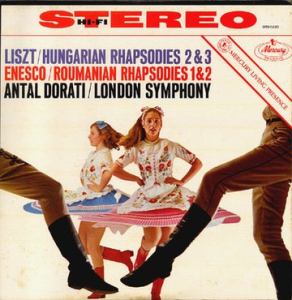
Hungarian Rhapsodies 1, 4, 5 & 6 – Wait a Minute

Hot Stamper Pressings of Orchestral Spectaculars Available Now

1963 was a phenomenal year for audiophile quality recordings, but this is not one of the better records produced that year. Far from it.

The sound of our vintage Mercury here, SR 90371, was awful. The overall sound was crude and the strings were shrill.

It has been our experience that many Mercury recordings suffer from these shortcomings.

But wait a minute.

Dorati recorded Hungarian Rhapsodies 2 and 3 with the London Symphony for Mercury, and those can sound amazing when you get hold of a good one.

How did they get this one so wrong?

We don’t know, and we doubt anyone else does either.

Like so many realities of the world of records, it’s a mystery, one that is very unlikely to be solved.

One of the best reasons mysteries such as this have little chance of being solved is that no one with any real expertise, using methodologies that are reliable and reproducible in any serious way, is taking on this kind of work — besides us.

We actually like testing records, and we refined* a method for doing it that is as reliable and reproducible as any method can be in the world of audio: the record shootout.

(more…)

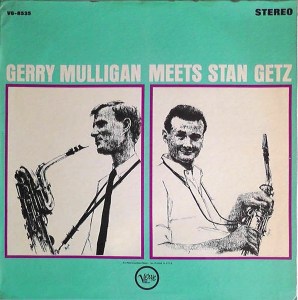
Gerry Mulligan – Gerry Mulligan Meets Stan Getz

More Gerry Mulligan

More Stan Getz

  • Mulligan and Getz’s 1957 collaboration is back for only the second time in over three years, here with solid Double Plus (A++) sound or close to it throughout this vintage 60s Verve Stereo pressing – fairly quiet vinyl too
  • Full, rich, and spacious with an abundance of Tubey Magic and, better yet, not the least bit dry, hard or transistory (particularly on side one)
  • Leave it to Better Records to figure out a complicated title with a long history such as this one – originals, reissues, monos, stereos, we had to play them all to find a copy that sounds as good as this one does (also particularly on side one)
  • Practically impossible to find in stereo with audiophile playing surfaces, hence the multi-year hiatus away from the site
  • “Produced by [Norman] Granz, Getz And Mulligan In Hi-Fi [the title it was originally released under] captures the two saxophone giants as they showcase a world class duet which provided them with a superb rhythm section featuring Lou Levy, proud member of The Stan Getz Quartet at the piano who play with impeccable style and well-conceived ideas that swing with unique vitality, while Ray Brown’s bass solidify the combo’s edge.”

(more…)

The Amazingly Spacious Sound of Ellington Indigos

Hot Stamper Pressings of the Music of Duke Ellington Available Now

This original 6-Eye Stereo pressing blew us away with its superbly well-recorded romantic big band jazz, of which Ellington was a true master.

A near-perfect demonstration of just how good 1958 All Tube Analog sound can be – no modern record can hold a candle to a pressing as good as this one.

If you like the sound of relaxed, tube-mastered jazz, you can’t do much better than Ellington Indigos. Many of the other Six Eye copies we played suffered from blubbery bass and transient smearing, but the clarity and bass definition here are surprisingly good. The warmth and immediacy of this sound may just blow your mind.

We played a handful of later pressings that didn’t really do it for us. They offer improved clarity, but can’t deliver the tubey goodness that you’ll hear on the best early pressings. We won’t be bothering with them anymore. It’s tubes or nothing on this album, and that means the best 6 Eye Stereo original pressings will always win our shootouts.

The key for vintage super-tubey recordings is balancing clarity with richness. The easiest way to test for those two qualities on this album is to find a track with clear, lively, loud trumpets that also includes rich trombones and other low brass.

On side one that track is Where or When. If your copy has clear, lively trumpets and rich, full-bodied, Tubey Magical low brass, it is definitely doing an awful lot of what it needs to do right.

Some of you may recognize that this is precisely why Bob and Ray Throw a Stereo Spectacular is our all time favorite test disc. (Was might be more accurate. It was for me, but I retired. The younger generation now running the show has their own favorite test discs, as is only fitting. They didn’t spend ten or fifteen years working on the stereo and room with the record the way I did.)

(more…)

What’s on Your Turntable and Why?

Robert Brook runs a blog called The Broken Record, with a subtitle explaining that his blog is:

A GUIDE FOR THE DEDICATED ANALOG AUDIOPHILE

Here is Robert’s latest posting.

WHAT’s On Your TURNTABLE? and WHY?

You say your stereo is having trouble playing challenging recordings like The Firebird with Dorati?

You can’t get the strings in the loudest passages to sound the way you think they should? Too screechy are they? Or too smeary? Or too thin? Or too hard? Or even congested and almost distorted in the climaxes?

It’s amazing how many different ways there are for strings on an orchestral recording to sound wrong. If getting The Firebird’s strings to sound right is a goal you wish to achieve, you, my friend, have your work cut out for you.

Because nothing in audio is harder than reproducing the massed strings on the biggest, boldest orchestral recordings.

We have some good test discs for that specific purpose, but it will take a real commitment from you to bring about the success you seek.

Audio Is Hard

This is a drum we have been banging on for as long as I can remember, to the constant irritation of every less-than-serious audiophile who comes in contact with us — which all well and good. We haven’t catered to that crowd since we gave up on Heavy Vinyl in 2007.

We’re trying to reach a much smaller subgroup of more serious enthusiasts with our approach to audio and records. See here, here and here, and there are great many more discussions to be found on our audio advice page.

If you want to achieve any real success in audio, you need to do a lot of work and spend a fair amount of money. Not a fortune, maybe not even six figures, but trying to do audio on the cheap is a fool’s errand. It can’t be done.

Why is it any of our business how your system sounds? If it’s good enough for you, why isn’t it good enough for us?

A true Hi-Fidelity rig is in fact what makes our business possible.

Without top quality sound, our records can’t possibly be worth the admittedly high prices we charge for them.

We want to help you take audio to the next level for two reasons: one, because that’s where our records really come to life, and two, that’s where the shortcomings of the modern Heavy Vinyl reissue are too glaringly obvious to ignore.

I found a way to get there. Like me, Robert Brook found a way.

We believe that the more time you spend following the advice on our two blogs explaining how we got to where we are now, the clearer the path forward will be. We hope you can learn from our experience. It will cost you nothing and might just save you a great deal of money.

(more…)

Tchaikovsky / Mendelssohn, et al. / 1812 Overture / Fingal’s Cave Overture & more / Reiner

More of the Music of Tchaikovsky

  • A rare and wonderful early Shaded Dog pressing that boasts excellent Double Plus (A++) sound from start to finish
  • Remarkably rich, Tubey Magical and oh-so-rosiny Living Stereo strings and powerful, dynamic brass make this a real Demo Disc quality orchestral heavyweight
  • The real stars here are NOT the 1812, but the three coupling works, which demonstrate, on this copy at least, The Real Power of the Orchestra

Lizst’s Mephisto Waltz, Mendelssohn’s The Hebrides Overture, and the Tragic Overture by Brahms are the Must Own 36 minutes worth of music on this record.

It’s an outstanding performance from Reiner and the CSO on everything but the 1812.

Say what?

Yes, it’s true. After hearing the amazing Decca pressing with Alwyn conducting, we knew early on that Reiner and the CSO were simply not competitive in terms of performance, and the RCA engineers also failed to capture the deep bass of the organ on their pressing.

What we were impressed with were the three other works, all played with verve and technical skill and as enjoyable as any music you can find on this site. Go to YouTube to listen to them if you are not familiar with the works. All of them belong in any serious music collection, and these recordings (and our Hot Stamper pressings) do them proud.

(more…)

Bizet / L’arlesienne And Carmen Suites – Ansermet

More of the Music of Georges Bizet

  • An early London pressing that was doing just about everything right, earning solid Double Plus (A++) grades from first note to last
  • This is a spectacular recording — it’s guaranteed to put to shame any Heavy Vinyl pressing of orchestral music you own
  • Vibrant orchestrations, top quality sound and scratch-free surfaces combine for an astounding listening experience
  • Some old record collectors (like me) say classical recording quality ain’t what it used to be – here’s all the proof anyone with two working ears and top quality audiophile equipment needs to make the case
  • If you’re looking to demonstrate just how good ’50s All Tube Analog can be, this killer copy should be just the record to do it
  • Recorded in 1958 using the amazing Decca Tree mic setup, it’s yet another remarkable disc from the Golden Age of Vacuum Tube Recording
  • 1958 just happens to be one of the truly great years for analog recordings, as evidenced by this amazing group of albums, all recorded or released in that year
  • This is a Must Own album, along with these other entries in our core classical/orchestral collection

Production and Engineering

James Walker was the producer, Roy Wallace the engineer for these sessions from 1958 in Geneva’s glorious Victoria Hall. It’s yet another remarkable disc from the Golden Age of Vacuum Tube Recording.

The gorgeous hall the Suisse Romande recorded in was possibly the best recording venue of its day, possibly of all time; more amazing sounding recordings were made there than any other hall we know of. There is a richness to the sound that exceeds all others, yet clarity and transparency are not sacrificed in the least. It’s as wide, deep and three-dimensional as any, which is of course all to the good, but what makes the sound of these recordings so special is the weight and power of the brass and the timbral accuracy of the instruments in every section.

This is the kind of record that will make you want to take all your heavy vinyl classical pressings and put them up for sale. None of them, I repeat not a single one of them, can ever begin to sound the way this record sounds.

Quality record production is a lost art, and it’s been lost for a very long time.

Famous in its Day

The Carmen Ballet Suite was deservedly famous in audiophile circles back in the ’70s. Even with the dubious equipment that a high-end stereo store might be running, this record would still sound shockingly good. It has so much “life” to it, so many interesting colors, and above all such three-dimensional spaciousness, it can make even bad transistor equipment, which is pretty much all there was back then, sound good.

The store I frequented carried the classic tube Audio Research electronics — that’s where I bought mine — but most stores were all-transistor, and high-power transistors at that, not a sound I care to revisit. Would love to hear my SP3-A-1 again though!

(more…)

What We Listened For on Blue

Hot Stamper Pressings of Joni Mitchell’s Albums Available Now

We recently auditioned the Mobile Fidelity One-Step pressing of Blue and made some notes regarding the sound. (You can read them in full here.)

We focussed on the quality of their pressing’s vocal reproduction, for the simple reason that a Joni Mitchell album that gets the vocals wrong is a Joni Mitchell album that no music lover and certainly no audiophile would ever want to play.

Notice that only the vocals are mentioned in the notes — not how deep the bass goes, not how high the highs are, not the tone of the piano, not the pluck of the lap dulcimer, not the black background, not the soundstaging — none of those things that audiophiles — including us! — like to talk about endlessly in our reviews so that everyone will know how attuned we were to every aspect of the recording.

For this album that kind of listening is unnecessary.

When the voice is wrong, the sound is wrong. What more do you need to know?

And when the voice is wrong on a Joni Mitchell record, you have a worthless piece of vinyl no matter how much you may have paid for it.

Other titles that get the voice wrong and therefore should be avoided by audiophiles of all stripes can be found here.

We’ve written quite a bit about the album, having played copies of it by the score, and you can find plenty of our reviews and commentaries for Blue on this very blog.

There is currently at least one Hot Stamper pressing on the site for those of you who really love the album and are willing to pay a premium-and-then-some price for it.

For everybody else, here is how to go about finding your own killer copy of Blue.

(more…)