Month: December 2024

Falla / Turina – Nights In The Gardens Of Spain / Danzas Fantásticas

More of the music of Manuel De Falla (1876-1946)

  • With excellent Double Plus (A++) grades on both sides, this original UK import pressing of these wonderful classical works will be hard to beat
  • These sides are doing pretty much everything right – they’re rich, clear, undistorted, open, spacious, and has depth and transparency to rival the best recordings you may have heard
  • Soriano’s piano is especially clear, solid, and present throughout Danzas Fantásticas, with practically no trace of vintage analog tube smear
  • When you hear how good this record sounds, you may have a hard time believing that it’s a budget reissue from the 70s, but that’s precisely what it is.
  • There are about 150 orchestral recordings we think offer the best performances with the highest quality sound. This record is certainly deserving of a place on that list.

(more…)

One Man Dog Is Another Good Conga Tester Title

Hot Stamper Pressings of the Music of James Taylor Available Now

If you have a Hot Side One for One Man Dog you will know it in a hurry. The guitars and congas will leap out of your speakers at the beginning of One Man Parade. If they don’t, forget it, move along to the next copy and keep going until you find one in which they do.

There are plenty of other, more subtle cues to separate the White Hots from the Supers and Hots, but if the sound doesn’t come to life right from the get go, it never will.

This reminded me of another record that can be judged by the jump-out-the-speaker energy of it congas, Teaser and the Firecat. An excerpt:

The congas are what drive the high-energy songs, songs like Tuesday’s Dead and Changes IV.

Here is how we stumbled upon their critically important contribution.

We were listening to one of the better copies during a recent shootout. The first track on side one, The Wind, was especially gorgeous; Cat and his acoustic guitar were right there in the room with us. The transparency, tonal neutrality, presence and all the rest were just superb. Then came time to move to the other test track on side one, which is Changes IV, one of the higher energy songs we like to play.

But the energy we expected to hear was nowhere to be found. The powerful rhythmic drive of the best copies of the album just wasn’t happening. The more we listened the more it became clear that the congas were not doing what they normally do. The midbass to lower midrange area of the LP lacked energy, weight and power, and this prevented the song from coming to LIFE the way the truly Hot Stamper pressings do.

The sound of the congas on many of the records we audition is a good test for some of the most important qualities we listen for: energy, rhythmic drive, presence and weight.

Congas, like drums and pianos, are good for testing records.

(Stereos too of course.)

If these instruments get lost in the mix, or sound smeary or thin, it’s usually fairly easy to hear those problems if you are listening for them. Most of what you will read on this blog is dedicated to helping you do that.

The richness of analog is where much of its appeal lies. Lean drums, congas and pianos are what you more often than not get with CDs.

These three instruments are also exceptionally good for helping you to choose what kind of speakers to buy. (We recommend big ones with large dynamic drivers.)

(more…)

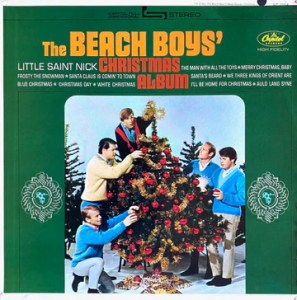
The Beach Boys – The Beach Boys’ Christmas Album

More of The Beach Boys

  • With two STUNNING Shootout Winning Triple Plus (A+++) sides or close to them, this early Capitol pressing could not be beat
  • This copy gets the midrange right, and since that is where The Beach Boys’ voices are, that puts it ahead of everything else we heard
  • What’s shocking to those of us who have played The Beach Boys records by the bucketful is how rich and open the best pressings of this album are
  • You will have an awfully hard time finding another Beach Boys album that sounds as good as this one, and you may just find that it simply can’t be done
  • 4 stars: “This mix of favorites and originals makes this a balanced holiday album that should please both Beach Boys admirers and those unfamiliar with the group
  • This is our pick for The Beach Boys’ best sounding album. Roughly 150 other listings for the best recording by an artist or group can be found here on the blog.

Having done this for so long, we understand and appreciate that rich, full, solid, Tubey Magical sound is key to the presentation of this primarily vocal music. We rate these qualities higher than others we might be listening for (e.g., bass definition, soundstage, depth, etc.). The music is not so much about the details in the recording, but rather in trying to recreate solid, palpable, and real Beach Boys singing live in your listening room. The best copies have an uncanny way of doing just that.

(more…)

Another 30th Street Studio Knockout – This One’s from Tony Bennett

Hot Stamper Pressings of the Music of Tony Bennett Available Now

UPDATE 2018

This review was written many years ago, circa 2010 I would guess, right about the time we first started doing shootouts for the album. (Here is what we have to say about I Left My Heart in San Francisco these days, suspiciously similar to what we had to say in 2010. As the song says, ‘”The fundamental things apply…”)


Everything that’s good about All Tube vocal recordings from the 50s and 60s is precisely what’s good about the sound of this record.

The huge studio the music was recorded in is captured faithfully on this pressing. The height, width and depth of the staging are extraordinary, a true Demo Disc in that regard.

We are not big soundstage guys here at Better Records, but we can’t deny the appeal of the space to be found on a record that sounds as good as this one does.

Transparency and Tubey Magic are key to the sound of the orchestra and you will find both in abundance on these two sides.

(Other records that are good for testing those two qualities can be found here and here.)

Albums such as this live and die by the quality of their vocal reproduction. On this record Mr. Tony Bennett himself will appear to be standing right in your listening room, along with the 38 other musicians from the session. (Actually, come to think of it, they’re probably sitting.)

On the best pressings, the space of your stereo room will seem to expand in all directions to accommodate them — an illusion of course, but nevertheless a remarkably convincing one.

(more…)

Letter of the Week – “I will spare you the time to comment on my 1992 Analogue Productions Reissue…”

Hot Stamper Pressings of Sonny Rollins’s Albums Available Now

One of our good customers had this to say about some Hot Stampers he purchased recently:

Dear Tom and Fred

After having had the opportunity to listen to the next batch of 7 more records, here are my observations on the now 40 records I bought from you.

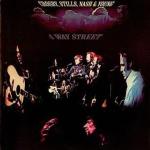
First to my listening experience. After receiving the CSNY 4 Way Street and looking for my own record, I thought was a German press easy to beat I realized it was a white label promo first press and thought, oh, did I make a mistake to buy this for this kind of money from you guys, this may be a tough one to crack?

Not so, your SH Stamper clearly beat the WL promo, check!

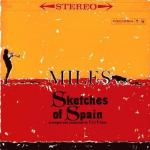
Next up was the Miles Davis Sketches of Spain White Hot Stamper, one of my very top Miles favorites.

I did not recall that I had the six eye first press, and on side 2, with identical stampers (when your 3/3 WH show up, you do not have the time to check this but hurry :-since your WH 3/3s sell like hot cakes!).

So even more difficult to beat?? Promising start: your WH was clearly better on side 1, now to the identical stampers side 2: not as clearly but still just more transparent, better drums, less shrill on track 2, check!

But it certainly cannot get better than this 3/3 WH stamper, can it?

Next up is Sonny Rollins 3/3 WH Stamper [of Way Out West]. Hard to believe, but yes, even better than the great Miles 3/3 WHS, and I will spare you the time to comment on my 1992 Analogue Productions reissue which I always thought was quite decent.

And so it goes on…

Christian

Christian,

In less than a year you have acquired a large number of simply amazing sounding records. Congratulations.

As you point out about the stampers, you may have a pressing with the right stampers, but our copy will still beat it. How it was pressed and how it was cleaned are critical to the sound, and that is not something the stamper numbers can tell you. It’s a subject we discuss all over this blog. Here is a good place to start.

As for your 1992 Analogue Productions Heavy Vinyl remaster, I honestly don’t know how anyone can listen to a record with sound like that and consider it acceptable, or, in your words, “quite decent.” I went into the long story of the album in this commentary.

(more…)

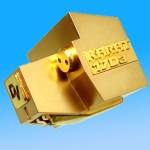
Cartridges Part Two: “Why don’t you talk about other cartridges more often on your blog?”

Advice to Help You Make More Audio Progress

Part one of this discussion can be found here.

Ab_ba continues:

Tom, this got me thinking.

I think of a mountain range. From one peak, you see others, and wonder, “gee maybe the view is even more magnificent from that peak!” But, for most of the peaks, it’s about the same, certainly no better, and could be a lot worse. Maybe just behind that other hill that looks so enticing from here there’s a parking lot! And also, climbing each peak takes time and energy, and for most of the journey between the peaks, you are down in a valley. And, is the view really actually better over there? Just because it is higher, doesn’t mean it will be more rewarding. Just because it is dazzling at first, maybe you grow sick of it after a while.

You have created a system that sounds demonstrably fantastic. And, it is a system that is not too finicky – other people can copy it and get amazing sound, even without any tweaking and fine-tuning. Are there other great-sounding systems? For sure. But, who, or what, on earth could be my guide to finding those other peaks? Certainly not the magazines. Certainly not other audiophiles. Certainly not the guys at my local hi-fi store. Certainly not the price tag.

As I’ve spent more time with the [redacted] cartridge my friend loaned me, its sonic character is becoming more evident. It is quite lovely on jazz. I threw on a $5 copy of Art Pepper’s Straight Life (Galaxy label, fwiw) and it sounded just fantastic. Sparkly highs, and the lack of bass that cartridge has was not noticably absent. I wondered, “has it settled in a little? Are my ears getting used to it?” I put on a few different records and said, “nope. It’s just got a sound signature that’s favorable to Art Pepper.”

So there’s a perfect example of a mountain peak I would not want to build my house on. Does the Dyna have no character? Probably not, but different records sound different, and different genres all reproduce well on it, and no part of the spectrum calls attention to itself. If there is a signature to it, it’s one I can live with.

Last question – why is it that audiophiles are so uncomfortable with the idea that they might be wrong? I mean, you can’t improve if you think you are already right. I think most of them are loners with disposable income, and most people who make some money in life get it by being supremely confident, perhaps overconfident. You look at guys like [redacted] and me, scientists where humility and knowledge of our own ignorance is in the very fiber of practicing our professions well, and even if we don’t have the disposable income of some audiophiles and some of your customers, we value quality, we value expertise, and we are happy to spend our available funds on things of enduring value.

Ab_ba

Dear Ab_ba,

I was no different back when I started. For about my first ten years in high-end audio, roughly 1975-85, I bought the most expensive equipment that I could afford, as long as it was well-liked by those whose ears I trusted and sounded good to me.

Is the audiophile of today doing anything different?

What would you be doing if you hadn’t stumbled on a guy with some credibility — he sold you some records that sounded amazing, so he must know something — who turned you on to some audio stuff that sounds great and, better yet, didn’t cost that much?

And how did this guy — me — come to find out about all this stuff in the first place? Well, I’ll tell you.

He had a good audio friend who turned him on to Dynavector cartridges twenty years ago (but oddly enough not the really good one they sell. I had to make that leap for myself).

And this audio friend had learned through extensive trial and error that there were certain receivers one could pick up for cheap at thrift stores that offered excellent, audiophile-quality sound. (Trial and error were his forte. This is the same guy that clued me into the concept of Hot Stampers, a life-changing concept if ever there was one.)

As it turned out, even my friend did not know how good the sound of the receiver he sold me could be when fed by a top quality outboard phono stage, something he did not have access to. (The receiver’s phono stage is decent but hopelessly outclassed by the EAR 324p we use.)

I ended up buying four or five different models with mediocre-at-best sound before I realized the one I owned must be a fluke. Then I bought three more of the model I liked and they all sounded different too, although they ranged in sound at most from excellent to crazy good. So I put the best sounding one in my system and kept the other three for backup. Like I said, they were cheap.

When I met my friend George Louis in San Diego back in the 80s, he had a much better system than I did. He was using non-audiophile-approved equipment that drove custom speakers. He showed me that my audiophile electronics and my Fulton so-called state-of-the-art speakers were not nearly as good as I thought they were. What did I know back then? Not as much as I thought I did, that’s for damn sure.

When I moved to Los Angeles in 1987, I met a fellow audiophile named Robert Pincus and we quickly became friends. Along with lots of other records, I was selling vintage classical records to audiophiles and he was supplying me with whatever he could dig up that sounded good.

He showed me that no two records sound the same, and even that no two sides of the same record sound the same. Once I had a chance to listen to some of the Hot Stamper pressings he brought me, I was sold.

Operating as the equivalent of a one-man band* in the 90s, I was only able to offer a small number of Hot Stamper pressings on an ad-hoc basis to customers who trusted me enough to believe in the concept. In 2004,  a mere 17 years later, we had worked out the bugs in the process and began selling them officially on our site, starting with Teaser and the Firecat. During those 17 years I was doing audio and records for 60-80 hours a week. Needless to say, I learned a lot in that time.

Anybody else want to put in 60-80 hours a week for 17 years to find out just how much they don’t know?

Isn’t it easier to go to a forum or site and have somebody tell you what you want to hear? It would save you a lot of work, but what would you learn? It’s our hope that every person buying a record from us has a Heavy Vinyl or audiophile-approved pressing to play against the one we sell them. Comparing the two, on their own time, on their own system, allows them to hear the kind of sound they’ve been missing and were told could not possibly exist.

But it does! And we have the records to prove it does.

Easy-to-carry-out comparisons of this kind have taught a select group of audiophiles and music lovers — customers like ab_ba, along with hundreds of others — not to put their trust in those who claim to know what they are talking about when they opine on what are the best sounding pressings. We have opinions, sure, but we also have the records that back up our opinions.

We’ve spent a lifetime discovering these very special vinyl pressings, and we make them available to discriminating audiophiles who prize superior sound as well as “enduring value.” All it takes is one click.

Best, TP


*More on the subject of being a one man band.

(more…)