zero-tube

Some records are so completely lacking in analog warmth, richness and sweetness that they sound more like bad CDs than records. They have so little Tubey Magic that you might as well peg the figure at ZERO.

This is definitely not our sound. No Hot Stamper pressing could possibly lack Tubey Magic — it’s one of the analog qualities that sets our records apart from even the best of those pressed on Heavy Vinyl – but plenty of other records do, and this link will take you to about 50 of them.

Steely Dan ‎on MCA Audiophile Vinyl – Sounds Like a Good CD to Me

Hot Stamper Pressings of the Music of Steely Dan Available Now

Clean and clear and tonally correct, just like a good CD should sound.

If this is what you are after, why not just buy the CD? It’s bound to be a lot cheaper.

Some songs sound better than others, but I can’t for the life of me remember which ones. I auditioned copies of this record more than twenty thirty years ago. Once I got rid of them I never bought another. Why would I?

No doubt there are still audiophiles extolling the virtues of this record on various internet threads.

One thing you can be sure of: these are people who are not serious about making progress in audio.

Some of the pressings these audiophiles like can be found in our stone age audio record section.

If you have top quality, highly-tweaked modern equipment, a good room, and the myriad other things that make exceptionally good vinyl playback possible these days — in a way that was not possible even ten or fifteen years ago — you would have no reason to keep a record of such mediocrity in your collection.

(more…)

Oh, So That’s Who Butchered Neil Young’s Greatest Hits

Hot Stamper Pressings of the Music of Neil Young Available Now

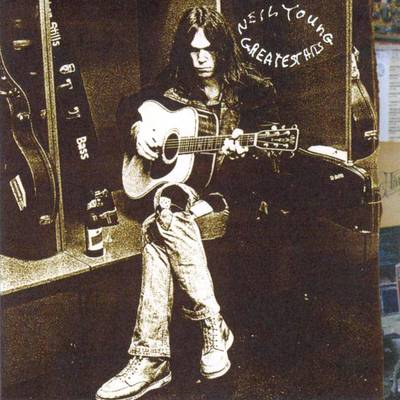
When I reviewed the Classic Records pressing of Neil Young’s Greatest Hits in 2005, I had never heard of Chris Bellman. As it turns out, he’s the guy who cut this piece of crap. I had no idea. And why would I care anyway?


UPDATE 2025

The median price the album sells for on Discogs as of 10/2025 is $142.92, and it has sold for as much as $288 and change in the past. There are bigger wastes of money in the world of records — this guy can be counted on to produce more than his share, some at prices that even make us blush — but it is hard to imagine how anyone could get less for his $142 than by buying this 2 disc set.


The most shocking thing about the fact that he cut the album is not how awful it sounds.

No, there are plenty of awful sounding Heavy Vinyl pressings in the world, enough to fill up the glossy-paged catalogs of every mail order audiophile record dealer from here to Timbuktu.

What is shocking is that there are audiophiles — self-identified lovers of sound, who are supposedly capable of telling a good sounding record from a hole in the ground — that defend this man’s work.

How does anyone take this guy’s records seriously?

To be fair, it should be said that I actually like one of the records Mr Bellman has cut, the 45 of Brothers in Arms, discussed here. An excerpt:

[In this video] I’m asked if I like any modern mastering engineers, and the only one I can think of is Chris Bellman, because he mastered one of the few Heavy Vinyl pressings I know of that sounds any good, Brothers in Arms, released in 2021. I played it when Edgers [Geoff Edgers from WAPO] brought it by the studio when he first visited me in preparation for his article.

My best copy was clearly better in some important ways, but Bellman’s mostly sounds right, and that surprised me because most of these modern records sound funny and weird and almost never sound right.

(Geoff brought over three records that day: Brothers in Arms, the remastered Zep II, and a ridiculously bad sounding Craft pressing of Lush Life, which was mastered by Kevin Gray, and one which I have not had time to review yet. It was my introduction to the Craft series, and let’s just say we got off on the wrong foot. I told Geoff it sounded like a bad CD, and that’s pretty much all I remember of it. The average price for that pressing on Discogs is roughly $69 these days. The CD is cheaper and there is very little doubt in my mind that it would be better sounding to boot.)

I stand by my admiration for Brothers in Arms, a very good reissue, something that might give one of our lowest level Hot Stamper pressings a run for its money.

But he has a lot of explaining to do when it comes to the other records of his we (and Robert Brook) have played. Reviews are coming, late as always, but for now here is what we’ve written about the records he’s credited with remastering.

(more…)

Just Say No to The Yes Album on Rhino

Hot Stamper Pressings of the Music of Yes Available Now

You can find this one in our audiophile record hall of shame, along with almost 300 others that, in our opinion, make a mockery of the term “audiophile record.”

Is it the worst version ever?

Hard to imagine it would have much competition. The CD I own is dramatically better sounding, and it can probably be had for ten bucks or less. (Make sure Joe Gastwirt had nothing to do with whatever version you buy. His stuff is usually no-noised garbage.)

That notorious hack Ron McMaster strikes again.

Rhino Records bills their releases as pressed on “180 gram High Performance Vinyl.” However, if they are using performance to refer to sound quality, we have found the performance of their vinyl to be quite low, lower than the average copy one might stumble upon in the used record bins.

The CD versions of most of the LP titles they released early on are far better sounding than the lifeless, flat, pinched, so-called audiophile pressings they produced starting around 2000.

The mastering engineer for this junk title actually has the nerve to feature his name in the ads for the records. He should be run out of town, not promoted as a keeper of the faith and defender of the virtues of “vinyl.” If this is what vinyl sounds like I’d would have switched to CD years ago.

And the amazing thing is, as bad as these records are, there are people who like them. I’ve read postings on the internet from people who say the sound on these records is just fine. It’s sad.

Their Grateful Dead titles sound as bad as the cheapest Super Saver reissue copies I have ever heard. And those are terrible!

(more…)

More Evidence of Ron McMaster’s Flat Out Incompetence

Hot Stamper Pressings of the Music of Steely Dan Available Now

Reasonably good bass, we’ll give it that, but no top end and no Tubey Magic.

More of Ron McMaster’s handiwork. The result is a record that simply has no reason to exist.

The AVERAGE original pressing sitting in your local record store bin right now for probably all of ten bucks will MURDER this piece of crap. 


UPDATE 2025

It’s been a long time since anybody could buy a clean original of Gaucho for ten bucks! Fifty is the going price at our local stores these days. Worth every penny too.


As we noted for Ron’s remastered Band album:

When you see that little RM in the dead wax of one of these new Heavy Vinyl reissues, you know you’ve just flushed your money down the toilet. There should be a warning label on the jacket: Mastered by Ron McMaster.

It’s only a warning to those of us familiar with his work of course; the general public, and that includes the general audiophile public, probably won’t have much of a problem with the sound of this record, or anything else he does.

He still has the job, doesn’t he? What does that tell you?

(more…)

How Does the Heavy Vinyl Rubber Soul Sound?

Hot Stamper Pressings of Rubber Soul Available Now

This review was originally written in 2015.


We are so excited to tell you about the first of the Heavy Vinyl Beatles remasters we’ve played! As we cycle through our regular Hot Stamper shootouts for The Beatles’ albums we will be of course be reviewing more of them*. I specifically chose this one to start with, having spent a great deal of time over the last year testing the best vinyl pressings against three different CD versions of Rubber Soul.

The short version of our review of the new Rubber Soul vinyl would simply point out that it’s awful, and, unsurprisingly, it’s awful in most of the ways that practically all modern Heavy Vinyl records are: it’s opaque, airless, energy-less and just a drag.

I was looking forward to the opportunity to take Michael Fremer, the foremost champion of thicky vinyl, to task in expectation of his usual rave review, when to my surprise I found the rug had been pulled out from under me — he didn’t like it either. Damn!

MF could hear how bad it was. True to form, he thinks he knows why it doesn’t sound good:

As expected, Rubber Soul, sourced from George Martin’s 1987 16 bit, 44.1k remix sounds like a CD. Why should it sound like anything else? That’s from what it was essentially mastered. The sound is flattened against the speakers, hard, two-dimensional and generally hash on top, yet it does have a few good qualities as CDs often do: there’s good clarity and detail on some instruments. The strings are dreadful and the voices not far behind. The overall sound is dry and decay is unnaturally fast and falls into dead zone.

It strikes me as odd that the new vinyl should sound like a CD. I have listened to the newly remastered 2009 CD of Rubber Soul in stereo extensively and think it sounds quite good, clearly better than the Heavy Vinyl pressing that’s made from the very same 16 bit, 44.1k remixed digital source.

If the source makes the new vinyl sound bad, why doesn’t it make the new CD sound bad? I can tell you that the new CD sounds dramatically better than the 1987 CD I’ve owned for twenty years. They’re not even close. How could that be if, as MF seems to believe, the compromised digital source is the problem?

Lucky for me I didn’t know what the source for the new CD was when I was listening to it. I assumed it came from the carefully remastered hi-rez tapes that were being used to make the new series in its entirety, digital sources that are supposed to result in sound with more analog qualities.

Well, based on what I’ve heard, they do, and those more analog qualities obviously extend to the new Rubber Soul compact disc. At least to these ears they do.

It’s possible my ignorance of the source tape allowed me to avoid the kind of confirmation bias — hearing what you expect to hear — that is surely one of the biggest pitfalls in all of audio and a pit that Fremer falls into regularly.

(more…)

Workingman’s Dead is Dead as a Doornail on Rhino Records

Hot Stamper Pressings of the Music of The Grateful Dead Available Now

This review was written many years ago, shortly after the release of the album in the early-2000s.


An audiophile hall of shame pressing and a Heavy Vinyl disaster if there ever was one (and oh yes, there are plenty. Here are some of the more recent examples we’ve played).

The 2003 Rhino reissue on Heavy Vinyl of Workingman’s Dead is absolutely awful. It sounds like a bad cassette.

The CD of the album that I own is superb, which means that the tapes are not the problem, bad mastering and pressing are.

This pressing has what we call ”modern” sound, which is to say it’s clean and tonally correct for the most part, but it’s missing the Tubey Magic the originals and the good reissues both have plenty of.

Is it the worst version of the album ever made? The pressings on the last WB labels are pretty awful, but this awful? Who can say.


Rhino Records has really made a mockery of the analog medium. Rhino bills their releases as pressed on “180 gram High Performance Vinyl”. However, if they are using performance to refer to sound quality, we have found the performance of their vinyl to be quite low, lower than the average copy one might stumble upon in the used record bins.

The CD versions of most of the LP titles they released early on are far better sounding than the lifeless, flat, pinched, so-called audiophile pressings they did starting around 2000. The mastering engineer for this garbage actually has the nerve to feature his name in the ads for the records. He should be run out of town, not promoted as a keeper of the faith and defender of the virtues of “vinyl.” If this is what vinyl sounds like I’d switch to CD myself.

And the amazing thing is, as bad as these records are, there are people who like them! I’ve read postings on the internet from people who say the sound on these records is just fine, thank you very much. I find this very, very sad. More proof, as if we needed it, that the audiophile record collecting world has lost its mind.

Their Grateful Dead titles sound worse than the cheapest Super Saver reissue copies I have ever heard. The Yes Album sounds like a cheap cassette as well, a ghost of the real thing.

(more…)

How Do You Make a Vintage Jazz Recording Sound Wrong?

Hot Stamper Pressings of Jazz Albums Available Now

How do you make a vintage jazz recording sound wrong?

Easy. Just take out all the Tubey Magic that was captured on the master tape all those years ago by Howard Holzer and Roy DuNann.

You know the kind of Tubey Magic I’m talking about. It’s the trademark sound of every vintage Contemporary pressing ever made. It’s the defining sound of the best jazz recordings from the era. It’s the reason that jazz lovers and record collectors the world over pay big bucks for vintage pressings — because they have the sound of tubes.

When you take away that one quality — just the one, leaving everything else as it should be: the bass, the mids, the highs, the energy, the space, the size, you name it — what you are left with doesn’t sound right.

It no longer sounds the way a jazz record from 1958 would sound.

If you don’t know that sound, it’s possible that this cheap reissue pressing from 1984 might not be as bothersome for you as it was for us. But we’ve played vintage jazz records from the 50s by the hundreds. They never sound like this. The reissues might, but the best early pressings sure don’t.

Maybe This Is Your Sound?

However, if you happen to like the sound of CDs for some reason, something that is frankly hard to imagine but nevertheless seems to be true, this OJC might just be the ticket.

We’ve never liked that sound, and we sure don’t like this pressing.

Other records we’ve played that sounded like CDs to us can be found here.

We’ve only played three releases on the Music Matters label, but all three of them sounded like CDs to us — Green Street, The Magnificent Thad Jones, and Tina Brooks’ True Blue (review coming someday!).

Much of Kevin Gray‘s work has the kind of sound we associate with the compact disc. We don’t understand why everyone doesn’t hear how badly mastered his records are, but we have no trouble recognizing their many faults. They are, to one degree or another:

The OJC pressings of Harold in the Land of Jazz we played were thinner and brighter than even the worst of the 70s LPs we auditioned.

They did not make the cut for our shootout, a shootout we abandoned years ago because the early pressings we liked were just too rare, too noisy and too expensive to justify the cost and effort that would be required to make a shootout a reality.

(more…)

Our Guide to Legrand Jazz on Impex

Hot Stamper Pressings of 30th St. Recordings Available Now

Years ago I wrote about how important the Legrand Jazz album was in my growth as a critical listener.

It’s yet another example of an album that helped make me a better audiophile by showing me the error of my tweaking and tuning ways.

Now there is a new pressing of it. Well, new to us anyway. (We readily admit to being behind the times and make no apologies for it. With records like these, we often find ourselves wondering why we bother.)

Two new pressings in fact. One on a single disc at 33 RPM as of 2017, and one mastered at 45 RPM on 2 LPs as of 2019, still in print and available for $59.99.

Production details can be found at the end of this review, along with some favorable comments, some from none other than Steve Hoffman himself.

But first let’s hear from the personification of the well-meaning audiophile reviewer, Michael Fremer. He gives the Impex pressings an 11 for sound. He writes (emphasis added):

This IMPEX reissue is sourced from an “analog mix-down transfer of the original 1958 work tape by Mark Wilder at Battery Studios” and cut by Chris Bellman and Bob Donnelly at Bernie Grundman Mastering on Grundman’s all-tube mastering system. I have a clean, original 6-Eye pressing that this superbly pressed reissue betters in every way. This will make both your stereo and your heart sing. Some of the greatest jazz musicians of that or any era wailing and clearly having a Legrand time. Limited to 3000 copies. Don’t miss it!

Who are you going to believe, the Self-Appointed Vinyl Experts of the World or some guy like me who thinks he knows a thing or two about the sound of records, especially, as in this case, a record I have been playing since 1990 or thereabouts.

(Back in those early days I also had the standard CD, which is excellent and highly recommended. Since I couldn’t clean or play my original vinyl pressing properly, my guess would be that the CD had the better sound at the time.)

Our notes (for those who have trouble reading our scratch)

So bright and thin and dry.

Crazy bad!

Unnatural, ugly.

Worst reissue ever?

Void of tubes and body.

So far off the mark.

Awful.

A second opinion

Robert Brook reviewed this pressing a while back. He does his best to remain positive when choosing the words that he thinks will help the reader bette understand the experience of playing the Impex release of Legrand Jazz that we had loaned him. In the end he goes with the spoken word over the written one.

(more…)

Skip the A3/B2 OJC on Some Like It Hot

Hot Stamper Pressings of the Music of Barney Kessel Available Now

Some Like It Hot badly needed to be made using tubes in the mastering chain, but that didn’t happen.

It’s another case of an OJC with zero Tubey Magic. You might as well be playing the CD. I would bet money it sounds just like this record. Maybe even better.

I suppose if you have a super-tubey phono stage, preamp or amp, you might be able to supply some of the Tubey Magic missing from this pressing, but then all your correctly mastered records wouldn’t sound right, now would they?

We had two copies of the OJC and one of them did better than this one. It earned a Super Hot grade for one side. If you see this OJC pressing in your local record store, avoid these stampers. The sound isn’t awful, but it’s not very good either, especially considering how amazing the tapes must be, based on the sound of our White Hot Stamper shootout winner.

The OJC pressing of this album is much better suited to the old school audio systems of the 60s and 70s than the modern systems of today. These kinds of reissues used to sound good on those older systems, and I should know, I had an old school stereo and some of the records I used to think sounded good back in the day don’t sound too good to me anymore (although this one never did).

The OJC pressings of Some Like It Hot are thinner and brighter than even the worst of the later pressings we’ve auditioned. That is decidedly not our sound. It’s not the sound Roy DuNann was famous for, and we don’t like it either, although we have to admit that we did find the sound of many of these OJC pressings more tolerable — even enjoyable — in the past.

Our old system from the 80s and 90s was tubier, tonally darker and dramatically less revealing, which strongly worked to the advantage of leaner, brighter, less Tubey Magical titles such as this one. Pretty much everybody I knew had a system that suffered from those same afflictions.

Like most audiophiles, I thought my stereo sounded great.

And the reality is that no matter how hard I worked or how much money I spent, I would never have been able to achieve top quality sound for one simple reason: most of the critically important revolutionary advances in audio had not yet come to pass.

It would take many technological improvements and decades of effort until I would have anything like the system I do now.

(more…)

Peter Gabriel on Classic Records

Hot Stamper Pressings of the Music of Peter Gabriel Available Now

Sonic Grade: D (or worse!)

An audiophile hall of shame pressing and another Classic Records rock album badly mastered for the benefit of audiophiles looking for easy answers and quick fixes.

We have a special section for bad sounding records that are marketed to audiophiles, and you can find that section here.

It currently has 281 entries, but if someone wanted to audition more of them — that person is definitely not me, although I cannot imagine anyone more qualified — the number could easily hit 500.

If one were to do just the Music Matters and Analogue Productions albums released to date, a thousand would be no problem.

And if one were simply to include vintage Japanese pressings, the kind many audiophiles regularly bought in the 80s and 90s for their quieter vinyl and supposedly higher quality mastering, our bad audiophile record section would contain multitudes. Multitudes I tell you!

(more…)