weighty-classical & jazz

These are jazz and orchestral pressings have exceptionally full-bodied, solid, weighty sound.

Herrmann – The Fantasy Film World of Bernard Herrmann

More of the Music of Bernard Herrmann

  • This early British London pressing gives you plenty of blockbuster sound for those who can play a record like this good and loud, here with incredible Nearly Triple Plus (A++ to A+++) sonics on both TAS-approved sides – just shy of our Shootout Winner
  • On the better copies, you will hear the power of the orchestra come to life right in your very own listening room
  • The soundfield is big, open and transparent, with the kind of wall to wall and floor to ceiling spaciousness that may just leave you in awe
  • A superb Phase 4 recording by Arthur Lilley, taking advantage of the legendary acoustics of Kingsway Hall
  • If like us you’re a fan of blockbuster orchestral recordings, this is a killer album from 1974 that belongs in your collection.

The soundfield is big, open and transparent, with the kind of three-dimensionality most orchestral recordings simply fail to reproduce. The brass here is weighty and powerful, and you can really hear the pluck of the strings on the harp.

Taxing the Limits

An orchestral dreadnought such as this requires mastering and pressing of the highest quality. It taxes the limits of LP playback itself, with deep organ notes (listen for the famous Decca rumble accompanying the organ if you have the deep bass reproduction to hear it); incredible dynamics from every area of the stage; masses of strings playing at the top of their registers with abandon; huge drums; powerful brass effects everywhere — every sound an orchestra can produce is found on this record, and then some. (You will hear plenty of sounds that defy description, that’s for sure. Some of the time I can’t even imagine what instrument could possibly make such a sound!)

Harry Pearson put the Decca pressing of this title on his TAS List of Super Discs. (We take issue with that choice below.)
(more…)

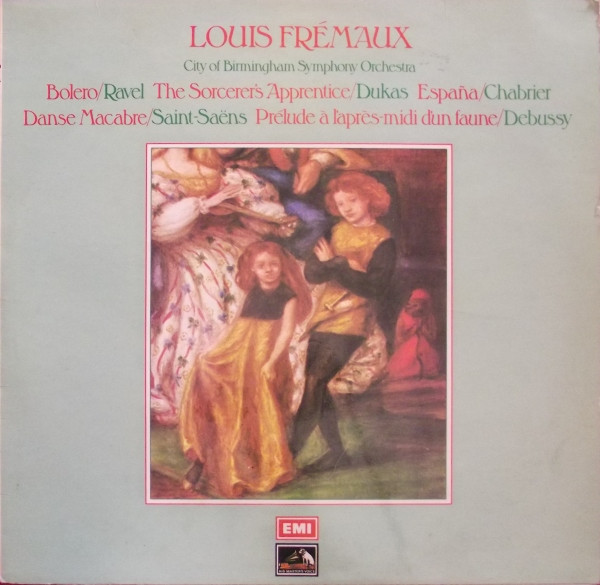
Saint-Saens / Chabrier / Danse Macabre / Espana and More

More of the music of Camille Saint-Saens (1835-1921)

More of the music of Emmanual Chabrier (1841-1894)

  • An outstanding EMI import pressing of these sublime orchestral works with Double Plus (A++) sound from first note to last
  • Both of these sides are bigger and richer than most of what we played – they’re super clean and clear, tonally correct from top to bottom, and have all of the weight of the orchestra down low
  • If you want a classical record to test your system and demo your system, this copy is for you!
  • This Demo Disc Quality recording should be part of any serious Orchestral Music Collection. Others that belong in that category can be found here.
  • There are about 150 orchestral recordings we think offer the best performances with the highest quality sound. This record is certainly deserving of a place on that list.

Orchestral Showpieces

Who can resist these sublime orchestral works? To quote an infamous (around here) label, “they are an audiophile’s dream come true.”

The sound is clear, with wonderful depth to the stage. These recordings may just be the ideal blend of clarity and richness, with depth and spaciousness that will put to shame 98% of the classical recordings ever made.

Clean bottom and lower mids. Zero smear. They’re so full-bodied and rich, yet clear and clean, and spread out on such a huge stage, these sides may become your go-to reference disc for Orchestral Reproduction.

One More Thing

This is the kind of record that will make you want to take all your Heavy Vinyl classical pressings and put them in storage. None of them, I repeat: not a single one of them, can ever begin to sound the way this record sounds. (The worst of them can be found here. If these 30-odd Heavy Vinyl titles sound good to you, something is definitely wrong somewhere.)

(more…)

Rimsky-Korsakoff, Saint-Saens, Prokofieff – Destination Stereo

More Classical and Orchestral Recordings

  • Boasting two STUNNING Shootout Winning Triple Plus (A+++) Living Stereo sides, this original Shaded Dog pressing is the BEST we have ever heard
  • It’s also fairly quiet at Mint Minus Minus, a grade that even our most well-cared-for vintage classical titles have trouble playing at
  • Explosive dynamics, huge space and size, unerringly correct tonality, this is a Demo Disc like no other
  • Shockingly real – proof positive that the cutting systems of the day are capable of much better sound than some audiophiles might think – if more evidence of that fact is what you’re after, see here and here
  • It has all the Living Stereo magic one could ask for, as well as the bass and dynamics that are missing from other Golden Age records
  • If you’re a fan of orchestral showpieces such as these, this Living Stereo from 1959 belongs in your collection.

This record is designed to show off the Living Stereo sound at its best and it succeeds magnificently. The full range of colors of the orchestra are presented here with remarkable clarity, dynamic contrast, spaciousness, sweetness, and timbral accuracy.

If you want to demonstrate to a novice listener why modern recordings are unsatisfactory, all you have to do is play this record for them. No CD ever sounded like this.

Just play “Gnomus” to hear The Power of the Orchestra, Living Stereo style.

The fourth and fifth movements of “Capriccio Espagnol,” the second track on side one, sound superb, clearly better here than on the Shaded Dog pressings we played a few years ago (which were terrible and never made it to the site. Great performance but bad mastering of what obviously was a very good master tape).

You can also hear the Living Stereo sound especially well on the excerpt from “The Fourth of July” performed by Morton Gould. It’s one of the best sounding tracks here.

When “in-the-know” audiophiles discuss three-dimensionalitysoundstaging and depth, they should be talking about a record that sounds like this.

(more…)

Tchaikovsky / Piano Concerto No. 1 – Our Favorite Performance and Sound By Far

More of the music of Peter Ilyich Tchaikovsky (1840 – 1893)

More Masterpieces of Classical Music

  • A Large Tulip label pressing of this wonderful piano concerto with solid Double Plus (A++) grades or BETTER from start to finish
  • Side one was sonically very close to our Shootout Winner – you will be amazed at how big and rich and tubey the sound is
  • It’s also impossibly quiet at Mint Minus to Mint Minus Minus, a grade that practically none of our vintage classical titles – even the most well-cared-for ones – ever play at
  • By far our favorite performance for the work, and fortunately for us audiophiles, it is also the best sounding recording of the work that we know of
  • With huge amounts of hall space, weight and energy, this is Demo Disc quality sound by any standard
  • When the brass is the way it is here – rich and clear, not thin and shrill – you have yourself a top quality DG pressing
  • Virtually no smear to the strings, horns or piano – this is Golden Age recording done right!
  • There are about 150 orchestral recordings we think offer the best performance coupled with the highest quality soundThis record has earned a place on that list.
  • This link with take you to more entries in our core collection of well recorded classical albums.

(more…)

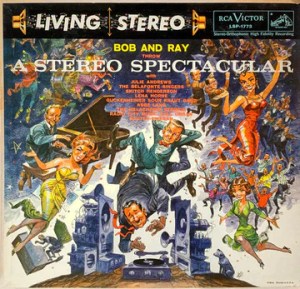
Bob and Ray / Throw a Stereo Spectacular

More of the Music of Bob and Ray

  • With outstanding Double Plus (A++) grades from start to finish, this TAS-approved Living Stereo pressing will be very hard to beat, practically impossible even
  • Originally produced as a sampler record for the Living Stereo line, it is an absolute MUST OWN for serious audiophiles looking to take their system to the next level
  • Our reference copy here at Better Records is so vital to our operation that it would not be for sale at any (well, almost any) price
  • It has long been my personal favorite test disc, as well as one of our three best cartridge tweaking and turntable setup discs
  • 4 stars: “The gleefully cacophonous Guckenheimer Sour Kraut Band takes the prize for providing the most unusual musical selection, but the overall program is extremely diverse [and] the comedy and music are enjoyable.”

Bob and Ray Throw A Stereo Spectacular just happens to be our favorite Test Disc, eclipsing all others in the areas of naturalness and difficulty of reproduction. Any tweak or new room treatment — we seem to do them almost weekly these days — has to pass one test and one test only: The Bob and Ray Test.

This record has the power to help you get to the next level in audio like no other.

Six words hold the key to better sound: “The Song of the Volga Boatman.”

For the purpose of mounting new carts, our favorite track is “The Song of the Volga Boatman” on Bob and Ray Throw A Stereo Spectacular (LSP 1773). It’s by far the most difficult track we know of to get to sound right.

There are about twenty places in the music that we use as tests, and the right setting is the one that gets the most of them to sound their best. With every change, some of the twenty will sound better and some will sound worse. Recognizing when the sound is the biggest, clearest, and most balanced from top to bottom is a skill that has taken me twenty years to acquire.

It’s a lot harder than it looks. The longer you have been in audio, the more complicated it seems, which may be counterintuitive but comports well with our day-to-day experience extremely well.

All our room treatments and tweaks must pass The Bob and Ray Test. It’s the one record we have relied on more than any other over the course of the last several years.

Presenting as it does a huge studio full of brass players, no record we know of is more dynamic or more natural sounding — when the system is working right. When it’s not working right, the first thirty seconds is all it takes to show you the trouble you are in.

If you don’t have a record like that in your collection, you need to find one. It will be invaluable to you in the long run.

(more…)

Liszt / Smetana / Mussorgsky – Les Préludes / The Moldau / Night On Bald Mountain / Dorati

More of the music of Franz Liszt (1811-1886)

More Recordings on Mercury

  • Boasting superb Double Plus (A++) sound throughout, this original copy will show you just how good the Mercury engineers were back in those days
  • Dorati breathes life into these concert hall favorites as only he can, and the Mercury engineers (Fine and Eberenz) capture the excitement on tape as only they can
  • We have a preference for Dorati’s recordings with the London Symphony Orchestra, and a record like this will show you exactly why we do
  • The exciting sound of Mercury lives on through the vintage disc they made all those years ago – you can forget the idea that anybody will come along and produce sound of this quality
  • If you’re a fan of orchestral showpieces such as these, this LP from 1960 belongs in your collection

(more…)

Ravel / Dukas et al. – Works by Ravel, Honegger and Dukas / Ansermet

More Classical and Orchestral Recordings

  • An incredible London pressingof this superb release with Nearly Triple Plus (A++ to A+++) grades on both sides – just shy of our Shootout Winner
  • It’s also fairly quiet at Mint Minus Minus, a grade that even our most well-cared-for vintage classical titles have trouble playing at
  • This spectacular Demo Disc recording is big, clear, rich, dynamic, transparent and energetic – here you will find some of the best orchestral Hot Stamper sound we offer
  • The sound of the orchestra is dramatically richer and sweeter than you will hear on practically all other pressings – what else would you expect from Decca’s engineers and the Suisse Romande?
  • 1963 was a great year for classical recordings – other Must Own Orchestral releases can be found here.

The sound is clear, with wonderful depth to the stage. As a rule, the classic ’50s and ’60s recordings of Ansermet and the Suisse Romande in Victoria Hall are as big and rich as any you may have ever heard. These recordings may just be the ideal blend of clarity and richness, with depth and spaciousness that will put to shame 98% of the classical recordings ever made.

Side One

Bolero (Ravel)

Tubey and clear, with both the snare and the flute coming from so far back in the hall. OUTSTANDING energy and dynamic power.

Turn it up and it really comes to life like LIVE MUSIC. It’s big, wide and believable. We loved it.

Side Two

The Sorcerer’s Apprentice (Dukas)

ZERO compression. ZERO distortion when loud. Which means it has ZERO compressor distortion, something not five out of a hundred Golden Age recordings can claim. Nice extended top too.

There is depth and richness to beat the band, as well as clarity and tonal correctness that let you forget the recording and just enjoy the music. This piece is not quite as transparent as the Ravel, but still has earned every one of its Three Pluses.

The timbre of the brass is right on the money. As we have noted before, the brass of the Suisse Romande is some of the best to have ever been committed to analog tape.

Again, this side had OUTSTANDING energy and dynamic power the likes of which we think you may never have heard.

La Valse (Ravel)

Again, with that wondrously huge hall adding a sense of space that will allow your speakers to disappear. The performers are not too close, which is very much in keeping with live music.

In his tribute to Ravel after the composer’s death in 1937, Paul Landormy described the work as follows:

“….the most unexpected of the compositions of Ravel, revealing to us heretofore unexpected depths of Romanticism, power, vigor, and rapture in this musician whose expression is usually limited to the manifestations of an essentially classical genius.”

(more…)

Mussorgsky / Pictures at an Exhibition (Piano Version) / Ashkenazy

More of the music of Modest Mussorgsky (1839-1881)

  • A superb early London stereo pressing of our favorite solo piano performance of Mussorgsky’s masterful suite, with Double Plus (A++) sound from the first note to the last
  • The weight and warmth of side one’s recording from Kingsway Hall is faithfully captured in all its beauty on this very disc
  • The orchestral performance of the work is squeezed onto the second side of the record, and that is just not going to work with a 30-minute-long piece of music — the sound is compressed and bass-shy

(more…)

Prokofiev / Piano Concerto No. 3 / Cliburn

More of the music of Sergei Prokofiev (1891-1953)

Reviews and Commentaries for the Music of Sergei Prokofiev

  • An early Shaded Dog pressing of these wonderful performances by pianist Van Cliburn and the Chicago Symphony Orchestra under the direction of Walter Hendl, here with INSANELY GOOD Shootout Winning Triple Plus (A+++) Living Stereo sound from first note to last
  • Both of these sides boast full brass and an especially clear, solid, present piano, one with practically no trace of vintage analog tube smear
  • Most of the Van Cliburn recordings for RCA that we’ve played over the years did not sound very good to us, which is why you haven’t seen one our site since 2005 (!)
  • Back in the days when the TAS Super Disc List meant something, this record was on it and deservedly so
  • To read the 60-odd reviews and commentaries we’ve written for piano concertos, please click here
  • The best sounding piano concerto records that we’ve auditioned to date can be found here

(more…)

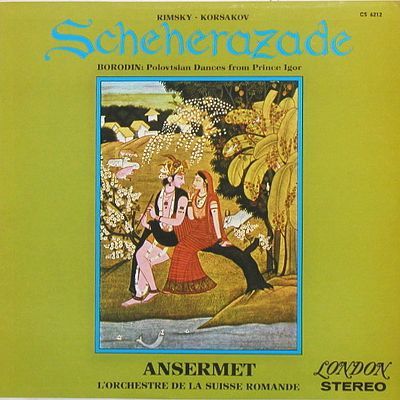
Rimsky-Korsakov / Scheherazade – As Good As It Gets

More of the Music of Rimsky-Korsakov

rimskscheh_6212_1610_1389793105

  • Outstanding Double Plus (A++) sound throughout this vintage London pressing of Ansermet and the Suisse Romande’s superb performance of this dazzlingly symphonic suite
  • It’s also fairly quiet at Mint Minus Minus, a grade that even our most well-cared-for vintage classical titles have trouble playing at
  • This copy will go head to head with the hottest Reiner pressing and is guaranteed to blow the doors off of it
  • The top end is natural and sweet – this is the way the solo violin in the left channel is supposed to sound
  • Extraordinary Demo Disc sound – the brass displays weight and power throughout the powerful first movement like nothing you’ve ever heard in your life, outside of a live performance of course
  • Finding the best sounding pressings of this exceptional recording was a breakthrough for us – here was sound we had never experienced for the work, and let me tell you, that was a thrill we will not soon forget
  • These are the stampers that always win our shootouts, and when you play this copy, you will know why – the sound is big, rich and clear like no other Scheherazade you’ve heard
  • We’ve come up with a simple listening test to help our audiophile brethren judge pressings of Scheherazade, especially those woeful iterations of the music on Heavy Vinyl. We hope you will find time to avail yourself of the lessons we’ve learned
  • There are about 80 orchestral recordings that are personal favorites, and this one deserves a place right at the top of that list

We did a monster shootout for this music in 2014, one we had been planning for more than two years. On hand were quite a few copies of the Reiner on RCA; the Ansermet on London (CS 6212, his second stereo recording, from 1961, not the earlier and noticeably poorer sounding recording from in 1959); the Ormandy on Columbia, and a few others we felt had potential.

The only recordings that held up all the way through — the fourth movement being THE Ball Breaker of all time, for both the engineers and musicians — were those by Reiner and Ansermet. This was disappointing considering how much time and money we spent finding, cleaning and playing those ten or so other pressings.

Here it is many years later and we’re capitalizing on what we learned from the first big go around, which is simply this: the Ansermet recording on Decca/London can not only hold its own with the Reiner on RCA, but beat it in virtually every area. The presentation and the sound itself are both more relaxed and natural, even when compared to the best RCA pressings.

The emotional content of the first three movements (all of side one) under Ansermet’s direction are clearly superior. The roller-coaster excitement Reiner and the CSO bring to the fourth movement cannot be faulted, or equaled. In every other way, Ansermet’s performance is the one for me. We did a monster shootout for this music in 2014, one we had been planning for more than two years. On hand were quite a few copies of the Reiner on RCA; the Ansermet on London (CS 6212, his second stereo recording, from 1961, not the earlier and noticeably poorer sounding recording from in 1959); the Ormandy on Columbia, and a few others we felt had potential. (more…)