midrange-suckout

The pressings linked here have sucked-out mids. Scooping out the middle of the midrange has the effect of creating an artificial sense of depth that does not exist on the recording. Mobile Fidelity was infamous for sucking out the mids of their LPs.

The midrange suckout effect is easily reproducible in your own system. Pull your speakers farther out into the room and farther apart and you can get that sound on every record you own.

When you play your records too quietly, this too creates an exaggerated sense of depth. That’s one of the main reasons we play them loud — we want to hear the pressings that have real presence and immediacy, because they’re the ones that are most likely to sound right to us and more often than not go on to win shootouts.

Thoughts on MoFi’s Midrange Suckout

Our Favorite Roots Rock Albums with Hot Stampers Available Now

I was already a huge Mobile Fidelity fan in 1982 when they released Music from Big Pink, which, for some strange reason, was an album I knew practically nothing about.

I was 15 when the second album came out and I played that album all the time. For some reason the first album had eluded me. How it managed to do that I cannot understand, not at this late date anyway. A major malfunction on my part to be sure.

At some point in the early 90s I got hold of an early British pressing of the album.

Comparing it to my MoFi, I was shocked to hear the singers in the band so present and clear. Having only played MoFi’s remastered LP, I had never heard them sound like that.

The MoFi had them standing ten feet back.

The Brit put them front and center.

There was no question in my mind which presentation was right.

Around that time I was noticing that many Mobile Fidelity pressings seemed to be finding that same distant-midrange sound, and finding it on wildly different recordings. Recordings from different studios, by different engineers, in different eras.

The midrange suckout effect is easily reproducible in your very own listening room. Pull your speakers farther out into the room and farther apart and you can get that MoFi sound on every record you own. I’ve been hearing it in the various audiophile systems I’ve been exposed to for more than 40 years.

Nowadays I would place it under the general heading of My-Fi, not Hi-Fi. Our one goal for every tweak and upgrade we make is to increase the latter and reduce the former.

And note also that when you play your records too quietly, it creates an artificial sense of depth.

That’s one of the main reasons we play them loud; we want to hear the pressings that have real presence and immediacy, because they’re the ones that are most likely to win our shootouts.
(more…)

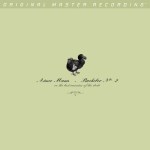
Bachelor No. 2 – MoFi Reviewed

More Rock and Pop Personal Favorites

An Audiophile Hall of Shame pressing and another Mobile Fidelity LP incompetently mastered for the benefit of those given to falling for easy answers and quick fixes.

I had not actually played the LP when I reviewed the MoFi CD, noting that the CD sounded great and that I expected the vinyl to be even better. In 2006 I should have known better but apparently I did not.

Mea culpa.

Boy, was I ever wrong. The vinyl has a bad case of sucked-out half-speed midsIt’s far too polite and lifeless to be taken seriously.

Is it the worst version of the album ever made? Since every CD I own sounds better, that would seem to be the case.

The comments about the music of course still apply — it’s brilliant — but I recommend the Gold or regular CD over this audiophile Heavy Vinyl pressing.

I used to consider this Mann’s One True Masterpiece. It’s actually her co-masterpiece, taking its place alongside the amazing I’m With Stupid, which is more of the rocker side of Mann. This is her Burt Bacharach side, prettier, sweeter and more melodic. Both are brilliant.

Aimee Mann is one of a handful of artists from the ’90s who actually makes music that can hold its own against the best popular recordings of the last forty years. There are few albums that I prize more highly or that have provided me with more musical satisfaction than those by Aimee Mann.

If you don’t know her music try one or both of the above-mentioned titles. Modern pop music just doesn’t get any better.   (more…)

The Doors’ Debut – MoFi Reviewed

More of the Music of The Doors

Sonic Grade: D 

If anyone still thinks that this pressing is anything but a bad joke played on the audiophile public — so sucked out in the midrange, bass shy and compressed to death — that person still has a way to go in this hobby.

A very long way.

You can hear that something is off with this pressing from another room. The sound is bad enough to have earned a place in our Mobile Fidelity Hall of Shame.

But wait just a gosh darn minute.

I liked the MoFi just fine when it came out. I guess I had a way to go in this hobby too.

That was back in the early ’80s. I like to think I’ve learned a thing or two in the last forty years.

Some reviewers and a great many audiophiles may be stuck in the 80s, but I sure as hell don’t think I am one of them.

(more…)

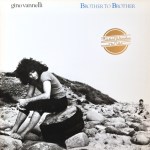
Brother to Brother – A Half-Speed Mastered Disaster

More of the Music of Gino Vannelli

More of Our Favorite Titles from 1978

Sonic Grade: F

An Audiophile Hall of Shame pressing and a Half-Speed Mastered Bomb if there ever was one.

Wooly bass, sucked-out mids, compressed to death, this record is one of the worst of the A&M Half-Speed series, and that is saying a lot.

We’ve played at least a dozen titles from this series and only one of them was any good.

The regular A&M pressings with the right stampers just kill it.

This pressing is every bit as bad.

(more…)

Ride The Lightning at 45 RPM – MoFi Reviewed

Hot Stamper Pressings of Rock and Pop Albums Available Now

Sonic Grade: F

This review is for the 2008 Warner Brothers 45 RPM 180g Double LP Half-Speed Mastered by Mobile Fidelity from the original analog master tapes.

Compressed, sucked-out mids, no deep bass and muddy mid-bass, the mastering of this album is an absolute disaster on every level.

If you want to know how lost the average audiophile is, a quick Google search will bring up plenty of positive comments from listeners and reviewers alike. 

(more…)

Disastrous MoFi and Direct Disk Labs Remasters for Goodbye Yellow Brick Road

Hot Stamper Pressings Only Offered on Import Available Now

Sonic Grade: F (DD Labs) / D (MoFi)

If you have the Direct Disc Labs Half-Speed of Goodbye Yellow Brick Road you have one truly awful record in your collection, so sucked out in the midrange, so compressed everywhere, what the hell were they thinking making this rockin’ album sound like that? It’s positively disgraceful.

It makes MoFi look like they knew what they doing, and we know that sure isn’t true.

To be honest we did not actually have a copy of the MoFi handy for this shootout, but in our defense let us just say that we’ve heard their pressing many times over the course of the last twenty years. It’s better than the DD Labs version but not good enough for me to want to play it — compressed and sucked-out like practically every record they ever made, just not as badly as the DD Labs version.

The most obvious problems with the sound of this album are ones common to many if not most rock records of the era: lack of presence, too much compression, smear, lack of weight from the lower mids on down — we hear lots of Classic Rock records with this litany of shortcomings.

But it’s not the fault of the master tape, it’s probably not even the fault of the mastering engineer most of the time.

It’s just plain bad pressing quality. The sound simply doesn’t get stamped onto the vinyl right and the result is one or more of the problems above.

And if you don’t know how to clean your records properly, forget it, you have virtually no chance of hearing good sound on GYBR. Our last shootout was 2022 if that tells you anything, and it’s rare for us to have any Hot Stamper pressings of any of his albums in stock on any given day.

(more…)