Martin Birch, Engineer – Reviews and Commentaries

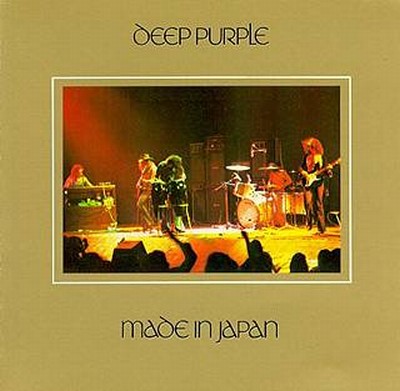
Made In Japan – UK Vinyl But Mastered in the States?

More of the Music of Deep Purple

To our dismay, we discovered that some of the stampers for some of the sides on some of the British import pressings are actually sourced from a well known American cutting house. When those sides did poorly in the shootout, naturally we wanted to know more about them in order to avoid buying any more pressings with those markings.

We had no idea the British would “import” the metalwork from here, but they did, and the results were not good, at least not for us audiophiles.

I hope it goes without saying that we will not be selling any versions of the album that are not cut in England.

This is what you learn when you have lots of copies of the same album and play them against each other.

We constantly experiment with different record pressings this way and we recommend you do the same.

Carry out as many experiments as you can find time for. The quality of your collection — at least the sonic quality of your collection — will improve immensely.

(more…)

Every Label Made Bad Sounding Records – Reprise Released this Fleetwood Mac Album in 1969

We’ve never heard this album sound good, on domestic or import vinyl. If you know of a good sounding pressing, drop us a line, would love to know what it is.

Some audiophile reviewers prefer to review only the records that sound good to them and ignore the rest. We think this does the audiophile community a disservice.

Like Consumer Reports, we like to test things. They test toasters, we test records. We put them through their paces and let the chips fall where they may.

They want to find out if the things they are testing offer the consumer good quality and value.

We want to find out if the records we are testing offer the audiophile good sound and music.

It takes a lot of people and a healthy budget to carry out large numbers of these kinds of tests.

No other record dealers, record reviewers or record collectors could possibly have auditioned more than a small fraction of the records that we’ve played. We’ve been looking for the best sounding records for a very long time. Now, with a staff of ten or more, we can buy, clean and play records in numbers that are unimaginable for any single person to attempt.

That puts us in a unique position to help audiophiles looking for the highest quality pressings.

Yes, we have the resources, the staff and the budget. More importantly, we came up with a different approach.

We’ve learned through thousands and thousands of hours of experimentation that there is no reliable way to predict which pressings will have the best sound for any given album.

(more…)

The Fleetwood Mac You Don’t Know – Kiln House (Now with Video)

Hot Stamper Pressings of the Music of Fleetwood Mac Available Now

We recently compiled a list of records we think every audiophile should get to know better, along the lines of “the 1001 records you need to hear before you die,” but with less accent on morbidity and more on the joy these amazing audiophile-quality recordings can bring to your life.

The list is purposely wide-ranging. It includes some famous titles (Tumbleweed Connection, The Yes Album), but for the most part I have gone out of way to choose titles from talented artists that are less well known (Atlantic Crossing, Dad Loves His Work), which simply means that you won’t find Every Picture Tells a Story or Rumours or Sweet Baby James on this list because masterpieces of that caliber should already be in your collection and don’t need me to recommend them.

Which is not to say there aren’t some well known masterpieces on the list, because not every well known record is necessarily well known to audiophiles, and some records are just too good not to put on a list of records we think every audiophile ought to get to know better.

Out of the thousands of records we have auditioned and reviewed, there are a couple of hundred that have stood the test of time for us and we feel are deserving of a listen. Many of these will not be to your taste, but they were to mine.

Kiln House is one of the all-time great Fleetwood Mac albums. It’s the first they recorded after Peter Green left. With Green gone, Jeremy Spencer’s influence came to the fore. He was apparently quite a fan of Buddy Holly. His songs are straightforward and unerringly melodic.

The co-leader here is Danny Kirwan and he rocks the hell out of this album. Three of the best songs the band ever did, regardless of incarnation, are here: Tell Me All The Things You Do, Station Man and Jewel Eyed Judy, all written by Kirwan (with the help of others). His guitar work on these three songs is blistering.

Any Fleetwood Mac greatest hits collection would be a joke without these tracks. Of course they are consistently missing from all such compilations, at least the ones with which I am familiar. The sad fact is that few people miss them because few people have ever heard them.

(more…)

Peter Green – The Last of a Hundred Deaths

The Last of a Hundred Deaths

We Love the Early Fleetwood Mac with Peter Green

This is the first iteration of the band from way back in the day, back when they were playing their unique brand of Blues Rock with Peter Green leading the band — about as far from Rumours as you can get.

If you like British Blues Rock I don’t think any other band can hold a candle to the Mac from this period. Clapton may have been considered a god but Green is the better guitar player; this album is proof of that.

(more…)

Mystery To Me – Whomp Factor on “Why”

More of the Music of Fleetwood Mac

Reviews and Commentaries for Fleetwood Mac

That bass drum tells you a lot about your deep bass reproduction, but we prize a little something called whomp here at Better Records every bit as much. It’s the WEIGHT and POWER you sense happening down below that translates into whomp factor. (This is the frequency area that screens and small dynamic drivers have the most trouble with. You need to be able to move lots of air under, say, 200 cycles to give the music a sense of real power down below. Few systems I’ve run into over the last thirty years can really pull it off.) 

That bass drum tells you a lot about your deep bass reproduction, but we prize a little something called whomp here at Better Records every bit as much. It’s the WEIGHT and POWER you sense happening down below that translates into whomp factor.

“Why”

Speaking of the song “Why,” I have to confess that it’s my favorite Fleetwood Mac song of all time. Considering how many great songs this band has recorded over the last thirty plus years, that’s really saying something. (“Need Your Love So Bad” off Pious Bird is right up there with it.) (more…)

The Faces – Live in the Studio Sound

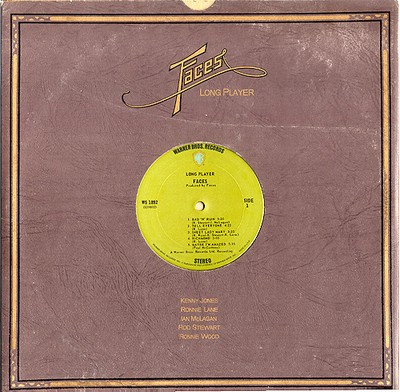
We knew this album could sound good, but back in the day we sure didn’t know it could sound like this. The best pressings of this album have amazing live-in-the-studio sound that conveys completely the raw power of one of the hardest rockin’ bands of all time.

Both musically and sonically I don’t think the group ever recorded a better album than this one.

Take the wonderful song Bad ‘N’ Ruin (the opening track on side one) for example. It’s the sound of open mics in a big studio space — nothing more, nothing less. It’s totally free from any phony mastering or bad EQ, and on a Hot Stamper copy like this one, it’s absolute magic.

Martin Birch was the engineer for the first two tracks on side one. You may know him from his work with Fleetwood Mac (1969-1973) and Deep Purple (1969-1977), which include the amazingly well-recorded albums Machine Head and Made In Japan.

It’s a rare record indeed that can rock with the best of them while keeping its audiophile credentials intact. Like we said about our Hot Stampers for Never A Dull Moment, we sure wish more Rolling Stones records sounded like this.

What to Listen For (WTLF)

A bigger presentation – more size, more space, more room for all the instruments and voices to occupy. The bigger the speakers you have to play this record, the better.

More bass and tighter bass. This is fundamentally a pure rock record. It needs weight down low to rock the way the band wanted it to.

Present, breathy vocals. A veiled midrange is the rule, not the exception. We take a lot of points off for that.

Good top end extension to reproduce the harmonics of the instruments and details of the recording including the studio ambience.

Last but not least, balance. All the elements from top to bottom should be heard in harmony with each other. Take our word for it, assuming you haven’t played a pile of these yourself, balance is not that easy to come by. Our best copies will have it though, of that there is no doubt.

Side One

Bad ‘N’ Ruin
Tell Everyone
Sweet Lady Mary
Richmond
Maybe I’m Amazed [Live]

Side Two

Had Me a Real Good Time
On the Beach 
I Feel So Good [Live]
Jerusalem

AMG Review

On their second album Long Player, the Faces truly gel… [I]f the album seems pieced together from a few different sources, the band itself all seems to be coming from the same place, turning into a ferocious rock & roll band who, on their best day, could wrestle the title of greatest rock & roll band away from the Stones.

The key is that Stewart, Lane and Ron Wood are all coming from the same place, all celebrating a rock & roll that’s ordinary in subject but not in sound.

The Five Men and Women Who Recorded My Favorite Fleetwood Mac Album

More of the Music of Fleetwood Mac

fleetmyste_band

The album is Mystery to Me, and it contains  my favorite Fleetwood Mac song of all time, “Why”, written by the lovely Christine McVie. Considering how many great songs this band has recorded over the last thirty plus years, that’s really saying something. (“Need Your Love So Bad” off Pious Bird is right up there with it. “Beautiful Child’ from Tusk would be in the Top Five, as would “Oh Well Parts 1 and 2” from Then Play On.)

Bob Weston, I learned recently, did the arrangement. He plays the lap guitar you see pictured below. His guitar work throughout the album, along with the wonderfully complex arrangements he provided for both Why and other songs on the album, make this music a powerful and engaging listening experience forty years on.

fleetmyste_guitar

The fold-open cover looks like this. You figure out what they were going for because I sure can’t.

fleetmyste_cover

From Bob Weston’s Bio (not sure where I found it)

The band recorded another album, the inspiring “Mystery To Me”. It contained such Mac classics as “Hypnotized”, “Emerald Eyes”, and the song “Why” which was a Bob Weston arrangement (a fact sadly left off the album’s liner notes). It is also interesting to note that Bob Welch’s song, “Good Things (Come To Those Who Wait)” was dropped at the last minute (but not before thousands of record sleeves and lyric inserts had been printed) in favor of a song suggested by Weston, the Yardbird’s “For Your Love”, which was also released as a single.

Eager to support the promise of “Mystery To Me”, the band scheduled a tour of the States. The tour had already begun, when Mick Fleetwood noticed something was awry. Bob Weston, always the ladies’ man, was spending a whole lot of time with Mick’s wife, Jenny. Not surprisingly, it became increasingly difficult, as the tour progressed, for the two musicians to appear on stage together. And Jenny did nothing to dispel his worst suspicions. Mick toughed it out as long as he could, but by the end of October it was clear someone had to go. Road Manager John Courage did the deed: Bob Weston was fired on October 26, 1973. And so ended one of the most magical lineups the band ever produced.

Spencer & Kirwan, Lost Guitar Heroes

More of the Music of Fleetwood Mac

Kiln House is one of the all-time great Fleetwood Mac albums. It’s the first album they recorded after Peter Green left. With Green gone Jeremy Spencer’s influence came to the fore. Apparently he was quite a fan of Buddy Holly. His songs are excellent: straightforward and unerringly melodic.

The co-leader for Kiln House is Danny Kirwan, and he rocks the hell out of this album. Three of the best songs Fleetwood Mac ever did, regardless of incarnation, are here: Tell Me All The Things You Do, Station Man and Jewel Eyed Judy, all written by Kirwan (with the help of others). His guitar work on these three songs is blistering.

Any Fleetwood Mac greatest hits collection would be a joke without these tracks. Of course they are consistently missing from all such compilations, at least the ones with which I am familiar. The sad fact is that few people miss them because few people have ever heard them.

The closest thing I can think of to the kind of music the new Mac plays is moody rock of the middle-period Beatles. Kiln House is similar to Beatles ’65 in its dual concerns with vintage rock ‘n’ roll and muted, romantic pieces. Jeremy Spencer took care of the former area, while Danny Kirwan extended the style best represented by McCartney’s “I’ll Follow the Sun.”

(more…)