John Haeny, Engineer – Reviews and Commentaries

What We Listen For on Don’t Cry Now

More of the Music of Linda Ronstadt

Hot Stamper Pressings on the Asylum Label

Linda’s vocals on both sides can be very DYNAMIC, but only the best copies will present them with no hint of STRAIN or GRAIN, two problems that make most pressings positively painful to listen to at the loud volumes we prefer.

Linda really belts it out on this album — face it, it’s what she does best — and only the rarest copies allow you to turn up the volume good and loud and let her do her thing.

Another key to recognizing the best copies is the fact that they tend to be highly resolving.

Two places to check:

  1. Note how breathy her voice is in the quiet passages. Only the least smeared, most transparent copies reproduce that breathy quality in her voice.
  2. Next check out the tambourine on Silver Threads and Golden Needles. If the sound is delicate, not gritty or transistory, you have yourself a winner in the resolution department.

Side One

The vocals on side one are often recessed and a bit dark on this album.

Linda’s Problems in the ’70s

The most common problem with these Ronstadt records from the ’70s is grainy, upper-midrangy sound. The smooth copies that still have plenty of presence, life, energy and top end extension are the ones that really get this music sounding RIGHT.

Every copy we played had problems on the last track of side one, Don’t Cry Now. Linda is singing at the top of her lungs practically from beginning to end, so both cutting the record and playing back the record would be difficult. The result is that there will usually be some coarsening of her vocal.

Some copies had the same problem on side two for I Believe in You, but not all.

(more…)

How Does the MoFi Dixie Chicken Sound?

Little Feat Albums We’ve Reviewed

How does the MoFi pressing sound?

We have no idea; we’ve never bothered to order one, for at least one very good reason.

This is an album about rhythm.

Half-Speed mastered records have sloppy bass and, consequently, lack rhythmic drive.

Who is his right mind would want to half-speed master an album by Little Feat, one of the most rhythmically accomplished bands in rock and roll history?

The obvious answer is that it was a bad idea. But, if you’re Mobile Fidelity, and that’s the only idea you’ve ever had because you are in the half-speed mastering business, then what else can you do?

As the old saying goes, to a hammer everything looks like a nail.

OUR PREVIOUS HOT STAMPER COMMENTARY

Folks, this is no demo disc by any means, but the later pressings strip away the two qualities that really make this music work and bring it to life: Tubey Magic and Big Bass. This side two has both in SPADES.

Listen to how breathy and transparent the chorus is on the first track. Now layer that sound on top of a fat and punchy bottom end and you have the formula for Little Feat Magic at its funky best. This is the sound they heard in the control room, of that I have no doubt, and it is all over this side two. No side of any copy we played was better.

Personally

The All Music Guide (and lots of other critics) think this is Little Feat at their best. With tracks such as Two Trains, Dixie Chicken, Fat Man in the Bathtub and Roll Um Easy, who’s gonna disagree!? (I guess I am. I prefer Waiting for Columbus and The Last Record Album but cannot deny that Dixie Chicken is probably the best of the albums that came before them.)


Head to Head It’s No Contest

Visit our Hall of Shame (300+ strong) to see what, in our opinion, are some of the worst sounding records ever made.

Note that most of the entries are audiophile remasterings of one kind or another.

The reason for this is simple: we’ve gone through the all-too-often unpleasant experience of comparing them head to head with our best Hot Stamper pressings.

When you can hear them that way, up against an exceptionally good record, their flaws become that much more obvious and, frankly, that much more intolerable.

Dynamic Vocals? Thank John Haeny

More of the Music of Bonnie Raitt

I learned only recently that John Haeny is one of the two engineers on this album, which goes a long way toward explaining the excellent ’70s analog sound. He worked on The Pretender, Don’t Cry Now, and many of the early and quite wonderful sounding albums Judy Collins did for Elektra in the earlier part of the decade. This guy knows sound.

(A good copy of The Pretender is an amazing Demo Disc that will put 99% of all the rock records you’ve ever played to shame. But the truly Hot Stamper pressings are few and far between, so most audiophiles have no idea how well recorded that album is.)

Side One

About to Make Me Leave Home 

This is where you will hear the best sound on the best copies. If it doesn’t sound BIG, you don’t have a Hot Stamper.

Runaway
Two Lives 

This is my favorite song on the album. Many copies get congested when Bonnie and the chorus are singing loudly, but this one plays it fairly clean.

Louise 

This is an easy one. The guitars are sweet and tubey magical.

Gamblin’ Man

Side Two

Sweet Forgiveness
My Opening Farewell

This track has the most dynamic vocals on the album, some of the most dynamic vocals on any pop record. She really gets LOUD on this one.

Three Time Loser
Takin’ My Time
Home 

Possibly the most beautiful song on the album. As I am writing this, it becomes more and more clear to me that this is Bonnie’s strongest album. It has more good songs than any other that I can think of.

Dynamics

The vocal dynamics on this side are the best I have ever heard. We’re not used to hearing singers get loud on pop records. Normally the compressors prevent that from happening, and even most copies of this record do not have the dynamics that this one does. You will need a high quality front end to track this LP, that I can assure you.

And the last quarter inch or so of side one will invariably have some distortion on the vocal peaks, as well as track three on side two which also gets quite loud. These may not actually be groove damage; sometimes the cutting engineer is at fault and sometimes the cutting equipment may not be up to the job of putting so much energy into those slower spinning inner grooves. Practically every copy that was dynamic had breakup to some degree somewhere on the record. We much prefer lively records to compressed ones, and sometimes overcutting is the price you have to pay.

Bonnie’s Best (more…)

Judy Collins #3 – Gold Versus Red Label in 2007

More of the Music of Judy Collins

This commentary was written in 2007, and our system was not as revealing back then as it is now. Also we had not discovered the Walker Record Cleaning Fluids.

We tend to prefer the Gold Label Elektra pressings on this album now, but we like to keep an open mind, so that if a Red Label pressing wins a shootout, we don’t have to say we was wrong again.

As for other records we may have been wrong about, you can find some of them here under the heading: Live and Learn.


This is a Minty Elektra Red Label LP with two AMAZING sounding sides! Typical copies are dull and thin sounding, making Judy Blue Eyes’ beautiful voice sound honky and weak like she has a head cold. This copy is the remedy!

It has rich, full-bodied sound with the sweetest highs and tons of ambience, especially around the guitars and bass. Most importantly, there is virtually NO STRAIN on the her vocals, which is extremely rare.

Out of the three labels we listened to for this shootout, nothing could compare to this Red Label.

(more…)

Can You Hear the Bloated Bass on This DCC Pressing?

More of the Music of Linda Ronstadt

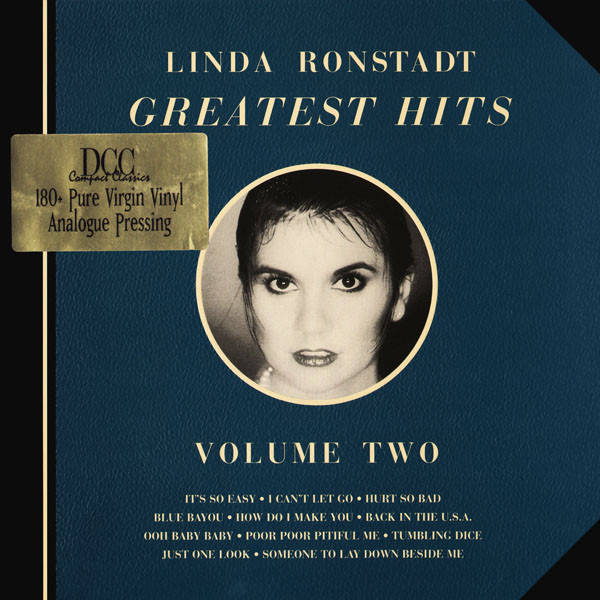
This review was written many years ago, around 2004 I think. This was one of the first DCC records I did a shootout with up against run-of-the-mill Mastering Lab domestic pressings, only to find, somewhat surprisingly, at least at that time, that the DCC came up short, as you will see in the review below.


As much as I admire Steve Hoffman’s work for DCC, on this title the DCC is not as good as the best domestic copies. The best domestic pressings are just plain more fun.

The DCC sounds thick in the midrange and fat in the bass, although some of that boost in the bass could have been used to the advantage of some of the domestic pressings we played. 1 DB or so at 50-60 cycles would help, but the DCC has a boost in the middle and upper bass that causes the bass to sound bloated next to a properly mastered, properly pressed LP. 

I like rich sounding records just like Steve does, but his version of this title is too rich for my blood. If your system is lean sounding you may prefer the DCC, but we found it less than agreeable over here.

Not sure why so few reviewers and audiophiles notice these rather obvious shortcomings, but we sure do, and we don’t like it when records sound that way. These are records for those who are not sufficiently advanced in the hobby to know just how compromised and wrong they are.

(more…)

Feats Don’t Fail Me Now – Little Feat’s Best Early Album

Little Feat Albums We’ve Reviewed

We can now clearly say that Feats Don’t Fail Me Now is the best sounding album of the first four the band recorded.

We think the songs are great too; we would hope that goes without saying.

Waiting For Columbus — their live masterpiece and inarguably the definitive recording statement by the band — has at least one song from this album on each of its four sides. That ought to tell you something.

If only we could find good sounding copies! But enough about that album. Let’s talk about this one.

What to Listen for

So many pressings are either dull or thin that tonality becomes a major issue on an album like this.

The copies that do well in our shootouts are rich and full-bodied, but not thick, opaque or dull. They must also of course have plenty of rock and roll energy and drive.

Side One

A+++. It ROCKS! It’s got the ENERGY and the BIG, RICH sound that no other copy could manage. The midrange is sweet and clear with clean and breathy vocal harmonies.

No other copy had the open space of this side either. It’s there on the tape but it takes a very special pressing to let you hear it.

Side Two

A++. This side starts off without all the top end extension we wanted, but by the second track the top end had opened up just fine and showed us the space and stage depth and width we knew was possible after hearing our top side one.

The energy is rockin’ and the voices are not edgy, thin or veiled. Our shootout winner for this side was bigger and richer but it had a mediocre side one so this is the best overall pressing we have to offer.

Early Little Feat albums are not known for their audiophile quality sound, so at A++ this is miles beyond the kind of sound we are used to for this era of the band’s output.

The Girls

Emmylou Harris, Bonnie Raitt and Fran Tate (the future Mrs. Billy Payne) sing lovely background vocals on this record. Those Little Feat guys sure know how to pick ’em.

(more…)

Heart Like A Wheel – Does Bernie Ever Get Bored?

More of the Music of Linda Ronstadt

Years ago we wrote:

One thing we noted with interest while doing this shootout was how compressed the first track is. When the chorus comes in, and Linda seems to be singing louder — should be singing louder, with a substantial coterie of vocalists backing her up — the volume is actually lower. In the verse immediately following you can hear that not only is she singing louder, but the amount of dynamic contrast in her voice is greater. Go figure.

The compression also means that that song will never sound the way we would wish it to. But that doesn’t mean it won’t sound good. It means it will sound good in more of a radio-friendly way. On a good copy, one with relatively little grain and plenty of bass, the music can still be very enjoyable, and that includes a Number One Pop Hit like “You’re No Good.”

Do we still see things this way? Well, yes and no. It’s not exactly that we were wrong, but that better cleaning and better playback (all that revolutions in audio stuff) have now allowed us to hear that some copies are actually much more dynamic on this track than others. Quite dynamic in fact.

Think about it. Bernie Grundman is going to cut this record many, many times, maybe more times than he wants to. Is he always going to apply exactly the same amount of compression to each cutting, or is he going to experiment a bit and see what works better over time? Or maybe he just learned a thing or two as he went along.

Which is pretty much what we do when playing copy after copy. The best pressings show us precisely what it is they are doing when they actually work. We can’t know that in advance; we’re learning on the job so to speak.

(more…)

Dixie Chicken – Our Shootout Winner from 2010

Hot Stamper Pressings of the Music of Little Feat Available Now

White Hot Stamper sound on side two — yes, it is possible, and this very copy is Proof with a capitol P.

Most copies of this album sound like cardboard, especially the later pressings on the palm tree and tan labels.

To get the best sound you need originals of this album, and Warner Brothers green label originals are getting pretty darn hard to find as more and more collectors and audiophiles are coming to the realization that the unending stream of heavy vinyl reissues flooding the market leaves a lot to be desired. (Our desire for them is at zero as we no longer bother to order the stuff.)

Folks, this is no demo disc by any means, but the later pressings strip away the two qualities that really make this music work and bring it to life: Tubey Magic and Big Bass. This side two has both in SPADES.

Listen to how breathy and transparent the chorus is on the first track. Now layer that sound on top of a fat and punchy bottom end and you have the formula for Little Feat Magic at its funky best. This is the sound they heard in the control room, of that I have no doubt, and it is all over this side two. No side of any copy we played was better.

This is A Triple Plus As Good As It Gets Little Feat Sound, the best we have ever heard for any of the early albums.

That WB Sound

Side one earned a grade of A+ to A++. It lacked the top end that lets the sound open up in the choruses, a very common problem with early WB pressings which have a marked tendency to be dull. (We know; we’ve played them by the hundreds, from Deep Purple to the Doobie Brothers to America to Van Morrison and scores of others too numerous to mention. There are ten dull WB pressings for every one that’s bright. )

The bass is excellent and the piano really sounds right on Dixie Chicken, but when you flip the record over you will hear what it could have sounded like (and practically never does).

(more…)

Our Previous Shootout Winner for Judith Was in 2014

UPDATE 2025

We finally got this shootout going again, and you can find our latest review here.

White Hot A+++ sound on side two of this 2-pack, with Shootout Winning sound. Great material including The Moon Is a Harsh Mistress and Sondheim’s Send in the Clowns. Another 2-pack that proves our case – the good sides here are wonderful, the bad sides plainly awful.

The engineer for Judith is Phil Ramone, who went on to win the Grammy the following year for Still Crazy After All These Years. (more…)

Colors of the Day – DCC Discussed

A classic case of live and learn, maybe. Previously we had written:

Superb sonics. Judy has never sounded better. Not a big seller for DCC but it should have been. Those sweet acoustic guitars are hard to beat. No modern recording has sounded like this for over twenty years, so if you’ve forgotten what a real acoustic guitar sounds like, buy this record and get reacquainted with that sound. Tons of breath of life, superb production and mastering so you can clearly hear her hitting those flat notes (!), and some of the best sounding echo ever recorded.


UPDATE 2007

Addendum to the above comments, posted 11/07

I wrote the above review many many years ago. As you may have read countless times on the site by now, it is my opinion that all such dated judgments are suspect. The major revolutions in vinyl playback that have occurred over the last dozen years have turned many of these old comments on their heads.

Hot Stamper pressings again and again have revealed magic in the mass-produced copies that is simply nowhere to be found in their audiophile counterparts.

Whether this is true for this particular title I can honestly say I don’t know.  We are going to play some copies of the album and will report our findings down the road, so Judy Collins fans, stay tuned.