Testing High Frequency Extension

The records linked here are good for testing high frequency extension.

Driving My Car into a Ditch

Hot Stamper Pressings of the Music of The Beatles Available Now

Mobile Fidelity made a mess of Drive My Car on their Half-Speed mastered release of Rubber Soul in 1982.

Perhaps it’s more accurate to say Stan Ricker, MoFi’s go-to mastering engineer, did.

He equalized out far too much upper midrange and top end.

What fuels the energy of the song are the cow bell, the drums and other percussion. Instead of a scalpel, Mobile Fidelity took a hatchet to this slightly bright track, leaving a dull, lifeless, boring mess.

Some Parlophone copies may be a little bright and lack bass, but at least they manage to convey the musical momentum of the song.

Even the purple label Capitol reissues can be quite good. A bit harsher and spittier, yes, but in spite of these shortcomings they communicate the music, which ought to count for something.

As much as I might like some of the MoFi Beatles records [not so much anymore], and even what MoFi did with some of the other tracks on Rubber Soul, they sure sucked the life out of Drive My Car.

We all remember how much fun that song was when it would come on the radio. Playing it on a very high quality stereo should make it more fun, not less.

If you’ve got a Rubber Soul with a Drive My Car that’s no fun, it’s time to get another one.

By The Way

The best $250 — to the penny! — I ever spent on records is the price I paid for my brand new, still-in-the-shipping-carton MoFi Beatles Box. I ordered it in 1982 when I first learned of it, and it finally came the next year. I already owned all The Beatles albums MoFi had done to date, including the UHQR of Sgt. Pepper, which, like a fool, I got rid of once the set came out.

(more…)

Finding the Rare Pressing of Heavy Weather with An Extended Top End

Hot Stamper Pressings of Jazz Rock Fusion Albums Available Now

It has been our experience that the copies with high frequency extension and the clarity, space and percussive energy that results from it are consistently the best sounding. You may have read elsewhere on the site that what separates many of the best Columbia LPs from their competition is an open, extended top end.

For some reason, Columbia, more than most labels, had a habit of making slightly dull records. Dull does not work for this album. 

When the highs on the record are right, it all comes together. Unfortunately, most copies don’t have those highs. There’s more to it than that of course: some copies lack bass, some are a bit grainy and gritty sounding — the normal problems associated with vinyl records are all here to one degree or another.

But when you have good highs you are about 80 to 85% of the way toward a Hot Stamper. Complete the picture with bass, dynamics, etc. (and a big speaker system) and there’s a good chance the sound will blow your mind.


Heavy Weather is a classic case of yet another in the long list of recordings that really comes alive when you turn up your volume.

This is music that doesn’t make any sense unless you play it LOUD. This is a BIG SPEAKER recording. I know this because I was playing it too quietly, which is to say at normal listening volumes, and it just wasn’t thrilling me. As soon as I turned it up, it really started to work, both as a piece of music and as a recording. So much gets lost in a mix as dense as this one at moderate levels. Everything comes out into the open when you give it the volume it needs. Trust me on this one; without a big dynamic speaker this music is never going to do what it wants to do — which is to ROCK YOUR WORLD. (more…)

Touch – A Great Test for Tweeters

More of the Music of John Klemmer

Mobile Fidelity, maker of some of the worst sounding records in the history of the medium, is the KING on this title. We know of no better pressing than the right version of the MoFi. (There are three different stampers for the MoFi, and only one of them ever wins shootouts.)

Klemmer says pure emotion is what inspired the album’s creation. Whatever he tapped into to find the source of that inspiration he really hit pay dirt with Touch. It’s the heaviest smooth jazz ever recorded. Musically and sonically, this is the pinnacle of Klemmer’s smooth jazz body of work. I know of none better. (If you want to hear him play more straight-ahead jazz try Straight from the Heart on Nautilus Direct to Disc.)

High Frequency Testing

MoFi was famous for demonstrating on an actual scope that the standard domestic ABC pressing had nothing above about 8 or 10 thousand cycles up top, which is why they all sound insufferably dull and dead. Some MoFi copies have no real top end either, which is the reason to we do these shootouts — to find the copies that are actually mastered and pressed right, not just the ones that should have been.

There’s plenty of information above 15K I would guess on this record — all those delicate percussion instruments ring so sweetly, the highs have to be extending way up there. (This album would probably make a good test to see how well your tweeters work, as well as for turntable setup. The right tracking weight and VTA are crucial to getting all the harmonics of a record like this right.) (more…)

An Amazingly Good Nashville Skyline, But Side Two Fell Short in One Area

Hot Stamper Pressings of the Music of Bob Dylan Available Now

You just can’t beat a well-produced, well-engineered Columbia from this era. There’s a richness and a naturalness to the sound that’s almost completely disappeared from the modern world of music, and by “modern world” we mean both modern recordings and modern remasterings of vintage recordings.

Practically none of them ever have the qualities of this wonderful record from 1969.

You really do have to go back to these old originals to find it. And then you have to find just the right old originals for it to be there. Here are the notes for one we played not long ago.

As you can see from the notes, side one of our most recent White Hot stamper shootout winning copy was doing everything right. We marvelled at these specific qualities in the sound:

Track three

  • Big and spacious and lively
  • The vocals and guitars are big and weighty and jumping

Track one

  • Spacious and great size and detail
  • Vocals jump out
  • Realistic acoustics

However, we had a side two that was slightly better than the side two you see here.

When we played the two best copies back to back, side one of this copy came out on top, earning a grade of 3+, but the side two of another copy showed us there was potentially even more presence to Dylan’s vocals in the recording than we had assumed. As a consequence, we felt it best to drop side two’s grade a half plus to 2.5+.

Track one

  • Tubey bass
  • Weighty
  • Very full vocals
  • A bit veiled but better than most

Track one on side two was doing practically everything right, but it slightly lacked presence, and for that we dropped the grade one half plus to 2.5+.

Midrange presence is one of the most important qualities of any rock or pop recording we might evaluate, and for a Bob Dylan album it is absolutely essential.

You want Dylan to be front and center, neither recessed nor behind a veil.

To aid you in doing your own evaluations, here is a list of records that we’ve found to be good for testing midrange presence.

(more…)

Lincoln Mayorga Volume 1 and Obvious Pressing Variations

Hot Stamper Pressings of Direct-to-Disc Recordings Available Now

After doing our first shootout many years ago for the record that single-handedly introduced the audiophile community to Direct to Disc recording, Lincoln Mayorga and Distinguished Colleagues, Volume One, I have to confess I was taken aback by the significant pressing variations we heard among the copies we played, 

These LPs are all over the map sonically.

Some Sheffield pressings are aggressive, many of them are dull and lack the spark of live music, some of them have wonky bass or are lacking in the lowest octave — they are prey to every fault that befalls other pressings, direct to disc and otherwise.

Which should not be too surprising. Records are records. Pressing variations exist for every album ever made. If you haven’t noticed that yet, start playing multiple copies of the same album while listening carefully and critically. If your stereo is any good at all, it should not take you long to notice how different one record sounds from another in practically every case.

Biggest problems on S9?

I would have to say smear is Number One.

When the brass loses its bite and the bells don’t have the percussive quality of metal being struck, this is not a good thing. The band also seems to lose energy when the pressing suffers from smear.

Number Two would be a lack of top end extension.

The harmonics of the sax and trumpet are muted on some copies, and the harpsichord really suffers when the top end isn’t all there. This lack of extension is most noticeable on all the lovely bells and percussion instruments that pepper the soundstage, but you can actually hear it on practically every instrument once you recognize the problem. It’s there on guitar harmonics, cymbals and snares, and on down the list.

Linked here are other records that are good for testing these same shortcomings:

(more…)

What to Listen For on Eine Kleine Nachtmusik

Hot Stamper Pressings of the Music of Mozart Available Now
On most copies the strings are slightly drier and more harsh and steely than one would want, occasionally turning strident in the louder passages.

As always, proper VTA adjustment — by ear — is critical to getting the strings to sound their best.

More advice on setting your VTA.

An extended top end helps the harmonics of the stringed instruments immensely.

Here are some other records that are good for testing string tone and texture.

The more resolving copies will show you more of the hall, which greatly adds to the sense that you are listening to live music, not a record.

(more…)

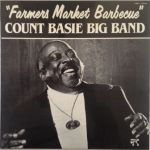
Farmers Market Barbecue – First Among Equals, or The Best Pablo Ever?

Hot Stamper Pressings of the Music of Count Basie Available Now

Musically FMB is a Top Basie Big Band title in every way. This should not be surprising: many of his recordings for Pablo in the ’70s and early ’80s display the talents of The Count and his band of veterans at their best.

Sonically it’s another story. Based on our recent shootout for this title, in comparison to the other Basie titles we’ve done lately, we would have to say that FMB is the best Basie big band title we’ve ever played. Since so many Basie big band recordings are so good, we don’t want to get ahead of ourselves; after all, we haven’t done shootouts for all of his Pablo large group recordings. To be safe we’ll just call this one First Among Equals.

The following are some general guidelines as to What to Listen For while you critically evaluate any of the Basie Big Band Pablo recordings (or any other big band recordings for that matter).

Simply put, we offer here a short list of qualities that we’ve come to appreciate on the best of the Basie Big Band pressings, qualities that we find are often in short supply on lesser LPs (and, as a rule, those that have been remastered onto Heavy Vinyl). (more…)

What to Listen For and More on Ruben and the Jets

More of the Music of Frank Zappa

Is the thought bubble on the cover the real story behind the album?

Is this the Mothers of Invention recording under a different name in a last ditch attempt to get their cruddy music on the radio?

Amazing sound for this record of greasy love songs and cretin simplicity to offer to audiophiles and music lovers alike from all corners of the world. We absolutely LOVE this album here at Better Records, or at least that portion of Better Records that remembers it from high school still loves it (which would narrow it down to a subset of just me I guess, but who’s counting?). Anyway, it’s a classic of twisted Doo-Wop that belongs in your collection. At least we think you should give it a chance anyway; hearing it sound this good might just make a believer out of you.

Tubey Magic Is Key

Many copies are just too thin and edgy to be as fun and enjoyable as we have every right to expect from this kind of purposely un-hip, un-cool, goofy retro-pop. We were gratified to find that the top finishers had a healthy dose of the Tubey Magical richness found on the best analog recordings from the latter half of the 60s (1968 in this case).

This is a very good recording indeed, judged, as is only fair, solely by the best of the pressings we’ve heard. In other words, the bad pressings sound like crap, but that’s no reflection on the quality of the master tape.

As with most Zappa records, an extended top end is devilishly hard to come by. (In that respect, it is good for testing.)

That said, on a primarily vocal album such as this one, the midrange is where the music lives or dies.

The copies that were rich and full-bodied, with natural vocal reproduction, tended to score the highest grades in our shootout.

Copies that failed to convey the energy and exuberance of the singers and musicians — their love of this music that time had forgotten even by 1968 — as you may well imagine scored relatively poorly. This music is supposed to be fun, and really not a whole lot else, so the copies that aren’t fun scored sub-Hot Stamper grades. (Lifelessness is of course our main beef with Heavy Vinyl these days. When we play one of these new thick LPs the sound is often so blase that I feel that the longer it plays, the more the air is being sucked out of the room.)

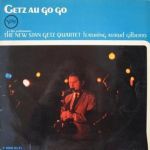
Getz Au Go Go – Critical Listening Exercise

Hot Stamper Pressings of Bossa Nova Albums Available Now

This album works wonderfully well as a test disc.

The third track on side 2, The Telephone Song, has a breathy vocal by Astrud, soon followed by Getz’s saxophone solo. If those two elements in the recording are in balance, your system is working, tonally anyway. Lots of other tracks are good for testing, and you can read about them below.

Side One 

Corcovado (Quiet Nights Of Quiet Stars) 

On the best copies the voice is perfection. The horn is always a bit hard sounding on this track though.

It Might As Well Be Spring

The best copies are warm, rich and sweet here, with much better sound for Getz’s sax. This track has some of the tubiest Tubey Magic you will find on the album.

Eu E Voce (Me and You)
Summertime

This one has real dynamics — the playing and the sound are lively, but somehow still cool…

Nix-Quix-Flix

Side Two

Only Trust Your Heart
The Singing Song
The Telephone Song

The best song on side two, certainly the most fun, and a wonderful test track as described above.

One Note Samba
Here’s That Rainy Day

RVG

This is one of Rudy Van Gelder’s greatest recordings. I think it’s as good as it is because he was out of his studio (mostly) and had to revert to Recording 101, where you set up some good mics and get the thing on tape as correctly as you can.

There’s not a trace of his penchant for too much compression, and no bad EQ choices either. (The sax is somewhat problematical in places, but most everyone else is tonally right on the money.)

(more…)

Never a Dull Moment – A Breakthrough Listening Experience

More of the Music of Rod Stewart

In the listing for our 2010 Shootout Winner, we noted:

Having made a number of serious improvements to our system in the last few months, I can state categorically and without reservation that this copy of Never a Dull Moment achieved the best stereo sound I have ever heard in my life (outside of the live event of course). I’m still recovering from it.

In 2022, of course this statement strikes me as way over the top. But I must have believed it when I wrote it.


The credit must go to the engineering of Mike Bobak for the Demo Disc sound. We just finished our most comprehensive shootout ever for the album, culling the best sounding dozen from about twenty-five entrants, and this copy just plain kicked all their butts, earning our highest grade on side one (A+++).

Side one here is OFF THE CHARTS! No other side one could touch it. It’s got all the elements needed to make this music REALLY ROCK — stunning presence; super-punchy drums; deep, tight bass; and tons of life and energy.

The Sound

So many copies tend to be dull, veiled, thick and congested, but on this one you can separate out the various parts with ease and hear right INTO the music.

It’s also surprisingly airy, open, and spacious — not quite what you’d expect from a bluesy British rock album like this, right? But the engineers here managed to pull it off.

One of them was Glyn Johns (mis-spelled in the credits Glynn Johns), who’s only responsible for the first track on side one, True Blue. Naturally that happens to be one of the best sounding tracks on the whole album.

(more…)