Testin Bass, Weight and Whomp

Port’s Rule and The Song of the Volga Boatman

More Records that Helped Me Make Progress in Audio

The track that started us down the road to our first Sauter-Finegan shootout is, to this very day, our Number One Test Track of All Time, a little ditty known as the Song of the Volga Boatman.

We first heard it back in the 90s on Bob and Ray Throw a Stereo Spectacular, which is still the version we test with, but this album of forward-looking big band contains that track  as well as 10 others, all with truly amazing sound.

Why is the Song of the Volga Boatman our ultimate test track?

The simplest way to understand it is that all the instruments are being played live in the studio, and all of them in the huge soundfield are real and acoustic — string bass, drums, horns of every size and type, woodwinds, percussion, tubular bells, etc.

In addition, the arrangements given to this roomful of players is so complex and lively that if anything sounds “funny,” to use the precise audiophile nomenclature, it really calls attention to itself.

Port’s Rule states: If it isn’t easy for your Test Discs to sound wrong, they are not very good Test Discs.

Wrong is the natural order of things.

Getting it right is where the work comes in to play.

And it should seem more like play than work or you are unlikely to get very far with it. (That’s another one of Port’s Rules, sometimes referred to as music does the driving.)

When the stereo is right from top to bottom, this song is right from top to bottom, and every other record we know the sound of will have the sound it’s supposed to have.

It seems simple and in some ways it is.

We’ve been getting the Song of the Volga Boatman to sound bigger and better now for years, through scores and scores of changes. At our current stage of audio evolution, at the very loud levels we play it at, it’s shocking how big, powerful and real it seems. It has more of the “live music” qualities we prize than almost any other studio recording I can think of.

(more…)

The Best Pressings of Brothers in Arms Are Not Hard to Recognize

We try to be upfront with our customers that the Hot Stamper pressings of Brothers in Arms on our site have many nice qualities, but some of the best qualities of analog recordings from the 50s, 60s and 70s are not among them.

It would be foolish to pretend otherwise. We want our customers to know what to expect when they buy a modern recording, and, having played copies of this album (as well as Love Over Gold) by the score, we are qualified to tell them what even the best pressings do not do as well as we might like. In a recent listing we introduced one of the best sounding pressings from our last shootout this way:

  • Tonally correct from start to finish, with a solid bottom and fairly natural vocals (for this particular recording of course), here is the sound they were going for in the studio
  • Drop the needle on “So Far Away” – it’s airy, open, and spacious, yet still rich and full-bodied
  • We admit that the sound may be too processed and lacking in Tubey Magic for some
  • When it comes to Tubey Magic, there simply is none — that’s not the sound Neil Dorfsman, the engineer who won the Grammy for this album, was going for
  • We find that the best properly-mastered, properly-pressed copies, when played at good loud levels on our system, give us sound that was wall to wall, floor to ceiling, glorious, powerful and exciting — just not Tubey Magical

The notes you see below catalog the qualities of our 2025 Shootout Winner.

Side One

Track One (So Far Away)

  • Meaty guitar and bass
  • Big, weighty and present

Track Two (Money for Nothing)

  • Wide, full and weighty
  • Lots of punch

Side Two

Track One (Ride Across the River)

  • Tight, deep and weighty [bass]
  • Vocals are sweet and present
  • Most space yet
  • Rich too

Note that the person doing the listening confined himself to what the record was doing right. In the case of this Shootout Winning Top Shelf 3/3 pressing, there really wasn’t any aspect of the sound to find fault with. As far as we were concerned, the record was doing what the record was trying to do, and doing it better than any of the other copies we played, hence the high grades.

If you have five or ten early domestic pressings of Brothers in Arms, you can judge them accurately by limiting yourself to the qualities the best of them have. For any copy you might play, you could ask:

  • How big is it?
  • How weighty is it?
  • How present is it?
  • How wide is the soundstage?
  • How full-bodied is the sound?
  • How punchy is it?
  • How tight, deep and weighty is the bass?
  • How sweet and present are the vocals?
  • How much space does the recording have?
  • How rich is the sound?

If your equipment, room, electricity, etc. are good enough, and your front end is properly set up, all these questions can be answered with relatively little effort. You could even create a checklist of them after playing a few copies and hearing what the best of them did well.

(more…)

The Nautilus Half-Speed of Harvest Is Not Bad!

Hot Stamper Pressings of the Music of Neil Young Available Now

Sonic Grade: B

We haven’t played a copy of this record in more than a decade [make that two], but back in the day we liked it, so let’s call it a “B” with the caveat that the older the review, the more likely we are to see things differently now. 

In the early 2000s we wrote the following (please excuse the all-caps, I could barely type back then):

This is a SURPRISINGLY good sounding Nautilus Half-Speed mastered LP with AMAZING transparency.

The sound here is DRAMATICALLY more natural than your average audiophile pressing. Just listen to the phony top end found on most MoFis to see what we mean.

On this record you’ll hear none of the hyped-up highs that are MoFi’s claim to fame.

This Nautilus is sure to destroy the typical domestic pressing, which (before cleaning) will tend to sound opaque, thick and dull.

This Half-Speed wouldn’t really match up to our Hottest Stampers, but you could sure do a lot worse.

Although it’s a tad fat at the bottom, it still retains much of the warmth and richness found on the best copies.

(more…)

Our Top Copy of Iberia Lacked a Measure of Weight and Tubey Magic on Side Two

Hot Stamper Pressings of Recordings by Decca Available Now

Subtitled:

The Thrill of Hearing Massive Sound on an Orchestral Blockbuster of the First Order.

We described our most recent shootout winning pressing this way:

This superb classical release (the first copy to hit the site in close to two and a half years) boasts big, bold, dynamic Shootout Winning Triple Plus (A+++) sound or close to it throughout this early London pressing.

The notes rave about this copy: “huge and spacious, strong strings and brass, very rich, well-defined low end, sweet and rich and textured strings, gets massive and extends both up high and down low.”

Here you will find the huge hall, correct string tone, spacious, open sound that are hallmarks of all the best vintage orchestral pressings.

Listen to the plucked basses – clear, not smeary, with no sacrifice in richness. Take it from us, the guys that play classical recordings by the score, this is hard for a record to do.

Below you can find our actual shootout notes for that copy.

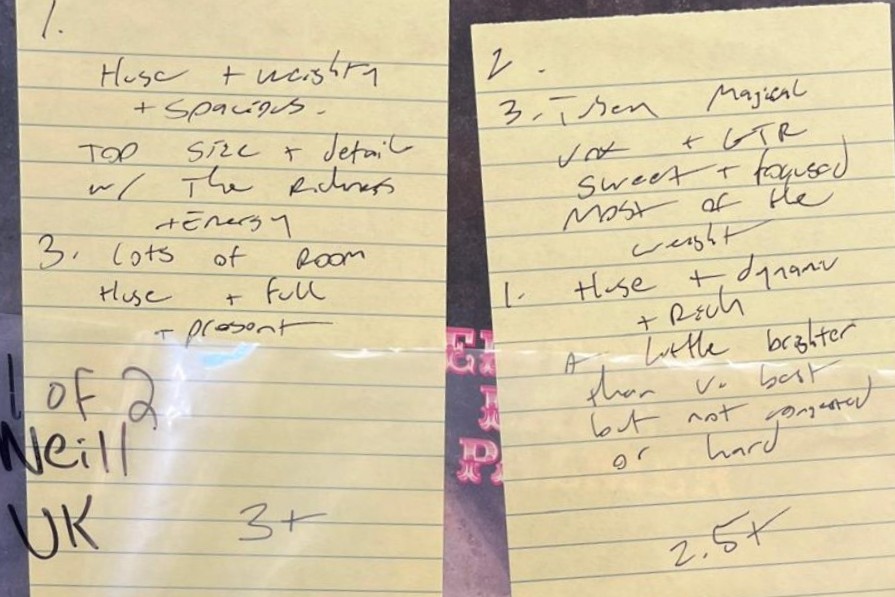
We discovered that side two was slightly lacking in some ways. We had a side two on another copy that was better than the 2.5+ side two you see here.

When we played the two best copies back to back, side one of this copy came out on top, earning a grade of 3+, but the side two of another copy showed us there was potentially even more weight and Tubey Magic to the recording than we had expected after hearing a number of copies by that point in the shootout.

As a consequence we felt it best to drop side two’s grade a half plus to 2.5+. Initially it was graded “at least 2+”, and the grade was then raised to 2.5+ after playing it head to head in the final round against the eventual shootout winner.

We marvelled at these specific qualities in the sound of side one.

Track Three

  • Huge and spacious
  • Strong strings and brass
  • Very rich
  • Well defined lows

Track Two

  • Sweet and rich and textured strings
  • Gets massive
  • Extends at both ends of the frequency spectrum

“Gets massive” is something we don’t say about too many records, but the best Hot Stamper pressings of Orchestral Spectaculars such as this one can certainly get massive if you have the speakers, the power to drive them, and the room big enough to unleash the kind of orchestral power found on these phenomenal sounding LPs.

In our experience, if you really want to hear this kind of “massive sound,” an early pressing of a Decca recording from 1960 is a good place to go looking for it.

You are very unlikely to hear it on any record made in the last fifty years, although we can’t say it isn’t possible.

Allow us to save you some trouble looking for love in all the wrong places. Take our word and skip the more than forty remastered classical and orchestral titles we’ve played over the years that badly missed the mark. (For other kinds of music there are hundreds more.)

Side two was nearly as good:

(more…)

Room Treatments Bring Out The Big Speaker Whomp Factor

Hot Stamper Pressings of the Music of Sergio Mendes Available Now

UPDATE 2025

The first Sergio Mendes and Brasil ’66 album is one of those records that helped us dramatically improve the quality of our playback.


Only the best copies are sufficiently transparent to grant the listener the privilege of hearing all the elements laid out clearly, each occupying a real three-dimensional space within the soundfield. 

With recent changes to some of our room treatments, we now have even more transparency in the mids and highs, while improving the whomp factor (the formula goes like this: deep bass + mid bass + speed + dynamics + energy = whomp) at the listening position.

There’s always tons of bass being produced when you have three 12′ woofers firing away, but getting the bass out of the corners and into the center of the room is one of the toughest tricks in audio.

For a while we were quite enamored with some later pressings of this album — they were cut super clean, with extended highs and amazing transparency, with virtually none of the congestion in the loud parts you hear on practically every copy.

But that clarity comes at a price, and it’s a steep one. The best early pressings have whomp down below only hinted at by the “cleaner” reissues. It’s the same way super transparent half-speeds fool most audiophiles. For some reason audiophiles rarely seem to notice the lack of weight and solidity down below that they’ve sacrificed for this improved clarity. (Probably because it’s the rare audiophile speaker that can really move enough air to produce the whomp we are talking about here.)

But hey, look who’s talking! I was fooled too. You have to get huge amounts of garbage out of your system (and your room) before the trade-offs become obvious.

When you find that special early pressing, one with all the magic in the midrange and top without any loss of power down below, then my friend you have one of those “I Can’t Believe It’s A Record” records. We call them Hot Stampers here at Better Records, and they’re guaranteed to blow your mind. (more…)

On Security, Robert Ludwig Let Us Down, Big Time

Hot Stamper Pressings of the Music of Peter Gabriel Available Now

All the copies we had in our shootout were pressed domestically, and none of them were mastered by the legendary Robert Ludwig except for the one whose stampers you see below.

We awarded both sides of RL’s cutting a sub-Hot Stamper grade of 1+, which means the sound is passable at best, even after a good cleaning. (Without a good cleaning it would probably not even earn that single plus.)

We do not sell records with 1+ grades. We figure you can find those on your own. The world is full of them, as are most audiophile record collections.

1+ is actually a fairly good grade for many of the Heavy Vinyl pressings being made today. Some of the ones we’ve reviewed can be found in our Heavy Vinyl mediocrities section.

Any version of the album we sell will be noticeably — and probably dramatically — better sounding.

If you own any of those titles and didn’t pay much for them, you didn’t get ripped off too badly. You got something for your money. Not much, but something, and it would surprise us no end if any of them have been played much. Mediocre records tend to spend most of their lives sitting on record shelves. They’re not good enough sounding to bother with.

If you have any of these specific Heavy Vinyl pressings, something is wrong somewhere and it would be a good idea for you to figure out what before you flush any more money down the drain.

General Advice

On this title, forget the Brits. Every British pressing we played was badly smeared and veiled.

This took us somewhat by surprise because we happen to like the British PG pressings. However, So on British vinyl is awful too, so it’s clear (to us anyway) that the later PG records are bad on British vinyl and the early ones are better.

We are limiting our comments here to albums up through So. Anything after that is more or less terra incognita for us simply because we don’t care for any of the music he was making after 1986.

(more…)

Jump Into the Fire with Harry Nilsson

Hot Stamper Pressings of the Music of Harry Nilsson Available Now

This commentary was written more than ten years ago.


Jump Into The Fire is one of the best tests we use for side two.

Copies that are too smooth make the “just bass and drums” intro sound thick and smeared.

Too bright and the vocals will tear your head off.

The “just right” copies rock from the start and never get too far out of control, even when Harry does. The best we can hope for is that the loudest vocal parts stay tolerable. Believe me, it is not that easy to find a copy that’s listenable all the way through, not at the high volume I play the record at anyway!

Again, with Nilsson screaming at the top of his lungs, you better have a good copy to get through this track, and even then it’s a bit of a problem.

A tough test for the old stereo, that’s for sure. Make sure your equipment is tuned up and the electricity is good before you get anywhere near a pressing of this album.

Big production pop like this is hard to pull off. Harry did an amazing job, but the recording is not perfect judging by the dozen or so copies I played this week and the scores I’ve suffered through before.

Let’s face it: Jump Into The Fire will never be smooth and sweet; neither will Down on side one. But other tracks on this album have Demo Disc quality sound, and, of course, the music is to die for.

Side One

Gotta Get Up

A tough one right off the bat. If you have an aggressive sounding copy, you’ll know it pretty quick!

Driving Along (more…)

Listening for Energy and Rock and Roll Firepower on Bad Company’s Debut

Hot Stamper Pressings of Rock Classics Available Now

The drums on this album are so solid, punchy and present, they put to shame 99% of the rock records on the planet.

As well as having great drums, the overall sound of the best pressings is raw, real and wonderfully unprocessed.

Here you will find none of the glossy artificiality you might hear on many of the rock and pop records we sell.

There’s nothing wrong with that sound, mind you, but this recording captures much more of what the real instruments sound like in the studio.

And, if you’re playing this album good and loud, you’ll feel like you’re in the room with the boys as they kick out the jams. “Ready For Love” sounds great here — shocking clarity, tons of ambience, and silky sweet highs.

This album was one of Ron Nevison‘s early engineering jobs.

The year before (1973) he had been behind the board at Ronnie Lane’s Mobile Studio for Quadrophenia, one of the best sounding Who albums we know of, and a longtime member of our Top 100 (as is this album).

He also knocked it out of the park on Bad Company’s follow-up, 1975’s Straight Shooter.

He worked on the sprawling mess that turned into Physical Graffiti the same year.


Want to find your own killer copy?

Consider taking our moderately helpful advice concerning the pressings that tend to win our shootouts.

(more…)

Our First Big Shootout for Tommy Took Place Way Back in 2008

Hot Stamper Pressings of the Music of The Who Available Now

Our notes from 2008. Much has changed since then!

This British Track Black Label pressing DEMOLISHED our expectations for this album. I don’t think I’ve ever heard The Who sound this good.

Three out of four sides rate our top grade of A+++, and side three ain’t far behind at A++. What do such high grades give you for this album? Tubey magical guitars, silky vocals with lots of texture, unbelievable weight to the bottom end, “you are there” immediacy, BIG drums sound, OFF THE CHARTS rock and roll energy, and shocking clarity and transparency.

This is only the second $1000 Hot Stamper we’ve ever listed on the site. We know there’s always a rise in trash talk on the vinyl message boards when we throw this kind of record on the site, but we can’t worry about that silly business. Our job is to find you guys the best of the best, and here’s a record that we’re very proud to put at the very top of our top shelf.

Story Of The Shootout

We’ve never been able to pull off a full Tommy shootout until now. We had played enough copies to figure out that the Track originals are really the only way to go, but who can find even one clean copy these days, let alone enough to do a shootout?


UPDATE

This is long before Discogs got up and running. You can buy Tommy all day long up there, and on Ebay too. You may end up with lots of noisy copies, but at least you can find them.


This is where you come in, loyal customer. The prices we charge on records like this allow us to spare little expense when it comes to acquiring important LPs. So when we saw a $200 Original British pressing on the wall at Amoeba recently, we were able to splurge on it.

How did it turn out? Well, by the time I invested the labor in it to clean it and evaluate it, we definitely won’t be making a dime on that one. (Of course, keep in mind that it inspired us to finally move on this shootout, so in that sense it was well worth it.)

It’s a nice copy, but a hefty price tag and a prime spot on the wall can’t tell you a thing about how a record sounds. Keep that in mind the next time you see an expensive record at your local store or on Ebay that has you hot and bothered. We may charge a lot for our Hot Stampers, but at least when you buy one you are GUARANTEED good sound.

(more…)

Counting Down to Ecstasy Can Get Congested

Hot Stamper Pressings of the Music of Steely Dan Available Now

One of the biggest problems with the average copy of this album is congestion in the loudest passages.

On King Of The World, for example, many copies never quite open up at the chorus.

The Hot Stamper copies are much more spacious, giving the voices and instruments plenty of room to breathe.

The soundfield needs to be big and wide for this album to work, and on the best copies we played the sound is huge.

Another problem with the typical copy is a lack of bass. This is Steely Dan, man: last I heard they had a pretty good bass player by the name of Walter Becker. (On later albums he plays guitar, but with Denny Dias and Jeff Skunk Baxter still in the band at this point, the guitar duties were already in the hands of the truly gifted.)

We have to imagine that the band wanted you to hear bass — and plenty of it. Any copy of this album that doesn’t have lots of deep, punchy, well-defined bass just isn’t gonna cut it.

Three Demo Discs

Of all the great albums Steely Dan made, and that means all seven of their original albums and none of the ones that came along later — the less said about those the better — there are only three in our opinion that actually support their reputation as studio wizards and recording geniuses.

Chronologically they are Pretzel Logic, Aja, and Gaucho. Every sound captured on these albums is so carefully crafted and considered that it practically brings one to tears to contemplate what the defective DBX noise reduction system did to the work of genius that is Katy Lied, their best music and their worst recording.

(The cymbal crashes on Katy Lied can really mess with your mind if you let them. To get a better sense of what the DBX system did to the sound, try banging two trash can lids together are hard as you can and as close to your head as possible.)

Countdown to Ecstasy is the only Steely Dan album recorded by a working live band.

One of the most important qualities we look for in a Hot Stamper pressing is the ability to convey the fun and energy of these seriously hard-rockin’ sessions. Look for the essence of the sound of a real band in whatever pressing you play and you’ll surely be on the right track to counting down to the ecstasy that awaits you.

(more…)