Masterpieces of Orchestral Music

Classical and Orchestra Masterpieces

Mozart / Symphonies Nos. 40 & 41 on London

More of the Music of Mozart

  • This vintage London pressing of two of Mozart’s greatest symphonies boasts seriously good Double Plus (A++) grades from start to finish
  • Giulini is masterful here, bringing both of these great works to life – both the performance and the sound are hard to fault
  • Both sides are remarkably transparent and energetic, with wonderful space and clarity
  • Full brass; full, rich, tonally correct strings; smooth higher up, never screechy — what’s not to like?

(more…)

Britten / Young Person’s Guide To The Orchestra

More of the Music of Benjamin Britten

  • Superb sound throughout this unboxed UK Decca stereo pressing, with both sides earning solid Double Plus (A++) grades
  • It’s also exceptionally quiet at the high end of Mint Minus Minus, a grade that even our most well-cared-for vintage classical titles have trouble playing at, and it should be noted that early Decca pressings rarely can be found in this condition
  • This is our favorite recording of the work – those of you looking for a Young Person’s Guide can stop looking, this is the one
  • We’ve learned from shootouts past (and were reminded again during our most recent) that the London pressing can also be quite good, but none of them can hold a candle to these early Deccas
  • For those who have never heard the work, check out The Young Person’s Guide on YouTube – it is a tour de force of orchestral excitement, especially the percussion section

(more…)

Albeniz / Iberia – Another Knockout of a Recording, Conducted by Ernst Ansermet

More of the Music of Albeniz

  • This superb classical release (only the second copy to hit the site in close to two and a half years) boasts big, bold, dynamic Shootout Winning Triple Plus (A+++) sound or close to it throughout this early London pressing
  • It’s also fairly quiet at Mint Minus Minus, a grade that even our most well-cared-for vintage classical titles have trouble playing at
  • Here you will find the huge hall, correct string tone, spacious, open sound that are hallmarks to all the best vintage orchestral pressings
  • Listen to the plucked basses – clear, not smeary, with no sacrifice in richness. Take it from us, the guys that play classical recordings by the score, this is hard for a record to do!
  • Ernst Ansermet conducted some of the best sounding records ever made — here are some of the ones we’ve reviewed

The sound of this copy is so transparent, undistorted, three-dimensional and real, without any sacrifice in solidity, richness or Tubey Magic, that we knew we had a real winner on our hands as soon as the needle hit the groove.

We were impressed with the fact that it excelled in so many areas of reproduction. The illusion of disappearing speakers is one of the more attractive aspects of the sound here, pulling the listener into the space of the concert hall in an especially engrossing way.

(more…)

Rodgers – Slaughter On Tenth Avenue / Fiedler

More Orchestral Spectaculars

  • With two outstanding Double Plus (A++) sides, you’ll have a hard time finding a copy that sounds remotely as good as this vintage Shaded Dog pressing, recorded in All Tube 1959 Living Stereo
  • Boasting two INCREDIBLE Shootout Winning Triple Plus (A+++) sides or close to them, this early Shaded Dog pressing, recorded in Living Stereo, is practically as good a copy as we have ever heard
  • It’s also fairly quiet at Mint Minus Minus, which makes it unusual in our experience for a record made in 1959
  • These sides are doing nearly everything right – they’re rich, clear, undistorted, open, spacious, and have depth and transparency to rival the best recordings you may have heard
  • The music flows from the speakers effortlessly – you are there
  • This record will have you asking why so few Living Stereo pressings actually do what this one does. The more critical listeners among you will recognize that this is a very special copy indeed. Everyone else will just enjoy the hell out of it.
  • Like many of our favorite orchestral spectaculars, weighty, powerful brass is key to the sound of the best copies like this one
  • 1959 was a phenomenal year for audiophile quality recordings – we’ve auditioned and reviewed more than a hundred and thirty so far, and there are undoubtedly a great many more that we’ve yet to play

Years ago we wrote:

This copy was so good it almost left me speechless. Why is it not one of the most sought-after recordings in the RCA canon? Beats the hell out of me.

But wait just one minute. It wasn’t until a few years ago that I found out just how good this record could sound, so how can I criticize others for not appreciating a record I had never taken the time to appreciate myself?

Which more than anything else prompts the question — why is no one exploring, discovering and then bringing to light the exceptional qualities of these wonderful vintage recordings (besides those of us here, of course)?

(more…)

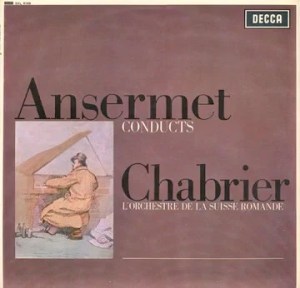
Bizet / L’arlesienne And Carmen Suites – Ansermet

More of the Music of Georges Bizet

  • An early London pressing that was doing just about everything right, earning solid Double Plus (A++) grades from first note to last
  • This is a spectacular recording — it’s guaranteed to put to shame any Heavy Vinyl pressing of orchestral music you own
  • Vibrant orchestrations, top quality sound and scratch-free surfaces combine for an astounding listening experience
  • Some old record collectors (like me) say classical recording quality ain’t what it used to be – here’s all the proof anyone with two working ears and top quality audiophile equipment needs to make the case
  • If you’re looking to demonstrate just how good ’50s All Tube Analog can be, this killer copy should be just the record to do it
  • Recorded in 1958 using the amazing Decca Tree mic setup, it’s yet another remarkable disc from the Golden Age of Vacuum Tube Recording
  • 1958 just happens to be one of the truly great years for analog recordings, as evidenced by this amazing group of albums, all recorded or released in that year
  • This is a Must Own album, along with these other entries in our core classical/orchestral collection

Production and Engineering

James Walker was the producer, Roy Wallace the engineer for these sessions from 1958 in Geneva’s glorious Victoria Hall. It’s yet another remarkable disc from the Golden Age of Vacuum Tube Recording.

The gorgeous hall the Suisse Romande recorded in was possibly the best recording venue of its day, possibly of all time; more amazing sounding recordings were made there than any other hall we know of. There is a richness to the sound that exceeds all others, yet clarity and transparency are not sacrificed in the least. It’s as wide, deep and three-dimensional as any, which is of course all to the good, but what makes the sound of these recordings so special is the weight and power of the brass and the timbral accuracy of the instruments in every section.

This is the kind of record that will make you want to take all your heavy vinyl classical pressings and put them up for sale. None of them, I repeat not a single one of them, can ever begin to sound the way this record sounds.

Quality record production is a lost art, and it’s been lost for a very long time.

Famous in its Day

The Carmen Ballet Suite was deservedly famous in audiophile circles back in the ’70s. Even with the dubious equipment that a high-end stereo store might be running, this record would still sound shockingly good. It has so much “life” to it, so many interesting colors, and above all such three-dimensional spaciousness, it can make even bad transistor equipment, which is pretty much all there was back then, sound good.

The store I frequented carried the classic tube Audio Research electronics — that’s where I bought mine — but most stores were all-transistor, and high-power transistors at that, not a sound I care to revisit. Would love to hear my SP3-A-1 again though!

(more…)

Gershwin – Concerto In F / Cuban Overture / Wild / Fiedler

More of the Music of George Gershwin

  • Both sides of this original Shaded Dog pressing were giving us the big and bold Living Stereo sound we were looking for on these wonderful orchestral pieces, earning solid Double Plus (A++) grades or BETTER
  • It’s also fairly quiet at Mint Minus Minus, a grade that even our most well-cared-for vintage classical titles have trouble playing at
  • If you love the sound of a big bass drum, the Concerto in F is the work for you, and the engineers know how to capture both the bass and the space surrounding it
  • The rich, textured sheen of the strings that Living Stereo made possible in the 50s and early 60s is clearly evident throughout these pieces, something that the Heavy Vinyl crowd will never experience, because that sound just does not exist on modern repressings
  • Everything that is wrong with the low-res Classic reissue – boosted mids, strings lacking in texture and sheen, etc. – is nowhere to be found on these superb sides, overflowing with Living Stereo Tubey Magic from 1962
  • This is yet another Must Own orchestral recording from 1962
  • For a more complete list, the highest quality recordings of piano concertos that we’ve auditioned to date can be found here

(more…)

Debussy – La Mer / Ansermet

More of the music of Claude Debussy (1862-1918)

  • A vintage Decca import pressing of these wonderful orchestral pieces that was doing just about everything right, with both sides earning seriously good Double Plus (A++) grades
  • La Mer is on side one and it is lovely – rich and sweet, tonally correct, dynamic, and extended on the top and the bottom
  • Two other major works found on this compilation are Prelude to the Afternoon of a Faun and Clair De Lune
  • The richness of the strings is displayed here beautifully for fans of the classical Golden Age – it’s practically impossible to hear that kind of string sound on any recording made in the last thirty years
  •  When you hear how good this record sounds, you may have a hard time believing that it’s a budget reissue from 1972, but that’s precisely what it is. Even more extraordinary, the right copies are the ones that win shootouts

(more…)

Bizet / Saint-Saens / Carmen Fantaisie / Introduction And Rondo Capriccioso / Ricci

More of the Music of Georges Bizet

  • You’ll find solid Double Plus (A++) sound throughout this early London LP
  • This is a spectacular recording, and one of the Greatest Violin Showpiece Albums of All Time
  • It is certainly a record that belongs in every right-thinking audiophile’s collection. If you’re on our site and taking the time to read this, that probably means you
  • Ruggiero Ricci is superb throughout – we know of no better performance of these works than those found on this very record
  • Some old record collectors (like me) say classical recording quality ain’t what it used to be – here’s all the proof anyone with two working ears and top quality audiophile equipment needs to make the case

Ricci’s playing of the Bizet-Sarasate Carmen Fantasie is out of this world. There is no greater performance on record, in my opinion, and few works that have as much audiophile appeal.

The Average Copy

When you play a copy of this record and hear a smeared, veiled violin, don’t be too surprised. This is not the least bit unusual, in fact it’s pretty much par for the course. The soundstage may be huge, spacious and 3-D. It is on most copies.

But what good is a record of violin showpieces if the violin doesn’t sound right?

Sides One and Two

These two sides can show you how good the violin — and the whole orchestra — can sound. They’re tonally correct from top to bottom, transparent and sweet.

These pieces are less about the “violin-in-your-lap” effect and more about the violin as an integrated member of the orchestra.

These sides had plenty of a quality that goes a long way in the world of classical music. As we went through the various copies, we noticed that the sound on the best sides was especially relaxed. (Compare that to the typical Classic Records Heavy Vinyl pressing, which, on the relaxation scale of one to ten, rates a lot closer to one than it does to ten. Between one and two, probably.)

Once you spot the relaxed copies, you find they tend to do every other thing well, and that’s what it takes to score top grades in shootouts — doing everything well.

(more…)

Bartok – Music For Strings Percussion And Celeste / Marriner

The Music of Bela Bartok Available Now

  • We surveyed a large group of pressings containing this work, and in the end Marriner’s reading from 1970 had the best sound and the best performance of all those we played
  • Wonderfully textured string tone and huge hall space extending wall to wall and floor to ceiling – everything you want in a top quality orchestral recording is here, and more
  • To keep beating a horse that has been dead for years, this is precisely the sound that the modern reissue fails to offer the committed audiophile with top quality equipment
  • “… one of the best-known compositions by the Hungarian composer Béla Bartók.”
  • There are about 150 orchestral recordings we think offer the best performance coupled with the highest quality soundThis record has earned a place on that list.

(more…)

Strauss / Also Sprach Zarathustra / Reiner

More of the Music of Richard Strauss

  • An early Shaded Dog pressing of this wonderful classical Masterpiece with superb Double Plus (A++) sound from first note to last
  • It’s also fairly quiet at Mint Minus Minus, a grade that even our most well-cared-for vintage classical titles have trouble playing at
  • The vibrant colors of the orchestra are captured brilliantly in All Tube Analog by the RCA engineers, creating an immersive and engrossing listening experience for the work without equal in our experience
  • There is plenty on offer for the discriminating audiophile, with the spaciousness, clarity, tonality and freedom from artificiality that are hallmarks of the best Living Stereo recordings
  • “Reiner’s close familiarity with the score and personal relationship with Strauss himself add extra weight to the authority and importance of his interpretation of Also sprach Zarathustra.”

(more…)