Folk Rock, American

Dave Mason – It’s Like You Never Left

More Folky Rock

  • It’s Like You Never Left returns to the site after a nearly three and a half year hiatus, here STUNNING Shootout Winning Triple Plus (A+++) sound throughout this early Columbia pressing
  • Mason’s 1973 comeback album got help from the likes of Graham Nash, Stevie Wonder and George Harrison
  • Both sides have good extension up top and down low, with plenty of meaty bass and silky highs
  • “Mason is perhaps one of the most creative forces, lyrically, musically and vocally, in pop today.” – Billboard, 1973
  • Thank Al Schmitt for delivering top quality — albeit glossy — sound on this 1973 recording
  • If you’re a Dave Mason fan, this has to be considered a Must Own Title of his from 1973.

I was a big fan of this album when it came out in 1973. I used to play it all the time, in fact. Now I hear why — it’s big and rich with a solid bottom end and a smooth, sweet top; perfect for the big but not especially sophisticated speakers (the Fulton J System) I had back in the day.

This album has the kind of sound that the typical CD just doesn’t want anything to do with. Not that the Compact Disc couldn’t pull it off — there are good sounding CDs in this world, I own hundreds of them — but it doesn’t seem to want to even try.

Graham Nash helps out on vocals on tracks one, two and five on the first side. Stevie Wonder plays a lovely harmonica solo on “The Lonely One” on side two, and George Harrison guests on guitar on “If You’ve Got Love,” the third track on side one.

(more…)

Joni Mitchell / Shadows and Light

More of the Music of Joni Mitchell

  • A superb copy of Mitchell’s second live album with solid Double Plus (A+++) grades or BETTER on all FOUR sides of these vintage Asylum pressings
  • The sound is full-bodied, lively and dynamic, with wonderful immediately to Joni’s remarkably present and breathy vocals
  • If you’re a fan of Joni’s more experimental work from the mid to late 70s, this album is a Must Own
  • “…it serves as a good retrospective of her jazzy period from 1975-1979. As expected, she assembles a group of all-star musicians including Pat Metheny (guitar), Jaco Pastorius (bass), Lyle Mays (keyboards), and Michael Brecker (saxophone) who give these compositions more energy than on the studio recordings.”

Four outstanding sides! We recently had a huge shootout for this famous double album and this copy blew our minds with Double Plus sonics (or better) and reasonably quiet vinyl from start to finish. In the high-stakes game of Better Records Double Album Poker, that’s a full house, man. This one gives you the kind of you are there immediacy and transparency that put you front and center for a late 70s jazzy Joni Mitchell show. Not too many copies will do that.

Joni’s voice is breathy and present with real texture, and the three-dimensional imaging gives the music a real sense of space — just like you’d get at a concert. This helps convey the intimacy of the songs and the performances, and isn’t that what we audiophiles got in this crazy hobby for in the first place?

(more…)

Crosby, Stills and Nash – Daylight Again

More of the Music of Crosby, Stills and Nash

  • With excellent Double Plus (A++) grades on both sides, this vintage copy is doing just about everything right
  • This is the embodiment of the classic CSN sound we love – rich, full-bodied, warm, punchy, dynamic and clear
  • Steven Barncard, one of our favorite recording engineers, no doubt deserves most of the credit
  • AllMusic on “Wasted On The Way” and “Southern Cross”: “Both were extracted as singles and became among the best-known tracks not only on Daylight Again, but also in the post-60s CSN canon.”

(more…)

We Didn’t Know How Good We Had It in the Seventies

Hot Stamper Pressings of Well-Recorded Folk Rock Albums Available Now

Stealin’ Home has long been a Folkie-Pop favorite of mine, mostly on the strength of the consistently smart songwriting, polished production and audiophile sound quality.

But really, to be truthful, what I found attractive right from the start was Iain Matthews’s especially clear, sweet tenor. That’s the hook that drew me to the album.

Only later would I be pleasantly surprised to find that the recorded sound was wonderful; that the production was equal to the best major label Rock and Pop around (a comparison to The Doobie Brothers would not be a stretch); and, with repeated listening, it was clear that the level of songwriting was high indeed (an a capella rendition of Rodgers and Hammerstein’s You’ve Got to Be Carefully Taught, which opens side two, can’t help but raise your averages).

ian_matthews_-_stealin_homeWe Didn’t Know How Good We Had It

Produced in 1978, the best copies are rich, smooth and sweet in the best tradition of ANALOG recording.

Only a few years later this sound was out of style, replaced by the edgy, hard, digital qualities preferred by synthpop bands like Tears for Fears and Simple Minds.

This would turn out to be a bad time for audiophiles (like me) who liked the pop music of the day but not the pop sound of the day. Heavy-handed processing as well as the overuse of synthesizers and drum effects, with the whole of the production slathered in digital reverb, have resulted in most of the albums from the early- to mid-80s being all but impossible to enjoy on a modern high-end system. Believe me, we’ve tried.


UPDATE 2026

Getting distortion out of the system, electricity, room and all the rest helps make the records from the 80s much more enjoyable. Brothers in Arms comes instantly to mind, but there are scores of others. Obviously some heavily processed recordings are going to sound much better than others, especially if you have the right pressings, but few of them can compete with the better recordings from the 70s.

(more…)

Joni Mitchell – Blue

More of the Music of Joni Mitchell

  • Boasting two solid Double Plus (A++) sides, this copy of Joni’s 1971 masterpiece is doing just about everything right – exceptionally quiet vinyl too
  • Full-bodied and balanced with the kind of smooth musicality that’s not always easy to find for Blue
  • We lucked into this quiet copy during our most recent shootout, but in our experience that is something we would not expect to happen very often, but we’re glad it did in the case of this wonderful pressing
  • A Better Records Top 100 title that belongs in any audiophile music collection worthy of the name
  • 5 stars: “Sad, spare, and beautiful, Blue is the quintessential confessional singer/songwriter album. Forthright and poetic, Joni Mitchell’s songs are raw nerves, tales of love and loss (two words with relative meaning here) etched with stunning complexity…”
  • Everything changed for us in 2007 with the release of the Hoffman/Gray-mastered Rhino pressing of Blue, a record that made us ask ourselves, “Why are we selling records that we would not want to own or listen to ourselves?”
  • It was truly a kicked-by-a-mule moment for all of us here at Better Records, and I am glad to say one kick was all it took to get the rocks out of my head

The best copies bring out the breathy quality to Joni’s voice, and she never sounds strained. They are sweet and open, with good bass foundation and transparency throughout the frequency range.

The best pressings (and our better playback equipment) have revealed nuances to this recording — and of course the performances of all the players along with it — that made us fall in love with the music all over again. Of all the tough nuts to crack, this was the toughest, yet somehow copies emerged from our shootouts that made it easy to appreciate the sonic merits of Blue and ignore its shortcomings.

Hot Stampers have a way of doing that. You forget it’s a record; it’s now just Music. The right record and the right playback will bring this music to life in a way that you cannot imagine until you hear it. That is our guarantee on Blue — better than you ever thought possible or your money back.

(more…)

Bob Dylan – Real Live

More of the Music of Bob Dylan

  • An original copy (only the second to hit the site in years) with a KILLER Shootout Winning Triple Plus (A+++) side one mated to a solid Double Plus (A++) side two – exceptionally quiet vinyl too
  • Forget that critical listening stuff and just notice that these Hot Stamper copies are simply more relaxed, musical and involving than anything you’ve heard – guaranteed or your money back
  • Glyn Johns produced Real Live, so its sonic credentials are certainly in order
  • “… if it doesn’t capture a historically significant tour, as Hard Rain did with the Rolling Thunder Revue, this is a better record all the same… it’s a good, solid live album, his best live album since Before the Flood…”

This vintage Columbia pressing has the kind of Tubey Magical Midrange that modern records can barely BEGIN to reproduce. Folks, that sound is gone and it sure isn’t showing signs of coming back. If you love hearing INTO a recording, actually being able to “see” the performers, and feeling as if you are sitting in the studio with the band, this is the record for you. It’s what vintage all analog recordings are known for — this sound.

If you exclusively play modern repressings of vintage recordings, I can say without fear of contradiction that you have never heard this kind of sound on vinyl. Old records have it — not often, and certainly not always — but maybe one out of a hundred new records do, and those are some pretty long odds.

What The Best Sides Of Real Live Have To Offer Is Not Hard To Hear

  • The biggest, most immediate staging in the largest acoustic space
  • The most Tubey Magic, without which you have almost nothing. CDs give you clean and clear. Only the best vintage vinyl pressings offer the kind of Tubey Magic that was on the tapes even as late as 1984
  • Tight, note-like, rich, full-bodied bass, with the correct amount of weight down low
  • Natural tonality in the midrange — with all the instruments having the correct timbre
  • Transparency and resolution, critical to hearing into the three-dimensional studio space

No doubt there’s more but we hope that should do for now. Playing the record is the only way to hear all of the qualities we discuss above, and playing the best pressings against a pile of other copies under rigorously controlled conditions is the only way to find a pressing that sounds as good as this one does.

Standard Operating Procedures

What are sonic qualities by which a record — any record — should be judged? Pretty much the ones we discuss in most of our Hot Stamper listings: energy, vocal presence, frequency extension (on both ends), transparency, spaciousness, harmonic textures (freedom from smear is key), rhythmic drive, tonal correctness, fullness, richness, three-dimensionality, and on and on down the list.

When we can get a number of these qualities to come together on the side we’re playing, we provisionally give it a ballpark Hot Stamper grade, a grade that is often revised during the shootout as we hear what the other copies are doing, both good and bad.

Once we’ve been through all the side ones, we play the best of the best against each other and arrive at a winner for that side. Other copies from earlier in the shootout will frequently have their grades raised or lowered based on how they sounded compared to the eventual shootout winner. If we’re not sure about any pressing, perhaps because we played it early on in the shootout before we had learned what to listen for, we take the time to play it again.

Repeat the process for side two and the shootout is officially over. All that’s left is to see how the sides of each pressing match up.

It may not be rocket science, but it’s a science of a kind, one with strict protocols that we’ve developed over the course of many years to insure that the results we arrive at are as accurate as we can make them.

The result of all our work speaks for itself, on this very record in fact. We guarantee you have never heard this music sound better than it does on our Hot Stamper pressing — or your money back.

What We’re Listening For On Real Live

  • Energy for starters. What could be more important than the life of the music?
  • Then: presence and immediacy. The vocals aren’t “back there” somewhere, lost in the mix. They’re front and center where any recording engineer worth his salt would put them.
  • The Big Sound comes next — wall to wall, lots of depth, huge space, three-dimensionality, all that sort of thing.
  • Then transient information — fast, clear, sharp attacks, not the smear and thickness so common to these LPs.
  • Tight punchy bass — which ties in with good transient information, also the issue of frequency extension further down.
  • Next: transparency — the quality that allows you to hear deep into the soundfield, showing you the space and air around all the instruments.
  • Extend the top and bottom and voila, you have The Real Thing — an honest to goodness Hot Stamper.

Side One

Highway 61 Revisited 
Maggie’s Farm 
I And I 
License To Kill 
It Ain’t Me, Babe 
Tangled Up In Blue

Side Two

Masters Of War 
Ballad Of A Thin Man 
Girl From The North Country 
Tombstone Blues

AMG Review

… if it doesn’t capture a historically significant tour, as Hard Rain did with the Rolling Thunder Revue, this is a better record all the same, capturing a working band — a working band featuring ex-Stones guitarist Mick Taylor, no less — on a pretty good night. That means there are few revelations — though diehards will certainly revel in “Tangled Up in Blue,” which has several brand-new (not necessarily better) verses — but it’s still pretty good all the same, providing lean, relatively muscular renditions of Dylan’s great songs. This isn’t an important, necessary Dylan record, but it’s a good, solid live album, his best live album since Before the Flood, even if it’s hardly as monumental as that.

Kenny Rankin – Like A Seed

More Singer-Songwriter Albums

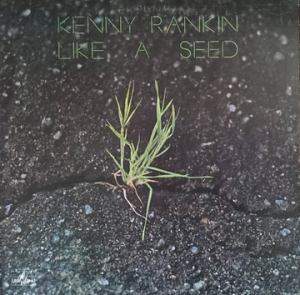
  • Like A Seed appears on the site for only the second time ever, here with an INCREDIBLE Shootout Winning Triple Plus (A+++) side one mated to a solid Double Plus (A++) side two
  • There’s real Tubey Magic on this album, along with breathy vocals and in-your-listening-room midrange presence
  • These sides are bigger, more natural, warmer and more solid than those of any other copy you’ve heard or your money back
  • There are some bad marks (as is sometimes the nature of the beast with these vintage LPs) on “You Are My Woman,” but once you hear just how killer sounding this copy is, you might be inclined, as we were, to stop counting ticks and just be swept away by the music
  • 4 1/2 stars: “Songs like the title cut and ‘Stringman’ spotlight Rankin’s continued growth as a songwriter.”

(more…)

Judy Collins / Judith

  • This vintage pressing (only the second copy to hit the site in years) boasts INCREDIBLE Shootout Winning Triple Plus (A+++) sound or close to it from start to finish
  • Both of these sides are rich and full with plenty of space around all of the instruments, and exceptionally breathy and present vocals
  • Here’s the Midrange Magic that’s missing from the reissues and whatever 180g pressing has been made from the tapes (or, to be clear, a modern digital master copied from who-knows-what-tapes)
  • Engineering by Phil Ramone, who went on to win the Grammy the following year for Still Crazy After All These Years
  • “Her graceful and affecting versions of Jimmy Webb’s ‘The Moon Is a Harsh Mistress’ and Stephen Sondheim’s ‘Send in the Clowns’ (as well as her own ‘Houses’) are lovely and inspired…”

(more…)

Bob Dylan – Highway 61 Revisited

More of the Music of Bob Dylan

  • Dylan’s 1965 release, here solid Double Plus (A++) sound or close to it on both sides of this vintage Stereo 360 pressing
  • In the same way Sgt. Pepper changed music a mere two years later, Highway 61 Revisited left all of Dylan’s contemporaries behind, scrambling to keep up with the standard he set
  • Marks in the vinyl are sometimes the nature of the beast with these early pressings – there simply is no way around them if the superior sound of vintage analog is important to you
  • 5 stars: “Dylan had not only changed his sound, but his persona, trading the folk troubadour for a streetwise, cynical hipster … it proved that rock and roll needn’t be collegiate and tame in order to be literate, poetic, and complex.”

We had a big stack of 360s and Red Labels with good stampers to compare for this shootout. On the better copies, the bottom end was punchy with real weight and the soundfield was open, spacious and so transparent.

Of course, the music is GENIUS. What separates the best copies from the also-rans is more than just rich, sweet, full-bodied sound. The better copies make Dylan’s voice more palpable — he’s simply more of a solid, three dimensional, real presence between the speakers. You can hear the nuances of his delivery more clearly on a copy like this.

What separates the best copies from the also-rans is more than just rich, sweet, full-bodied sound. The better copies make Dylan’s voice more palpable — he’s simply more of a solid, three dimensional, real presence between the speakers. You can hear the nuances of his delivery more clearly on a copy like this.

Now it should be noted that some songs here definitely sound better than others. Do not expect “Tombstone Blues” to become a favorite demo track. It’s upper midrangey here because that’s the way they wanted it. One must assume that the songs sound the way Dylan wanted them too, because every other track has a slightly different tonal balance, and that change in tonality seems to be a conscious choice designed to bring out the best in each song.

Or not. Who’s to say?

The 360 label pressings are a mixed bag, running from mediocre to mindblowing. Most of the time they are too trashed to even consider playing on an audiophile turntable. Many of the later pressings are sterile, congested, and lean.

On a typical pressing of this record, the harmonica can be shrill and aggressive, but on the best copies, it will sound airy and full-bodied (for the most part). There are times on every copy we’ve ever played where the harmonica solos get to be just a bit much.

The best tracks have fat, meaty, oh-so-analog drums and bass. There’s a certain amount of opacity that modern mastering engineers would be tempted to fix by boosting the highs. This is a very bad idea. Brighter, in this case, is going to destroy what’s good about the sound of the album.

(more…)

The Byrds – Mr. Tambourine Man (360 Label)

More of the Music of The Byrds

xxx.jpg

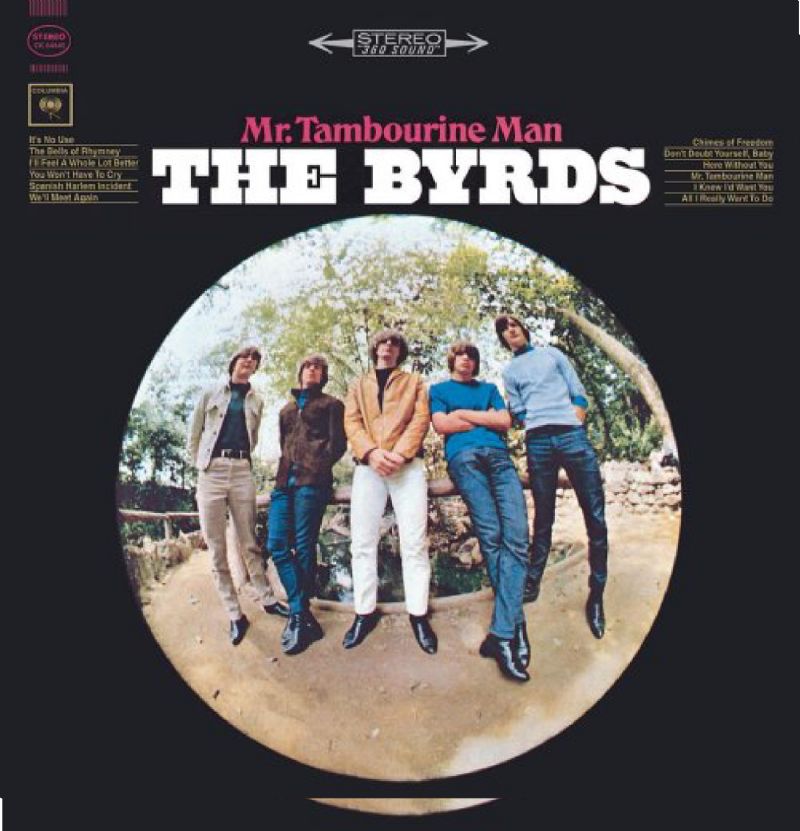
  • With KILLER Shootout Winning Triple Plus (A+++) sound or close to it from start to finish, this Stereo 360 pressing is guaranteed to blow the doors off any other Mr. Tambourine Man you’ve heard
  • Lively, balanced and vibrant, with boatloads of the Tubey Magical richness these recordings need in order to work
  • Listen to how amazingly breathy Jim (later Roger) McGuinn’s vocals are – his vocals are key to the best sounding Byrds records
  • 5 stars: “One of the greatest debuts in the history of rock … nothing less than a significant step in the evolution of rock & roll itself, demonstrating that intelligent lyrical content could be wedded to compelling electric guitar riffs and a solid backbeat.”
  • If you’re a fan of the Byrds, this is a Classic from 1965 that belongs in your collection.
  • The complete list of titles from 1965 that we’ve reviewed to date can be found here.

Want to hear exactly what I’m talking about? Play Chimes of Freedom, one of the best sounding tracks on side two, if not THE best. Listen to how breathy Jim (later Roger) McGuinn’s vocals are. Byrds records almost never sound like that.

I Knew I’d Want You is another one that sounds amazingly Tubey Magical on the best pressings.

By the time you get to track two on side one you’re hearing one of my favorite Byrds song of all time: I’ll Feel A Whole Lot Better. It’s energetic and very present on this copy.

Notice that Gene Clark’s vocals usually sound better than Roger McGuinn’s. For some reason they tend to brighten up McGuinn’s vocals, and the last thing you ever want to do with a Byrds recording is make it brighter.

But having said that, most of the reissues are too thin and bright compared to the best originals. (more…)