Jazz, Large Group

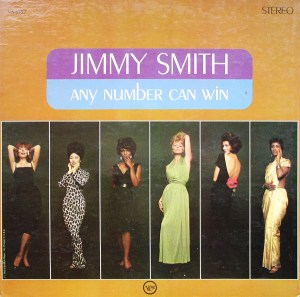
Jimmy Smith / Any Number Can Win

More of the Music of Jimmy Smith

  • Any Number Can Win is back on the site for the first time in years, here with solid Double Plus (A++) grades on both sides of this early Verve pressing
  • With richness, clarity, space and timbral accuracy, this is guaranteed to be one of the best sounding big band jazz records you’ve heard in a while
  • Another top jazz recording from Rudy Van Gelder (among others) – big, bold and lively, just the right sound for this music

This is one of Rudy Van Gelder’s triumphs and one of the best Jimmy Smith albums we’ve ever heard. All of side one and the last cut of side two sound stunning! This is dynamic, big speaker sound.

Lots of old Verves weren’t mastered right, but this one was. It’s as good as it gets — it’s right up there with Bashin’.

RVG did not record this entire album. Some songs are recorded by other engineers and don’t have the dynamic slam that his do but the best tracks are amazing.

(more…)

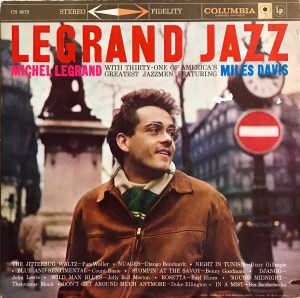
Michel Legrand – Legrand Jazz

More Large Group Jazz Recordings

  • This original 6-Eye Stereo pressing was doing just about everything right, earning solid Double Plus (A++) grades from start to finish
  • Both of these sides are open and spacious with real depth to the soundfield and lots of separation between the various instruments, a very important quality for a recording of a large ensemble recording such as this
  • Rich, solid bass; you-are-there immediacy; energy and drive; instruments that are positively jumping out of the speakers – add it all up and you can see that this copy had the sound we were looking for
  • Legrand rounded up 31 of the greatest jazz players of the 50s, divided them up into three groups, and the result was a landmark 30th Street Studio recording with audiophile sound to die for
  • We’re talking jazz giants: John Coltrane, Miles Davis, Bill Evans, Ben Webster, Herbie Mann, Art Farmer, Donald Byrd, Phil Woods — everybody who was anybody is on this record
  • 4 1/2 stars: “Throughout this superlative album, the arrangements are colorful and unusual, making one wish that Legrand had recorded more jazz albums through the years.”
  • Robert Brook recently played the “award winning” Impex 45 RPM pressing from 2019 (as did we) and wants to know what you think of the sound

This album is more common in mono than stereo, but we found the sound of the mono pressing we played seriously wanting. It’s dramatically smaller and more squawky and crude than even the worst of the stereo pressings we played.

We had a copy we liked years ago, but that was years ago. We don’t have that copy anymore and we don’t have a stereo that sounds the way our old one did either.

The unique voices of each of the jazz giants featured on this landmark recording contributes memorable solos then receeds into the group to provide the structure for the rest of the music. Which is an awkward way of saying everybody does his thing in service to the song and then gets out of the way. “The Jitterbug Waltz,” which opens up side one, is a perfect example: the arrangement is completely original, and within its structure, Miles DavisPhil WoodsJohn Coltrane and others solo beautifully, each taking a turn at the melody. If three minutes into this song you don’t like what you’re hearing, jazz is just not for you.

(more…)

Charles Mingus – Pre Bird

More of the Music of Charles Mingus

  • You’ll find solid Double Plus (A++) sound or close to it throughout this original Mercury Stereo LP
  • We used to think the early Limelight pressing was impossible to beat, but this superb original Mercury showed us just how wrong we were – it takes the recording to another level (particularly on side two)
  • This copy sounds like a big room full of musicians (25 in all!) playing live, which is exactly what it was
  • The Tubey Magical richness of this 1960 recording (released in 1961, and again in 1965 as Mingus Revisited) is breathtaking (also particularly on side two) – no modern record can touch it
  • AllMusic gives it 4 stars and we think it’s maybe even a bit better than that
  • Two tracks are contrapuntal arrangements of two swing era pieces, whereby “Take the ‘A’ Train” (left channel) is paired with a simultaneous “Exactly Like You” (right channel), and likewise “Do Nothin’ Till You Hear From Me” with “I Let a Song Go Out of My Heart.”
  • An outstanding member of our Core Jazz Collection of currently available exceptional recordings.

The better copies recreate a live studio space the size of which you will not believe (assuming your room can do a good job of recreating their room). The sound is tonally correct, Tubey Magical and above all natural. The timbre of each and every instrument is right and it doesn’t take a pair of golden ears to hear it — so high-resolution too.

If you love 50s and 60s jazz, you cannot go wrong here. Mingus was a genius and the original music on this record is just one more album’s worth of proof of the undeniability of that fact.

(more…)

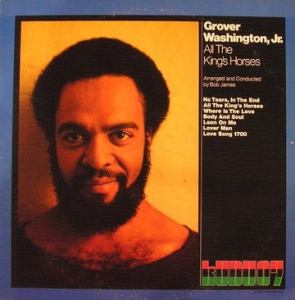
Grover Washington, Jr. – All The King’s Horses

More of the Music of Grover Washington

  • An early Kudu pressing of Washington’s sophomore release with seriously good Double Plus (A++) grades from top to bottom
  • There’s so much life in these grooves – the sound jumps out of the speakers and right into your lap
  • Credit must go to Rudy Van Gelder for recording and mastering this album so well, and to Bob James for his brilliant big group arrangements
  • We cannot recommend this album highly enough – if you have the big speakers a big group of musicians need to perform live in your listening room, his record is going to be nothing less than a thrill
  • 4 stars: “. . . this set has assumed its proper place in Washington’s catalog: as one of his more ambitious and expertly performed sessions.”
  • This is a Must Own jazz album from 1972, one that deserves a place in any audiophile’s collection

Both sides of this original Kudu pressing are OUT OF THIS WORLD. The sweetness and transparency of Grover Washington Jr.’s breathy sax went beyond any copy we’ve ever played. Who knew it could sound like this? We sure didn’t!

It’s spacious and full of life with virtually no distortion. Of special note, this copy has amazingly articulate bass which brings out the undeniable funkiness of the music in a way that no other copy did.

The early 70s were a good time for Rudy Van Gelder. All the King’s Horses from 1972 is an amazing Demo Disc for a large group. But it only sounds good on the copies that it sounds good on, on the pressings that were mastered, pressed and cleaned right, a fact that has eluded most jazz vinyl aficionados interested in good sound.

But not us. We’ve played the very special pressings that prove the album can sound amazing.

Yer Average Copy

The sound we most often find on original pressings (the only ones that ever sound any good; the later pressings are awful) is full of compression, and suffers as well from the kind of high-frequency restriction that prevents the top end from extending in a harmonically correct way. The result: Grover’s horn often will take on a somewhat sour quality. Our better Hot Stampers are both uncompressed and open up top.

I’m a Big Fan

I’ve been a big fan of this record since I first heard it all the way back in High School. I only found out later that this is not what most people would consider “real” jazz — it’s CTI jazz, more in the pop jazz or soul jazz vein. But I love the music more with each passing year and would not hesitate for a moment to recommend it to any jazz lover or audiophile. If the first track doesn’t knock you out, this album may not be for you. Without a doubt, in my book it’s the best thing Grover Washington ever did.

The really good RVG jazz pressings sound shockingly close to live music — uncompressed, present, full of energy, with the instruments clearly spread out and surrounded by the natural space of the studio.

As our stereo has gotten better, and we’ve found better pressings and learned how to clean them better, his “you-are-there” live jazz sound has impressed us more and more.

(more…)
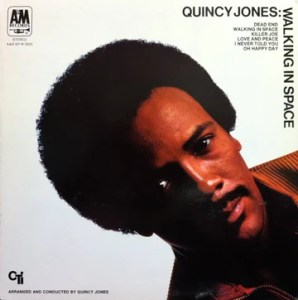
Quincy Jones – Walking In Space

More Jazz Fusion

  • Here is a vintage A&M pressing (and one of only a handful of copies to ever hit the site) with solid Double Plus (A++) sound or close to it from start to finish – exceptionally quiet vinyl too
  • The sonics on this side one are rich and Tubey Magical, yet transparent and spacious in the way that only vintage pressings ever are, and side two is not far behind in all those areas
  • The vocals (courtesy Hilda Harris, Maretha Stewart, Marilyn Jackson, and Valerie Simpson) are wonderfully sweet and breathy with remarkable in-your-listening-room presence (particularly on side one)
  • 5 stars: “The protean Quincy Jones returned to the recording studio as a leader after a long stretch in Hollywood with this triumphantly contemporary big band album. For jazz buffs, the long, dramatic title track from the then-raging musical Hair is the highlight… This is one of the great peaks of Creed Taylor’s A&M period, and it still sounds spectacular today.”

(more…)

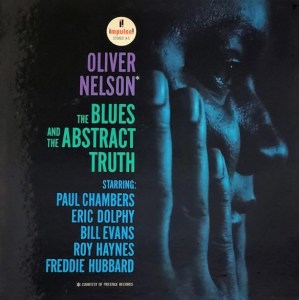
Oliver Nelson – The Blues and the Abstract Truth

More of the Music of Oliver Nelson

  • Oliver Nelson’s Masterpiece (one of only a handful of copies to hit the site in close to three years), here with solid Double Plus (A++) sound or close to it from first note to last – fairly quiet vinyl too
  • Clean, clear and present with a solid bass foundation, as well as the big stage this big group of musicians needs (particularly on side one)
  • If all you know is Van Gelder’s original cutting, you will surely have your eyes and ears opened by this wonderful reissue pressing (also particularly on side one)
  • The knockout pressings we discovered many years ago are ones with very particular markings that are very hard to find, which is explains why this musical Masterpiece comes to the site only once every three years
  • AllMusic gives it 5 stars (of course) and calls this album “…his triumph as a musician for the aspects of not only defining the sound of an era… but on this recording, assembling one of the most potent modern jazz sextets ever.”

The sound is tonally correct, Tubey Magical and above all natural. The timbre of each and every instrument is right and it doesn’t take a pair of golden ears to hear it. So high-resolution too. If you love 50s and 60s jazz, you cannot go wrong here.

For those record lovers who still cling to the idea that the originals are better, this record will hopefully set you straight.

Yes, we can all agree that Rudy Van Gelder recorded it, brilliantly as a matter of fact. Shouldn’t he be the most natural choice to transfer the tape to disc, knowing, as we must assume he does, exactly what to fix and what to leave alone in the mix?

Maybe he should be; it’s a point worth arguing.

But ideas such as this are only of value once they have been tested empirically and found to be true.

We tested this very proposition in our recent shootout, as well as in previous ones of course. It is our contention, based on the experience of hearing quite a number of copies over the years, that Rudy did not cut the original record as well as he should have. For those of you who would like to know who did, we proudly offer this copy to make the case.

Three words say it all: Hearing is believing.

(And if you own any modern Heavy Vinyl reissue we would love for you to be able to appreciate all the musical information that you’ve been missing when playing it. I remember the one from the 90s on Impulse being nothing special, and the Speakers Corner pressing in the 2000s if memory serves was passable at best.)

(more…)

Deodato – Prelude

More Deodato (Music and Arrangements)

  • A vintage CTI pressing that is doing everything right, with INSANELY GOOD Shootout Winning Triple Plus (A+++) sound from first note to last
  • Here are just a few of the things we had to say about this amazing copy in our notes: “great size and space and energy”…”very rich brass”…”dynamic and weighty and accurate low end”…”top detail and space” (side one)…”jumping out of the speakers”…”3D midrange”
  • The brass and percussion are amazing on “2001” (and every other track) thanks to RVG, a man who knew how to do these kinds of big jazz productions better than practically anyone alive in 1973
  • We had no idea there was space this huge in the recording until we heard the better copies
  • 4 stars: “Though overshadowed by ‘2001,’ the other tracks also hold up well today, being mostly medium-tempo, sometimes lushly orchestrated, conga-accented affairs that provide velvety showcases for Deodato’s lyrical electric piano solos… it still makes enjoyable listening.”
  • This title from 1973 is clearly Deodato’s best album, and his best recording

Both sides are surprisingly sweet and Tubey Magical, nice qualities for a CTI record to have since so many of them are aggressive and edgy to the point of distraction.

Listen to the trumpet on the second track on side one — it’s so immediate, it’s practically JUMPING out of the soundfield, just bursting with energy. Rudy can really pull off these big productions on occasion, and this session was clearly one of them. If you have the kind of stereo that’s right for this music (the bigger the better) you could easily find yourself using this record as a demonstration disc. It’s very unlikely your audiophile friends have ever heard anything like it.

(more…)

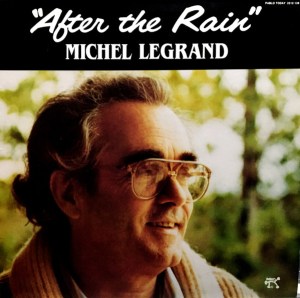
Michel Legrand – After the Rain

More Jazz Recordings of Interest

  • After the Rain returns to the site for the first time in years, here with solid Double Plus (A++) sound throughout this original Pablo pressing
  • Both of these sides are open and spacious with real depth to the soundfield and lots of separation between the various instruments
  • Rich, solid bass; you-are-there immediacy; energy and drive; instruments that are positively jumping out of the speakers – add it all up and you can see that this copy had the sound we were looking for
  • 4 stars: “This high-quality outing features composer Michel Legrand faring quite well as a jazz pianist. He performs six of his compositions with a lyrical septet also including altoist Phil Woods (doubling on clarinet), tenor saxophonist Zoot Sims, trumpeter Joe Wilder, guitarist Gene Bertoncini, bassist Ron Carter, and drummer Grady Tate.”

This album is pure magic! I know of no other jazz album like it. It’s lyrical and moody, yet comes to life at a moment’s notice when the horn players start to feel the spirit. If you’re familiar with the music he wrote for The Thomas Crown Affair (he won an Academy Award for “Windmills of Your Mind”), you may have a good feel for subtle, impressionistic, often moody quality of After the Rain. Or check it out on YouTube (while trying to imagine the sound being at least one million times better).

Michel’s idea was to assemble a group of his favorite musicians, especially those who were ordained in the lyrical persuasion, to record his next album.

With Zoot Sims and Phil Woods trading off stylistically opposed solos within the gentle, subtly ‘French’ atmosphere, aided by guitar, trumpet, Michel’s piano, and rhythm, you have something new, even unique.

Phil Woods doubles on clarinet, and his lead work on “Martina” is the one of the finest examples of jazz clarinet I’ve ever heard. (Art Pepper is another guy who can really swing on the clarinet without sounding dated.)

(more…)

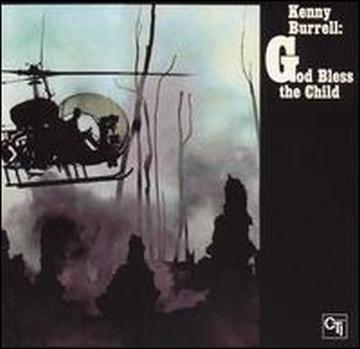
Kenny Burrell – God Bless The Child

More Kenny Burrell

  • Incredible sound throughout this original copy (only the second to hit the site in years), with both sides earning Shootout Winning Triple Plus (A+++) grades or close to them
  • Here are just a few of the things we had to say about this stunning copy in our notes: “spacious and rich guitar and strings”…”big and open and clear”…”jumping out of the speakers”
  • One of our favorite CTI albums, and surely one of the best sounding, especially on this pressing
  • If you’re looking for the best sounding jazz from the 70s and 80s, you might want to check out these titles
  • Credit goes to Rudy Van Gelder once again for the huge space that the superbly well-recorded orchestra occupies
  • 4 stars: “This is Burrell at his level best as a player to be sure, but also as a composer and as a bandleader. Magnificent.”

God Bless The Child is one of our favorite orchestra-backed jazz records here at Better Records. A few others at the top of my list would be Wes Montgomery’s California Dreaming (1966, and also Sebesky-arranged), Grover Washington’s All the King’s Horses (1973) and Deodato’s Prelude (also 1973, with brilliant arrangements by the man himself).

What’s especially notable is how well-recorded the strings are. They have just the right amount of texture and immediacy without being forced or shrill. They’re also very well integrated into the mix. I wouldn’t have expected RVG to pull it off so well — I’ve heard other CTI records where the orchestration was abominable — but here it works as well as on any album I know of.

The bass is deep and defined; the tonality of the guitar and its overall harmonic richness are beautifully rendered. The piano has the weight and heft of the real thing.

This kind of warm, rich, Tubey Magical analog sound is gone forever. You have to go back to 1971 to find it.

The Music

The high point for side one is clearly the first track. It’s got a Midnight Blue relaxed groove going on, the kind that Kenny Burrell seems to be able to bring to any session he plays on. Or maybe it’s the rhythms Ray Barretto works out in the songs that make them so relaxed and swinging at the same time.

Side two is magical from start to finish. The two extended songs, both more than eight minutes in length, leave plenty of room for the band and the orchestra to stretch out.

(more…)

Charles Mingus – Tijuana Moods

More Charles Mingus

  • Tijuana Moods is back on the site for only the second time in four years, here with solid Double Plus (A++) grades or close to them on both sides of this vintage RCA pressing
  • This is Sixties Living Stereo at its best – big, rich and Tubey Magical like you will not believe (particularly on side two)
  • 5 stars: “Mingus at the time said that this was his greatest recording, and it certainly ranks near the top. The passionate playing, exciting ensembles, and high-quality compositions make this a real gem, and it represents one of Charles Mingus’ finest hours.”

This is the way it must have sounded in 1957, when legendary RCA engineers BOB SIMPSON and RAY HALL were sitting behind the board in the New York studios where it was recorded. (more…)