Advice-WTLF, Various

Records with advice on what to listen for in order to separate the best pressings from the also-rans.

I Have to Admit: the Cisco Pressing of Home Again! Had Me Vexed

Reviews and Commentaries for the Music of Doc Watson

Folks, if you made the mistake of buying the Cisco Heavy Vinyl reissue of this album, and you manage to grab one of our Hot Stamper pressings, you are really in for a treat.

I have to confess that when this record came out in 2003 I had a hard time coming to grips with what was wrong with it. I knew I didn’t like it, but I wasn’t sure exactly why. I wasn’t sure exactly what it was doing wrong, if anything. It seemed tonally correct and natural sounding. Why didn’t I like it?

It wasn’t phony up top with sloppy bass like a MoFi.

It wasn’t hard and transistory like so many of the Classic Records pressings back then.

I didn’t know the record at all so I really had nothing to judge it by.

But there was definitely something lacking in the sound that had me confused. Eventually I figured it out. Looking back on it now, the problems with the Cisco I could not identify were these:

  • The Cisco lacks presence. It puts Doc Watson further back than he should be, assuming that he is where he should be on the good vintage pressings, which sound right to me — some better, some worse, of course. Moving him back in the sound field does him no favors.
  • The Cisco lacks intimacy, which is key to the best pressings. The shootout winners remove all the veils and put you in the presence of the living, breathing Doc Watson. The Cisco adds veils and takes the intimacy right out of the record.
  • The Cisco lacks transparency. It frustrates your efforts to hear into the recording.
  • Doc is in a studio, surrounded by the air and ambience that would naturally be found there. The Cisco is airless and ambience-free, with Doc performing in a heavily damped booth of some kind. At least that’s what it sounds like.
  • And the last thing you notice is the lovely guitar harmonics on the originals and early reissues, harmonics that are attenuated and dulled on the Cisco.

As my stereo got better and better, and my critical listening skills improved in tandem, it became more and more obvious to me what was wrong with the Cisco. When we play modern Heavy Vinyl pressings these days, especially albums we know well, it usually doesn’t take us two minutes to hear what they are doing wrong.

(more…)

Listen for a Sweetly Extended Top End on Bang, Baaroom and Harp

Hot Stamper Percussion Recordings Available Now

What to listen for you ask? Top end, plain and simple.

It’s the RARE copy that has the incredible extension of the side two we played recently. The space, the clarity, the harmonic complexity — perhaps one out of ten copies will show you a side two like that.

The highs are so good on this record you can use it as a setup tool. Adjust your VTA, tracking weight and the like for the most natural and clear top end, then check for all the other qualities you want to hear. You may just find yourself operating on a higher sonic plane than you ever thought possible.

Harry Pearson put this record on his TAS List of Super Discs, and rightfully so. It certainly can be a Super Disc, but only when you have the right pressing. It’s a real treat to hear such a crazy assortment of percussion instruments with this kind of amazingly clear, high-resolution sound!

This is one of the Demo Discs on the TAS List which truly deserves its status when, and only when, you have a killer copy.


UPDATE 2025

The last three shootouts for this album were won by the same set of stampers. Here are about a hundred other albums with one set of stampers that consistently win shootouts.

There is only one other set of stampers that we buy apart from those of the shootout winners. We avoid the rest. As a rule this is not our approach, but in the case of this record, having done so many shootouts for it over the course of decades, we can’t be bothered to buy, clean and play the pressings that have little hope of earning good grades.

This album is hard enough to sell as it is, even when it sounds amazing. Like so many other records we offer, we think it should be more popular with audiophiles, especially for those more serious types who don’t mind working at improving their playback.

The best copies are amazingly spacious and three-dimensional. They would probably come in handy for setting up speakers using some of the principles outlined in this discussion of the “room coupling method.”

(more…)

Which Side Lacked Space, and How Did You Figure That Out?

Hot Stamper Pressings of the Music of Linda Ronstadt Available Now

Big, rich, smooth, and sweet, how did George Massenburg pull off this kind of analog sound in 1987?

We don’t know, but we do know good sound when we hear it, and we heard remarkably good sound on this copy.

The first track on side one was big and rich, with vocals that were breathy and present, just the way we like ’em.

The third track was every bit as good, with sound that was rich and weighty. The vocals wer so present and open, sweet and silky. This is exactly what you want on this album.

And the way we know that is we played a bunch of copies and nothing could beat it. This side one took top honors for having sound we described above.

Side two is another matter. We came across a side two that was slightly better than the side one you see here.

How did that kind of thing happen, you ask?

Well, when we played the two best copies back to back, side one of this copy came out on top, earning a grade of 3+, but the side two of another pressing showed us there was even more space in the recording than we noticed the first time around.

We knew side two was “at least 2+,” the crossed-out text you see in the notes.

With another copy earning a better grade, 3 pluses, we felt the right grade for this side two was 2.5+.

(more…)

An Amazingly Good Nashville Skyline, But Side Two Fell Short in One Area

Hot Stamper Pressings of the Music of Bob Dylan Available Now

You just can’t beat a well-produced, well-engineered Columbia from this era. There’s a richness and a naturalness to the sound that’s almost completely disappeared from the modern world of music, and by “modern world” we mean both modern recordings and modern remasterings of vintage recordings.

Practically none of them ever have the qualities of this wonderful record from 1969.

You really do have to go back to these old originals to find it. And then you have to find just the right old originals for it to be there. Here are the notes for one we played not long ago.

As you can see from the notes, side one of our most recent White Hot stamper shootout winning copy was doing everything right. We marvelled at these specific qualities in the sound:

Track three

  • Big and spacious and lively
  • The vocals and guitars are big and weighty and jumping

Track one

  • Spacious and great size and detail
  • Vocals jump out
  • Realistic acoustics

However, we had a side two that was slightly better than the side two you see here.

When we played the two best copies back to back, side one of this copy came out on top, earning a grade of 3+, but the side two of another copy showed us there was potentially even more presence to Dylan’s vocals in the recording than we had assumed. As a consequence, we felt it best to drop side two’s grade a half plus to 2.5+.

Track one

  • Tubey bass
  • Weighty
  • Very full vocals
  • A bit veiled but better than most

Track one on side two was doing practically everything right, but it slightly lacked presence, and for that we dropped the grade one half plus to 2.5+.

Midrange presence is one of the most important qualities of any rock or pop recording we might evaluate, and for a Bob Dylan album it is absolutely essential.

You want Dylan to be front and center, neither recessed nor behind a veil.

To aid you in doing your own evaluations, here is a list of records that we’ve found to be good for testing midrange presence.

(more…)

Lincoln Mayorga Volume 1 and Obvious Pressing Variations

Hot Stamper Pressings of Direct-to-Disc Recordings Available Now

After doing our first shootout many years ago for the record that single-handedly introduced the audiophile community to Direct to Disc recording, Lincoln Mayorga and Distinguished Colleagues, Volume One, I have to confess I was taken aback by the significant pressing variations we heard among the copies we played, 

These LPs are all over the map sonically.

Some Sheffield pressings are aggressive, many of them are dull and lack the spark of live music, some of them have wonky bass or are lacking in the lowest octave — they are prey to every fault that befalls other pressings, direct to disc and otherwise.

Which should not be too surprising. Records are records. Pressing variations exist for every album ever made. If you haven’t noticed that yet, start playing multiple copies of the same album while listening carefully and critically. If your stereo is any good at all, it should not take you long to notice how different one record sounds from another in practically every case.

Biggest problems on S9?

I would have to say smear is Number One.

When the brass loses its bite and the bells don’t have the percussive quality of metal being struck, this is not a good thing. The band also seems to lose energy when the pressing suffers from smear.

Number Two would be a lack of top end extension.

The harmonics of the sax and trumpet are muted on some copies, and the harpsichord really suffers when the top end isn’t all there. This lack of extension is most noticeable on all the lovely bells and percussion instruments that pepper the soundstage, but you can actually hear it on practically every instrument once you recognize the problem. It’s there on guitar harmonics, cymbals and snares, and on down the list.

Linked here are other records that are good for testing these same shortcomings:

(more…)

Top End Extension Is Key on Whipped Cream and Other Delights

Hot Stamper Pressings of Sixties Pop Recordings Available Now

The better pressings have the kind of Tubey Magical, big-bottomed, punchy, spacious sound that we’ve come to expect from Larry Levine‘s engineering for A&M. If you have any Hot Stamper pressings of Sergio Mendes & Brasil ’66’s albums, then you know exactly the kind of sound we’re talking about.

Top end extension is critical to the sound of the best copies. Lots of old records (and new ones) have no real top end; consequently, the studio or stage will be missing much of its natural air and space, and instruments will lack the full complement of harmonic information.

In addition, when the top end is lacking, the upper midrange and high frequencies get jammed together — the highs can’t extend up and away from the upper mids.

This causes a number of much-too-common problems that we hear in the upper midrange of many of the records we play: congestion, hardness, harshness, and squawk.

Painstaking Vertical Tracking Angle adjustment is absolutely critical if you want your records to play with the least amount of these problems, a subject we discuss in the Commentary section of the site at length.

Full-bodied sound is especially critical to the horns.

Any blare, leanness or squawk ruins at least some of the fun, certainly at the louder levels the record should be playing at.

The frequency extremes (on the best copies) are not boosted in any way. When you play this record quietly, the bottom and top will disappear (due to the way the ear handles quieter sounds as described by the Fletcher-Munson curve).

Most records (like most audiophile stereos) are designed to sound correct at moderate levels. Not this album. It wants you to turn it up. Then, and only then, will everything sound completely right musically and tonally from top to bottom.

Bob Dylan Listening Test – Here’s One to Wet Your Whistle

Hot Stamper Pressings of the Music of Bob Dylan Available Now

Presenting today’s Home Audio Exercise. Play your copy of Nashville Skyline — on speakers, no fair cheating on headphones! — and see if you can answer this question. At the beginning of one of the songs on this album two sounds are heard, neither of which is produced by an instrument, but could be said to have been produced by a singer. What are these two mysterious sounds?  

If you have a good copy of the record, a good stereo and the ability to listen critically, you should have no problem figuring out what these sounds are. When you do, drop us an email. Until we come up with a better prize, for now we can offer you an extra 10% off your next order.

Have fun. Once you hear it you will be pretty amazed that you never noticed it before. We sure were.

What’s most striking about this album is the sound of Johnny Cash’s voice in the duet he sings with Bob (we’re on a first name basis, don’t you know). I can’t remember when’s the last time I heard Johnny Cash sound better.

The stuff he did for American Recordings had much to recommend it; the first album sounded especially good. It was practically Mono.

But you just can’t beat a well produced, well engineered Columbia from this era. There’s a richness and a naturalness to the sound that has almost completely disappeared from the modern world of music.

You really do have to go back to these old originals to find it. And then you have to find just the right old originals for it to be there.


Hey, want to find your own top quality copy?

Consider taking our moderately helpful advice concerning the pressings that consistently win our shootouts.

This record has been sounding its best for many years, in shootout after shootout, this way:

Perez Prado (and Better Records) Implore You to Turn Up the Volume

Another in the long list of recordings that sounds its best when you Turn Up Your Volume.

Tube smear is common to most pressings from the late ’50s, and this is no exception. The copies that tend to do the best in a shootout will have the least amount of smear, or none, yet are full-bodied, tubey and rich. Full sound is especially critical to the horns: any blare, leanness or squawk ruins much of the fun, certainly at the loud levels the record should be playing at.

Which brings up a point that needs making. The tonality of this record is correct when it is playing loud. The trumpets do not get harsh at loud volumes the way they will on, say, a Chicago record. The timbre of the instruments is correct when loud, which means that it was mixed loud to sound correct when loud.

The frequency extremes (on the best copies) are not boosted in any way. When you play this record quietly, the bottom and top will disappear (due to the way the ear handles quieter sounds as described by the Fletcher-Munson curve).

Most records (like most audiophile stereos) are designed to sound correct at moderate levels. Not this album. It wants you to turn it up. Then, and only then, will everything sound completely right from top to bottom.

If you like the sound of percussion instruments of every possible flavor, including some you have never tasted before, you will have a hard time finding a more magical recording of them than this. (more…)

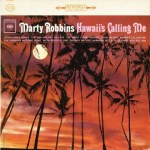
What to Listen For on Hawaii’s Calling Me

More Vintage Columbia Pressings 

The Analog sound of this pressing makes a mockery of even the most advanced digital playback systems, including the ones that haven’t been invented yet. I’d love to play this for Neil Young so he can see what he’s up against. Good Luck, Neil, you’re going to need it.

We’ve been through dozens of Columbia albums from the ’60s since we discovered how good the Marty Robbins titles on Columbia can sound. Most of the popular vocal and country albums we play have an overall distorted sound, are swimming in reverb, and come with hard, edgy, smeary vocals to boot.

To find an album with freakishly good sound such as this involves a healthy dose of pure luck. You will need to dig through an awfully big pile of vinyl to uncover a gem of this beauty.

Vocals Are Key

Like any good Elvis or Nat “King” Cole record, the one quality that is far and away the most important is that the vocals must be full-bodied, rich and smooth. Without that sound, you might as well be playing a CD. This is precisely what both sides here give you – Tubey Magical richness in spades.

Note that the heavy reverb not only sounds right for this music and this era but actually sounds great, the very opposite of the hard, sour, metallic digital reverb that replaced it decades later.

Skip the Mono

Stick with stereo on this title; the monos aren’t worth anybody’s time (scratch that: any audiophile’s time). If you see one for a buck at a garage sale, pick it up for the music, and then be on the lookout for a nice stereo original to enjoy for the sound.

(more…)