 Hot Stamper Pressings of Jazz Piano Recordings Available Now
We played an amazing Hot stamper copy that got the bottom end on this album as right as we’ve ever heard. The contribution of the bass player was clear and correctly balanced in the mix, which we soon learned to appreciate was fundamentally important to the rhythmic drive of the music.
The bass was so tight and note-like you could see right into the soundstage and practically picture Monte Budwig plucking and bowing away.
This is precisely where the 45 RPM pressing goes off the rails.
The bloated, much-too-heavy and poorly-defined bass of the Heavy Vinyl remaster makes a mess of the Brazilian and African rhythms inherent in the music. If you own that $50 waste of money, believe me, you will not be tapping your foot to Cast Your Fate to the Wind or Manha de Carnival.
Our rule of thumb: he better the system, the more second-rate Hoffman’s remastered records will sound when they aren’t just terrible.
Is this the worst version of the album ever made? That’s hard to say.
But it is the worst sounding version of the album we’ve ever played, and that should be good enough for any audiophile contemplating spending money on this kind of trash. Take our advice and don’t do it.
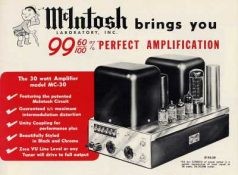 If you like the sound of old McIntosh tube equipment like the Mac 30s shown here, a sound Steve Hoffman apparently cannot get enough of, these remastered records have your name all over them.
We don’t sell junk like this, but every other audiophile record dealer does, because most of the current group of mastering engineers making records for audiophiles have somehow gotten into their heads that this is the way records should sound.
We’ve been telling them they are wrong about that for years now, that good records have never sounded this way, but the collectors and audiophiles of the world keep buying their wares, so why should they listen to us?
If you want to know what a properly-mastered, properly-pressed copy sounds like, we put the last one up in 2023.
What to Listen for
The arrangement of the players is straightforward, with the bass hard left, drums hard right (with leakage well to the left on the cymbals, but that’s another story), and Guaraldi on piano in the center. (The first track of side two reverses this arrangement; why I have no idea.)
Here’s the crazy thing about this recording: The best copies really connect up — tie together — the space each of the players is in. I heard it during the shootout, and I can’t recall if it actually happened more than once or twice, but I know I heard it. They are all live, they are all on the same soundstage, but on most copies you would never know it. They sound like they are playing in booths, the ambience never extending very far in any direction.
The best copies have so much ambience that one player’s space extends all the way to the edge of the other player’s space. The effect, though rare, is nothing less than magical.
Other Options
The early colored vinyl mono pressing we played was awful in every way. Steer clear at anything more than a buck.
As we mentioned earlier, we flushed good money down the drain in order to suffer through the 45 Analogue Productions cutting of the album. What a mess. Ridiculously bloated overblown bass is its major shortcoming, but compression and an overall lifeless quality are obvious problems that made us give up on it pretty quickly.
This is the kind of sound that audiophiles want? I find that hard to believe. It’s what they’re stuck with because the good early pressings are just too hard to find and too noisy and groove damaged when you do find them.
Most pressings of this album, the OJC and the later reissues especially, are just plain awful, so for the typical audiophile record collector the 45 might actually be a step up over those pressings. Like so much of the heavy vinyl we have played in the last few years, we did not find the sound enjoyable or compelling. I would venture a guess that the DCC gold CD is clearly better overall.
Further Reading
Here are some of our reviews and commentaries concerning the many Heavy Vinyl pressings we’ve played over the years, well over 300 at this stage of the game in 2025.
Even as recently as the early 2000s we were still at least somewhat impressed with some of Heavy Vinyl pressings. If we had never made the progress we’ve worked so hard to make over the course of the last twenty or more years, perhaps we would find more merit in the Heavy Vinyl reissues so many audiophiles are enamored with these days.
We’ll never know of course; that’s a bell that can be unrung. We did the work, we can’t undo it, and the system that resulted from it is merciless in revealing the truth — that these newer pressings are second-rate at best and much more often than not third-rate and even worse.
Some audiophile records have such bad sound that I was pissed off to the point of creating a special sh*t list for them. As of 2025, it contains close to 300 titles. That is a lot of bad sounding audiophile records! I should know, I played an awful lot of them. (Having now retired, I’m pleased to be able to leave that job in the more than capable hands of the listening crew at Better Records.)
Setting higher standards — no, being able to set higher standards — in our minds is a clear mark of progress. Judging by the hundreds of letters we’ve received, especially the ones comparing our records to their Heavy Vinyl and Half-Speed mastered counterparts, we know that our customers see things the same way.
Further Reading