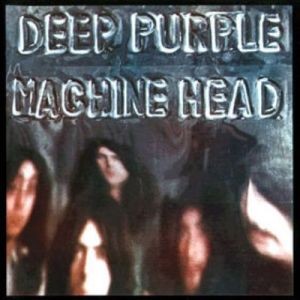
- This UK import pressing was doing just about everything right, with both sides earning seriously good grades
- Amazingly spacious and three-dimensional, no doubt the result of the album being recorded practically live in the studio – the sound is HUGE, with real energy, presence and whomp
- Their superbly talented engineer, Martin Birch, recorded the big, bold, rich, smooth sound of British Rock about as well as anyone ever did
- 5 stars: “Machine Head was anything but a one-trick pony, introducing the bona fide classic opener “Highway Star,” which epitomized all of Deep Purple’s intensity and versatility while featuring perhaps the greatest soloing duel ever between guitarist Ritchie Blackmore and organist Jon Lord.”
- It’s our pick for the band’s best sounding studio album. Roughly 150 other listings for the best recording by an artist or rroup can be found here.
When you get a Hot Stamper pressing like this one, Machine Head is a True Rock and Roll Demo Disc. Since our stereo is all about playing these kinds of records, and playing them at good loud levels as nature — and the artists — intended, we had a helluva time with Machine Head.
It had the kind of presence and energy that puts most copies of this album to shame. It’s also amazingly spacious, the result no doubt of it being recorded practically live in the studio. On the best copies, you can really hear the sound bouncing off the studio walls, just as you can on the best Zep, AC/DC and Bad Co. albums. You can just tell they are all playing this one live: it’s so relaxed and natural and REAL sounding.
The vocalist is surely in a booth, but everyone else seems to be in a lively studio. With lovely extension up top, this was a very sweet copy that cried out to be turned up good and loud. The louder we played it the better it sounded.
The best pressings give you exactly what you want from this brand of straight-ahead rock and roll: presence in the vocals; solid, note-like bass; big punchy drums, and the kind of live-in-the-studio energetic, clean and clear sound. (AC/DC is another band with that kind of live studio sound. With big speakers and the power to drive them YOU ARE THERE.)
What The Best Sides Of Deep Purple’s Masterpiece From 1972 Have To Offer Is Not Hard To Hear
- The biggest, most immediate staging in the largest acoustic space
- The most Tubey Magic, without which you have almost nothing. CDs give you clean and clear. Only the best vintage vinyl pressings offer the kind of Tubey Magic that was on the tapes in 1972
- Tight, note-like, rich, full-bodied bass, with the correct amount of weight down low
- Natural tonality in the midrange — with all the instruments having the correct timbre
- Transparency and resolution, critical to hearing into the three-dimensional studio space
No doubt there’s more but we hope that should do for now. Playing the record is the only way to hear all of the qualities we discuss above, and playing the best pressings against a pile of other copies under rigorously controlled conditions is the only way to find a pressing that sounds as good as this one does.
Domestic or Heavy Vinyl? Get Real!
I’m guessing that very few people have ever heard this record sound this good. The average copy is really a piece of trash, as is the awful Rhino 180 gram version that was remastered a while back. This is the way to go.
Forget the domestic pressings, they’re clearly made from dub tapes. Some are better than others, but none can compete with the best British pressings such as this one.
What We’re Listening For On Machine Head
- Energy for starters. What could be more important than the life of the music?
- Then: presence and immediacy. The vocals aren’t “back there” somewhere, lost in the mix. They’re front and center where any recording engineer worth his salt — Martin Birch in this case — would have put them.
- The Big Sound comes next — wall to wall, lots of depth, huge space, three-dimensionality, all that sort of thing.
- Then transient information — fast, clear, sharp attacks, not the smear and thickness so common to these LPs.
- Tight punchy bass — which ties in with good transient information, also the issue of frequency extension further down.
- Next: transparency — the quality that allows you to hear deep into the soundfield, showing you the space and air around all the instruments.
- Extend the top and bottom and voila, you have The Real Thing — an honest to goodness Hot Stamper.
Side One
Highway Star
Maybe I’m a Leo
Pictures of Home
Never Before
Side Two
Smoke on the Water
Lazy
Space Truckin’
AMG 5 Star Rave Review
Led Zeppelin’s fourth album, Black Sabbath’s Paranoid, and Deep Purple’s Machine Head have stood the test of time as the Holy Trinity of English hard rock and heavy metal, serving as the fundamental blueprints followed by virtually every heavy rock & roll band since the early ’70s…
Machine Head was anything but a one-trick pony, introducing the bona fide classic opener “Highway Star,” which epitomized all of Deep Purple’s intensity and versatility while featuring perhaps the greatest soloing duel ever between guitarist Ritchie Blackmore and organist Jon Lord.
Also in top form was singer Ian Gillan, who crooned and exploded with amazing power and range throughout to establish himself once and for all as one of the finest voices of his generation, bar none.
this is the best album I have ever heard. I have heard 1000’s of albums.
Which pressing do you have?
TP