More Direct-to-Disc Recordings
More Jazz Piano Recordings
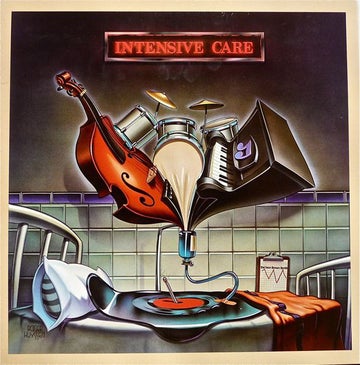
- Both sides of this amazing Discwasher direct-to-disc Japanese import earned STUNNING Shootout Winning Triple Plus (A+++) sonic grades
- Here are just a few of the things we had to say about this incredible copy in our notes: “so big and roomy”…”no veil at all” (side one)…”huge and rich with a power low-end”…”very articulate and round piano”…”tubey and weighty”…”best bass, deep and note-like” (side two)
- One of our all time favorite direct-to-discs; Piano Trio doesn’t get much better than this
- Paul Smith is an underrated jazz player – most of his albums as a leader are forgettable (we should know, we’ve played a bunch of them), but on this album he swings and really makes music with his two bandmates
- The playing is extremely energetic and involving, the sound is some of the best we’ve heard, and the engineering is by Phil Schier, who also recorded another favorite direct disc of ours, Friendship, and we recommend both albums highly
- If you want a good jazz direct-to-disc, you would be hard pressed to find one better than this
- If you’re a fan of piano trio jazz recordings, recorded direct to disc or otherwise, this is a killer record from 1978 that belongs in your collection.
This record probably doesn’t have the reputation it deserves because it came out on the Discwasher label, which to my knowledge, only made one good record, this one. The same metalwork would have been used to make the version Pausa released, and that fairly common pressing may be virtually identical to this Discwasher pressing.
This vintage Discwasher pressing has the kind of Tubey Magical Midrange that modern records can barely BEGIN to reproduce. Folks, that sound is gone and it sure isn’t showing signs of coming back. If you love hearing INTO a recording, actually being able to “see” the performers, and feeling as if you are sitting in the studio with the band, this is the record for you. It’s what vintage all analog recordings are known for — this sound.
If you exclusively play modern repressings of vintage recordings, I can say without fear of contradiction that you have never heard this kind of sound on vinyl. Old records have it — not often, and certainly not always — but maybe one out of a hundred new records do, and those are some pretty long odds.
What the Best Sides of Intensive Care Have to Offer Is Not Hard to Hear
- The biggest, most immediate staging in the largest acoustic space
- The most Tubey Magic, without which you have almost nothing. CDs give you clean and clear. Only the best vintage vinyl pressings offer the kind of Tubey Magic that was on the tapes in 1978
- Tight, note-like, rich, full-bodied bass, with the correct amount of weight down low
- Natural tonality in the midrange — with all the instruments having the correct timbre
- Transparency and resolution, critical to hearing into the three-dimensional studio space
No doubt there’s more but we hope that should do for now. Playing the record is the only way to hear all of the qualities we discuss above, and playing the best pressings against a pile of other copies under rigorously controlled conditions is the only way to find a pressing that sounds as good as this one does.
Copies with rich lower mids and nice extension up top did the best in our shootout, assuming they weren’t veiled or smeary of course. So many things can go wrong on a record! We know, we’ve heard them all.
Top end extension is critical to the sound of the best copies. Lots of old records (and new ones) have no real top end; consequently, the studio or stage will be missing much of its natural air and space, and instruments will lack their full complement of harmonic information.
Tube smear is common to most vintage pressings and this is no exception. The copies that tend to do the best in a shootout will have the least (or none), yet are full-bodied, tubey and rich.
What We’re Listening For on Intensive Care
- Energy for starters. What could be more important than the life of the music?
- The Big Sound comes next — wall to wall, lots of depth, huge space, three-dimensionality, all that sort of thing.
- Then transient information — fast, clear, sharp attacks, not the smear and thickness so common to these LPs.
- Tight punchy bass — which ties in with good transient information, also the issue of frequency extension further down.
- Next: transparency — the quality that allows you to hear deep into the soundfield, showing you the space and air around all the instruments.
- Extend the top and bottom and voila, you have The Real Thing — an honest to goodness Hot Stamper.
Side One
The Lady Is A Tramp
Yesterdays
Everything Happens To Me
On A Clear Day
Side Two
Surrey With The Fringe On Top
My Heart Stood Still
Chicago
Lover
I just now discovered this spectacular review of Intensive Care. Thank you for the kind words. My name is Jeffrey Weber and I am the producer of this recording. I approached Paul, Ray and Luis with the idea of doing a direct disc recording. Paul was the leader and he agreed to do this. There’s lots more to this story if you’re interested. All I can say is this was my first record as producer. And that’s just the beginning. Cheers, Jeff
Jeff,
Thanks for writing. We love the record but it is unfortunately not one that is widely known in the audiophile record world.
We love it but it is a tough sell, but that seems to be true for most direct to disc recordings. They don’t have the appeal they did twenty and thirty years ago.
I note that you produced a lot of digital recordings in your career. What did you think of their sound back then and what do you think of their sound now?
Best, TP
So sorry it took so long for me to respond! I just now saw your note. Yup, the Discwasher label did nothing to promote the album, and that’s because they really weren’t a true label, as you and I know labels to be. I think it was more of an experiment than anything else. I proposed the whole project, and had lots of help from Jim Hall, who worked at Discwasher at the time and enjoyed the ideas. Bruce Maier, head of Discwasher then, also liked the ideas.
Re digital sound, I really had issues with digital recordings in the early days. Shrill, strident in the upper registers with no true sonic balance. Once D to A converters came into their own and the sampling rates increased, the products became more tolerable. Still, in my humble opinion, you can’t beat a great analog recording. But, as you know, these days, those are few and far between.
Cheers,
Jeff
Jeff,
I never realized that Discwasher wasn’t really a label but that makes perfect sense. I don’t recall seeing their albums in record stores, just audiophile showrooms. The “audiophile jazz record” craze seems to have ended quickly.
But a few from that period are still favorites of mine, especially The Three on Eastwind. And of course Intensive Care.
Best, TP
Cannot tell you how much I appreciate the kind words. That was my very first production, and it was a direst disc recording, at that. The trio had to record each side, in its entirety, directly to the lacquer, which they did with surprising ease. Still boggles my mind how we pulled it off.
Glad you did pull it off!
TP