 Hot Stamper Pressings of the Music of Deep Purple Available Now
What a murky mess. The sound is dead as a doornail.
It’s yet another audiophile record hall of shame pressing, a Heavy Vinyl disaster if there ever was one.
Is it the worst version of the album ever made?
That’s hard to say. But it is the worst sounding version of the album we’ve ever played, and that should be good enough for any audiophile contemplating spending money on this kind of trash. Take our advice and don’t do it.
If you like the sound of old McIntosh tube equipment such as the Mac 30s shown here, a sound Steve Hoffman apparently cannot get enough of, DCC is the label for you.
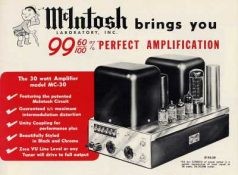 We don’t sell junk like this, but every other audiophile record dealer does, because most of the current group of mastering engineers making records for audiophiles have somehow gotten into their heads that this is the way records should sound.
We’ve been telling them they are wrong about that for years now, that good records have never sounded this way, but the collectors and audiophiles of the world keep buying their wares, so why should they listen to us?
What a Fool Believes
I used to like some of the DCC vinyl titles just fine too. Didn’t play them very often, but I liked what I heard when I did.
Then my stereo got a lot better. Eventually it became obvious to me what was wrong with practically all of the Heavy Vinyl pressings put out by that label. (That story from 1998 gets told in some detail here.)
Heavy Vinyl
The good Heavy Vinyls can be found in this group, along with other Heavy Vinyl pressings we liked or used to like.
The bad Heavy Vinyls can be found in this group. And those in the middle end up in this group.
Audio and record collecting (they go hand in hand) are hard. If you think either one is easy you are very likely not doing it right, but what makes our twin hobbies compelling enough to keep us involved over the course of a lifetime is one simple fact, which is this: Although we know so little at the start, and we have so much to learn, the journey itself into the world of music and sound turns out to be both addictive and a great deal of fun.
Every listing in this section is about knowing now what I didn’t know then, and there is enough of that material to fill its own blog if I would simply take the time to write it all down.
Every album shootout we do is a chance to learn something new about records. When you do them all day, every day, you learn things that no one else could possibly know who hasn’t done that work, comparing thousands of pressings with thousands of other pressings.
The law of large numbers tells us that in the world of records, more is better. We’ve taken that law and turned it into a business.
What We Believe
We believe it is the only way to find Better Records.
Not the records that you think are better, were told are better, expect to be better, or want to be better.
No, truly better records are the records that have proven themselves to be better empirically. They can only be found by the use of rigorous scientific methodologies. Fortunately for some, these methodologies are laid out in detail for anyone to read and follow right here on this blog.
Being willing to make lots of mistakes is part of our secret, and we admit to making lots and lots of them.
Knowing what I know now, and having access to the system that I’ve put together over the course of the last twenty years or so, I guarantee you the DCC Gold CD is dramatically better sounding than their vinyl release. They almost always are.
Steve Hoffmann brilliantly mastered many classic albums for DCC. I much prefer the DCC’s CDs to their records.
DCC’s CDs did not have to fight their way through Kevin Gray’s opaque, airless, low-resolution cutting system, a subject we have discussed on the blog in some depth here.
Whether made by Speakers Corner, DCC, AP or any other label, starting at some point in the mid-90s, the sound these labels produced had an infuriating tonal balance problem we hear in practically every pressing they made.
A tonal balance that is just too damn smooth.
The phony boosted highs of the bad old audiophile pressing days are gone, replaced by the phony rolled off highs of today.
(Bernie Grundman cut hundreds of records for Classic Records starting in the 90s, and it’s clear he chose to go a different way, but his way turned out to be every bit as problematical.)
Are You Better Off?
Are the audiophiles who buy these new, super-smooth records any better off?
The ones with bright, phony systems probably are.
As we have been saying for years, first you need to have reasonably good sound. Then you can buy records that actually are good.
Further Reading