More of the Music of Elton John
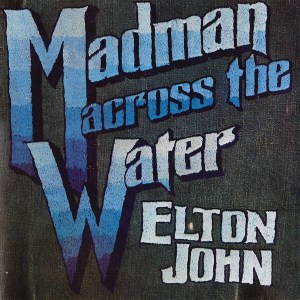
- Madman is finally back on the site, here with a KILLER Shootout Winning Triple Plus (A+++) side two mated to a solid Double Plus (A++) side one, and vinyl that’s about as quiet as we can find it these days
- A ridiculously tough album to find with the right sound and clean surfaces, which is why we so rarely have them on the site
- The last of the classic albums Elton recorded at Trident, the best of which have more Tubey Magic than anything that came after
- Problems in the vinyl are sometimes the nature of the beast with these vintage LPs – there simply is no way around them if the superior sound of vintage analog is important to you
- 4 1/2 stars: “The record remains an ambitious and rewarding work, and John never attained its darkly introspective atmosphere again.”
This Madman is guaranteed to blow your mind.
The amount of effort that went into the recording of this album is comparable to that of the engineers and producers of bands like Supertramp, Yes, Jethro Tull, Pink Floyd, The Beatles (of course) and far too many others to list. This is some of the best high-production-value rock music of the ’70s.
It seems that no effort or cost was spared in making the home listening experience as compelling as the recording technology of the day permitted. Of course, as it turns out, recording technology only got worse as the decade wore on, and during the ’80s the sound of most Big Rock records went off a cliff.
What The Best Sides Of Madman Across the Water Have To Offer Is Not Hard To Hear
- The biggest, most immediate staging in the largest acoustic space
- The most Tubey Magic, without which you have almost nothing. CDs give you clean and clear. Only the best vintage vinyl pressings offer the kind of Tubey Magic that was on the tapes in 1971
- Tight, note-like, rich, full-bodied bass, with the correct amount of weight down low
- Natural tonality in the midrange — with all the instruments having the correct timbre
- Transparency and resolution, critical to hearing into the three-dimensional studio space
No doubt there’s more but we hope that should do for now. Playing the record is the only way to hear all of the qualities we discuss above, and playing the best pressings against a pile of other copies under rigorously controlled conditions is the only way to find a pressing that sounds as good as this one does.
Madman Is Lush
You don’t need tube equipment to hear the prodigious amounts of Tubey Magic that exist on the better copies of Madman. For those of you who’ve experienced top quality analog pressings of Meddle or Dark Side of the Moon, or practically any jazz album on Contemporary, whether played through tubes or transistors, that’s the luscious sound of Tubey Magic, and it is all over the album.
The problem is that most British copies — the only ones that have any hope of sounding good in our experience — don’t have all the Tubey Magic that can be heard on the best copies. They are simply not as rich, tubey, and LUSH as the best that we’ve played.
This is the one quality that separates the winners of the shootout from the copies that come in second or third.
Other Qualities Matter Too Of Course
Lushness isn’t the only thing to listen for of course. The rich copies shouldn’t be too rich, to the point of being murky and muddy. Achieving just the right balance of Tubey Magical Madman Sound with other qualities we prize such as space, clarity, transparency and presence is no mean feat.
The Moody Blues albums have exactly the same issues. Finding Moodies pressings that do it all is every bit as difficult as finding a copy of Madman that does it all.
You’ll Know
Having said all that, it has been our experience that one copy in the shootout will make clear what the ideal blend of all the elements is. It will have the right balance of Tubey Magic, clarity, space, weight, top end and all the rest.
When you find yourself lost in the music of Madman because the copy playing has that right sound, it shouldn’t be hard to recognize it. When the record is not only doing what it’s supposed to do, but doing more than you ever expected it could do, with more energy, more dynamics, more bass, more clarity, on a stage that’s wider, taller and deeper than you thought it could be, that’s when you know you have reached the highest level of reproduction.
This will happen on each side independently of the other. That’s just the way records work. Sometimes a copy has two matching sides with that ideal blend but on Madman, a ridiculously difficult record to master and press properly, chances are good that one copy of the record will win for one side and a different copy will win for the other.
What We’re Listening For On Madman Across the Water
- Energy for starters. What could be more important than the life of the music?
- Then: presence and immediacy. The vocals aren’t “back there” somewhere, lost in the mix. They’re front and center where any recording engineer worth his salt would put them.
- The Big Sound comes next — wall to wall, lots of depth, huge space, three-dimensionality, all that sort of thing.
- Then transient information — fast, clear, sharp attacks, not the smear and thickness so common to these LPs.
- Tight punchy bass — which ties in with good transient information, also the issue of frequency extension further down.
- Next: transparency — the quality that allows you to hear deep into the soundfield, showing you the space and air around all the instruments.
- Extend the top and bottom and voila, you have The Real Thing — an honest to goodness Hot Stamper.
Extraordinary Engineering
This is the last of the classic Elton John albums recorded at Trident, the best of which have more Tubey Magic than anything recorded afterwards. There are three amazing sounding Elton John records on our Top 100 list, two of them engineered by the estimable Robin Geoffrey Cable, Trident Studios’ house engineer in 1972.
His work on Tumbleweed, the first album and Madman here mark him as one of the All Time Greats in my book.
Elton John Shootouts
Elton John is one of the handful of artists to produce an immensely enjoyable and meaningful body of work throughout the ’70s, music that holds up to this day. The music on his albums, so multi-faceted and multi-layered, will endlessly reward the listener who makes the effort and takes the time to dive deep into the sound of his classic releases.
Repeated plays are the order of the day. The more critically you listen, the more you are sure to discover within the exceedingly dense mixes favored by Elton and his bandmates. And the better your stereo gets the more you can appreciate the care and effort that went into the production of the recordings.
Elton John albums always make for tough shootouts. His producers’ (Gus Dudgeon being the best of them) and engineers’ (Ken Scott and Robin Geoffrey Cable, likewise the best) approach to recording — everything-but-the-kitchen-sink as a rule — make it difficult to translate their complex sounds to disc, vinyl or otherwise.
Everything has to be tuned up and on the money before we can even hope to get the record sounding right. Careful VTA adjustment could not be more critical in this respect.
If we’re not hearing the sound we want, we keep messing with the adjustments until we do. There is no getting around sweating the details when sitting down to test a complex recording such as this. If you can’t stand the tweaking tedium, get out of the kitchen (or listening room as the case may be). Obsessing over every aspect of record reproduction is what we do for a living. Pink Floyd’s recordings require us to be at the top of our game, both in terms of reproducing their albums as well as evaluating the merits of individual pressings.
When you love it, it’s not work, it’s fun. Tedious, occasionally exasperating fun, but still fun nonetheless.
Side One
Tiny Dancer
Levon
Razor Face
Madman Across the Water
Side Two
Indian Sunset
Holiday Inn
Rotten Peaches
All the Nasties
Goodbye
AMG Review
Trading the cinematic aspirations of Tumbleweed Connection for a tentative stab at prog rock, Elton John and Bernie Taupin delivered another excellent collection of songs with Madman Across the Water.
Like its two predecessors, Madman Across the Water is driven by the sweeping string arrangements of Paul Buckmaster, who gives the songs here a richly dark and haunting edge. And these are songs that benefit from grandiose treatments. With most songs clocking in around five minutes, the record feels like a major work, and in many ways it is.
While it’s not as adventurous as Tumbleweed Connection, the overall quality of the record is very high, particularly on character sketches “Levon” and “Razor Face,” as well as the melodramatic “Tiny Dancer” and the paranoid title track. Madman Across the Water begins to fall apart toward the end, but the record remains an ambitious and rewarding work, and John never attained its darkly introspective atmosphere again.