Not sure how much of this video you can stand — nothing could interest me less than watching a couple of vinyl enthusiasts spouting off on what they think about some random records sitting in a local store’s bins.
But one or two bits caught my eye. I thought I might take the opportunity to share my take on them with you.
Is there any value to the comments of these two collectors? If you care about what music they like, perhaps. Anything about what to look for on the label or jacket that might correspond to better sound? If it’s there I sure didn’t see it, but I admit to speeding through most of it, so I can’t say for sure.
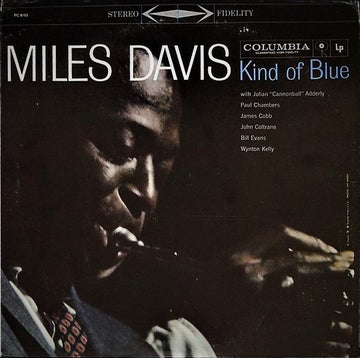
The first bit I refer to above is at 18:42. The album in question is the legendary Kind of Blue. At this point the unseen helmet-cammed audiophile picks up the record, recognizes the cover, and proceeds to pull the record out to see what era the pressing is from.
Drat! The disappointment in this audiophile’s voice is palpable as he drops the record back in the bin with his dismissive comment that “it’s a later pressing.”
But we here at Better Records would be falling all over ourselves to get our hands on that later pressing.
Those late pressings can and often do win shootouts. We would never look down our noses at a Red Label Columbia jazz LP, and neither should you.
UPDATE 2025
As good as the best pressings on the Red Label can sound, it has been years since one won a shootout. Here is our commentary for a recent 70s copy that went up on the site, one that earned a Super Hot grade on both sides.
They tend to sell for four or five hundred dollars these days. Why so much you ask? Because they beat the pants off of every so-called audiophile pressing of the album ever made. The testimony of one of our customers does a good job of describing the differences.
In addition, it turns out that at least nine out of ten of the copies with the red label are not remotely as good as the ones that earn Super Hot grades. The good ones are so rare that we only pick them up locally since practically none of the ones we find on the web have the right stampers. Trying to find the right red label needle in the haystack is more trouble than it’s worth, so don’t expect to see many coming to the site.
Our intrepid audiophile explorer does much the same thing about 23 minutes in. It seems pretty clear to us that he has no respect for such reissues, another example of one of the most common myths in record collecting land, the myth that the original pressing is always, or to be fair, usually better.
This is simply not true, and those of our customers who have purchased White Hot Stamper pressings from us that turned out to be reissues know exactly what I am talking about. This is especially true for the records we sell by The Beatles. No original pressing has every won a shootout. [With one exception.]
Let’s get back to Kind of Blue.
Is the 50s original always better, is the 70s reissue always better, is the 60s 360 pressing always better?
No to one, two and three.
Why? Because no pressing is always better. All pressings are unique and should only be judged on their merits, and you do that by playing them, not by looking at their labels. For us this truth is practically axiomatic. It is in fact the premise of our entire business. Over the course of the 28 years we have been selling records we have never found any compelling evidence to invalidate it.
The day that someone can accurately predict the sound quality of a specific record by looking at the label or cover is a day I do not expect to come, ever.
UPDATE 2025
The above is somewhat misleading. With enough clean 6-Eye pressings on hand to play in a shooout, one of them will win.
That being the case, we have created two lists for those who would like to know which Columbia labels win shootouts — one for 6-Eye winners and one for 360 Label winners.