label-collectors

Thoughts on collecting records by their labels.

We think it’s mostly a bad idea, and here’s why.

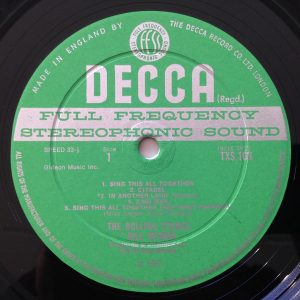
How Good Are the UK Original Unboxed Deccas of Satanic Majesties?

Hot Stamper Pressings of the Music of The Rolling Stones Available Now

How good are the original Unboxed Deccas on Satanic Majesties?

They can be very good.

But they are never as good as the right later pressings with the Decca in a box label, the ones produced from about 1970 on.

The Unboxed Decca pressing earned a Super Hot Stamper grade (A++). The later pressing, with the right stamper, showed us just how good the album can sound.

Since the originals are pricey and hard to find, and, as a rule, noisier than the later pressings, we don’t pick them up unless we find them for cheap, which rarely happens. They have not won any shootouts, and that is very unlikely to change.

There is one set of stampers for this album that always wins, and those stampers are not found on the early label.

(more…)

The Planets – Can You Imagine Sound this Bad from a TAS List Super Disc?

Hot Stamper Classical and Orchestral Pressings Available Now

We can, we played it.

Or, to be more correct, we played them. Two pressings, each with one good side and one very bad side.


UPDATE 2025

Take all of this with a very large grain of salt. In the course of doing more shootouts for the Mehta Planets, we’ve played quite a number of different pressings and now believe — believe being the operative word — we know which are the best stampers.

It is very unlikely that any Dutch pressing would be competitive with the best UK-pressed copies cut by Harry Fisher.

For those of you who just want a good sounding copy of The Planets to play and enjoy, our favorite by far is Previn’s reading on EMI from 1974.

We know of no better performance, and we much prefer the dramatically more natural sound quality.

The Mehta recording, like much of what he recorded for Decca in those days, is a multi-miked mess, the kind we grew out of (for the most part) a long time ago. (More of the multi-miked records we’ve auditioned, of varying quality to be sure, can be found here.)


Our old commentary (please excuse the heavy-handed caps):

This 2-pack from many years ago (ten fifteen perhaps), described below, boasts White Hot Stamper sound on side two for the Mehta Planets. Yes, it IS possible. Side two shows you what this record is actually capable of — big WHOMP, no SMEAR, super SPACIOUS, DYNAMIC, with an EXTENDED top.

It beat every London pressing we threw at it, coming out on top for our shootout. Folks, we 100% guarantee that whatever pressing you have of this performance, this copy will trounce it.

But side one of this London original British pressing was awful.

We wrote it off as NFG after about a minute; that’s all we could take of the bright, hard-sounding brass of War.

If you collect Super Discs based on their catalog numbers and labels and preferred countries of manufacture, you are in big trouble when it comes time to play the damn things.

That approach doesn’t work for sound and never did.

If your stereo is any good, this is not news to you. The proof? The first disc in this 2-pack is Dutch. It earned a Super Hot grade in our blind test, beating every British copy we played against it save one. Side two however was recessed, dark and lifeless. Another NFG side, but the perfect complement to our White Hot British side two!

(more…)
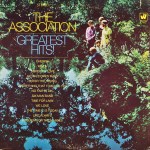
The Association Greatest Hits – Gold, Green or Palm Tree?

Hot Stamper Pressings of Sixties Pop Recordings Available Now

UPDATE 2025

This commentary was written way back in 2008. It appears to confirm much of the conventional wisdom we criticize when it comes to records and the sonic qualities of their various pressings, but sometimes the conventional wisdom turns out to be right.

Not just sometimes, but most of the time. That’s why rules of thumb seem to work more often than not.

It’s all the times that they don’t work that are the problem, the exceptions to the rule, especially if one of those exceptions just happens to be a favorite album of yours.

Then you’re really up a creek. You followed a general rule that sometimes works and sometimes fails and now you really don’t know of any other way to solve the problem. Fortunately for readers of this blog, we do.

For more on The Association, please click here.


The sound on this record is as good as this album gets. Don’t think you’re too cool to enjoy this 60s pop rock. These songs are still a blast and very enjoyable. The sound on this record is as good as this album gets. 

I did a shootout with this copy and a later pressing just now, after having just listed a Gold Label Original LP of Insight Out, which allowed me to compare the sound of three different generations of Warner Brothers records.

I heard pretty much what you would expect to hear. The best Gold Label pressings have the most sweetness, richness, the best bass (amazingly good for a ’60s pop recording) and the most Tubey Magic.

The Green Label Greatest Hits sounds very sweet and analog, but it’s obviously made from sub-generation copy tapes, as Greatest Hits albums usually are. Still the sound is very smooth and sweet. There is a loss of transparency but the tonality is correct.

The Palm Tree Label pressing, the best sounding one I’ve ever heard by the way, is brighter and more modern sounding. On some tracks that brightness helps cut through the murk, but most of the time it sounds more transistory and less musical.

So this Green Label copy has the best sound for all the hits. If you want better sound, you have to find the right pressings of the individual albums. Since most of those are full of filler, this is actually a pretty good way to go.

(more…)

Labels, Patterns and Reasoning in a Circle

Hot Stamper Pressings of Orchestral Music Available Now

This commentary was written more than ten years ago. It seems to be holding up just fine though, especially considering just how bad some of the Heavy Vinyl pressings we’ve played recently sounded.


RFR1/ 2This pressing has DEMONSTRATION QUALITY SOUND.

Here is the sound that Mercury is famous for: immediate, dynamic and spacious. This record lives up to the Mercury claim: You immediately feel as though you are in the Living Presence of the orchestra.

This is precisely the kind of record that Speakers Corner would not have a clue how to master. I’d stake my reputation on it, for what that’s worth.

As you may know, I am a critic of the new [now long in the tooth] Speakers Corner Mercury series, and I can tell you without ever hearing their version of this recording that there is NO CHANCE IN THE WORLD they will ever cut a record that sounds like this.

It’s alive in a way that none of their pressings would even begin to suggest.

If you don’t believe me, please buy this record and play it for yourself. If you don’t agree, I will refund your money and pay the domestic shipping back.

This record also gives the lie to those who think that Vendor pressings are inferior. This is a Vendor and I would be surprised if there’s a better sounding copy than this one. I’ve certainly never heard one.

People who like to read labels and find some sort of pattern or connection between the label and the sound of the record are living in a world of their own making.

A world that exists solely in their heads.

The stamper numbers are the only thing that can possibly mean anything on a record, and even those are subject to so much variation from pressing to pressing that they become little more than a vague, general guide.

This LP is a good example of a record that a certain kind of record collector might pass up, hoping to find a better sounding non-Vendor pressing.

Of course, the circular reasoning that would result is that such a collector would buy the non-Vendor pressing, possibly with the exact same stamper numbers, hear how good it sounded, and congratulate himself on the fact that the non-Vendor pressings always sound so much better.

All without ever having done a comparison. A good way to never be wrong.

(more…)

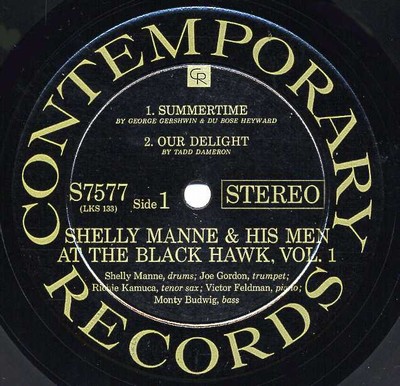
Black, Green, Yellow, Orange – Which Contemporary Label Has the Best Sound?

Hot Stamper Pressings of Contemporary Jazz Albums Available Now

Our Hot Stamper commentary from a long-ago shootout we’d done for the wonderful Helen Humes album Songs I Like to Sing discusses the sonic characteristics we find most commonly associated with the various Contemporary labels.

This Contemporary Black Label Original LP has that classic tube-mastered sound — warmer, smoother, and sweeter than the later pressings, with more breath of life. Overall the sound is well-balanced and tonally correct from top to bottom, which is rare for a black label Contemporary, as they are usually dull and bass-heavy.

We won’t buy them locally anymore unless they can be returned. I’ve got a box full of Contemporarys with bloated bass and no top end that I don’t know what to do with.


UPDATE 2020

This commentary was written a long time ago. There are no boxes full of Contemporary records laying around in the back room. The ones that don’t sound good were sold off years ago.


Like most mediocre-to-bad sounding records we’ve auditioned, they just sit in a box taking up space. All of our time and effort goes into putting good pressings on the site and in the mailings. It’s hard to get motivated to do anything with the leftovers. We paid plenty for them, so we don’t want to give them away, but they don’t sound good, so most of our customers won’t buy them.

(more…)

Is The Pink Label The Hot Ticket for Jethro Tull’s Brilliant Stand Up Album?

Hot Stamper Pressings of the Music of Jethro Tull Available Now

Well, it certainly can be, but sometimes it isn’t, and failing to appreciate that possibility is a classic case of misunderstanding a crucially important fact or two about records. Audiophile analog devotees would do well to keep these facts in mind, especially considering the prices original British pressings are fetching these days.

Simply put: Since no two records sound alike, it follow that the right label doesn’t guarantee the right sound.

A shootout years ago illustrated both of these truths.

We had a number of Pink Island British pressings to play — if you hit enough record stores often enough, in this town anyway, even the rarest pressings are bound to show up in clean condition from time to time — along with Sunrays (aka Pink Rims), later Brits, early Two Tone domestics and plain Brown Label Reprise reissues. All of them can sound good. (We do not waste time with German and Japanese pressings, or any of the later Chrysalis label LPs. Never heard an especially good one.)

What surprised the hell out of us was how bad one of the Pink Label sides sounded. It was shockingly thin and hard, practically unlistenable.

Keep in mind that during our shootouts the listener has no idea which pressing is being played, so imagine hearing such poor reproduction on vinyl and then finding out that such bad sound was coming from a copy that should have been competitive with the best, on the legendary Pink Island label no less. (Of course the other Pinks were all over the map, their sides ranging from good to great.)

Hearing one sound this bad was completely unexpected, but hearing the unexpected is what we do for a living, so I suppose it shouldn’t have been. Having dubious looking reissues and the “wrong” pressings beat the originals and the so-called “right” pressings from the “right” countries is all in a day’s work here at Better Records.

The audiophiles who collect records by label are asking for trouble with Stand Up.

Assuming they want the best sound, that is.

(more…)

Album 1700 – Gold Versus Green

Hot Stamper Pressings of Folk Rock Records Available Now

In previous shootouts we felt strongly that the best Gold Label copies had the lock on Tubey Magic, while the best Green Label pressings could be counted on to offer superior clarity.

That was quite a few years ago, and as we never tire of saying, things have changed.

Now the Gold Label pressings have the ideal combination of Tubey Magic and clarity.

In fact, based on our recent shootout we would state categorically that the best originals are clearly better in every way, with the most vocal presence, the most harmonic resolution, the most space, the most warmth and intimacy, the most natural string tone on both the guitars and bass — in sum, the most of everything that allows a Hot Stamper vintage LP to be the most sublime musical experience available to any audiophile fortunate enough to own it.

Steve Hoffman’s famous phrase is key here: we want to hear The Breath Of Life. If these three gifted singers don’t sound like living, breathing human beings standing across from you — left, right and center — toss your copy and buy this one, because that’s exactly what they sound like here.

The TUBEY MAGIC of the midrange is practically off the scale. Until you hear it like this you really can’t even imagine it. It’s a bit shocking to hear each and every nuance of their singing reproduced so faithfully, sounding so much like live music.

This is high-rez ’60s style; not phony and forced like so much of what passes for audiophile sound these days, but relaxed and real, as if the recording were doing its best to get out of the way of the music, not call attention to itself. This, to us, is the goal, the prize we must constantly strive to keep our eyes on. Find the music, leave the rest.

(more…)

What Happens When the Gold Label Doesn’t Have the Best Sound on Both Sides?

More of the Music of The Doors

It gets marked the sonic grade it earns.

If a Big Red E label pressing sounded better to us on side two, if it somehow managed to sound better than any of our Gold Label originals, then it would earn the top grade on side two.

Here is how we described a killer copy we had not long ago:

With a Triple Plus (A+++) shootout winning side two and a Double Plus (A++) side one, this copy is practically as good as it gets. The sound on this Gold Label pressing is incredibly powerful — big, rich, full-bodied, present and lively. It’s HUGE, RICH, and FULL-BODIED, exactly the way it should be.

But note that side two was clearly not as good as side one. Even the best early pressings cannot be relied on to get both sides right. The pressing above is proof. We discuss the issue in the commentary below.

(more…)