11-2018

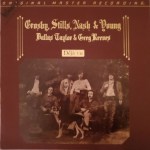
Deja Vu – A Tale of Two MoFi’s

Hot Stamper Pressings of the Music of Crosby, Stills, Nash and (Sometimes) Young

Sonic Grade: F (or not!)

Just for fun about 10 years ago [make that 20] I pulled out a MoFi pressing of Deja Vu I had laying around. I hadn’t played their version in a long time. I could have gone a lot longer without playing it, because what I heard was pretty disappointing. Playing their record confirmed all my prejudices. The highs sizzled and spit. The heart of the midrange was recessed and sour.

Know what it reminded me of? A bad Japanese pressing.

(Since most of them are pretty bad I could have just said a typical Japanese pressing, but that’s another story for another day.)

And if that’s not bad enough, the bass definition disappeared. Bass notes and bass parts that were clearly audible and easily followed on our Hot Stamper copies were murky, ill-defined mud on the MoFi.

If you own the MoFi you owe it to yourself to hear a better sounding version. You really don’t know what you’re missing.

But Then, A Few Years Later We Played This Copy…

Here is what we had to say at the time:

Hot Stamper Sound on the MoFi pressing of Deja Vu, can it be possible? I have NEVER heard the MoFi sound this good, not even close. This just KILLS the other copies I’ve heard. I wrote a scathing review of their badly mastered pressing which you can read below, and I still stand behind every word, because this copy is not your average MoFi. The average one still sucks. What we are selling here is a FLUKE. Here is the story from our Hot Stamper shootout we just did.

This week we picked up a very clean looking MoFi pressing and decided to throw it in the shootout just for fun. We were shocked — this one actually sounded good! Not as amazing as our best Hot Stampers, but much better than we had expected. We checked our old copy and heard the same bad sound described above. 

Pressing variations exist for audiophile records as well, and here was another example. It just goes to show that nothing short of playing a record will tell you how it sounds — except for reading our website. Who besides us could spend so much time playing so many bad records? It’s a dirty job, but we’re happy to do it. Hearing one amazing record makes up for playing 10 bad ones, so we’ll keep at it.

Keep in mind that the only way you can never be wrong about your records is to simply avoid playing them. If you have better equipment than you did, say, five or ten years ago, try playing some of your MoFi’s, 180 gram LPs, Japanese pressings, 45 RPM remasters and the like. You might be in for quite a shock.

It’s all good — until the needle hits the groove. Then you might find yourself in need of actual Better Records, not the ones you just hoped were better.
(more…)

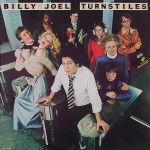
Listening in Depth to Turnstiles

More of the Music of Billy Joel

Reviews and Commentaries for the Music of Billy Joel

On side two Prelude/Angry Young Man were key test tracks. The biggest, richest copies with the most space were the ones that consistently brought out the best in the songs and individual performances of the players.

Summer, Highland Falls is a great test — listen for breathy vocals, a full piano, a clear snare drum once it comes in and, most importantly, an energetic performance. You will need all four to score well in one of our shootouts. 

Note that the first track on side one has a tendency to be a bit brighter than those that follow.

Those of you who’ve been with us for a while know that we are big fans of Songs in the Attic, the live album Joel released in 1981 after The Stranger, 52nd Street and Glass Houses all went to the top of the charts.

More than half of the songs on SITA come from this very album: Say Goodbye to Hollywood, Miami 2017, Summer, Highland Falls, Say Goodbye to Hollywood and I’ve Loved These Days. These are the songs from his fourth album that Joel felt were unfairly overlooked and most wanted you to hear.

We were favorably impressed with just how good the sound can be on a great pressing like this (quite a bit better than Songs in the Attic for sure). We’ve played a ton of copies of this one over the years but most copies left us unmoved. Here you get real weight to the piano — essential for any Billy Joel album — and big, punchy drums.

Note that the orchestra was recorded at the famed Columbia 30th Street studios.

(more…)

Will You Still Love Me Tomorrow Is the Best Sounding Track on Tapestry

More of the Music of Carole King

Notice how the third track on side two, Will You Still Love Me Tomorrow, which Carole wrote when she was only eighteen and which became a big hit for The Shirelles, is actually the best sounding song on the entire album.

It’s my guess that this song was recorded toward the end of the sessions, and the reason it sounds so good is that it took them until then to figure out how to do it.

This is no Demo Disc by any means. The recording itself seems to have shortcomings of every kind from track to track. Perhaps as they made their way through the sessions they were learning from their mistakes, mistakes that no one could go back and fix without starting all over again, and by the time they got to this track they had it all figured out. Of course that is just a guess, nothing but speculation on my part. Regardless of the cause, see if you don’t hear what I’m talking about. 

(more…)

What to Listen For on Sittin’ In

More of the Music of Loggins and Messina

Practically any copy you find will have a bit of a boost in the bottom end. The kick drum really kicks on this album, more than it should in fact.

The elements that make up a good sounding Loggins and Messina album can be found, in varying degrees, on all the Hot Stamper pressings we offer. Permit us to break them down for you. (We’ve borrowed heavily from ourselves here so if this material looks familiar don’t be surprised, we’ve used it before.)

Top End Extension

Absolutely critical to this record. Most copies of this album have no extreme highs, which causes the percussion and guitar harmonics to be blunted and dull. Without extreme highs the percussion can’t extend up and away from the other elements in the mix. Consequently these elements end up fighting for space in the midrange and getting lost in the dense mixes that Jim Messina favors (and we audiophiles love).

(more…)

What to Listen For on Queen’s The Game

Hot Stamper Pressings of the Music of Queen Available Now

Years ago we wrote:

The best sounding side ones were rarely as good as the best sounding side twos.

Not sure if that’s still true but you can check your own copy and see how the two sides compare.

Here some more records that often display side to side differences.


Even the good side ones tended to have a trace of harmonic distortion and compression that is simply nowhere to be found on the good side twos. How and why this is we have no idea. Since every copy had the same sonic issues, we discounted it in our grading. Only the better copies bring the hits on side one to life and give them the size and power we know they can have.

One of the qualities we don’t talk about nearly enough on the site is the SIZE of the record’s presentation. So many copies of this album just sound small, or at least smaller — they don’t extend all the way to the outside edges of the speakers, and they don’t seem to take up all the space from the floor to the ceiling. Other copies do. They create a huge soundfield from which the instruments and voices positively jump out of the speakers. When you hear a copy that can do that, needless to say (to anyone on this site), it’s an entirely different listening experience.

Dirty Little Secrets

The Game is clearly one of the two best sounding records Queen ever made. The Dirty Little Secret of Queen’s recorded output is that most of their albums have mediocre sound, and often they’re downright dreadful.

Do you see a lot of Queen albums going up on the site? The demand is there, but where is the supply?

There’s a good reason for their scarcity as Hot Stampers. As much as people might love to hear some top quality pressing of Queen on vinyl, we just can’t seem to find many that do their brand of multi-layered Big Production Rock justice.

Take A Night at the Opera for example. Isn’t it supposed to be a good sounding record? I’ve played twenty of them over the last ten years — imports, domestics, the DCC, the MoFi – and practically none of them sounded as good as I was expecting. If you think the album is well recorded, don’t just rely on your memory. Pull out your own copy and listen to it closely; you should hear the same distortion and smearing and transistory grain that’s on all the copies I’ve played.

It’s a record that’s trying to sound good but just doesn’t — so far anyway.

Hope springs eternal, and of course we will keep looking, but for now the Queen titles we know to have the potential to sound good are pretty much limited to A Day at the Races, News of the World and The Game.


UPDATE 2015 or so

GOOD NEWS – We now know which pressings sound good, and they sound very good indeed!


(more…)