Notes from a Shootout

Post-it notes for records that we played in a shootout.

The Who By Numbers – How Did We Know Side Two Was Slightly Veiled?

Hot Stamper Pressings of the Music of The Who Available Now

Here is how we might typically describe one of our Shootout Winning copies:

Who By Numbers returns to the site for only the second time in over three years, here with KILLER Shootout Winning Triple Plus (A+++) sound or close to it on both sides of this vintage Polydor import pressing – fairly quiet vinyl too.

Glyn Johns‘s magic is on display here, with open mics in a big studio space creating the 3D soundscapes we love.

Features two of their most iconic songs, “Slip Kid” and “Squeezebox,” and both sound incredible on this copy.

To back it all up, here are the notes for that very copy.
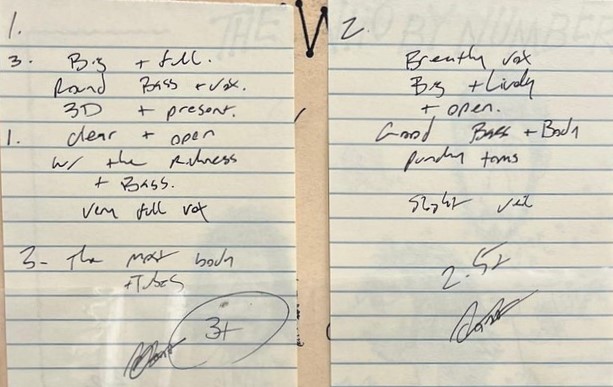
We started playing track three on side one, Squeeze Box, and returned to that track when we had two top copies to play against each other in the final round. Which one won? The one with “the most body and tubes.”

Note that side two of this copy was slightly veiled compared to the side two of the best copy we played, the one that would go on to earn 3+.

We don’t like veiled records — records where there is a curtain, no matter how transparent, in front of the musicians. Heavy Vinyl pressings are typically quite veiled and recessed in the midrange compared to their vintage vinyl counterparts, and that sound is simply not going to cut it with us. (Other folks may prefer a different sound it seems.)

Midrange presence is one of the most important qualities of any rock or pop recording we evaluate. You want Roger Daltry to be front and center, neither recessed nor behind a veil.

(more…)

Capriccio Italien on Classic Records and How Badly I Missed the Boat

More of the Music of Peter Ilyich Tchaikovsky

More of the Music of Nikolai Rimsky-Korsakov

Years ago, around 2005 if memory serves, I played a copy of the Classic Records pressing of LSC 2323 and thought it was pretty good.

I thought it was better than the Shaded Dog copies I had compared it to, which, based on hundreds of other Classic Records titles I had auditioned, was unexpected to say the least.

Little did I know that the Shaded Dog pressings on this title are not remotely competitive with the early reissues.

The best of the Shaded Dog pressings we could find, which just happened to have a 1s side one, came in tied for last with the one 70s Red Seal pressing we thought sounded good enough to make the shootout.

(Some inside baseball: most of the Shaded Dogs and Red Seals were needle-dropped, and all but two were eliminated before the shootout. It takes time and wastes money to clean and play pressings that sound hopeless, so a quick elimination round often precedes the cleaning process.)

Back then it was tough to wrap my head around the idea that a Classic Record classical title could actually be better sounding than a Shaded Dog — it had never happened, so I knew there had to be more to the story.

Finding the time to do the serious investigation of LSC 2323 that would be necessary to get to the bottom of it was not in the cards, so I shelved the project for close to the next twenty years.

The title would have to wait until 2025 to go through a proper shooout, and when it did, naturally the Classic was part of the mix, which is the way we do things here at Better Records. Every record gets the chance to show us what it can do, to be evaluated fairly without the listener having any way to know which pressing is playing.

It turns out that side one of the Classic was passable, but side two — the side I had probably never played — was every bit as bad as most of their other classical offerings.

Side One, Second Movement (Tchaikovsky)

  • Big, but bright and compressed
  • Gets loud but opaque and hot
  • Good weight

Side One, First Movement

  • Bright and blurry bells
  • Sort of tubey but a mess
  • Grade: 1+ (passable, but no Hot Stamper)

Side Two (Rimsky-Korsakov)

  • Big but boomy and smeary
  • Brass is edgy and opaque
  • No top end or space
  • Peaks are hot and congested
  • Grade: NFG

To recap: In 2005 I was impressed with Classic’s pressing of LSC 2323. That was only twenty years ago, yet I could not have been more wrong. I thought my stereo was great — I’d owned top quality equipment since 1975 by then — thirty sodding years — so my audiophile credentials would surely dwarf those of the vast majority of forum posters who write about audiophile pressings today. How reliable should we expect their reviews to be?

(more…)

Born Under a Bad Sign Is Amazing Sounding on the Right Pressing

Hot Stamper Pressings of Electric Blues Albums Available Now

We finally got a shootout going and found this killer copy.

Every copy we found with Hot Stampers in clean condition, a grand total of three original stereo copies, sold quickly, so for those of you who wanted to finally be able to hear the record in all is glory, sorry!

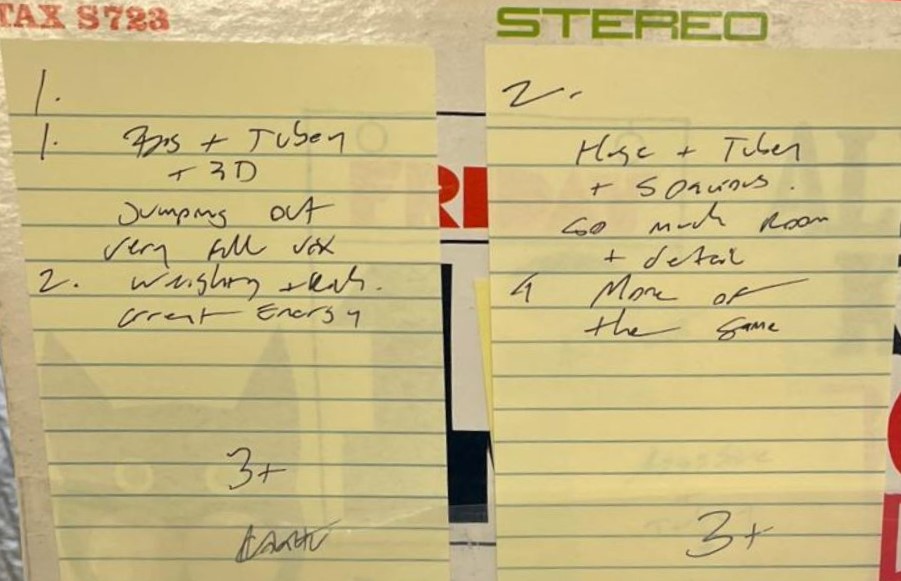
Here are the notes for our Shootout Winning copy. It sold for $899.

Side One

  • Big and tubey and 3-D
  • Jumping out
  • Very full vocals
  • Weighty and rich
  • Great energy

Side Two

  • Huge and tubey and spacious
  • So much room and detail
  • More of the same!

That’s the kind of sound your nine hundred bucks buys you.

Here is how we described it on the site:

  • Born Under A Bad Sign returns to the site for the first time in years, here with KILLER Shootout Winning Triple Plus (A+++) grades on both sides of this original Stax pressing – fairly quiet vinyl too
  • These are just a few of the the things we had to say about this amazing copy in our notes: “big and tubey and 3D”…”jumping out of the speakers”…”very full vox”…”weighty and rich”…”great energy”…”so much room and detail”
  • No other copy came close to this one, and we had a bunch, many of which earned grades of 1.5+ because, on this record, you really have to know what to look for in the dead wax
  • Incredibly dynamic, rich and full, with lots of texture to the guitars, this copy brought the music to life right in our listening room
  • Accept no substitutes – no reissue of the album can ever give you the energy, size and you-are-there presence that’s on this disc

More amazing finds similar to this one can be found here.

Craft Recordings remastered this Albert King title, and you should not be surprised to find that it sounds as awful as the other pressings put out by this ridiculous label, remastered pressings that we took the time to audition and review out of the goodness of our hearts, in the hopes of saving those of you out there in the land of audiophiles who might be tempted to buy some of their low- to mid-fi releases and could be scared away by our criticisms.

(more…)

Which Side of this Pressing Lacked Space, and How on Earth Did You Spot It?

Hot Stamper Pressings of the Music of Thelonious Monk Available Now

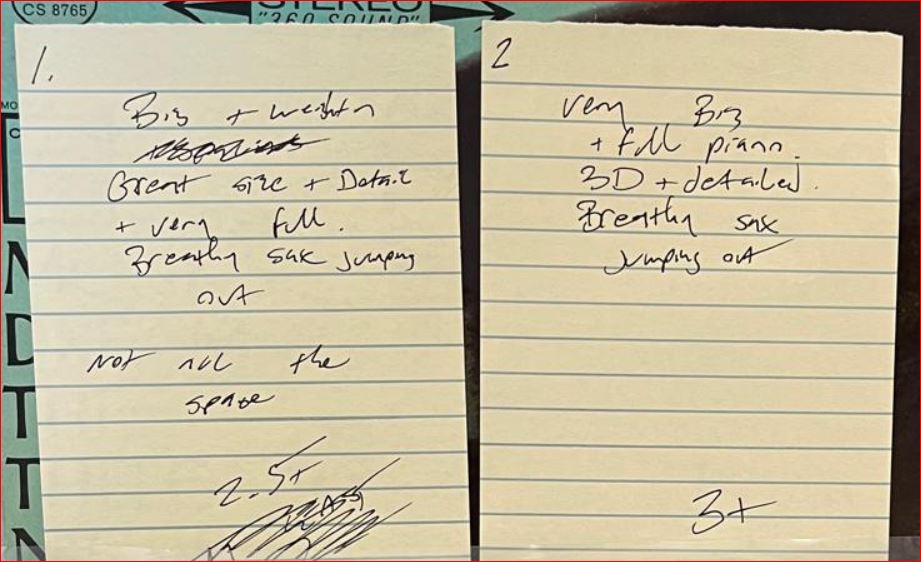
Our notes for a recent shootout winning copy read:

Monk’s Dream returns to the site for only the second time in over two years, here with INCREDIBLE Shootout Winning Triple Plus (A+++) grades or close to them throughout this black print Stereo 360 pressing.

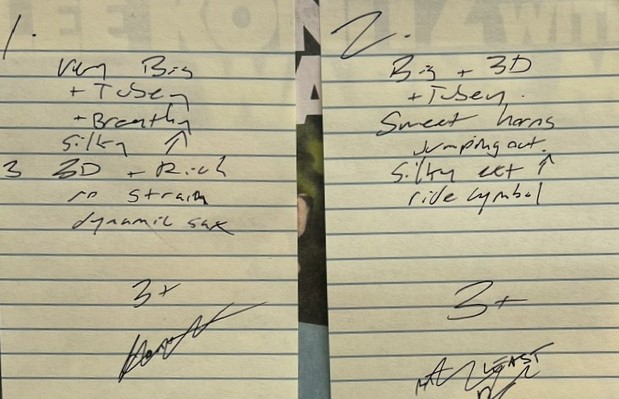
These are just a few of the things we had to say about this killer copy in our notes: “big and weighty”…”great size and detail and very full”…”breathy sax jumping out of the speakers”…”very big and full piano”

In our notes you can see that side one fell short in one area, space, but how would anyone know that who hadn’t played a copy with even more space than this one? That’s why we do shootouts and you must do them too.

Both of these sides are rich, spacious, big and Tubey Magical, with less smear on the piano, a problem that holds many copies back. The sound found on these early Columbia 360 Label Stereo pressings is absolutely the right one for Monk’s music.

As you can see from the notes we took for this copy, we are not making any of this up!

This is why we do shootouts. If you really want to be able to recognize subtle (and sometimes not so subtle!) differences between pressings, you must learn to do them too.

And make sure to take notes about what you are hearing, good and bad.

One side falling short of the full Three Pluses happens all the time.

One out of five records that has one shootout winning side will have a matching shootout-winning other side.

(more…)

On Our Top Copy of Face Value, How Did We Know that One Side Lacked Weight?

Hot Stamper Pressings of the Music of Phil Collins Available Now

We described our most recent shootout-winning pressing this way:

An early UK copy of Phil Collins’s killer solo debut with STUNNING Shootout Winning Triple Plus (A+++) side two mated to a nearly as good side one.

The recording of this album is still analog and the quality is excellent, thanks to hugely talented engineer and producer Hugh Padgham (Peter Gabriel, Genesis, The Police, Yes, Emerson, Lake & Palmer, etc.).

Song after song, Collins’s songwriting and musicianship shine with this breakout record, the first and clearly the best of all his solo albums. The sound on the better copies is vibrant, with superb extension on the top, punchy bass, and excellent texture on the drums and percussion, as well as spacious strings and vocals.

Side two was killer in every way, and the way we know that is we played a bunch of copies and nothing could beat it. This side two took top honors for having exactly the sound we described above.

For Those About to Rock

Of special interest to those of you who would like to do your own shootouts for the album are some of the specific notes we took:

The third track is “much less pinched,” with the most warmth and the least hardness.

Those are the areas that set this killer side two apart — it wasn’t as pinched and hard as most copies, and it had more warmth. Listen for those three things on the third track of the second side and you might just find it’s a lot easier to pick a winner.

Side one was doing great in many areas. Track three (again) was punchy, rich and relaxed, with no hardness.

It had most, but not all of the weight.

Same story as side two. Listen for all those qualities, especially hardness and how much weight you can hear on the first side. You will need big speakers to do this shootout, and don’t be afraid to turn them up.

(more…)

What the Shootout Winning Copies of A Hard Day’s Night Really Get Right

Hot Stamper Pressings of the Music of The Beatles Available Now

I wrote this bit of commentary about twenty years ago:

When comparing pressings of this record, the copies that get their voices to sound both present and warm, smooth, and sweet, especially during the harmonies, are always the best.  All the other instruments seem to fall in line when the vocals are correct. This is an old truism — it’s all about the midrange — but in the case of A Hard Day’s Night, it really is true.

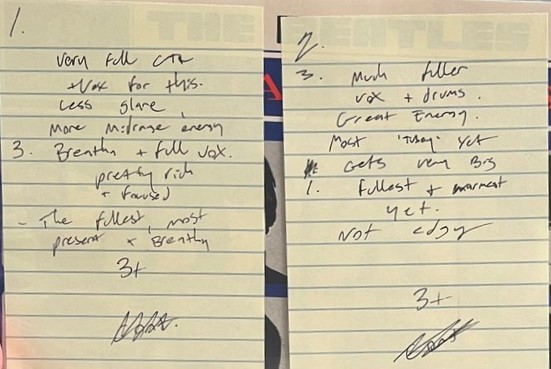
Now that we are putting our unredacted (!) shootout notes on the blog for everyone to see, here are the actual notes for the shootout winning pressing we just played (6/2025), notes that back up what we said so many years ago 100%.

What’s does this amazing side one sound like?

  • Very full guitars and vocals for this
  • Less glare
  • More midrange energy
  • Breathy and full vocals
  • Pretty rich and focussed
  • The fullest, most present and breathy vocals

And this amazing side two?

  • Much fuller vocals and drums
  • Great energy
  • Most “tubey” yet
  • Gets very big
  • Fullest and warmest yet
  • Not edgy

Both sides had qualities that did much to set them apart, coupled with fewer of the shortcomings we found in practically all the other pressings we played.

Less glary and less edgy are critical to the better pressings, simply because few copies are not glary and edgy in the midrange to some degree.

But the real keys to the shootout winners are vocals that are full, present, warm and breathy.

For The Beatles in 1964, nothing else about the sound of their recordings could possibly compete with those four qualities.

We could add two more. Energy would probably be the next most important one, followed by Tubey Magic.

That brings the total of most important qualities to a grand total six.

(more…)

It’s the Rare Yellow Submarine that Sounds Anything Like This One

Hot Stamper Pressings of the Music of The Beatles Available Now

Here is how we described our best copy of Yellow Submarine from the last shootout:

Boasting two KILLER Shootout Winning Triple Plus (A+++) sides, this vintage UK copy could not be beat.

Without a doubt the hardest single side of any Beatles album to find with good sound is side two of Yellow Submarine, and here’s a copy that is as good as it gets.

The only place to find the all-time classic “Hey Bulldog,” as well as “All Together Now” and “It’s All Too Much.” In addition, “All You Need Is Love” debuted in a true stereo mix on this album.

My favorite lines from the notes for the notoriously difficult-to-get-to-sound right side two:

  • Big and clear and 3-D for this
  • Nice string texture — sweet and rich for once

You do the best you can with what you have to work with, and normally side two of this album does not give you much to work with, as most copies are thin sounding and have screechy strings.

One or two out of ten copies — and of course we are only talking about the real vintage UK pressings, nothing else is worth bothering with — will get the strings right on side two. That makes side two a good test for string tone in our book, especially for those of you who don’t have any of our Hot Stamper orchestral pressings.

This is a very difficult album to find good sound for; many pressings are almost unbearably gritty and harsh. Fortunately, these two sides have no such problems. The overall tonality is rich and full-bodied, and there’s plenty of presence and energy as well.


A Tough Title to Play

Side two of this recording, the orchestral side, ranks high on our difficulty of reproduction scale. Do not attempt to play it using any but the best equipment.

It took us a long time to get to the point where we could clean the record properly, twenty years or so, and about the same amount of time to get the stereo to the level it needed to be, involving many of the revolutionary changes in audio we discuss at great length on the blog.

As we’ve said before about these kinds of recordings, they are designed to bring an audio system to its knees. If you have the kind of big system that a record like this demands, when you drop the needle on the best of our Hot Stamper pressings, you are going to hear some amazing sound.

This is a record that’s going to demand a lot from the home audio enthusiast, and we want to make sure that you feel you’re up to the challenge. If you don’t mind putting in a little hard work, here’s a record that will reward your time and effort many times over, and probably teach you a thing or two about tweaking your gear in the process (especially your VTA adjustment, just to pick an obvious area most audiophiles neglect).

(more…)

On Our Top Copy of Moondance, How Did We Recognize that One Side Was Not as Tubey?

Hot Stamper Pressings of the Music of Van Morrison Available Now

We described our most recent shootout winning pressing this way:

A Moondance like you’ve never heard, with Shootout Winning Triple Plus (A+++) grades or close to them on both sides of this early Green Label pressing.

Here are just a few of the things we had to say about this killer copy in our notes: “silky and 3D and present”…”sweet and breathy vox”…”spacious and rich”…”huge and lively”…”jumping out of the speakers.”

Drop the needle anywhere on the album for a taste of early-70s Tubey Magical analog, not to mention the kind of blue-eyed soul that will remind some of you just how good music on vinyl used to be.

Side one was killer in every way, and the way we know that is we played a bunch of copies and nothing could beat it. This side one took top honors for having exactly the sound we described above.

Side two is another matter. We came across a side two that was slightly better than the side two you see here.

When we played the two best copies back to back, side one of this copy came out on top, earning a grade of 3+. However, the side two of another pressing showed us there was even more Tubey Magic in the recording than we’d noticed the first time around.

With another copy earning a better grade for having even more Tubey Magic, the full 3 pluses, we felt the right grade for this side two was 2.5+.

Helpful Advice

To aid you in doing your own evaluations, here is a list of records that we’ve found to be good for testing Tubey Magic.

This is exactly why we do shootouts. If you really want to be able to recognize subtle (and not so subtle!) differences between pressings, you must learn to do them too.

And make sure to take notes about what you are hearing, good and bad.

One more thing: stick with the Green Label early pressings, they are the only way to fly on Moondance.

Mistakes Were Made

If you made the mistake of buying the Rhino pressing of Moondance, I hope you heard what we heard: a complete lack of Tubey Magic! This on one of the most Tubey Magical analog recordings we’ve ever played. You can thank Kevin Gray for helping you flush your record money down the drain. When we first reviewed the remaster in 2014, we wrote:

Where is the Tubey Magic of the originals? The sweetness? The richness? And why is there so little ambience or transparency? You just can’t “see” into the studio on this pressing the way you can on the good originals, but that’s fairly consistently been the knock on these remastered Heavy Vinyl records. We noted as much when we reviewed Blue all the way back in early 2007, so no surprise there.

We also complained that the Heavy Vinyl reissue gets the voice wrong.  When the voice is wrong on a Van Morrison record, you have yourself a completely worthless piece of vinyl. 180 grams or 120 grams or any other number of grams, vinyl with sound this bad should hold no appeal to the audiophile. The record collector, maybe, but collecting for the sake of collecting has never been our thing and we hope it’s never been yours.

(more…)

Debussy & Ravel – A Tale of Two Top Copies

Hot Stamper Pressings of the Music of Claude Debussy Available Now

Hot Stamper Pressings of the Music of Maurice Ravel Available Now

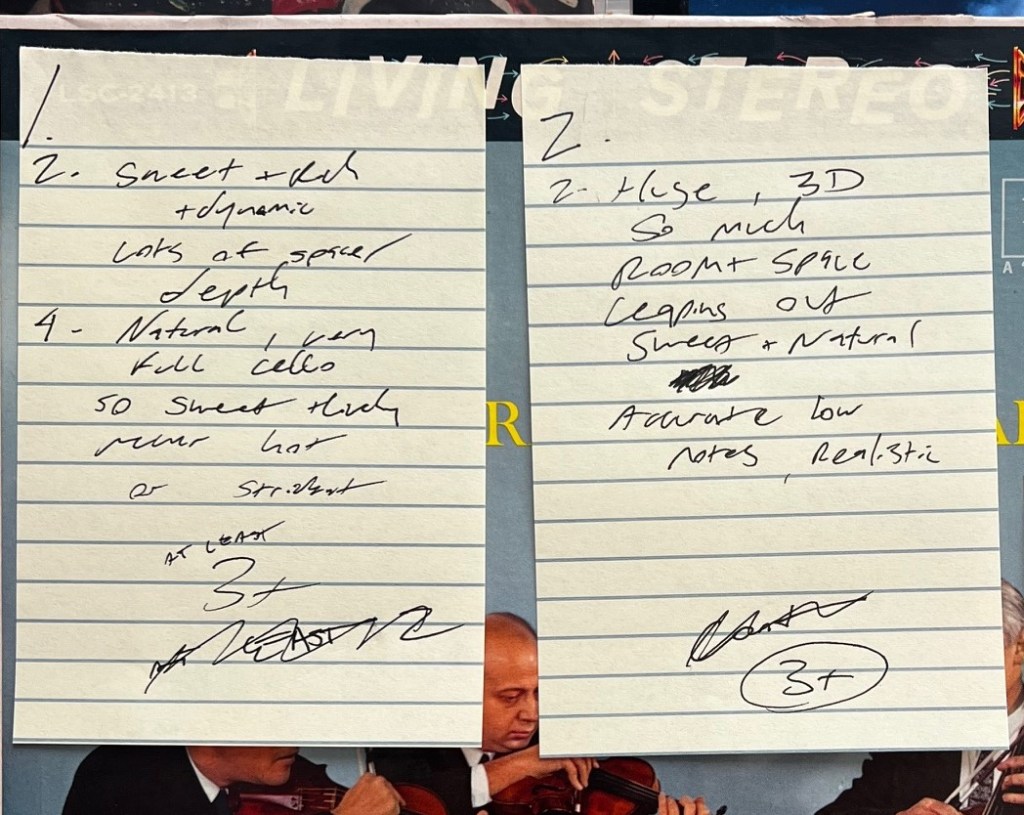
In 2024 we did a shootout for this recording of quartets, LSC 2413, our first in 19 years.

For the shootout winning pressing, we wrote the following:

Juilliard String Quartet’s performance of these wonderful classical works appears on the site for only the second time ever, here with INSANELY GOOD Shootout Winning Triple Plus (A+++) grades on both sides of this original Shaded Dog pressing.

Having just played some killer copies of Death and the Maiden, we’re tempted to say that this Debussy record has the potential for even better sound — it’s richer and sweeter, but every bit as real and immediate as any chamber recording we know of.

Here are the notes for the actual record we played. Side one really blew our minds, earning a grade of at least 3+.

The second place finisher may not have been quite as good on side one, but it was still so good that it had no problem earning the full three pluses. It had the same stampers as the copy above by the way.

Side two however lacked the space of the very best pressings we played, and we marked it down one half plus for that shortcoming. Although it was “so tubey and 3-D” it did not have “all the space but not hot at all and natural and sweet.”

It’s very unlikely that the person who bought this copy would feel there was any problem with side two. We had two killer side two’s to play against each other back to back, and that’s about the only way these kinds of very subtle differences can be recognized, assuming you have a system that can resolve the space of the recording at an extremely high level to begin with.

The big rooms with high ceilings that systems like those require are not usually found in listening rooms that have not been custom built.

More on this wonderful record:

The Living Stereo sound here is Tubey Magical, lively and clear, with the kind of transparency that puts living, breathing musicians right in your listening room in the way that only the best vintage vinyl pressings can.

Lewis Layton engineered this recording (along with Ed Begley) and he nailed it, perfectly capturing the rich, textured sheen on the strings, the hallmark of Living Stereo sound in the 50s and 60s.

He recorded both the Schubert (LSC 2378) mentioned above and this wonderful Debussy/Ravel record for RCA in 1960 — it would be quite the understatement to say he had a gift for recordings of this kind.


Another superb recording from the 60s, brought to you by your vinyl-loving friends at Better Records.

It’s an exceptional Living Stereo all analog recording from 1960 – nothing else sounds like it.

When you’ve played as many Living Stereo titles as we have (250+ and counting), you’re bound to run into this kind of Demo Disc sound from time to time – it’s what makes record collecting fun.

It’s an amazing find, the kind of record we live for here at Better Records.

(more…)

Lee Konitz With Warne Marsh Is Yet Another Amazing Sounding Budget Reissue

Hot Stamper Pressings of Jazz Recordings Featuring the Saxophone Available Now

Here is how we described this wonderful reissue of the 1955 recording of Lee Konitz with Warne Marsh:

Incredible MONO sound throughout this reissue copy of Lee Konitz with Warne Marsh (only the second to hit the site in years).

Exceptionally spacious and three-dimensional, as well as relaxed and full-bodied – this pressing was a big step up over every other copy we played.

If you want to hear the Tubey Magic, size and energy of this wonderful session from 1955 – originally recorded by Tom Dowd and expertly remastered by George Piros – this pressing will definitely let you do that.

I hope these notes are able to speak for themselves. If you have trouble reading them, please drop me a line and I will translate them for you.

The horns are breathy and clear, yet full and rich as can be. There may be a good reason that this pressing sounds as good as it does: it was remastered by one of the greatest mastering engineers of all time, George Piros.

Tom Dowd is the original recording engineer, and this one album should be all the proof you need that when it comes to jazz in mono, the guy is hard to beat. Rock in stereo, there the record is quite a bit more spotty (see, or better yet, listen to Cream, The Young Rascals, Delaney and Bonnie and too many others to list).


UPDATE 2025

The listening panel for this record listened to it with the mono switch in as well as with the mono switch out on the EAR 324p phono stage we use.

Somewhat surprisingly, the sound got worse on this mono pressing playing with the mono switch activated.

That’s not supposed to be the way works, but in the world of records, when has that ever counted for anything?

Just another reminder to always stay skeptical. Never believe anything anybody tells you about audio. Test everything for yourself, and that includes our Hot Stamper pressings. Play them against the best other pressings you can find. We will happily take back any record that doesn’t trounce anything you have to play head to head with our records.

(more…)