Weak Sound or Music

These vintage records didn’t sound very good to us. Additionally, some made the list because the music or performances were not to our liking.

As to their sound quality, some of them are bad recordings, but some are no doubt just bad pressings of good recordings. Either way, audiophiles should avoid them.

Bad sounding Heavy Vinyl and Half-Speed mastered pressings can be found in their own sections.

Eric Clapton / At His Best – But Is It Really?

More of the Music of Eric Clapton

More Reviews and Commentaries for the Music of Eric Clapton

Sonic Grade: D

This pressing, along with the rest of the series, was mastered by Robert Ludwig. The sound may be as rich and full as we described it years ago, but the tapes RL had to work with were dubs, so the sound is not up to audiophile standards, not ours anyway.

We play mediocre-to-bad sounding pressings so that you don’t have to, a public service from your record loving friends at Better Records.

You can find this one in our Hall of Shame, along with more than 350 others that — in our opinion — qualify as some of the worst sounding records ever made. (On some records in the Hall of Shame the sound is passable but the music is bad.  These are also records you can safely avoid.)

Note that most of the entries are audiophile remasterings of one kind or another. The reason for this is simple: we’ve gone through the all-too-often unpleasant experience of comparing them head to head with our best Hot Stamper pressings.

When you can hear them that way, up against an exceptionally good record, their flaws become that much more obvious and, frankly, that much more inexcusable.

Sonny Rollins and The Original Jazz Classics Series – Not a Good Match!

More of the Music of Sonny Rollins

Pictured is OJC 029, one of the earliest Sonny Rollins titles they picked to remaster.

Too bad they didn’t do a very good job with it.

The copy we auditioned did not impress us sonically, so don’t expect to see Hot Stampers of this title on OJC coming to the Better Records website any time soon.

The music might be wonderful — we unreservedly follow the maxim de gustibus non est disputandum — but the sound of this pressing is unlikely to ever be of audiophile quality.

There may be great sounding pressings of the album – how could we possibly know there aren’t without playing every version ever pressed? — but we’re pretty sure the OJC will always fall short of the mark.

We created two sections for the OJC label: one for the (potentially, it’s what Hot Stampers are all about) good sounding OJC pressings and one for the (probably, see the paragraph above) bad sounding ones.

If you know of a great sounding pressing of the album, feel free to let us in on what pressing you have and we might just pick one up and give it a listen.

We’ve auditioned countless pressings like this one in the 33 years we’ve been in business — buying, cleaning and playing them by the thousands. This is how we find the best sounding vinyl pressings ever made.

Not the ones that should sound the best. The ones that actually do sound the best.

(more…)

Neither the Sound Nor the Performance Here Make the Grade

Hot Stamper Pressings of the Music of Rimsky-Korsakov Available Now

In our experience this is not the recording of the work to buy, on either Decca or London. Of the two recordings by Ansermet, we much prefer the one made with the Suisse Romande in 1961 to that of the one he recorded with the Paris Conservatoire in 1954 (which was his second recording of the work with them).

We did a monster shootout for this music in 2014, one we had been planning for more than two years. On hand were quite a few copies of the Reiner on RCA; the Ansermet on London (CS 6212, his second stereo recording, from 1961, not the earlier and noticeably poorer sounding recording from in 1959); the Ormandy on Columbia, and a few others we felt had shown potential.

The only recordings that held up all the way through — the fourth movement being THE Ball Breaker of all time, for both the engineers and musicians — were those by Reiner and Ansermet.

This was disappointing considering how much time and money we spent finding, cleaning and playing those ten or so other pressings.

Here it is a year later and we’re capitalizing on what we learned from the first big go around, which is simply this: the Ansermet recording on Decca/London can not only hold its own with the Reiner on RCA, but beat it in virtually any area. The presentation and the sound itself are both more relaxed and natural, even when compared to the best RCA pressings.

The emotional content of the first three movements (all of side one) under Ansermet’s direction are clearly superior. The roller coaster excitement Reiner and the CSO bring to the fourth movement cannot be faulted, or equaled. In every other way Ansermet’s performance is the one for me.

There are other Deccas and Londons that we’ve cleaned and played recently that were disappointing, and they can be found here.

Our Pledge of Service to You, the Discriminating Audiophile 

(more…)

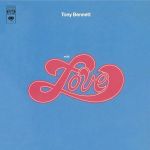
The Recordings of Tony Bennett – These Are Some that Didn’t Make the Grade

More of the Music of Tony Bennett

When we last played them, nothing about these two titles was impressive. Certainly not the sound. If you’re a die-hard fan and you see one or the other for cheap, by all means, pick them up.

Those of you looking for top quality vintage vinyl should stick to the man’s better albums, of which there are some but they are very hard to come by in audiophile playing condition.


We play mediocre-to-bad sounding pressings so that you don’t have to, a public service from your record-loving friends at Better Records.

You can find these two in our Hall of Shame, along with others that — in our opinion — are best avoided by audiophiles looking for hi-fidelity sound. Some of these records may have passable sonics, but we found the music less than compelling.  These are also records you can safely avoid.

We also have an Audiophile Record Hall of Shame for records that were marketed to audiophiles for their putatively superior sound. If you’ve spent any time on this blog at all, you know that these records are some of the worst sounding pressings we have ever had the displeasure to play.

We routinely play them in our Hot Stamper Shootouts against the vintage records that we offer, and are often surprised at just how bad an “audiophile record” can sound and still be considered an “audiophile record.”


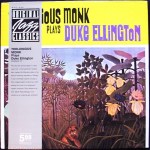
Thelonious Monk ‎Plays Duke Ellington on OJC

More of the Music of Thelonious Monk

Reviews and Commentaries for the Music of Thelonious Monk

This title badly needed to be mastered with some tubes in the chain, but that didn’t happen. More on that subject here.

It’s another case of an OJC with Zero Tubey Magic. You might as well be playing the CD. I would bet money it sounds just like this record. And it may even sound better. For something close to ten bucks you could find out.

I suppose if you have a super-tubey phono stage, preamp or amp you might be able to supply some of the Tubey Magic missing from this pressing, but then all your properly mastered records wouldn’t sound right, now would they?


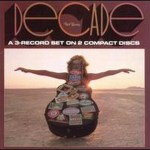
Decade – Passable at the Right Price

More of the Music of Neil Young

Reviews and Commentaries for the Music of Neil Young

This Reprise 3 LP set can basically be broken down into thirds: about a third of the material sounds really dull. The next third sounds surprisingly good and the last third is decent, like a typical Neil Young record.

People looking for an introduction to Mr. Young can’t go wrong with this set. It’s a wide ranging overview of his career, from the CSNY period, through all the solo records up to Zuma.

If you see one for cheap and don’t particularly care if the sound is mediocre, pick it up, otherwise pass.

The Sensitive Sound of Dionne Warwick Did Not Make the Grade

Hot Stamper Pressings of Pop Albums from the ’60s Available Now

Reviews and Commentaries for the Music of Dionne Warwick

Blary and gritty. Much too unpleasant to be enjoyable on today’s much more revealing high quality equipment.

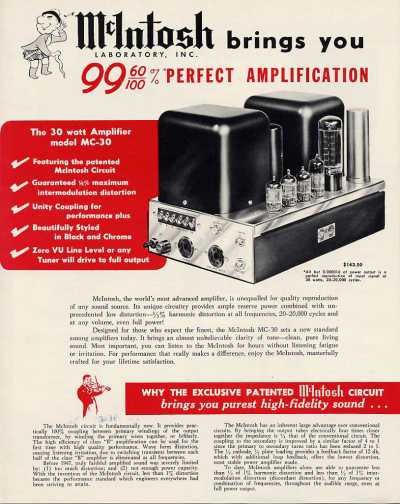
The only stereo that can play a record that sounds the way this album does — and we had a number of copies that all sounded bad, some worse than others — is a stereo that is powered by a pair of vintage tube amps like the Macs seen below, or something like them. (Some modern amps try to recreate that sound, and if you want to hear what is on your records, you had best avoid them.)

The above approach to record playback is also very good at hiding the faults of the Modern Heavy Vinyl record.

Remastering Out The Good Stuff

What is lost in the newly remastered recordings so popular with the record collecting public these days ? Lots of things, but the most obvious and irritating is the loss of transparency.

Modern records tend to be small, veiled and recessed, and they rarely image well. But the most important quality they lack is transparency. Almost without exception they are opaque. They resist our efforts to hear into the music and get lost in it.

We don’t like that sound, and like it less with each passing day, although we certainly used to put up with it back when we were selling what we considered to be the better Heavy Vinyl pressings from the likes of DCC, Speakers Corner, Cisco and even some Classic Records.

Now when we play the vinyl those companies produced they either bore us to tears or frustrate us with their veiled, vague, lifeless, ambience-challenged presentation.

It was sometime in 2007 when we turned a corner. The remastered Blue on Rhino Heavy Vinyl came out and was such a mediocrity that we asked ourselves “Why are we bothering?” That was all she wrote.

We stopped selling those third-rate remasters and dedicated ourselves to finding, cleaning, playing and critically evaluating vintage pressings, regardless of era or genre of music.

The result is a website full of great sounding records that should find special appeal with audiophiles who set high standards, who own good equipment and who have well-developed critical listening skills.

(more…)

Did Gary Puckett and the Union Gap Ever Make a Good Sounding Record?

Their recordings may be amazing, but the pressings made from them sure leave a lot to be desired.

In fact, their music sounds better on the radio than it does on the half dozen pressings we’ve played, of the one pictured above and other titles as well. If we hear a good sounding pressing down the road, we would certainly be open to the possibility of doing a shootout for it.

We play mediocre-to-bad sounding pressings so that you don’t have to, a public service from your record loving friends at Better Records.

You can find this one in our Hall of Shame, along with more than 350 others that — in our opinion — qualify as some of the worst sounding records ever made. (On some records in the Hall of Shame the sound is passable but the music is bad.  These are also records you can safely avoid.)

Note that most of the entries are audiophile remasterings of one kind or another. The reason for this is simple: we’ve gone through the all-too-often unpleasant experience of comparing them head to head with our best Hot Stamper pressings.

When you can hear them that way, up against an exceptionally good pressing, their flaws become that much more obvious and, frankly, that much less excusable.

The Happy Blues on Vintage OJC Is No Good

Hot Stamper Pressings of Recordings by Rudy Van Gelder Available Now

Some vintage OJC pressings sound good and some don’t.

This one doesn’t.

Typical bad OJC sound – thin and modern, lacking in the Tubey Magic that makes vintage pressings so musically involving.

This album is fairly common on the OJC pressing from the 80s, but we found the sound of the OJC pressings we played seriously wanting. They have the kind of bad reissue sound that that plays right into the prejudices of most record collectors and audiophiles for whom nothing but an original will do. They were dramatically smaller, flatter, more recessed and more lifeless than even the worst of the ’70s LPs we played.

The lesson? Not all reissues are created equal. Some OJC pressings are great — including even some of the new ones — some are awful, and the only way to judge them fairly is to judge them individually, which requires actually playing a large sample.

Since virtually no record collectors or audiophiles like doing that, they make faulty judgments – OJC’s are cheap reissues sourced from digital tapes, run for the hills! – based on their biases and reliance on inadequate sample sizes.

You can find those who subscribe to this approach on every audiophile forum there is. The methods they have adopted do not produce good results, but as long as they stick to them they will never have to worry about discovering that inconvenient truth.

(more…)

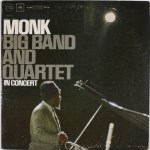
Skip the Mono on Big Band and Quartet

Hot Stamper Pressings of the Music of Thelonious Monk Available Now

Stick with stereo on this title; the mono we played was a disaster and not worth anybody’s time (scratch that: any audiophile’s time).

If you see one for a buck at a garage sale, pick it up for the music, and then be on the lookout for a nice stereo original to enjoy for the sound.

Skip This One Too

The Thelonious Monk Orchestra at Town Hall on Riverside (1959). Never heard a good one. Same arranger, Hal Overton, but much poorer sound.

Notes from a Long Ago Shootout

An amazingly well-recorded Big Band Concert from 1963, and these White Hot sides make the case like nothing you have ever heard. Our early pressing here is so rich, Tubey Magical, spacious and lively we simply could not fault the sound. Monk alternates between a 10 piece Big Band and his standard quartet, with magical results. 

Normally our notes for the sound of the records we are comparing in our shootout fall into two categories: what the record is doing right and what the record is doing wrong. In this case there was nothing wrong about the sound to write about.

I could have tried to pick some nits, but when a record is so clearly superior to its competition, what’s the point?

Side One

The right sound — HUGE, rich, tubey and clear. No need to pick nits. This side is so HTF – Hard To Fault – that we simply have to call it MTS – Master Tape Sound.

Side Two

Transparent. Rich, smooth, balanced. Spacious and open and yet so Tubey Magical.

Tubes

On this record, more than most, the tubes potentially make all the difference.

(more…)