*Collecting Better Records

Ideas and methods for collecting the best sounding pressings of your favorite music.

Better Records’ Record Collecting Axiom Number One

Handy Tips and Tricks for Collecting Better Sounding Records

In an old commentary we wrote for Carole King’s Tapestry album, we took shots at both the CBS Half-Speed mastered audiophile pressing and the Classic Heavy Vinyl audiophile pressing, noting that both fell far short of the standard set by the Hot Stamper copies we had come across years ago

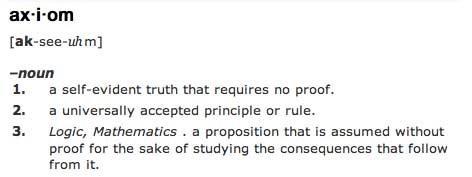
This finding (and scores of others just like it) prompted us to promulgate the first two axioms of audiophile record collecting.

Better Records Record Collecting Axiom Number One

The better your stereo gets, the fewer Heavy Vinyl and Half-Speed mastered pressings you will choose to play, or own for that matter.

This assumes a fact not in evidence: that audiophiles get rid of their bad sounding records.

It has been my experience that the reverse is actually more often the case. Most audiophiles seem to like to hang on to their audiophile pressings, even the bad sounding ones. Why they do this I cannot for the life of me understand.

To me a bad sounding audiophile record is a record not worth playing. It should either be given away or sold, with any proceeds from the sale applied to the purchase of good records — you know, like the ones found on this site.

Click here to read Better Records’ record collecting axiom number two.

We Get Letters

Quite a number of our customers have written us about our Hot Stamper pressings of Tapestry, and their letters can be found here.

(more…)

Fire and Water on a Mythical Pink Island

Reviews and Commentaries for Island Pressings on the Pink Label

Free’s Third Album on the original British Island pink label — wow!

Found one at a local record store a while back. It was the first one I’d ever seen in nice enough condition to buy. Checking the dead wax was a bit of a shock though. Care to guess where it was mastered? Right here in the good old U S of A. In fact, at one of the worst mastering houses of all time: Bell Sound in New York. [This is not fair. We have found many good pressings mastered at Bell Sound.]

Now what does that tell you about British First Pressings? Are those the ones you’re looking for? Don’t get me wrong; I look for them too. But you had better look before you leap, or you’ll end up with a bad sounding, probably quite expensive pressing.

It’s one more reason why we try to play as many records as we can here at Better Records. You can’t rely on anything but the grooves.

Rules of Thumb

Which brings up another interesting issue. Some audiophiles use the following rule of thumb for rock record collecting.

If it’s an English band, get the import pressing. If it’s an American band, the tapes should be here in this country, so the original domestic pressing should be the best.

As a rule of thumb it’s not bad. It’s just wrong so often (Led Zeppelin, Cat Stevens, The Eagles, etc.) that you must be very careful how you apply it.

Same with reissue versus original. Nice rule of thumb but only if you have enough copies of the title to know that you’re not just assuming the original is better. You actually have the data — gathered from the other LPs you have played — to back it up.

(more…)

Deja Vu in (Awful Sounding) Mono Sells for $1200 and People Complain About Our Prices?

More on the Subject of Hot Stamper Pricing

A mono copy of Deja Vu (which no doubt sounds terrible; I had one once) went for $1200 on ebay a few years back!

Oh, but it’s an auction, so I guess that makes it all right. The seller didn’t set the price, the market did.

But the market sets our prices too.

We can’t sell a record for more than what our customers are willing to pay. What exactly is the difference?

Man, I sure would love to get $4k+ for one of our killer Hot Stamper pressings of Deja Vu. I guarantee our copy sounds a whole lot better than the one that sold on ebay.

And the music is the same, right? There is no mono mix, so anyone with a mono switch can hear the record in mono if they wanted to. But why do that? The stereo sound is phenomenal on the best copies!

So what did you get for your additional three thousand dollars?

A nice record to put on the shelf.

Which you could get from us for three thousand dollars less.

(more…)

Which One’s Pink? And What Do All Those Numbers Mean?

This commentary was written at the dawn of the Hot Stamper revolution, circa 2006 I believe. We felt it necessary to explain why we did not give out the stamper information for the pressings we were offering.


UPDATE 2024

We’re so fascinated by the unpredictable nature of the stamper information we often discover in our daily Hot Stamper shootouts that we thought it would be a good idea to create a section on the blog just to draw attention to it. You can find it under the heading of Record Mysteries. Please to enjoy.


Our Letter from 2006

An erstwhile customer wrote to us a while back asking a question about Dark Side of the Moon: “What is the FULL stamper matrix for this record… all the way around the dead wax?”

I replied that we never give out stamper numbers for the records we sell. The only way to find out the stampers for our records is to buy them.

He then countered with this bit of information:

Well, ok. I don’t understand the logic, but it’s your show.

Floyd stampers are probably the most uniquely well documented stampers on [a site that no longer exists] that they’re pretty much common knowledge. If I understand your logic, a first pressing may not be a “Hot Stamper” while a 3rd, 4th or 5th might be. Just a function of the stars aligning when that record is pressed. So what’s the diff?

I would think this would be pretty obvious. If we say pressing X is the best, this is information that you cannot get anywhere else, certainly not on the site you linked to. The day that such a site tells you which stampers sound the best is the day that such a site can have any value to those who are not collecting for the sake of collecting, but actually want to find pressings with the best sound to play

The information on that site has absolutely no value to me, or to any of my Hot Stamper customers, of that I can assure you. [It no longer exists by the way. Why should it?]

If you told me what the stampers were and it was a first pressing and /or issue, it would enhance the marketability of that particular record and I would be more inclined to buy it…not that I would sell it, but just knowing it was a first press would have more value to me.

Why would you want a first pressing if it didn’t sound as good? Or, if a later pressing sounded better, why would that make any difference in your desire to buy it? Isn’t the idea to get good sound?

If you buy records principally to collect original pressings, you will end up with some awful sounding records, that I can tell you without fear of contradiction.

On the other hand, if you want the best sounding pressings, we are the only record sellers on the planet who can consistently find them for you. This is precisely the service we are able to offer, unique in the world as far as we know. 

Anyone can sell originals. Only we can sell the best sound.

Others could of course, but none of them have ever bothered to try, so the result is the same. Finding the best sound is far more difficult and far more rewarding to both the seller and the buyer, as any of our customers will tell you.

I guess the only problem for the “collector” who cares about sound as well as rarity is that your “Hot Stampers” aren’t “certified” in any way. That is, if I went to re-sell a Hot Stamper I bought from you, no one else would know it to be different from any other pressing of the same record. Ever thought about coding your records so that individual record had some kind of verifiable marking that it was a certain level of “hot stamper”???

We do have a customer who makes us fill out hot stamper certificates, but they are really of little value for resell in the real world.

Records aren’t to sell, they are to play and enjoy.

Btw, I collect for sound first, but “collectability / rarity” is up there too. My stone mint MFSL Muddy Waters Folk Singer #0005 / 5000 might fetch a couple more bucks on ebay than number 4999 say, right? I know, 4999 might sound better, but hey, a lot of people don’t have the equipment to tell the difference.

[This is where I got a little fed up and a little testy, or maybe I should say testier than usual.]

Since that is an AWFUL sounding pressing, I hope your equipment is able to tell you what is wrong with its sound. Mobile Fidelity is one of the worst labels in the history of the world; surely you don’t buy their lousy sounding records to play them? Collect them all you want, it’s your money, but who in his right mind thinks they sound any good? There are tons of commentaries on the site detailing their deficiencies. Please take the time to read them.

The fastest way to improve your record collection is to get rid of all your audiophile pressings, since only one out of every ten or twenty is even passable. If your stereo isn’t showing you how wrong the sound of those records is, it’s time to make some serious changes.

Best, 
TP

(more…)

Blue on Heavy Vinyl – We Broke Through in 2007

Hot Stamper Pressing of the Music of Joni Mitchell Available Now

Thoughts on the so-called definitive vinyl version

Yet another milestone event in the history of Better Records.

In 2007 a customer took issue with our decision to reject the sale of the newly remastered Heavy Vinyl pressing of Blue, the one put out by Rhino and mastered by Steve Hoffman and Kevin Gray.

We actually used to give the record away for free with every purchase of a Hot Stamper Blue, making it easy for our customers to hear for themselves just how superior sounding our Hot Stamper pressings were.


UPDATE 2024

With every purchase of a Hot Stamper Led Zeppelin II, we give our customers the Page-remastered version for free so that they can hear for themselves why our pressing costs well over $1000 and Jimmy’s a small fraction of that figure, sometimes as small as one hundredth!


We did this partly out of necessity. I had foolishly taken the advice of a Mr. Robert Pincus (the discoverer of Hot Stampers let us never forget) that the new version was indeed all it was cracked up to be and proceeded to put in an advance order for twenty copies to sell to our audiophile customers.

We were still selling Heavy Vinyl in 2007, but it would not be long before we decided to end the practice. Within a few years we were only selling records that we had cleaned and played and could guarantee both their superior sound quality and audiophile-quality playing surfaces.

So we had about twenty copies of Blue we did not think qualified as “better records” and decided to just give them away.

After spending quite a number of hours evaluating the new version, I got fairly worked up over the disappointing sound, worked up enough to write a very long commentary about the album, which I entitled Blue, The Game.

Rather than detailing the shortcomings of the new pressing, in this particular commentary, the first of its kind, I decided to take a different tack.

I implored the reader to do his own shootout for the album and tell me what he heard on the various pressings he might have at hand to work with. (Nothing much came of it of course, and not too surprisingly. Shootouts are hard and the vast majority of audiophiles are averse to them in our experience, hence the sorry state of audiophile records and the systems that fail to reveal their shortcomings — but that’s a horse that gets flogged regularly enough on this site. Enough is enough.)

Tom, 

I find it curious you are not carrying the new Joni Mitchell Blue vinyl issue. Even to the point of saying you can do better… for 25 bucks? After clicking on the LP cover and reading the comments from over the years it makes me wonder what your agenda really is. I paid $250 for a wonderful WLP and this Rhino issue smokes it, even as good as it is. I even have a CD cut from this mastering session off the analog FLAT, not Dolby tapes and this vinyl even beats it…. of course just my opinion.

I have listened on $100,000 systems, all the way down to portable units, solid state and tube and there is no denying this is the definitive vinyl version….. and again for 25.00. What a bargain.

Maybe all you did was look at that Rhino sticker and think back to the Grateful Dead records they did a few years ago (horrible) and just assumed this wasn’t up to Better Records standards.

Thanks for reading. I enjoy your e mails and store….

Tom

Tom,

We don’t review records based on their labels or stickers. And of course we never assume anything about the sound of a record. We talk about this stuff all the time. Here’s a relevant quote:

My approach to reviewing records is pure skepticism: a record sounds good if it sounds good, regardless of how it was made, who made it, or why. I’ve heard lots of expensive so-called audiophile equipment do a pretty poor job of making music over the years, the owners of which had an armful of reasons for why the sound should be truly awe-inspiring. But it just wasn’t. Most fancy gold faceplates are nothing but lipstick on a pig in my opinion.

I once heard Blue poorly reproduced at a friend’s house, and this is probably the best explanation for this letter writer’s inability to understand our position on Blue.

And paying $250 for a White Label Demo that apparently doesn’t sound good is the height of audiophile collector foolishness.

That money should have gone for better equipment or room treatments or tweaks, something, anything, to make this guy’s stereo and room work better than they apparently do.

Actually this brings up a good point. If I had to choose one record that separates the men from the boys, the stereos that really work from the artificial, restricted audiophile systems you might read about in the magazines or hear in a showroom or at an audio show, Blue would be a darn good choice.

(more…)

Three Labels, But Only One Ever Wins Shootouts

More Hot Stamper Pressings that Sound Better on the Right Reissue

There are three Epic labels for this record.

The originals are yellow, the first reissue is orange, and the last reissue is bluish black.

I can tell you that only one of those labels produced the best sounding copies in our shootout.

Beyond that you will have to buy a sample of each and do your own shootout. Finding clean copies was quite difficult; it took us a long time to get enough to play, and, as we said, most pressings are dreadful.

Those of you who like to read our commentaries and play along at home are going to have a rough time with this title. We sure did.

But the results are worth it, because we LOVE this music! Music just doesn’t get any better. If this album doesn’t lift your spirits, I can’t imagine what would. And note that many of the best songs here are exclusive to this greatest hits and cannot be found on any other album. That makes it a Must Own in our book.

(more…)

Confessions of an Analog Vinyl Connoisseur


Writing for Dangerous Minds, Richard Metzger recounts his journey though the world of audiophile equipment and his lifelong search for better sounding pressings of his favorite albums.

The first paragraph had me hooked:

Sorry, but this is not going to be one of those analog vs. digital rants that goofball audiophile types like to indulge in at the drop of a hat. In fact I probably should have just called it something like “Why you should never buy new vinyl versions of classic albums.”

Seems pretty clear he knows what he is talking about.

Later on he adds this bit:

Nothing trumps empirically comparing a stack of different pressings of the same album in a shootout. This is why you should take what Tom Port of Better Records has to say very seriously. Whether or not you’re willing to pay his Hot Stamper prices, Port probably knows more about records than anyone on Earth and his On The Record blog is one of the very best repositories of hard won empirical evidence relating to audiophile vinyl that’s out there. It might take weeks to read everything, but it’s quite an education.

I couldn’t agree more. The whole story can be found here. I suspect that if you’ve spent any length of time on this blog, you will get a lot out of it.

On a side note, I think snob is not exactly the right word he (or I)should be called.

“Connoisseur” (a discerning judge of the best in any field) is a better fit.

“Snob” (a person who claims to be an expert or connoisseur in a given field and is condescending toward or disdainful of those who hold other opinions or have different tastes regarding this field) implies that I disdain those who listen to music I personally don’t happen to like, but music is a very personal thing, so what you like is your business and nobody else’s.

I strongly believe that the more you listen to music, the more joy you will have in your life.

I hope to add a few comments of my own down the road, especially in the form of rebuttals to uncharacteristically bad advice such as this:

Michael Fremer’s Analog Planet website is a great resource for finding out about new and upcoming quality vinyl releases. He is one of the most knowledgeable people in the world when it comes to vinyl and he’s also produced a handy YouTube guide to AAA mastered new vinyl releases that you should definitely watch.

I guess it makes sense to play nice with the heavy hitters in the audiophile world. Seriously though, Fremer is the last person that anyone should take advice from. He may be one step ahead of the audiophiles who follow him, but that doesn’t mean he can tell a good record from a bad one. I have been reading him off and on (mostly off) for twenty five years and I see no evidence that he has learned much about records in all those years, or improved his critical listening skills in the slightest.

That fact that this list of crap vinyl is still to be found on his site — with neither corrections nor apologies — should tell you that he never had a clue and is not likely to come into possession of one any time soon

I have a section devoted to reviewer malpractice which contains a goodly portion of quotes from this so-called expert. Any attempt to correct the positive things Fremer has written for the kind of third-rate records he tends to review would quickly turn into a full time job. I might even have to hire an assistant.

If Fremer recommends a Heavy Vinyl reissue that we have a corresponding Hot Stamper pressing of, there is not a chance in the world that our record won’t beat the pants off his for sound quality. He has opinions, most of which we think are way off the mark. We have better sounding records, so good they are guaranteed to beat any other copy you have ever heard or you get your money back.

We have to be right, or we wouldn’t still be in business, owing in large part to the fact that we sell records for ten times as much money as the ones he recommends. He has never had to pay a price for getting the sound of record after record wrong.

The only people that suffer for his mistakes are the credulous audiophiles who bought the mediocre-at-best Heavy Vinyl pressings he’s been promoting for years and are now stuck with. They have a collection of junk vinyl he recommended to them and few of them will ever know something better exists because they think they already have the best.

As Richard goes out of his way again and again to make clear in his piece, empirically comparing pressings is the only way to learn anything of real value when it comes to the sound of record pressings.

If you own any Heavy Vinyl LP, it would be my honor to send you the vintage pressing that will help you to hear everything that’s wrong with the sound of it.

It’s what we do. That’s why the business is called Better Records. And we’re still here because we actually do sell the best sounding records in the world. You don’t need to believe a single word of what we say about records, ours or anybody else’s. You just need to put one of our Hot Stampers on your turntable and play it.

Hundreds of audiophiles have done just that and they seem to be pretty darn pleased with the records we’ve sent them.

Want to know more about Hot Stampers? The best place to start is here.

First Get Good Sound – Then You Can Recognize and Acquire Good Records

Advice to Help You Make More Audio Progress

You know why this guy has a wall full of records?

Because it’s easy to be a record collector — you just collect records.

To get your stereo and room to sound right, and recognize when they do sound right, or at least better than before, that is much, much harder. It literally takes a lifetime of effort.

I’ve been at it for forty-five fifty years. I still work at it and try to learn new things every day.


UPDATE 2022

Or at least I did. I retired in 2022 and left the running of the business to my dedicated, hard working and exceptionally talented staff.


Until you get your stereo, room and ears working, collecting good sounding records is all but impossible.

You will very likely waste a fortune on “collectible audiophile records.”

The kind with collector value and not much else.

These are precisely the opposite of Hot Stamper pressings.  Practically all of the value of a Hot Stamper is tied up in its wonderful music and superior sound quality, which is where we think it should be.

(more…)