More Classical and Orchestral Recordings
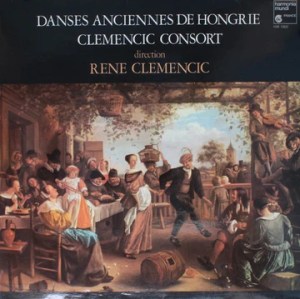
- Danses Anciennes De Hongrie Et De Transylvanie debuts on the site with STUNNING Shootout Winning Triple Plus (A+++) sound or close to it throughout this vintage Harmonia Mundi France import pressing – exceptionally quiet vinyl too
- These are just a few of the things we had to say about this incredible copy in our notes: “transparent and spacious”…”dynamic strumming and sweeter string texture” (side one)…”accurate low end”…”3D organ”…”top detail” (side two)
- Spacious, rich and smooth – only vintage analog seems capable of reproducing all three of these qualities without sacrificing resolution, staging, imaging or presence
- So transparent, dynamic and real, this copy raises the bar for the sound of this kind of unique music on vinyl
- Early music is not really our thing here at Better Records – we much prefer orchestral spectaculars that really come to life on big speakers in custom sound rooms at live levels – so Harmonia Mundi is not a favorite label of ours. That said, a little early music never hurt anybody, and since this album is so well recorded, we can recommend it, even if it only serves to cleanse the palate
This vintage import pressing has the kind of Tubey Magical Midrange that modern records can barely BEGIN to reproduce. Folks, that sound is gone and it sure isn’t showing signs of coming back. If you love hearing INTO a recording, actually being able to “see” the performers, and feeling as if you are sitting in the studio with the band, this is the record for you. It’s what vintage all analog recordings are known for — this sound.
If you exclusively play modern repressings of vintage recordings, I can say without fear of contradiction that you have never heard this kind of sound on vinyl. Old records have it — not often, and certainly not always — but maybe one out of a hundred new records do, and those are some pretty long odds.
What The Best Sides Of Danses Anciennes De Hongrie Et De Transylvanie Have To Offer Is Not Hard To Hear
- The biggest, most immediate staging in the largest acoustic space
- The most Tubey Magic, without which you have almost nothing. CDs give you clean and clear. Only the best vintage vinyl pressings offer the kind of Tubey Magic that was on the tapes in 1978
- Tight, note-like, rich, full-bodied bass, with the correct amount of weight down low
- Natural tonality in the midrange — with all the instruments having the correct timbre
- Transparency and resolution, critical to hearing into the three-dimensional studio space
No doubt there’s more but we hope that should do for now. Playing the record is the only way to hear all of the qualities we discuss above, and playing the best pressings against a pile of other copies under rigorously controlled conditions is the only way to find a pressing that sounds as good as this one does.
Copies with rich lower mids and nice extension up top did the best in our shootout, assuming they weren’t veiled or smeary of course. So many things can go wrong on a record. We know, we’ve heard them all.
Top end extension is critical to the sound of the best copies. Lots of old records (and new ones) have no real top end; consequently, the studio or stage will be missing much of its natural air and space, and instruments will lack their full complement of harmonic information.
Tube smear is common to most vintage pressings. The copies that tend to do the best in a shootout will have the least (or none), yet are full-bodied, tubey and rich.
Size and Space
One of the qualities that we don’t talk about on the site nearly enough is the SIZE of the record’s presentation. Some copies of the album just sound small — they don’t extend all the way to the outside edges of the speakers, and they don’t seem to take up all the space from the floor to the ceiling. In addition, the sound can often be recessed, with a lack of presence and immediacy in the center.
Other copies — my notes for these copies often read “BIG and BOLD” — create a huge soundfield, with the music positively jumping out of the speakers. They’re not brighter, they’re not more aggressive, they’re not hyped-up in any way, they’re just bigger and clearer.
And most of the time those very special pressings are just plain more involving. When you hear a copy that does all that — a copy like this one — it’s an entirely different listening experience.
What We’re Listening For On Danses Anciennes De Hongrie Et De Transylvanie
- Energy for starters. What could be more important than the life of the music?
- The Big Sound comes next — wall to wall, lots of depth, huge space, three-dimensionality, all that sort of thing.
- Then transient information — fast, clear, sharp attacks, not the smear and thickness so common to these LPs.
- Powerful bass — which ties in with good transient information, also the issue of frequency extension further down.
- Next: transparency — the quality that allows you to hear deep into the soundfield, showing you the space and air around all the instruments.
- Extend the top and bottom and voila, you have The Real Thing — an honest to goodness Hot Stamper.
Side One
all artists are credited as ‘anonymous’
Ötödik Tancz
Duch Pane Swu Swatuny (Grâce Au Saint-Esprit)
U Naseho Bárty (Notre Vieux Barty)
Erdélyi Hajdutanc (Danse Des Heiduques)
Chodila, Chodila (La Bien-Aimé Qui Louche)
Pro Clarinis XXIII, XXII
Chorea Hungarica
Chorea Tancz
Pargamasca
Corant
Sarabanda
Coranda
Gagliarda
Tantz
Chorea Tantz
Ritka
O Gloriosa Domina
Side Two
Alia Chorea Nº 8
Lopatkowaný Tanecz
Klobucký Tanecz
Proportío
Alia Chorea – Alia Hungarica
Pro Clarinis III Et XI
Lapozskas Tancz
Tancz
Apor Lazar Tancza
Olach Tancz (1eme Partie)
Alia Chorea
Alia Polonica
Nerada Robýla
Olach Tancz (2e Partie)
About Clemencic Consort
The Clemencic Consort is an early-music ensemble comprised of international artists under the direction of René Clemencic. It performs in varying combinations of voices and instruments, depending on the programme.
Singers and instrumentalists from around the world have made it their task to interpret music from the Middle Ages to the Baroque period on historical instruments. They set great store on lively authenticity, but at the same time they consciously avoid “the wagging finger.” The programmes are structured in such a way that they convey a colourful overall impression of the respective period.
The Clemencic Consort devotes particular attention to the production of Baroque operas, in both staged and concert performances.
[It] has made many works from earlier periods accessible to a wider audience, often for the first time.
A characteristic feature of the ensemble is its varying composition and size, which can range from two to 50 performers.