More Art Pepper
More Jazz Recordings featuring the Saxophone
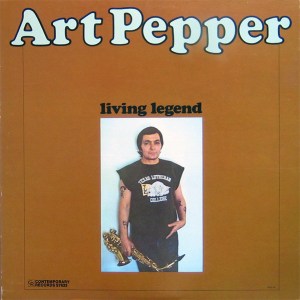
- Stunning sound throughout this vintage Contemporary pressing, with both sides earning Shootout Winning Triple Plus (A+++) grades or close to them from first note to last
- Here are just a few of the things we had to say about this killer copy in our notes: “very natural + roomy + relaxed”…”3-D + rich”…”sax jumps out [of the speakers]”…”sweet + rich + breathy”
- Both of these sides are a textbook example of the Contemporary sound we love here at Better Records: rich, warm and lively, with superb clarity throughout
- Which means that well into the 70s, Contemporary was still at the top of their game, and well ahead of most of the jazz label competition
- Pepper’s saxophone sound is right on the money – breathy and airy with clearly audible leading edge transients
- Speaking of transients, listen for the powerful kinetic energy produced when Shelly Manne whacks the hell out of his cymbals
- This is only the second copy of this title to hit the site in years – finding them in audiophile condition is getting harder (and more expensive) than ever these days
- Problems in the vinyl are sometimes the nature of the beast with these vintage LPs, but once you hear just how incredible sounding this copy is, you might be inclined, as we were, to stop counting stitches and just be swept away by the music
- 4 stars: “After 15 years filled with prison time and fighting drug addiction, Pepper was finally ready to return to jazz. Accompanied by three of his old friends (pianist Hampton Hawes, bassist Charlie Haden and drummer Shelly Manne), Pepper … shows a greater emotional depth in his improvisations and was open to some of the innovations of the avant-garde in his search for greater self-expression.”
Superb sound and music. The lineup on this LP is stellar, with Hampton Hawes on piano and keys, Shelly Manne on drums, and the great Charlie Haden on bass guitar.
We’ve mentioned plenty of times what big fans we are of Contemporary Label Jazz LPs and this record is another sonic triumph for engineer Roy DuNann.
Hampton Hawes is wonderful on this album. On the track “What Laurie Likes,” he switches over to an electric piano, giving the sound a very cool 70s jazz-rock feel. It’s too bad these guys didn’t record more material in this vein — they really nail it.
This vintage pressing has the kind of Tubey Magical Midrange that modern records can barely BEGIN to reproduce. Folks, that sound is gone and it sure isn’t showing signs of coming back. If you love hearing INTO a recording, actually being able to “see” the performers, and feeling as if you are sitting in the studio with the band, this is the record for you. It’s what vintage all analog recordings are known for — this sound.
If you exclusively play modern repressings of vintage recordings, I can say without fear of contradiction that you have never heard this kind of sound on vinyl. Old records have it — not often, and certainly not always — but maybe one out of a hundred new records do, and those are some pretty long odds.
What The Best Sides Of Living Legend Have To Offer Is Not Hard To Hear
- The biggest, most immediate staging in the largest acoustic space
- The most Tubey Magic, without which you have almost nothing. CDs give you clean and clear. Only the best vintage vinyl pressings offer the kind of Tubey Magic that was on the tapes in 1976
- Tight, note-like, rich, full-bodied bass, with the correct amount of weight down low
- Natural tonality in the midrange — with all the instruments having the correct timbre
- Transparency and resolution, critical to hearing into the three-dimensional studio space
No doubt there’s more but we hope that should do for now. Playing the record is the only way to hear all of the qualities we discuss above, and playing the best pressings against a pile of other copies under rigorously controlled conditions is the only way to find a pressing that sounds as good as this one does.
Copies with rich lower mids and nice extension up top did the best in our shootout, assuming they weren’t veiled or smeary of course. So many things can go wrong on a record! We know, we’ve heard them all.
Top end extension is critical to the sound of the best copies. Lots of old records (and new ones) have no real top end; consequently, the studio or stage will be missing much of its natural air and space, and instruments will lack their full complement of harmonic information.
Tube smear is common to most vintage pressings. The copies that tend to do the best in a shootout will have the least (or none), yet are full-bodied, tubey and rich.
What We’re Listening For On Living Legend
- Energy for starters. What could be more important than the life of the music?
- The Big Sound comes next — wall to wall, lots of depth, huge space, three-dimensionality, all that sort of thing.
- Then transient information — fast, clear, sharp attacks, not the smear and thickness so common to these LPs.
- Tight, full-bodied bass — which ties in with good transient information, also the issue of frequency extension further down.
- Next: transparency — the quality that allows you to hear deep into the soundfield, showing you the space and air around all the instruments.
- Extend the top and bottom and voila, you have The Real Thing — an honest to goodness Hot Stamper.
Further Reading
- Hot Stamper pressings of top quality jazz albums available now
- Hot Stamper pressings of Contemporary jazz albums available now
- Reviews and commentaries for jazz albums recorded by Contemporary
