Hot Stamper Pressings of the Music of Ray Charles Available Now
The first copy of the album I got my hands on and needle-dropped back in 2015 or thereabouts blew me away with its big, clear, solid mono sound. Close to a year later when we had enough copies to do this shootout, sure enough it won. That rarely happens — in a big pile of records there’s almost always something better than whatever we’ve heard — but it happened this time.
Imagine if I had played one of the bad sounding or noisy ones to start with. It’s unlikely I would have been motivated to pursue the title and consequently the shootout we just did would never have happened. Lucky for us all that that first copy was so good.
Side One
Big and clear with a very solid piano and all its harmonic overtones. What piano recording from 1956 sounds like this? None that I know of. And it’s Ray Charles at the keys!
Side Two
The exceptionally dynamic brass that comes jumping out of the soundfield is nonetheless warm and full – what a great sound!
There’s much more space here than on most copies, making it sound less mono.
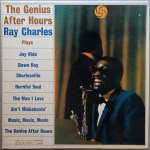 Proof positive that there is nothing wrong with remastering vintage recordings if you know what you’re doing. These sessions from 1956 (left off of an album that Allmusic liked a whole lot less than this one) were remastered in 1985 and the sound — on the better copies mind you — is correct from top to bottom.
The highest compliment I can pay a pressing such as this is that it doesn’t sound like a modern remastered record.
It sounds like a very high quality mono jazz record from the 50s or 60s.
Unlike modern recuts, it doesn’t sound EQ’d in any way.
It doesn’t lack ambience the way modern records do.
It sounds musical and natural the way modern records rarely do.
If not for the fairly quiet vinyl, you would never know it’s not a vintage record. The only originals we had to play against it were too noisy and worn to evaluate critically. They sounded full, but dark and dull and somewhat opaque.
And although it is obviously a budget reissue, it sure doesn’t sound cheap to these ears.
Testing
Lately we have been writing quite a bit about how good pianos are for testing your system, room, tweaks, electricity and all the rest, not to mention turntable setup and adjustment.
- We like our pianos to sound natural (however one chooses to define the term).
- We like them to be solidly weighted.
- We like them to be free of smear (a quality, we can’t help but notice, that is rarely mentioned in the audiophile record reviews we read).
AMG 4 1/2 Star Review
Taken from the same three sessions as The Great Ray Charles but not duplicating any of the performances, this set casts Charles as a jazz-oriented pianist in an instrumental setting. Brother Charles has five numbers with a trio (three songs have Oscar Pettiford on bass) and jams on three other tunes (“Hornful Soul,” “Ain’t Misbehavin’,” and “Joy Ride”) with a septet arranged by Quincy Jones; solo space is given to David “Fathead” Newman on tenor and alto and trumpeter Joseph Bridgewater. Fine music — definitely a change of pace for Ray Charles.