More Country and Country Rock
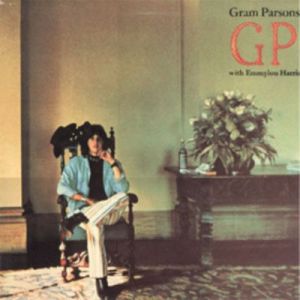
- A KILLER sounding copy and the first to hit the site in many years; both sides have Shootout Winning Triple Plus (A+++) sound or very close to it
- This copy is doing just about everything right — clean, clear, full-bodied and present with tons of energy and a nicely extended top end
- “… his first solo album, 1973’s G.P., is probably the best realized expression of his musical personality. Working with a crack band of L.A. and Nashville’s finest, he drew from them a sound that merged breezy confidence with deeply felt Southern soul… this album remains a haunting reminder of Parsons’ talent and influence, and has only gotten better with the passing years.”
If you’re a fan of country rock, this is some of the finest you’ll ever hear. James Burton, Ron Tutt and Byron Berline all play on here and quite well I might add. The harmonies between Gram and Emmylou are absolutely breathtaking, just drop the needle on ’We’ll Sweep Out The Ashes In The Morning’ to hear what I’m talking about.
What amazing sides such as these have to offer is not hard to hear:
- The biggest, most immediate staging in the largest acoustic space
- The most Tubey Magic, without which you have almost nothing. CDs give you clean and clear. Only the best vintage vinyl pressings offer the kind of Tubey Magic that was on the tapes in 1973
- Tight, note-like, rich, full-bodied bass, with the correct amount of weight down low
- Natural tonality in the midrange — with all the instruments having the correct timbre
- Transparency and resolution, critical to hearing into the three-dimensional studio space
No doubt there’s more but we hope that should do for now. Playing the record is the only way to hear all of the qualities we discuss above, and playing the best pressings against a pile of other copies under rigorously controlled conditions is the only way to find a pressing that sounds as good as this one does.
What We’re Listening For on GP
- Energy for starters. What could be more important than the life of the music?
- Then: presence and immediacy. The vocals aren’t “back there” somewhere, lost in the mix. They’re front and center where any recording engineer worth his salt would put them.
- The Big Sound comes next — wall to wall, lots of depth, huge space, three-dimensionality, all that sort of thing.
- Then transient information — fast, clear, sharp attacks, not the smear and thickness so common to these LPs.
- Tight punchy bass — which ties in with good transient information, also the issue of frequency extension further down.
- Next: transparency — the quality that allows you to hear deep into the soundfield, showing you the space and air around all the instruments.
- Extend the top and bottom and voila, you have The Real Thing — an honest to goodness Hot Stamper.
TRACK LISTING
Side One
Still Feeling Blue
We’ll Sweep Out the Ashes in the Morning
A Song for You
Streets of Baltimore
She
Side Two
That’s All It Took
The New Soft Shoe
Kiss the Children
Cry One More Time
How Much I’ve Lied
Big Mouth Blues
AMG Review
… his first solo album, 1973’s G.P., is probably the best realized expression of his musical personality. Working with a crack band of L.A. and Nashville’s finest (including James Burton on guitar, Ronnie Tutt on drums, Byron Berline on fiddle, and Glen D. Hardin on piano), he drew from them a sound that merged breezy confidence with deeply felt Southern soul, and he in turn pulled off some of his most subtle and finely detailed vocal performances; “She” and “A Song for You,” in particular, are masterful examples of passion finding balance with understatement.
Parsons also discovered that rare artist with whom he can be said to have genuinely collaborated (rather than played beside), Emmylou Harris; Gram and Harris’ spot-on harmonies and exchanged verses on “We’ll Sweep out the Ashes in the Morning” and “That’s All It Took” are achingly beautiful and instantly established her as one country music’s most gifted vocalists. On G.P., Parsons’ ambitious vision encompassed hard-country weepers, wistful ballads, up-tempo dance tunes, and even horn-driven rhythm and blues. He managed to make them all work, both as individual tunes and as a unified whole. If it falls just short of being his greatest work (an honor that goes to The Flying Burrito Bothers’ The Gilded Palace of Sin) thanks to a couple songs that are a bit too oblique for their own good (“The New Soft Shoe” may be beautiful, but who knows just what it’s supposed to be about), this album remains a haunting reminder of Parsons’ talent and influence, and has only gotten better with the passing years.