More Jethro Tull
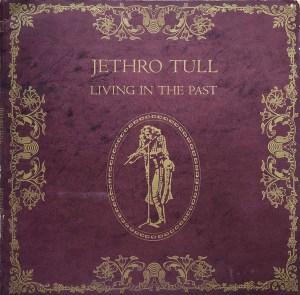
- A stunning Chrysalis British import double LP set with Triple Plus (A+++) grades or close to them on sides one, two and four and a solid Double Plus (A++) side three
- You’re gonna love the sound here – clean, clear and full-bodied with great bass and solid midrange presence and energy
- These are incredibly tough to find with the right sound and surfaces – this is one of the best copies to hit the site in years
- 4 1/2 stars: “… this collection is seminal and essential to any Tull collection, and the only compilation by the group that is a must-own disc.”
- Some records are just too consistently noisy for us to offer to our audiophile customers no matter how good they sound. We have a section for records that tend to be noisy, and it can be found here.
This set was very difficult to find with audiophile playing surfaces. Many of the copies we bought — at great expense I might add — were so heavily played and marked up they went right into the trade-in bin. This is one of the few that made the cutoff. Mint Minus Minus and a little noisier is about as quiet a copy as we could find.
If you want to hear how amazing Living In The Past can sound and don’t mind some surface problems, this is the copy to get. If for any reason you are not happy with the sound or condition of the album, we are of course happy to take it back for a full refund, including the domestic return postage.
These early British pressings have the kind of Tubey Magical Midrange that modern records cannot even BEGIN to reproduce. Folks, that sound is gone and it sure isn’t showing signs of coming back. If you love hearing INTO a recording, actually being able to “see” the performers, and feeling as if you are sitting with the band, this is the record for you. It’s what vintage all analog recordings are known for — this sound.
If you exclusively play modern repressings of vintage recordings, I can say without fear of contradiction that you have never heard this kind of sound on vinyl. Old records have it — not often, and certainly not always — but maybe one out of a hundred new records do, and those are some pretty long odds.
Forget the dubby domestic pressings, they can’t hold a candle to these excellent British imports.
What the best sides of Living In the Past have to offer is not hard to hear:
- The biggest, most immediate staging in the largest acoustic space
- The most Tubey Magic, without which you have almost nothing. CDs give you clean and clear. Only the best vintage vinyl pressings offer the kind of Tubey Magic that was on the tapes in 1972
- Tight, note-like, rich, full-bodied bass, with the correct amount of weight down low
- Natural tonality in the midrange — with all the instruments having the correct timbre
- Transparency and resolution, critical to hearing into the three-dimensional space of the studio
No doubt there’s more but we hope that should do for now. Playing the record is the only way to hear all of the qualities we discuss above, and playing the best pressings against a pile of other copies under rigorously controlled conditions is the only way to find a pressing that sounds as good as this one does.
What We’re Listening For on Living In The Past
- Energy for starters. What could be more important than the life of the music?
- The Big Sound comes next — wall to wall, lots of depth, huge space, three-dimensionality, all that sort of thing.
- Then transient information — fast, clear, sharp attacks for the guitars, keyboards and drums, not the smear and thickness common to most LPs.
- Tight, note-like bass with clear fingering — which ties in with good transient information, as well as the issue of frequency extension further down.
- Next: transparency — the quality that allows you to hear deep into the soundfield, showing you the space and air around all the players.
- Then: presence and immediacy. The musicians aren’t “back there” somewhere, way behind the speakers. They’re front and center where any recording engineer worth his salt — Andy Johns in this case — would have put them.
- Extend the top and bottom and voila, you have The Real Thing — an honest to goodness Hot Stamper.
TRACK LISTING
Side One
Song for Jeffrey
Love Story
Christmas Song
Living in the Past
Driving Song
Bouree
Side Two
Sweet Dream
Singing All Day
Witch’s Promise
Teacher
Inside
Just Trying to Be
Side Three (Live)
By Kind Permission Of
Dharma for One
Side Four
Wond’ring Again
Locomotive Song
Life is a Long Song
Up the ‘Pool
Dr. Bogenbroom
From Later
Nursie
AMG 4 1/2 Star Rave Review
Listen to this collection, put together to capitalize on the explosive growth in the group’s audience after Aqualung, and it’s easy to understand just how fine a group Jethro Tull was in the early ’70s.
Most of the songs, apart from a few heavily played album tracks (“Song for Jeffrey,” etc.) and a pair of live tracks from a 1970 Carnegie Hall show, came off of singles and EPs that, apart from the title song, were scarcely known in America, and it’s all so solid that it needs no apology or explanation.
Not only was Ian Anderson writing solid songs every time out, but the group’s rhythm section was about the best in progressive rock’s pop division. Along with any of the group’s first five albums, this collection is seminal and essential to any Tull collection, and the only compilation by the group that is a must-own disc.