Hot Stamper Blue Note Albums Available Now
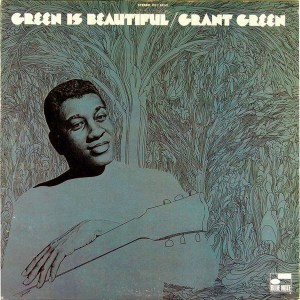
- Green Is Beautiful finally arrives on the site, with Shootout Winning Triple Plus (A+++) sound from first note to last – exceptionally quiet vinyl too
- A copy like this is a real audiophile treat – here is the punchy, clear, natural and lively sound you want for Green Is Beautiful
- Forget whatever dead-as-a-doornail Heavy Vinyl they’re making – the Tubey Magic, size and rock and roll energy of this very special vintage pressing simply cannot be beat
- Rudy Van Gelder was masterful at this kind of spacious, low-distortion, dynamic, energetic sound
- “Green Is Beautiful is still explicitly commercial and accessible to non-jazz audiences, and (purist objections notwithstanding) that’s not necessarily a bad thing.”
This vintage Blue Note stereo pressing has the kind of Tubey Magical Midrange that modern records can barely BEGIN to reproduce. Folks, that sound is gone and it sure isn’t showing signs of coming back. If you love hearing INTO a recording, actually being able to “see” the performers, and feeling as if you are sitting in the studio with the band, this is the record for you. It’s what vintage all analog recordings are known for — this sound.
If you exclusively play modern repressings of vintage recordings, I can say without fear of contradiction that you have never heard this kind of sound on vinyl. Old records have it — not often, and certainly not always — but maybe one out of a hundred new records do, and those are some pretty long odds.
What amazing sides such as these have to offer is not hard to hear:
- The biggest, most immediate staging in the largest acoustic space
- The most Tubey Magic, without which you have almost nothing. CDs give you clean and clear. Only the best vintage vinyl pressings offer the kind of Tubey Magic that was on the tapes in 1970
- Tight, note-like, rich, full-bodied bass, with the correct amount of weight down low
- Natural tonality in the midrange — with all the instruments having the correct timbre
- Transparency and resolution, critical to hearing into the three-dimensional studio space
No doubt there’s more but we hope that should do for now. Playing the record is the only way to hear all of the qualities we discuss above, and playing the best pressings against a pile of other copies under rigorously controlled conditions is the only way to find a pressing that sounds as good as this one does.
What We’re Listening For on Green Is Beautiful
- Energy for starters. What could be more important than the life of the music?
- The Big Sound comes next — wall to wall, lots of depth, huge space, three-dimensionality, all that sort of thing.
- Then transient information — fast, clear, sharp attacks, not the smear and thickness so common to these LPs.
- Tight punchy bass — which ties in with good transient information, also the issue of frequency extension further down.
- Next: transparency — the quality that allows you to hear deep into the soundfield, showing you the space and air around all the instruments.
- Extend the top and bottom and voila, you have The Real Thing — an honest to goodness Hot Stamper.
TRACK LISTING
Side One
Ain’t It Funky Now
A Day In The Life
Side Two
The Windjammer
I’ll Never Fall In Love Again
Dracula
AMG Review
The second album of Grant Green’s thorough jazz-funk makeover, Green Is Beautiful finds the guitarist growing more comfortable with harder, funkier R&B than he seemed on the softer-hued Carryin’ On. The switch from Fender Rhodes electric piano back to the more traditional Hammond organ certainly helps give the session a little extra grit, but it doesn’t return Green to the land of soul-jazz by any means.
Green Is Beautiful is still explicitly commercial and accessible to non-jazz audiences, and (purist objections notwithstanding) that’s not necessarily a bad thing. Green’s take on James Brown’s “Ain’t It Funky Now” is one of the funkiest items in his rare-groove period; it may be chordally very simple, but the groove is tight and percolating, and Green, tenor saxophonist Claude Bartee, and trumpeter Blue Mitchell all come up with hot, exciting solos.
The album also benefits from Green’s discovery of composer and occasional organist Earl Neal Creque, who contributes two bright, slinky, horn-driven originals: “The Windjammer,” which became one of the signature tunes of Green’s late period, and “Dracula.” They help give the album a more original voice, and indicate that Green was actively making himself at home in his new musical environment, not just mixing dull originals with phoned-in covers of pop and R&B hits (as he and many other ’70s Blue Note artists were accused of doing).
Of course, there are still pop covers present — the Beatles’ “A Day in the Life” is a mellow, mid-tempo groove, and Bacharach’s “I’ll Never Fall in Love Again” doesn’t stray far from the melody. Even if those aren’t particularly distinctive, the remainder of Green Is Beautiful proves that Green’s reinvention as a jazz-funk artist wasn’t the misguided disaster it was initially made out to be.