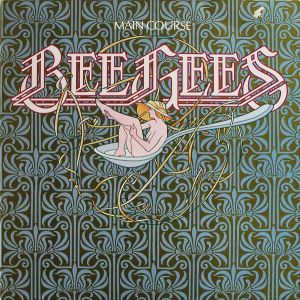
- KILLER sound for this early RSO pressing with both sides earning Shootout Winning Triple Plus (A+++) grades or very close to them – this is the best sounding Main Course ever
- I can’t recall how many times we’ve tried to get this shootout going and failed – this very pressing represents the breakthrough we were hoping for the last twenty or so years
- 4 1/2 stars: “It may sound silly to call the 12th album by a group with an eight-year string of gold records behind them a “breakthrough,” but that’s what Main Course was… Years later, Main Course holds up as well as anything the group ever did, and with killer album cuts like “Wind of Change” (featuring a superb Joe Farrell tenor sax solo) and “Edge of the Universe” all over it, demands as much attention as any hits compilation by the group.”
The impossible has happened – we found a good sounding copy of Main Course. The right stampers eluded us for a very long time, but we finally lucked into a good sounding pressing, and that allowed us to put the wheels in motion for this shootout.
Here are some other titles that represent the most dramatic Breakthroughs from the last ten years or so.
This vintage RSO pressing has the kind of Tubey Magical Midrange that modern records can barely BEGIN to reproduce. Folks, that sound is gone and it sure isn’t showing signs of coming back. If you love hearing INTO a recording, actually being able to “see” the performers, and feeling as if you are sitting in the studio with the band, this is the record for you. It’s what vintage all analog recordings are known for — this sound.
If you exclusively play modern repressings of vintage recordings, I can say without fear of contradiction that you have never heard this kind of sound on vinyl. Old records have it — not often, and certainly not always — but maybe one out of a hundred new records do, and those are some pretty long odds.
What amazing sides such as these have to offer is not hard to hear:
- The biggest, most immediate staging in the largest acoustic space
- The most Tubey Magic, without which you have almost nothing. CDs give you clean and clear. Only the best vintage vinyl pressings offer the kind of Tubey Magic that was on the tapes in 1975
- Tight, note-like, rich, full-bodied bass, with the correct amount of weight down low
- Natural tonality in the midrange — with all the instruments having the correct timbre
- Transparency and resolution, critical to hearing into the three-dimensional studio space
No doubt there’s more but we hope that should do for now. Playing the record is the only way to hear all of the qualities we discuss above, and playing the best pressings against a pile of other copies under rigorously controlled conditions is the only way to find a pressing that sounds as good as this one does.
What We’re Listening For on Main Course
- Energy for starters. What could be more important than the life of the music?
- Then: presence and immediacy. The vocals aren’t “back there” somewhere, lost in the mix. They’re front and center where any recording engineer worth his salt would put them.
- The Big Sound comes next — wall to wall, lots of depth, huge space, three-dimensionality, all that sort of thing.
- Then transient information — fast, clear, sharp attacks, not the smear and thickness so common to these LPs.
- Tight punchy bass — which ties in with good transient information, also the issue of frequency extension further down.
- Next: transparency — the quality that allows you to hear deep into the soundfield, showing you the space and air around all the instruments.
- Extend the top and bottom and voila, you have The Real Thing — an honest to goodness Hot Stamper.
TRACK LISTING
Side One
Nights On Broadway
Jive Talkin’
Wind Of Change
Songbird
Fanny (Be Tender With My Love)
Side Two
All This Making Love
Country Lanes
Come On Over
Edge Of The Universe
Baby As You Turn Away
AMG Review
It may sound silly to call the 12th album by a group with an eight-year string of gold records behind them a “breakthrough,” but that’s what Main Course was. The group’s first disco album — and, for many white listeners, the first disco album they ever purchased — Main Course marked a huge change in the Bee Gees’ sound.
Barry, Robin, and Maurice Gibb had been fascinated by R&B and soul for years (“To Love Somebody” had been written for Otis Redding to sing), but, as white Britons — fearing they’d seem ridiculous — they had never adapted those sounds themselves. Not only didn’t they seem ridiculous, but they took to it as easily as they’d absorbed the Beatles’ harmony-based rock sounds in the late ’60s. It was a liberating experience for the entire group — Blue Weaver, newly added to the lineup with an array of electronic keyboards and ideas that ended up shaping lots of the songs here; Alan Kendall, playing in a funky guitar style; and drummer Dennis Byron, playing more complicated patterns than he’d been asked to in years, were also delighted with the new direction, and they constituted the instrumental core of the band for the next six years.
Years later, Main Course holds up as well as anything the group ever did, and with killer album cuts like “Wind of Change” (featuring a superb Joe Farrell tenor sax solo) and “Edge of the Universe” all over it, demands as much attention as any hits compilation by the group.